
Your home’s plumbing system could be hiding a structural liability that leads to a sudden, catastrophic flood without a moment’s notice. If your Central Florida house was built between the late 1970s and the mid-1990s, there is a high chance you have polybutylene pipes. These materials are notorious for failing from the inside out, often leaving homeowners scrambling to find the cost to repipe a house in Florida after the damage is already done. We understand how stressful it is to face rising insurance premiums or the fear of a denied claim because of outdated plumbing materials.
You deserve a home that provides peace of mind, not a constant worry about what is happening behind your walls. In this 2026 guide, we will show you exactly how to identify these grey plastic pipes and why local insurers are increasingly refusing to cover homes that still have them. We’ll walk you through the modern, reliable alternatives like PEX and explain how a professional repipe protects your property value. From understanding the signs of pipe deterioration to preparing for a tidy, professional installation, you will gain the clarity needed to make the best decision for your family’s future.
Key Takeaways
- Polybutylene pipes are fragile grey plastic lines that deteriorate from the inside out, often failing without any external warning signs or visible leaks.
- High chlorine levels in Central Florida municipal water react chemically with the resin in these pipes, leading to micro-fractures and sudden, catastrophic bursts.
- You can identify these “battleship grey” pipes by looking for the specific PB2110 stamp on the side of the piping in your garage, attic, or near the water heater.
- Florida insurance carriers are increasingly denying coverage for homes with these pipes, making the cost to repipe a house in Florida a vital investment in your property’s insurability.
- Professional PEX repiping is the only permanent solution to eliminate the risk of water damage and protect your home’s long-term market value.
What is Polybutylene Plumbing and Why is it Dangerous?
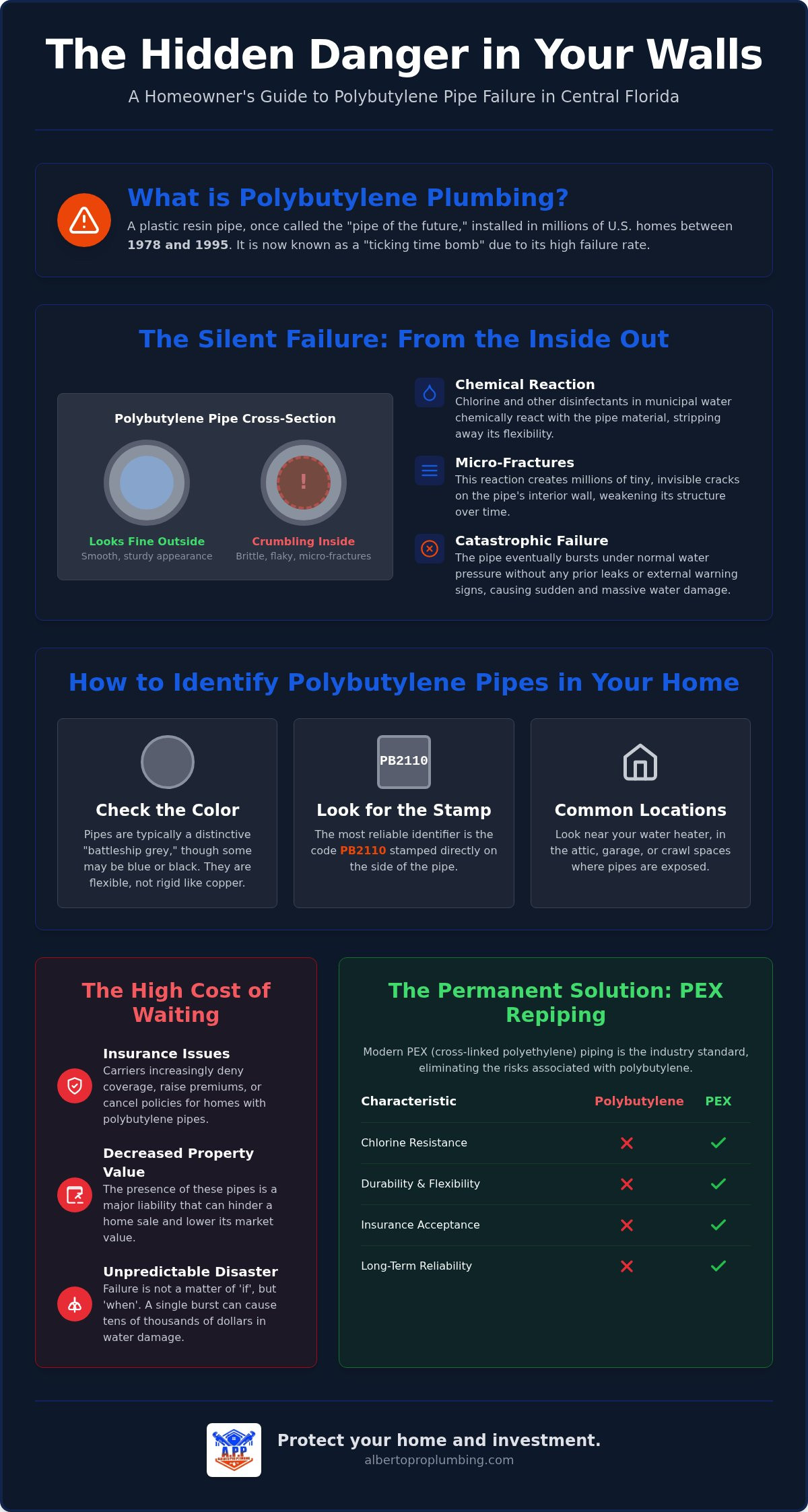
Polybutylene is a form of plastic resin that was once hailed as the “pipe of the future.” Between 1978 and 1995, it was installed in millions of homes across the United States. You can usually recognize Polybutylene (PB) piping by its distinctive battleship grey color and flexible nature. While it seemed like a miracle material for builders, it has earned a reputation among local experts as a ticking time bomb. This is because the material doesn’t just wear out; it fails catastrophically from the inside out, often without a single external sign of trouble.
A major 1995 class action settlement eventually brought the production of these pipes to a halt in the U.S. construction industry. However, many homes in Central Florida still have these original systems hidden behind their walls. If you are in this situation, you’re likely wondering about the cost to repipe a house in Florida to avoid a sudden disaster. Visual inspections are notoriously misleading. A pipe can look perfectly smooth and sturdy on the outside while the interior walls are crumbling into the water stream. This hidden decay makes it impossible to know when a failure is imminent.
The History of the Pipe of the Future
In the late 1970s, builders were looking for ways to cut costs and speed up construction. Polybutylene was the perfect solution. It was cheap to manufacture and much easier to install than rigid copper. In Central Florida developments built from 1978 through the mid-1990s, PB pipes became the industry standard. Builders loved the flexibility, but the long-term results were disastrous. The material was eventually banned from international building codes after widespread reports of property damage. Today, it’s considered a significant liability that can impact your home’s safety and value.
How Polybutylene Fails: The Silent Leak
The danger of polybutylene lies in its chemical vulnerability. Unlike copper pipes that might develop a visible pinhole leak, polybutylene becomes brittle and flakes internally. This degradation is often accelerated by the very chemicals used to treat our municipal water. Early systems also relied on acetal plastic fittings, which were prone to cracking under pressure. Because the deterioration happens on the inside, a pipe can burst under standard household pressure without any warning. This unpredictable nature is why many homeowners prioritize finding the cost to repipe a house in Florida before a burst occurs. Patching a single leak in a polybutylene system is rarely a permanent fix. Since the entire system is usually made of the same degrading material, one leak is almost always a sign that more are coming soon.
The Florida Factor: Why Central Florida Water Destroys Poly Pipes
Central Florida water is uniquely aggressive toward certain older plumbing materials. Municipalities in areas like Clermont and Orlando rely on high concentrations of chlorine and chloramines to keep the public water supply safe. While these disinfectants are necessary for health, they create a hostile environment for polybutylene resin. The chlorine molecules bond with the plastic, triggering a chemical reaction that results in millions of tiny micro-fractures along the inner walls of the pipe. This is why homes in our community often experience plumbing disasters long before similar homes in cooler, northern climates where water chemistry and temperatures differ.
The geography of our region also plays a role. Many Central Florida homes are built on concrete slabs, which means plumbing lines are often routed through the attic to avoid the cost and mess of breaking through the floor. This exposes the pipes to extreme environmental stressors that they weren’t originally designed to handle. When you combine chemical vulnerability with Florida’s unique building styles, it’s easy to see why the cost to repipe a house in Florida has become a standard part of home maintenance for local property owners.
Chlorine and Chemical Degradation
The oxidation process is relentless and invisible. Over time, the chlorine strips away the plasticizers that keep the pipe flexible and durable. This turns the once-pliable plastic into a brittle, flaky shell that can no longer hold the weight of the water inside. Municipal disinfectants act as a catalyst for failure. Once this structural damage begins, no amount of system flushing or water softening can reverse the decay. It’s a permanent change in the pipe’s integrity that is widely recognized as a major building material failure.
The Role of High Water Pressure and Heat
Heat plays a massive role in Central Florida plumbing failures. Attic temperatures in our region can easily soar above 140 degrees during the summer months. This constant baking accelerates the brittleness of the polybutylene, making it prone to cracking. When you combine this heat with the pressure fluctuations common in municipal lines, you have a recipe for disaster. Brittle pipes can’t absorb the shock of “water hammer” when a valve or faucet closes quickly. This often results in a sudden pipe burst that requires emergency plumbing repair to prevent total property loss. If you suspect your attic lines are reaching their breaking point, our team can help you evaluate your system before a crisis occurs.
How to Identify Polybutylene Pipes in Your Home
Identifying polybutylene requires a bit of detective work. You shouldn’t rely on a quick glance under the sink. Start by checking the color of the pipes. While most are battleship gray, they can also appear in silver or black. The most reliable way to confirm the material is to look for the code “PB2110” stamped on the side of the pipe. You’ll also want to look at the fittings. Polybutylene systems typically use gray plastic connectors secured with copper or aluminum crimp rings. If you see these components, you’re likely facing a system that needs attention before it fails. Check the main shut-off valve and the area around your water heater, as these are the easiest places to spot exposed lines.
Polybutylene vs. PEX: Don’t Get Confused
Modern PEX piping is the industry standard for a whole home repipe, but it can sometimes look similar to old polybutylene. PEX is much more flexible and will have its own specific markings, like “PEX-A” or “PEX-B,” rather than the dreaded PB code. Don’t assume that just because a pipe is gray, it’s polybutylene. Some older PEX was also manufactured in gray. Because the cost to repipe a house in Florida is a significant investment, you should always get a professional verification before deciding on a replacement. We can help you distinguish between a safe, modern system and a high-risk relic. Our experts look for specific manufacturing dates and pressure ratings that tell the real story of your plumbing’s health.
Where to Look for Hidden Pipes
Polybutylene often hides in plain sight. Check the main water service line where it enters your home from the street. In Central Florida, many homes utilize manifold systems located in the attic. This is a prime spot to find large bundles of gray plastic that have been exposed to years of extreme heat. Another common trick used by original builders is the “stub-out.” A builder might have used copper pipes for the visible connections under your sinks or behind the toilet to make the plumbing look high-quality. However, if you look deeper into the wall or through the cabinet back, that copper often transitions into polybutylene. Knowing the true extent of the material in your home is the first step in accurately calculating the cost to repipe a house in Florida. It’s better to find these hidden lines now than to discover them during a midnight emergency.
Insurance and Real Estate: The Hidden Cost of Poly
In the 2026 Florida insurance market, polybutylene pipes have moved from a minor concern to a deal-breaking liability. Carriers across the state are tightening their underwriting guidelines to mitigate the risk of high-dollar water damage claims. If your home still utilizes these outdated materials, you aren’t just risking a leak; you’re risking your ability to maintain affordable coverage. Most local insurers now require a “Satisfactory” rating on a Four-Point Inspection to issue or renew a policy. When an inspector identifies gray plastic piping, they mark the plumbing system as a hazard, which often leads to an immediate non-renewal notice or a flat-out denial of coverage.
The financial impact extends directly to your home’s market value. Today’s buyers are more educated about plumbing risks than ever before. When they see polybutylene, they see a looming project that complicates their financing and insurance. This often leads to demands for significant price credits or requests that the seller handle the replacement before closing. Understanding the cost to repipe a house in Florida is no longer just about maintenance; it’s a vital part of protecting your largest financial investment. If you are curious about how these issues affect your property’s worth, you can discover Meridian Property Appraisers Inc. for professional valuation services. If a known poly pipe bursts and you haven’t taken steps to mitigate the risk, you may even face challenges with claim payouts, as some carriers argue that the failure was a predictable result of a known defect.
Navigating the Florida Insurance Crisis
Many homeowners discover the severity of this issue during a new home purchase. It’s common for carriers to issue a binder but require a full repipe within 30 days of the policy’s start date. In 2026, there is a massive difference between functional plumbing and insurable plumbing. Your pipes might be carrying water without a leak today, but that doesn’t make them acceptable to an actuary. Proactively replacing your system can often lead to lower annual premiums and provides the documented proof of safety that insurers demand. It shifts your home from the “high-risk” category back into the “preferred” category, saving you money and stress over the long term.
Selling a Home with Polybutylene
Florida real estate disclosure laws are very clear about known plumbing defects. You must be honest about the presence of polybutylene, or you risk legal trouble after the sale. Furthermore, homes with active PB systems are frequently rejected for FHA and VA loans because they don’t meet minimum property standards. This shrinks your pool of potential buyers significantly. By investing in a repipe before you list your property, you remove a major “deal-killer” and ensure a much smoother inspection process. If you’re concerned about how your pipes will affect your home’s insurability or resale value, contact our team for a professional assessment today.
The Solution: Why Repiping is the Only Permanent Fix
Attempting to patch a single leak in a polybutylene system is like trying to plug one hole in a crumbling dam. Because the material degrades throughout the entire home, fixing one spot doesn’t stop the next failure from happening elsewhere. This cycle of endless repairs quickly exceeds the initial cost to repipe a house in Florida. A full replacement is the only way to ensure your property remains dry and your insurance coverage stays intact. We provide a professional plumbing service that focuses on long-term reliability rather than temporary fixes. By replacing the entire system with modern PEX, you eliminate the chemical vulnerabilities of the past and gain a plumbing system that is built to last for decades.
Our team understands that the idea of a whole-home project can feel overwhelming. That’s why we utilize a methodical approach designed to keep your home functional and clean throughout the process. We don’t just swap pipes; we restore your peace of mind by using materials that are resistant to the aggressive chlorine levels found in Central Florida water. This proactive investment protects your equity and ensures you won’t have to worry about a sudden burst while you’re away at work or on vacation.
The Repiping Process: What to Expect
We’ve refined our workflow to minimize the impact on your daily routine. Our technicians follow a disciplined three-step process to ensure a high-tier result:
- Step 1: Systematic Mapping: We begin by locating every fixture and mapping out the most efficient routes for your new lines. This careful planning limits the number of wall cuts needed.
- Step 2: Strategic Installation: Our experts make small, precise access points to run flexible PEX lines. This modern material is much easier to navigate through existing structures than rigid copper.
- Step 3: Testing and Restoration: We perform rigorous pressure testing to ensure every connection is perfect. Once verified, we handle the professional drywall restoration, leaving your walls ready for paint.
Why Choose Alberto Pro Plumbing for Your Repipe?
As a local, family-owned business, we take deep pride in serving Lake, Polk, Osceola, and Orange Counties. We have extensive experience with the specific Central Florida home construction styles of the 80s and 90s, meaning we know exactly where your pipes are hidden before we even start. Our Home Protection Membership provides an extra layer of security, offering proactive monitoring to keep your new system in peak condition year-round. We also stand by our tidy service guarantee. Our technicians treat your property with the highest level of respect, ensuring the workspace is left in its original condition. Don’t wait for a plumbing emergency to disrupt your life. Get a professional inspection of your pipes today!
Protect Your Home and Your Peace of Mind
Leaving polybutylene pipes in your walls is a risk that Central Florida homeowners shouldn’t have to take. As we’ve explored, these materials are chemically vulnerable to our local water and can lead to sudden, expensive damage or lost insurance coverage. While the cost to repipe a house in Florida is a significant consideration, it’s a vital investment that protects your property value and your family’s safety for years to come. Replacing an aging system now prevents the stress of a midnight pipe burst later.
Our local Clermont experts are here to help you transition to a modern, reliable PEX system with minimal stress. We take pride in our craft and offer a tidy service guarantee, ensuring we leave your home in the same condition we found it. If you ever face a plumbing crisis, our 24/7 emergency response team is always ready to help Lake, Polk, Osceola, and Orange Counties. Take the first step toward a safer, more valuable home by reaching out to a trusted neighbor for a professional assessment.
Don’t wait for a flood—schedule your repipe consultation with Alberto Pro Plumbing today!
Frequently Asked Questions
Can I just repair a single leak in my polybutylene pipe?
Patching a single leak is generally a temporary band-aid that doesn’t solve the underlying problem. Because polybutylene degrades throughout the entire system, fixing one spot often puts more pressure on other weakened areas. We recommend a full replacement because it’s the only way to ensure you won’t face another emergency leak next week or next month. It’s about protecting your home from future damage.
How long do polybutylene pipes usually last before they fail?
While these pipes were originally expected to last up to 40 years, many Central Florida systems fail much earlier. The high chlorine content in our local water and the extreme heat in our attics often cause these pipes to become brittle within 15 to 20 years. If your home was built in the 80s or 90s, your plumbing is likely nearing the end of its safe lifespan.
Does homeowners insurance cover a polybutylene pipe burst in Florida?
Most policies will pay for the water damage cleanup and drywall repairs, but they won’t pay for the actual pipe replacement. In the 2026 insurance market, many carriers are actually dropping customers who have these pipes. Understanding the cost to repipe a house in Florida is often more manageable than dealing with the high premiums or deductibles associated with a high-risk plumbing system.
Is polybutylene plumbing still legal to have in a house?
It’s perfectly legal to live in a house with polybutylene, but it hasn’t been allowed in new construction since the mid-1990s. International building codes and Florida standards were updated to ban the material after millions of failures were reported. While you aren’t required by law to remove it, doing so is the only way to meet modern safety and insurance standards for your property.
What is the best material to use when replacing polybutylene?
PEX is the industry standard and the best choice for Florida homes because of its flexibility and durability. It doesn’t corrode like copper and it’s specifically designed to resist the chemical breakdown caused by chlorine. Our team uses high-quality PEX for every repipe to give you a system that can handle Florida’s unique environmental stressors, such as attic heat, for many decades.
How much does it cost to repipe a house in Florida in 2026?
The cost to repipe a house in Florida depends on several factors, such as the square footage and the number of plumbing fixtures. Homes with more bathrooms or complex layouts will naturally require more labor and materials to complete. We provide detailed assessments to help you understand the specific investment needed to protect your property and ensure long-term peace of mind for your family.
Will having polybutylene pipes affect my home’s resale value?
Yes, these pipes are a major red flag for buyers and home inspectors during the sales process. Most buyers will ask for a significant price reduction or a full replacement before they commit to the purchase. To see how professional inspectors evaluate these risks, you can visit A Premier Home Inspection. Replacing the pipes before listing your home can actually increase your property’s value and make it much easier to attract a qualified buyer who can secure traditional financing.
Can I tell if my pipes are polybutylene without cutting into the walls?
You can usually find exposed sections of pipe in the garage, near the water heater, or under your kitchen and bathroom sinks. Look for flexible, battleship-gray plastic tubing. If you see the code PB2110 printed on the side, you’ve confirmed it’s polybutylene. If you’re still unsure, our experts can perform a non-invasive inspection to verify your plumbing material and assess its current condition.