
A single slow drain may be minor, but when toilets, tubs, or several sinks start backing up together, the problem could be deeper than a fixture clog. For Clermont homeowners, main sewer line clog removal Clermont starts with identifying the cause: a blockage and a damaged pipe may need different solutions. If your home has a septic system, the source may be different still.
When wastewater backs up, it’s natural to worry about damage or wonder whether a DIY attempt could make things worse. This guide explains common signs and causes of a main sewer line clog, how to distinguish a possible sewer-line issue from a septic concern, and what to do safely while arranging professional help. You’ll also learn how assessment can guide the choice between clearing a blockage and repairing a pipe. A clear diagnosis is the first step toward choosing the right response.
Key Takeaways
- Backups or slow drains affecting several fixtures may point to a main-line problem rather than a single clogged drain.
- Clermont sewer clogs can have different causes, so identifying the obstruction and checking for pipe damage helps guide the next step.
- Pause water use during an active backup to limit more wastewater entering the suspected blockage.
- Main sewer line clog removal Clermont should follow a clear process: assess symptoms, locate the likely problem, then clear the blockage or address needed repairs.
- Alberto Pro Plumbing provides drain cleaning and sewer line repair to help Clermont homeowners respond to active or recurring sewer problems.
How to Recognize a Main Sewer Line Clog in Clermont
Wastewater coming up through a shower or floor drain is a warning sign. So are several slow drains at once or a toilet that gurgles after someone runs water elsewhere in the house. When symptoms appear in multiple fixtures, the shared drain line may be restricted. A main sewer line clog is an obstruction in the pipe that carries wastewater away from the property.
Use the number and location of affected fixtures as an initial clue. One slow sink or shower often points to a local clog in that fixture’s drain. If toilets, tubs, and sinks in different parts of the home are slow or backing up, the problem may be farther downstream, where their drainage paths connect. This pattern doesn’t confirm the cause, but it can explain why clearing one fixture may not resolve a whole-home problem.
Which symptoms suggest a blockage in the main line?
Notice where wastewater appears and what happens after water is used:
- Backups at lower fixtures: Wastewater surfacing in a ground-floor shower, tub, or floor drain can mean flow is restricted farther downstream.
- Several slow drains: If multiple fixtures slow around the same time, the cause may affect a shared line rather than one sink trap.
- Gurgling after water use: Bubbling or unusual sounds from a toilet or drain can indicate disrupted drainage or air movement. Treat the sound as a clue, not proof of a main-line blockage.
- Symptoms that return: A drain that eventually clears but repeatedly slows or backs up still needs attention. Temporary drainage doesn’t show that the underlying cause is gone.
A blocked line can sometimes contribute to a sanitary sewer overflow, where wastewater escapes from a sewer system. The Sanitary Sewer Overflow article discusses possible causes such as debris and tree roots. If sewage is backing up inside, stop using affected fixtures and arrange a professional assessment rather than waiting for the problem to pass.
Could it be a fixture clog, sewer problem, or septic issue?
Start with the pattern rather than guessing at the cause. One slow fixture points more toward a localized drain issue; several affected fixtures or a backup at a lower drain raises concern about a shared line. Homes connected to a municipal sewer and properties with private septic systems have different wastewater setups. Because symptoms can overlap, they can’t confirm which system or component is responsible.
When arranging main sewer line clog removal Clermont service, note which fixtures are affected, where wastewater appears, whether toilets gurgle, and whether the issue has happened before. Share whether the property uses septic or municipal sewer if you know. This information helps a plumber assess whether the problem is a local drain clog, a main-line obstruction, or another plumbing or septic concern. Avoid forcing a DIY tool into a line when the blockage’s location and cause are unclear.
What Causes Main Sewer Line Clogs Around Clermont?
A main sewer line clog restricts wastewater as it flows away from a property. The obstruction may be material inside the pipe, a narrowing or break in the pipe itself, or a combination of issues. Understanding the possible causes helps explain why the clearing method should follow an assessment, not a guess.
Common possibilities include accumulated grease and other debris, items that don’t belong in drains, tree roots entering through openings, and damaged or shifted pipe sections. A suspected blockage isn’t a confirmed diagnosis. The line and the property’s wastewater setup need to be assessed to determine the cause.
How debris, roots, and pipe condition can restrict flow
Some restrictions build gradually. Grease, food scraps, wipes, and other unsuitable items can collect on the pipe’s interior or catch on a rough spot. Buildup may narrow the sewer lateral, the pipe carrying wastewater from the property, until flow becomes restricted. A single item can also snag and create a blockage.
Roots are another possibility. They can enter through openings or joints and obstruct flow, but their presence shouldn’t be assumed without evidence. Pipe condition matters too: a removable mass of debris is different from a cracked, collapsed, or displaced section. Clearing may address an obstruction, while a damaged pipe may need repair to resolve the underlying problem.
That distinction is central to main sewer line clog removal Clermont. Removing material without identifying a damaged section may leave the cause unresolved. The appropriate next step depends on the assessment, not simply on the fact that a drain has backed up.
Why Clermont property and sewer-system details matter
Clermont and Lake County are the local service context, but homes in the area don’t all have the same wastewater setup or sewer issue. First establish whether wastewater leaves through a municipal sewer connection or flows to a private septic system. The systems have different components, and symptoms alone can’t confirm which one is affected.
For a septic property, trouble may involve the line from the home, the tank, or another part of the system. Disposal habits and drainfield care also matter. The EPA SepticSmart Initiative for Homeowners offers guidance on septic maintenance and what should not go down household drains. Alberto Pro Plumbing also provides septic drain field services. For a municipal connection, assessment focuses on the property’s sewer lateral and its connection to the larger system.
Nearby lakes or a high water table don’t prove that either system is clogged or explain the cause of a particular backup. Don’t assume a pipe is failing based only on a neighborhood’s age or appearance. A property-specific assessment is more useful than broad local assumptions.
If symptoms are active or keep returning, Alberto Pro Plumbing provides drain cleaning and sewer line repair for Clermont properties.
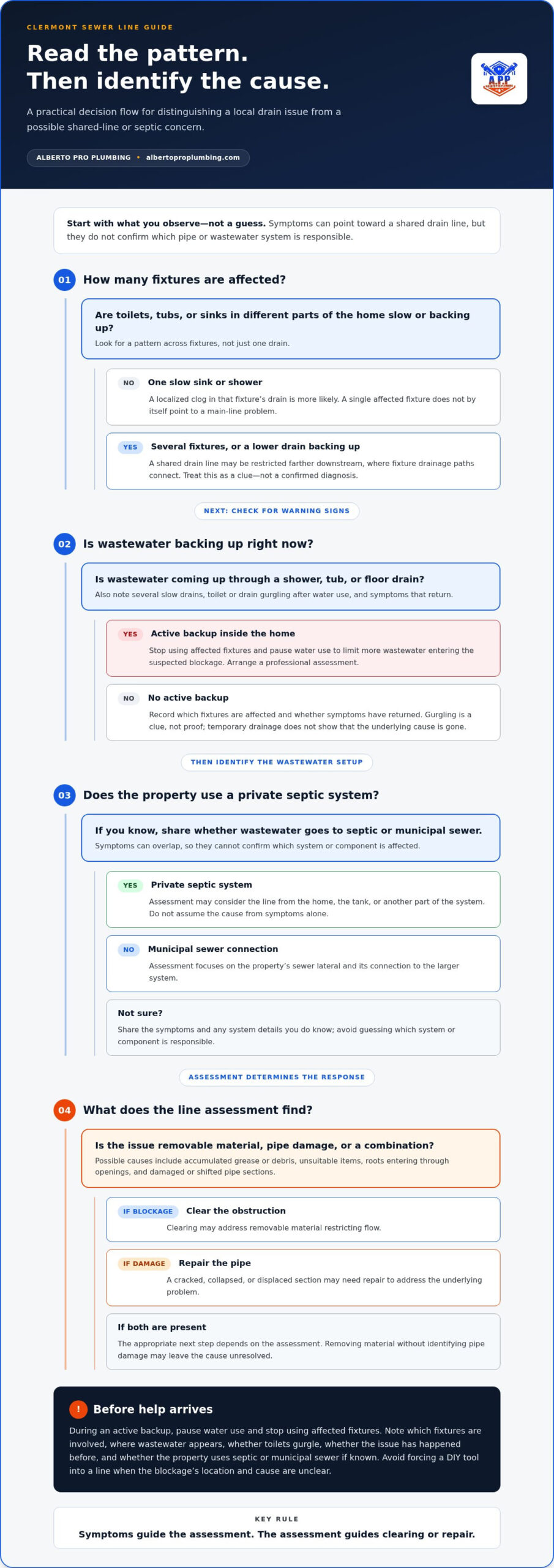
Main Sewer Clog Removal: How Diagnosis Guides the Clearing Method
A backup tells you wastewater isn’t moving normally, but it doesn’t show whether the cause is a removable obstruction, a damaged pipe, or both. The right approach to main sewer line clog removal Clermont starts with assessing the symptoms, the line’s access points, and the likely location of the restriction before choosing what to do.
A plumber may ask which fixtures are affected, when the problem began, and whether it returned after earlier clearing. Those details help narrow down where wastewater flow may be restricted. The assessment also considers what is accessible at the property and whether symptoms point to a local drain issue or a problem farther along the sewer line. A suspected cause remains a possibility until there’s enough evidence to support it.
What can inspection reveal before a sewer line is cleared?
Inspection helps locate a possible blockage and determine whether the pipe itself could be compromised. When appropriate, a sewer camera can show the interior of the section examined and may help identify visible obstructions, cracks, or shifts. It doesn’t automatically explain every symptom. Findings should distinguish observed conditions from possible causes.
That distinction guides the next step. A visible obstruction in an otherwise passable section suggests a different response than evidence of a break or displaced pipe. If the cause isn’t clear, the plumber should explain what is known and what remains uncertain rather than presenting an assumption as a confirmed diagnosis.
How do clearing methods differ from sewer line repair?
Clearing removes or breaks up material restricting flow; repair addresses a pipe that is cracked, collapsed, or out of position. They solve different problems. The condition of the line and the type and location of the obstruction help determine which approach is suitable.
Broadly, mechanical clearing uses a tool to reach or break apart an obstruction. Water-based cleaning uses flowing water to move material or clean buildup from the pipe interior. Neither method is right for every line. Material that can be cleared may call for a different approach than a damaged pipe, where clearing alone may not correct the underlying condition.
The method needs to suit the pipe and the assessment findings. If a line appears fragile or compromised, a clearing method that doesn’t account for its condition may be inappropriate. A clog alone doesn’t necessarily mean repair is needed. The goal is to match the response to the evidence.
After the assessment, the plumber should explain whether the next step is clearing, further evaluation, or sewer line repair, and why. Alberto Pro Plumbing provides drain cleaning and sewer line repair for Clermont properties. The service depends on the issue identified. Clear findings help you understand the recommended work and distinguish restored flow from a confirmed fix for the underlying cause.
What to Do Before Main Sewer Line Service Arrives
An active sewer backup is stressful, but careful steps can help limit additional wastewater and reduce contact with contaminated water. If more than one drain is affected, treat it as a possible shared-line problem while arranging professional help. Don’t keep testing the plumbing to see whether it has cleared.
- Pause water use. Ask everyone in the home to stop using sinks, showers, toilets, dishwashers, and washing machines. These fixtures can send more wastewater toward a suspected blockage.
- Keep people and pets away. Block access to areas where sewage has surfaced. Avoid touching the water or items it has reached.
- Stop DIY attempts. Don’t repeatedly plunge affected fixtures or use a drain snake if several drains are showing symptoms. A local fix may not address a restriction farther along the line.
- Skip drain chemicals. Don’t pour chemical cleaners into affected drains or add them to standing wastewater. They may not resolve a main-line obstruction and can make contact with backed-up water more hazardous.
- Arrange professional assessment. Explain that wastewater is backing up and identify the affected fixtures. This helps communicate the urgency and scope of the problem.
What should you stop doing when drains back up?
Don’t flush toilets, run appliances that drain into the plumbing, or keep plunging when multiple fixtures are affected. Avoid mixing products or adding chemicals to standing wastewater. These steps won’t identify the blockage, and continued water use can add to the backup. If sewage is present, keep children and pets out of the area and avoid handling contaminated belongings.
What information helps make the service visit more efficient?
When arranging main sewer line clog removal Clermont service, note which fixtures are affected, where wastewater appeared, and when symptoms began. Describe earlier backups or recurring slow drainage factually, including whether the issue cleared and returned. If you know whether the property connects to municipal sewer or a septic system, share that detail. Keep the route to affected areas accessible, but don’t step through wastewater or move contaminated items.
A clear account helps the plumber assess the situation and decide what needs attention first. You don’t need to determine the cause yourself. Stick to what you observed: which drains changed, what happened after water use, and whether the problem has happened before. If symptoms worsen while you’re waiting, update the service team rather than running more water to test the line.
For active backups or recurring symptoms, Alberto Pro Plumbing provides professional sewer line service. A careful assessment guides the next step, whether the issue calls for drain cleaning or sewer line repair.
Main Sewer Line Clog Removal in Clermont: Get the Right Help
Resolving a suspected main-line clog takes more than getting wastewater moving again. Start with the symptoms and the property’s plumbing setup, then determine whether the problem is an obstruction or a pipe condition that needs repair. That assessment helps match the next step to the issue instead of treating every backup the same way.
Alberto Pro Plumbing provides drain cleaning and sewer line repair for Clermont homeowners. If the assessment points to material restricting flow, drain cleaning may be appropriate. If it shows damage or another compromised condition, sewer line repair may be needed. Clearing and repair serve different purposes, so the recommendation should follow the findings. For ongoing drain concerns, Clermont drain cleaning services can be part of the solution, while urgent backups may call for emergency plumbing support.
When a suspected clog may need sewer line repair
Recurring backups deserve attention, particularly if symptoms return after the line seems to drain again. A damaged, cracked, or displaced section can restrict flow or contribute to repeated trouble, and clearing alone may not address that condition. Diagnosis helps distinguish a removable obstruction from a problem with the pipe itself. For an urgent backup, Alberto Pro Plumbing provides 24/7 emergency plumbing repair in Clermont.
A clear explanation of the findings matters. Ask what the assessment indicates, whether the recommended work is clearing or repair, and how that step relates to the observed problem. You don’t need to identify the cause before arranging help; sharing what you’ve seen gives the plumber a useful starting point.
How to arrange professional sewer-line help in Clermont
When you call or request service, describe which fixtures are affected, where wastewater has appeared, when symptoms began, and whether this has happened before. Mention if the backup is active and whether the home connects to municipal sewer or a septic system, if you know. These details help the team understand the situation and prepare to assess the right part of the plumbing.
The next steps are straightforward: review the symptoms, assess the likely source, explain what the findings indicate, and recommend clearing or repair as appropriate. A professional service visit should leave you with a clearer understanding of what’s happening and why a particular solution makes sense. You shouldn’t have to guess whether a recurring problem was fully addressed.
If you’re dealing with an active backup or repeated sewer symptoms, contact Alberto Pro Plumbing to arrange professional help. Request sewer line service in Clermont and share what you’ve observed so the team can guide the next step.
Take the Next Step Toward a Clearer Diagnosis
Recurring or active sewer trouble can leave you unsure what to do next. You don’t have to pinpoint the cause before asking for help. Share what you’ve observed and let a professional assessment guide the response. For main sewer line clog removal Clermont, a clear diagnosis helps determine whether the line needs clearing or a pipe problem calls for repair.
Alberto Pro Plumbing is locally owned and operated, serving Clermont and Central Florida. If wastewater is backing up or the problem keeps returning, act before more water use adds to the disruption. Request main sewer line service in Clermont and explain what’s happening at your home. A clear assessment can turn uncertainty into a practical plan.
Frequently Asked Questions
Can tree roots cause a main sewer line clog?
Yes, roots can enter through openings or joints in a sewer pipe and obstruct wastewater flow. Their presence is one possible cause, not something you can confirm from a backup alone. If roots are involved, clearing may restore flow temporarily, but the point of entry or pipe condition may need attention too. Tell the plumber assessing your Clermont property about recurring clogs or any roots you’ve noticed near the line.
Can I use a chemical drain cleaner for a main sewer line clog?
No. Chemical drain cleaner is not a reliable choice for a suspected main-line blockage. A product poured into one fixture may not reach an obstruction farther down the shared line, and it can remain in backed-up water. Don’t combine cleaners or add them to a drain with standing wastewater. Stop using affected plumbing and tell the plumber if you’ve already used a product, including its name if available.
How long does main sewer line clog removal take?
There isn’t one dependable time estimate for every job. The time needed depends on where the obstruction is, what is causing it, how accessible the line is, and whether assessment points to pipe damage as well as a clog. A straightforward obstruction and a recurring problem that needs further investigation can require different steps. For main sewer line clog removal, Clermont homeowners should expect the scope to become clearer after the line is assessed.
What happens if a main sewer line clog is left untreated?
Leaving a restriction in place can allow wastewater to keep draining poorly or back up into the home, especially if additional water enters the line. Sewage can soil floors and belongings, creating a cleanup and sanitation concern. The blockage may also remain or worsen rather than resolve on its own. Limit plumbing use if symptoms are active, keep people and pets away from sewage, and arrange an assessment to understand the risk at your property.
Is a sewer line clog the same as a septic tank problem?
No. A sewer-line clog is a flow restriction in a pipe, while a septic concern may involve the tank or another part of a private system. The symptoms can overlap, so a backup alone doesn’t identify which component is responsible. If your Clermont home uses a septic system, tell the plumber so the property’s setup is considered. Alberto Pro Plumbing also provides septic drain field services. That context helps distinguish a house drain-line concern from a broader septic-system issue.
Does homeowners insurance cover sewer line clog removal?
Coverage depends on your specific policy, the cause of the clog, and any endorsements you carry. A policy may treat sudden damage differently from routine maintenance or gradual deterioration, so don’t assume clearing costs are covered. Review the sections on sewer or service-line coverage and water damage, and contact your insurer to ask how your situation is handled. Keep records of the symptoms, assessment, and work performed for your claim inquiry.