
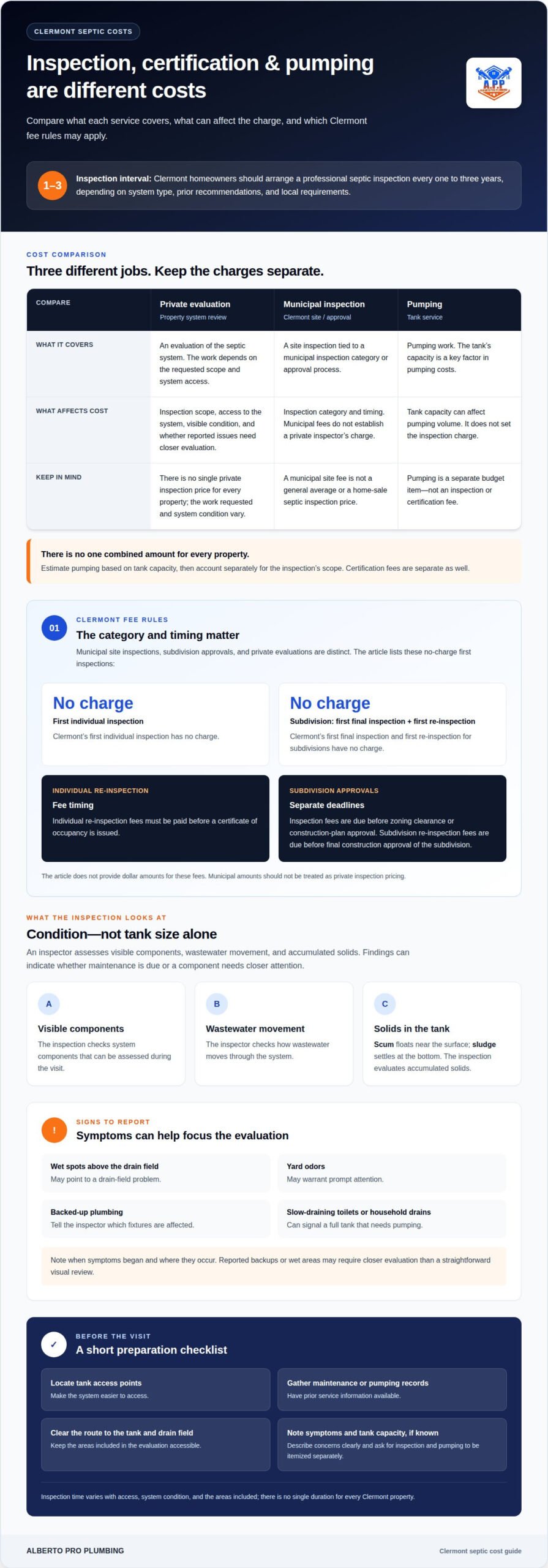
Clermont homeowners should arrange a professional septic inspection every one to three years, depending on system type, prior recommendations, and local requirements. Septic tank inspection cost in Clermont depends on the inspection’s scope, while tank size can affect related pumping costs. Certification and inspection fees are separate.
It’s reasonable to want a clear picture of the costs before scheduling, especially when an inspection may cover both the tank and drain field. This guide explains what can affect the total, how tank capacity relates to pumping costs, and which Clermont inspection fees may apply. You’ll also learn what inspectors assess, including system components and accumulated solids, so you can understand the work and plan your next step.
Key Takeaways
- Separate inspection and certification charges from pumping expenses so you can understand what each part of the work covers.
- Use tank capacity as a starting point when estimating pumping needs; the inspection itself focuses on system condition, not size alone.
- Learn which tank components and solids levels an inspection assesses, and how those findings can inform maintenance decisions.
- If septic concerns come with leaks, slow drains, or plumbing trouble, understand when plumbing services such as leak detection or drain cleaning may help.
Clermont septic inspection and certification
Clermont inspection costs depend on whether you need a private evaluation or municipal certification. Identify which service you need before comparing scope and fees.
For a home sale, distinguish a private septic evaluation from Clermont’s municipal inspection. These municipal fees don’t establish a private inspector’s charge, which depends on the evaluation’s scope and system access.
Certification fees also follow different rules for subdivisions. Clermont’s first final inspection and first re-inspection for subdivisions have no charge. Individual re-inspection fees must be paid before a certificate of occupancy is issued. This distinction matters when a property sale involves municipal approvals, rather than only a buyer-requested septic evaluation.
To find licensed septic inspectors serving Clermont, use Florida’s official health-department and licensing directories. Before scheduling, compare each inspector’s septic experience and written inspection scope. Clermont homeowners are advised to arrange professional septic inspections every one to three years, depending on system type, prior recommendations, and local requirements.
Warning Signs for Further Inspection
Look for wet spots above the drain field, yard odors, or backed-up plumbing. These signs may point to a drain-field problem and warrant prompt attention. Slow-draining toilets and household drains can also signal a full tank that needs pumping. Tell the inspector when symptoms began and which fixtures are affected; those details help focus the evaluation.
Inspection Timing and Homeowner Preparation
Inspection time varies with access, system condition, and the areas included, so there’s no single duration for every Clermont property. Before the visit, locate tank access points and gather maintenance or pumping records. Clear the route to the tank and drain field, then note any odors, wet areas, or backups. These steps help the inspector assess the system efficiently.
Routine septic inspections and septic cleaning help keep a septic system in good working order. Treat both as parts of ongoing system care, rather than relying only on a visit prompted by warning signs. Keeping them in view alongside inspection preparation supports attention to the system’s condition over time.
Costs by septic tank size
Tank capacity is a key factor in Clermont septic pumping costs. These figures cover pumping, not a separate inspection or certification fee. Septic tank inspection cost in Clermont is a separate budgeting consideration.
Inspection charges depend on the evaluation’s scope, access to the system, and its visible condition. A basic assessment and a closer investigation of reported issues involve different work. Tank size can affect pumping volume, while inspection tasks depend on what needs examining. Keep the charges distinct when estimating the total.
How much do septic tank pumping and inspection cost together in Clermont? Treat them as separate items: estimate pumping based on tank capacity, then account for the inspection’s scope. There isn’t one combined amount for every property. Septic tank inspection cost in Clermont and the pumping charge reflect different work.
These size-based figures help frame the pumping portion, but they don’t represent an inspection price or a full project total.
What affects septic inspection prices in Clermont? Key factors include the inspection’s scope, access to the tank and system, and conditions that require closer evaluation. Reported backups or wet areas may call for more attention than a straightforward visual review.
Before scheduling, note the tank capacity if known, and describe any symptoms clearly. Ask for inspection and pumping work to be itemized separately, so each charge is easy to understand. If an assessment points to drain-field trouble, explore septic drain field services as a next step.
Individual inspection fees
Clermont’s individual inspection fees depend on the inspection category and timing. The first individual inspection has no charge. These municipal amounts are distinct from private septic inspection charges and shouldn’t be treated as a home-sale inspection price.
These are site inspection fees, not a general average for inspecting a home’s septic system.
Are septic inspection fees different for conventional and aerobic systems? Clermont’s listed individual fees are based on inspection category, re-inspection, and timing, rather than a stated system-type distinction. The inspection work itself may differ because the systems have different components and operating arrangements.
Timing can therefore change the municipal fee, even when the inspection category stays the same.
What is the average septic tank inspection cost in Clermont, Florida? There is no single average that fits every private inspection, because the requested scope and system condition affect the work. Keep municipal amounts separate from private inspection pricing.
Before scheduling, identify whether you need a municipal site inspection, an individual re-inspection, or a private septic evaluation. Then note whether the appointment falls outside normal working hours. This distinction helps you understand which Clermont fee category applies and avoid treating a site fee as the cost of a septic inspection.
Subdivision inspection fees follow separate approval milestones: in Clermont, Florida, they’re due before a zoning clearance is issued or construction plans are approved. Subdivision re-inspection fees must be paid before final construction approval of the subdivision. These deadlines concern subdivision approvals, so keep them distinct from the individual and site inspection charges described above.
Inspection of tank components and solids
A septic inspection looks beyond tank capacity. The inspector assesses visible components, checks how wastewater moves through the system, and evaluates accumulated solids. Findings can show whether maintenance is due or a component needs closer attention.
Inside the tank, wastewater separates into layers. Scum floats near the surface, while sludge settles at the bottom. The clearer liquid between them flows toward the outlet. An inspector measures or assesses these layers to understand how much tank space solids occupy and whether pumping may be appropriate.
Access points matter, too. The inspector may examine the tank lid, inlet and outlet connections, and baffles that help direct wastewater. A damaged or displaced baffle can affect how solids move through the tank. If present, an effluent filter may also be checked for blockage or buildup.
Outside the tank, the inspection can include the visible path toward the drain field. Look for wet ground, unusual odors, or wastewater surfacing near the field. These observations don’t identify every underlying cause, but they can indicate where further evaluation may be needed. Share the location of any recurring wet spot or odor.
Ask for findings that identify each checked component and any observed concern. For example, a report noting sludge accumulation is more useful than a general recommendation to pump. Keep inspection notes with pumping records so future evaluations can track changes in solids and system condition.
Inspection findings don’t automatically mean a repair is necessary. The inspector’s observations, solids levels, and component condition help determine the next step. If the evaluation points to drain-field trouble, take action early. Arrange septic drain field service to address concerns affecting the field and system.
Alberto Pro Plumbing: Emergency Plumbing
Alberto Pro Plumbing can help when plumbing symptoms accompany septic concerns. Slow drains or backed-up fixtures may need drain cleaning, while unexplained water around plumbing may call for leak detection. For urgent leaks or other sudden plumbing problems, Emergency Plumbing provides a practical next step. These services address household plumbing issues, while inspection findings guide septic-system maintenance decisions.
Keep the inspection report handy when describing the problem. Note which fixtures are affected, where water appears, and whether the issue recurs. Clear details help connect plumbing symptoms to the right service. For broader pipe concerns, repiping may also be relevant.
Contact Alberto Pro Plumbing or visit albertoproplumbing.com to discuss your plumbing needs.
Take the Next Step With Confidence
Use your inspection findings to plan what happens next. A clear report can help you distinguish routine maintenance from a plumbing concern that needs attention, making it easier to act without guessing. Gather the findings and your questions before arranging service. That gives the conversation a practical starting point.
Septic tank inspection cost in Clermont is only one part of planning for a healthy home. If the findings coincide with a plumbing issue, Alberto Pro Plumbing offers Emergency Plumbing, Leak Detection, and Repiping for relevant household plumbing needs. These services are separate from municipal inspection or certification, so choose your next step based on what the report identifies.
For help with a plumbing concern, contact Alberto Pro Plumbing. A thoughtful next step can make the path forward clearer, and you can move ahead with confidence.
Frequently Asked Questions
Need septic service in Clermont?
Yes. Alberto Pro Plumbing serves Clermont with septic drain field services and 24/7 emergency plumbing services. Its plumbers are licensed and insured. For example, if septic concerns coincide with a sudden leak or sewer-line problem, describe both issues when arranging help. That distinction helps clarify whether you need plumbing assistance, drain-field work, or separate inspection and certification steps.
What is included in a standard septic system inspection?
A standard inspection commonly assesses the tank, its accessible components, solids, and visible drain-field conditions. Written findings are just as useful as the on-site review: ask for observed issues, inaccessible areas, and recommended next steps to be clearly distinguished. Also clarify whether pumping is included in the scheduled work, since an inspection and tank pumping are separate tasks.
Do Lake County or Clermont require septic inspections or permits when selling a home?
Don’t assume a home sale and a municipal inspection are the same process. Clermont has specific inspection and certification procedures tied to site, subdivision, and occupancy approvals; septic pumping in most of Clermont typically requires a permit. A buyer-requested evaluation is a separate consideration. For a Lake County property, distinguish the municipal process from the sale evaluation and the work being performed.