
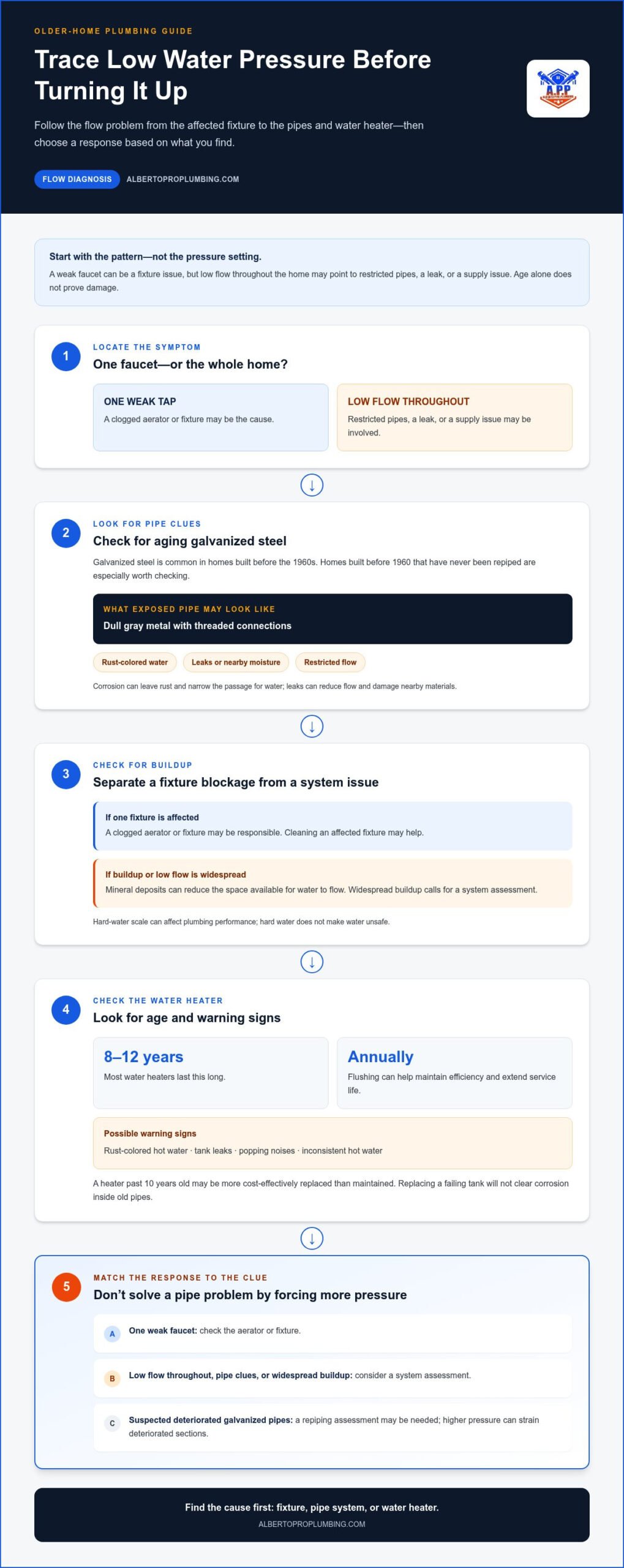
A weak faucet isn’t always just a faulty fixture; the pipes behind the wall may be restricting flow. One of the plumbing problems in older Florida homes is aging galvanized steel plumbing. Homes built before 1960 that have never been repiped are especially worth checking, and exposed galvanized pipes typically look like dull gray metal with threaded connections.
It’s easy to focus on the obvious symptom, such as low pressure or a dripping tap, but the cause may lie elsewhere in the system. Knowing what to look for can help you decide whether a fixture needs attention or the plumbing needs a closer assessment.
This guide explains how to recognize galvanized pipes, understand pressure changes, plan sewer inspections, and avoid habits that can worsen drain problems. You’ll also learn how faulty shut-off valves and running toilets affect older homes, so you can spot concerns early and know when a professional plumbing assessment may help.
Key Takeaways
- Pressure trouble can come from more than aging pipes. Rust-colored water, tank leaks, popping noises, or inconsistent hot water may point to a water heater that needs attention.
- For original sewer lines over 30 years old, a camera inspection roughly every one to two years can help reveal deterioration before it causes a backup.
- Slab leaks can stay hidden beneath concrete, so pay attention to unexplained moisture or other signs of a leak before damage spreads.
- Test older shut-off valves carefully and don’t ignore a running toilet; a single one can waste thousands of gallons of water a month.
Can I add water pressure to a home with old pipes?
Permit requirements for repiping or sewer repairs depend on the project and local jurisdiction, so determine the applicable requirements before work begins. Older Florida homes can face greater risks from corrosion, mineral buildup, and tree-root intrusion, but age alone doesn’t prove damage.
Corrosion, Rust, and Pipe Leaks
Corrosion gradually eats away at metal pipes, leaving rust and narrowing the passage for water. Galvanized steel was standard plumbing material during the 20th century, and it’s common in homes built before the 1960s. Rust-colored water, leaks, or moisture near pipes can signal deterioration. Restricted pipes may reduce water pressure, while leaks can lower flow and damage nearby materials.
Mineral Buildup and Low Water Pressure
Mineral deposits can build up inside pipes and fixtures, reducing the space available for water to flow. The U.S. Department of Energy identifies hard-water sediment as a primary reason older tank water heaters lose efficiency and fail earlier than expected. Hard water doesn’t make water unsafe, but scale can affect plumbing performance. Cleaning an affected fixture may help, while widespread buildup calls for a system assessment.
Before trying to increase water pressure, note whether the problem affects one faucet or the whole home. A single weak tap may have a clogged aerator or fixture, while low flow throughout the house can point to restricted pipes, a leak, or a supply issue. Galvanized pipes may need a repiping assessment rather than higher pressure, which can strain deteriorated sections.
Check the water heater as well. Most water heaters last 8 to 12 years, and annual flushing can help maintain efficiency and extend service life. Rust-colored hot water, tank leaks, popping noises, or inconsistent hot water are possible warning signs. A heater past 10 years old may be more cost-effectively replaced than maintained. Water heater replacement can address a failing tank, but it won’t clear corrosion inside old pipes.
How often should older homes get a sewer line inspection?
Homes with original sewer lines over 30 years old can benefit from a camera inspection roughly every one to two years. In Clermont, recurring drainage symptoms and older pipe materials are useful reasons to assess the line’s condition.
Aging Sewer Materials and Root Intrusion
Older sewer materials can corrode, crack, or separate at joints, leaving openings for tree roots to enter. Cast iron drain lines can corrode internally over time, while roots can exploit gaps and obstruct wastewater flow. The concern for homeowners is a gradual restriction that develops into repeated clogs, backups, or line failure. A camera inspection can show the pipe’s interior condition.
Shifting Sandy Soil and Sewer Lines
Movement or settling in sandy soil can put stress on buried sewer lines and their joints. If a section shifts, wastewater may drain poorly, and a joint may separate or crack. The damage can also create an entry point for roots. In Clermont, note any drainage changes alongside ground settling near the route of a buried line, then share those observations during an inspection.
Signs of Sewer-Line Problems
Several slow drains, bubbling toilets, backups, and foul drain odors can point to a shared sewer-line problem. Soggy areas in the yard may also signal an underground leak. Sewer stoppages in Florida can result from grease buildup, root intrusion, scaling, or collapsed sections. When several fixtures show symptoms at once, consider the main line rather than treating each drain as an unrelated clog.
Buyers evaluating an older home should ask about sewer-line age and material, note repeat drainage issues, and look for yard moisture or persistent odors. Homes with original sewer lines over 30 years old can benefit from camera inspection roughly every one to two years. A history of recurring symptoms makes inspection especially relevant. If drainage problems continue, a professional sewer-line assessment can help identify the affected section and clarify the next step.
What is the biggest plumbing mistake homeowners in older homes make?
A common mistake is dismissing a small leak because water damage isn’t visible yet. Hidden leaks beneath slab foundations or inside aging plumbing systems can worsen before obvious signs appear.
Slab Leaks and Plumbing Damage
A slab leak is an underground plumbing leak beneath a home’s concrete foundation. In Clermont homes built on slabs, a leak can stay hidden while moisture spreads below floors or behind walls. Watch for unexplained damp areas, persistent moisture, or water damage without an obvious source. A timely leak assessment can help locate the problem and determine whether it needs a repair or broader pipe work.
Leaks, Mold, and Mildew
Leaks keep building materials damp, creating conditions that can encourage mold and mildew. A slow drip under a sink or a hidden slab leak can affect enclosed spaces before stains appear. Repair plumbing leaks promptly, then improve ventilation in high-moisture areas such as bathrooms and laundry spaces. These steps can help reduce the chance of mold developing in Florida homes.
Polybutylene Pipe Leaks
Polybutylene is a plastic pipe material that can deteriorate with age and become prone to leaks. It was widely installed in homes built from roughly 1978 to 1995. Exposed pipes may appear as gray plastic tubing, about half an inch to one inch in diameter. If you spot it near a water heater or in a utility area, note its location and watch for dampness, staining, or recurring leaks.
Leaks and Burst Pipes
Aging pipes can leak at joints or weakened sections, and a sudden rupture can release water into walls, cabinets, or floors. In homes aged 30-50 years, cast iron deterioration and slab leaks are common concerns. Don’t treat repeated leaks as isolated repairs without considering the wider plumbing system. Track where leaks occur, including near galvanized pipes, fixtures, and water heaters, and address active water damage promptly.
Inefficient or faulty plumbing fixtures
Fixtures can cause common plumbing problems even when the main pipes remain intact. A dripping faucet, weak shower flow, or toilet that keeps running may point to a worn part rather than a sewer line concern. In Florida homes aged 0-15 years, fixture wear and supply line leaks are common plumbing concerns. Check each fixture separately and note whether the problem is sudden or has gradually worsened.
Shut-off valves deserve close attention in older homes. Original compression-style valves from the 1960s through the 1980s are particularly prone to failure. Corrosion can seize a valve, making it difficult to stop water during a leak or fixture repair. Look beneath sinks and behind toilets for rust, moisture, or mineral deposits. If a valve won’t turn easily, forcing it can create another problem; have it assessed before an urgent repair.
A running toilet is more than an irritating sound. A single running toilet can waste thousands of gallons of water a month. Check whether the sound continues after flushing, then inspect the tank for a flapper that doesn’t seal or a float that doesn’t stop filling. For faucets and showerheads, cleaning removable aerators can clear debris or mineral buildup. If low flow continues across several fixtures, the cause may involve the water supply or pipes instead.
Match the inspection to the symptom. A camera inspection examines drain or sewer lines, not a faulty faucet or shut-off valve. Repeated clogs point to a drain problem; a leak at a fixture points to its connections, valve, or supply line. Track which fixtures are affected and where moisture appears. Those details help distinguish a local repair from a wider plumbing concern.
For worn or leaking fixtures, arrange professional fixture installation to replace the problem safely and restore reliable use.
Alberto Pro Plumbing: Emergency Plumbing
Alberto Pro Plumbing can help when a leak, recurring drain blockage, or failing pipe needs professional attention. Its Emergency Plumbing service addresses urgent plumbing issues, while Leak Detection helps locate hidden leaks before moisture causes further damage. Repiping may be appropriate when corrosion affects multiple sections of an older plumbing system, rather than one isolated fixture.
For repeated clogs, Drain Cleaning can address buildup that restricts flow. Keep track of where leaks appear, which drains back up, and whether pressure changes affect one fixture or the whole home. These details help clarify the problem and the right next step.
For help with an urgent plumbing problem or an older system that needs assessment, contact Alberto Pro Plumbing or visit albertoproplumbing.com.
Make a Confident Plan for Your Home
Older plumbing doesn’t need to become a constant worry. Use what you’ve noticed to set a clear next step: record recurring symptoms, keep inspection findings with your home documents, and address new leaks before moisture spreads. This record can help you distinguish a one-time fixture issue from a pattern that deserves a closer look.
Some plumbing problems in older Florida homes call for targeted repair; others may point to broader pipe deterioration. Alberto Pro Plumbing offers Leak Detection to locate hidden leaks, Repiping for aging pipe systems, and Emergency Plumbing for urgent problems. The right response starts with understanding what’s happening in your home and which part of the plumbing system is affected.
Don’t let uncertainty keep you from acting on a concern. Contact Alberto Pro Plumbing for help with a leak, failing pipes, or an urgent plumbing issue. A clear next step can help you protect your home and feel more confident about its plumbing.
Frequently Asked Questions
How do I know if my home has galvanized pipes?
Look for exposed, dull gray metal pipes with threaded connections, especially near a water heater, laundry area, or under a sink. Rust-colored water or corrosion around joints can offer additional clues. Visible sections may not show what runs inside walls, so note where the pipes appear and whether symptoms affect nearby fixtures. A plumbing inspection can help identify concealed sections and distinguish pipe materials.
At what age should I consider repiping an older home?
Consider a repiping assessment when original galvanized plumbing is more than 50 years old and symptoms appear. Low pressure throughout the home, recurring leaks, or rust-colored water can point to system-wide deterioration rather than one faulty fixture. Age alone doesn’t establish that every pipe needs replacement. The material, visible condition, leak history, and whether problems occur in separate areas all help determine the scope.
Can I repipe just part of my house instead of the whole system?
A partial repipe can address a specific affected section when the rest of the system remains serviceable. For example, a damaged branch supplying one bathroom may be replaced without removing every pipe in the house. The decision depends on how the affected section connects to existing pipes and whether other areas show corrosion or leaks. Repeated failures in separate locations can make a broader assessment useful.
Do plumbing inspections help prevent major damage?
Inspections can reveal developing leaks, corrosion, or restricted flow before those issues cause more extensive damage. A homeowner might schedule one after finding recurring moisture beneath a cabinet or noticing several fixtures losing flow. Camera inspections can examine sewer lines from inside, while checks of visible plumbing focus on accessible pipes and connections. The findings help prioritize repairs based on the problem’s location and condition.
How long do cast iron pipes last in Florida?
Cast iron drain lines have a stated service life of around 50 years. In Clermont, use the line’s age as a reason to consider its condition, not as a guarantee that it will fail at a specific time. Recurring drainage trouble, backups, or odors can signal deterioration. A sewer camera inspection can reveal internal wear that isn’t visible from inside the home.
What plumbing problems are common in older Florida homes?
Common plumbing problems in older Florida homes include corroded galvanized pipes, leaks from aging polybutylene, deteriorating cast iron drains, slab leaks, and faulty fixtures or shut-off valves. In Clermont, Florida, track whether symptoms affect one fixture or several, and record where moisture or backups occur. Alberto Pro Plumbing’s plumbers are licensed and insured, and those details can help them assess the plumbing concern.