
The lower-cost tankless option in Clermont may be the one your home is already equipped to support. Electric units often cost less than gas units, but the price to install a tankless water heater in Clermont also depends on whether the home needs electrical, gas-line, or venting upgrades. A lower equipment cost doesn’t necessarily mean a lower total installation cost.
It’s reasonable to want a clear comparison before choosing a system. The final installation price depends on your home and the project scope. Equipment type, existing connections, venting, and required upgrades can all affect the total. This article explains how gas and electric options compare, what an estimate may cover, and which additional work can change the scope. You’ll also learn how to review an itemized estimate and identify what’s included or listed separately.
Key Takeaways
- Compare gas and electric systems by looking beyond equipment cost: your home’s existing utilities and the work needed to support the unit affect the overall project.
- Use itemized estimates to see how equipment, labor, and project scope are accounted for, then compare proposals on the same basis.
- Separate included work from potential extras, such as taxes, permits, inspections, or upgrades, so you can better understand the final estimate.
- Gas-line capacity and venting requirements can change the scope of a gas installation; Alberto Pro Plumbing also handles water heater installation and related plumbing needs.
1. National tankless installation cost estimates
Equipment and installation costs vary because each home and project is different. Electric units generally have lower equipment costs than natural gas or propane models. Condensing gas units can cost more than standard gas models. Fuel type, capacity, and design all affect the equipment cost.
Compared with a traditional tank, tankless installation may cost more when the home needs utility upgrades. Operating costs depend on fuel rates, hot-water demand, and how the system is used. Compare the installation scope and your household’s expected usage, rather than choosing by equipment price alone.
In Clermont, the total depends on the selected unit, its capacity, labor, and your home’s existing connections. No single average reflects every project. Equipment, labor, utility changes, and venting all shape the estimate. When comparing estimates, check what each includes for equipment and labor.
Clermont installations must follow applicable local requirements and the manufacturer’s instructions. Permit and inspection requirements vary by jurisdiction and the work involved. Gas, venting, and high-voltage electrical work must meet the selected unit’s installation requirements.
Replacing a tank heater with a tankless unit can involve more than swapping equipment. The estimate depends on whether the existing water, fuel, electrical, and vent connections suit the new system. Changes to those connections affect the project scope.
Installation involves removing the existing heater, positioning the tankless unit, and connecting the required utilities. The installer then follows the manufacturer’s instructions and tests the completed system. The project duration depends on the work involved, including any connection changes.
Common installation challenges include insufficient gas capacity, incorrectly sized lines, and a vent path that doesn’t suit the unit. Gas models also require attention to combustion air, vent termination, and condensate needs. Whole-home electric models may require multiple dedicated circuits and substantial electrical capacity.
2. Comparing itemized contractor estimates
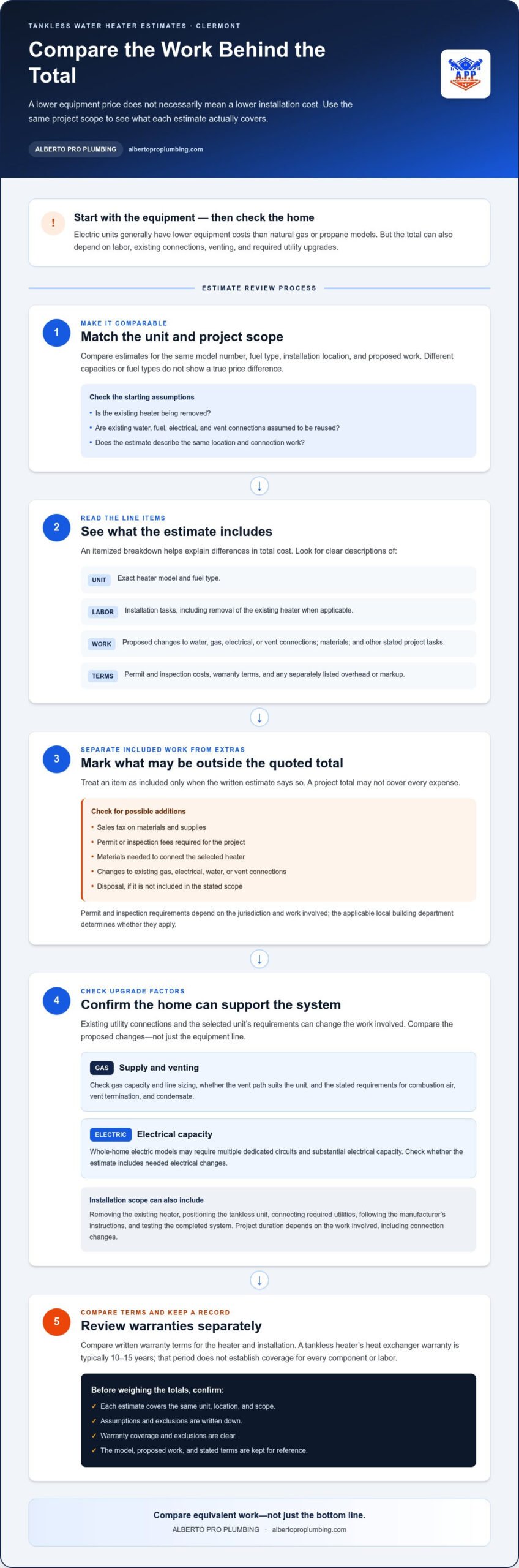
Compare itemized estimates using the same model, location, and project scope. This makes it easier to see differences in labor, equipment, and proposed work. A lower total may reflect a narrower scope, so review each line before deciding.
Clermont-area plumbing contractors that install tankless systems can provide project estimates. Compare written warranty terms separately for the heater and installation. A tankless heater’s heat exchanger warranty is typically 10-15 years, but that period does not establish the coverage for every component or labor.
Look for clear descriptions of these estimate details:
- The exact heater model and fuel type.
- Labor and installation tasks, including removal of the existing heater if applicable.
- Any proposed changes to water, gas, electrical, or vent connections.
- Whether permit, inspection, and material costs appear in the estimate.
- Warranty terms, including what parts and work they cover.
Use the model number to compare like with like. Estimates for different capacities or fuel types don’t show a true price difference. Check that each proposal describes the same installation location and connection work. If one includes a gas-line change and another doesn’t, they cover different projects.
Ask for an itemized breakdown rather than just a project total. Identify whether general contractor overhead and markup are listed separately. Note any assumptions, such as reusing existing connections. These details explain why totals differ and help prevent you from assuming an unlisted item is included.
Before choosing, make sure each estimate covers the same scope, then compare warranty coverage and exclusions. Keep a copy of the model, proposed work, and stated terms. This record helps clarify what the estimate covers and what may change if the installation plan changes.
3. Excluded costs and additional charges
An installation estimate may show a project total without covering every expense. Check the written scope for sales tax on materials and supplies. Also look for permit or inspection fees, which may be separate from the quoted work. These exclusions can make totals appear different even when the listed installation tasks are similar.
Start with the estimate’s assumptions. If it lists a heater and installation labor, check whether the total also includes required materials, disposal, and connection changes. Treat an item as included only when the estimate says so. For example, a proposal that excludes permit fees doesn’t cover the same complete project as one that includes them.
Permit and inspection requirements in Clermont depend on the jurisdiction and work involved. The applicable local building department determines whether they apply to a particular installation. Identify these fees separately when comparing estimates, since they may be excluded.
Review these potential additions before comparing final totals:
- Sales tax applied to materials and supplies.
- Permit or inspection fees required for the project.
- Materials needed to connect the selected heater.
- Changes to existing gas, electrical, water, or vent connections.
Separate required project costs from optional work. If a proposal includes connection changes, compare the specific tasks with the scope in another estimate. A line that says “installation” may not explain which materials or adjustments it covers. Ask for the work to be itemized in writing so you can compare equivalent scopes.
Keep the heater model and installation location consistent across estimates. Then note each listed exclusion beside the relevant proposal. If one estimate omits sales tax and another lists it, compare the underlying work before weighing the totals. This review clarifies what may remain payable beyond the quoted scope and helps you avoid mistaking an excluded charge for included work.
4. Gas supply and venting upgrades
A gas tankless system may need changes beyond connecting the new heater. Existing gas piping, meter capacity, and vent route all affect the installation scope. A qualified professional should match these details to the exact model, helping identify necessary upgrades before work begins.
Gas demand matters. The installer assesses gas capacity and line sizing against the heater’s requirements. A line that served an older tank may not suit the new unit. Meter capacity also matters, especially when other gas appliances share the supply. Any proposed changes should be clearly listed in the project scope.
Venting has its own requirements. The installer evaluates the vent path, termination point, combustion air, and condensate needs. For example, one tankless gas heater model requires a 3-inch vent connection at the unit. That example is model-specific, so it shouldn’t be assumed to fit every system.
- Confirm the selected model’s gas capacity and line-sizing requirements.
- Assess the gas meter alongside other appliances using the supply.
- Plan a compatible vent path and termination for the unit.
- Account for combustion air and condensate requirements in the installation scope.
Ask for the estimate to distinguish existing connections from proposed changes. This helps show whether gas-line or vent work is included in the project. Gas or venting work must follow the manufacturer’s instructions and applicable local requirements. Installation details must suit the equipment, not just the previous heater’s layout.
For a gas system, have the model requirements and home connections assessed together before installation. Explore tankless water heater installation for help planning the plumbing work and connection needs.
Alberto Pro Plumbing: Emergency Plumbing
Alberto Pro Plumbing helps when a plumbing problem disrupts your home or water-heater plans. Its services include leak detection and pipe repairs for leaks or other pipe issues. Repiping addresses broader piping needs, while drain cleaning helps with clogged drains.
For an urgent plumbing problem, explain what’s happening and where you see the issue. Clear details help identify the relevant service. For example, mention whether water is leaking near the heater or a drain is backing up.
Contact Alberto Pro Plumbing to discuss your plumbing needs.
Plan Your Next Step With Confidence
Use your estimate as a planning tool, not just a final number. Before arranging tankless water heater installation, gather details about your current heater, preferred fuel type, and any changes already identified for your home. This keeps the project discussion focused on your priorities and the work your property needs.
If you’re weighing the price to install a tankless water heater in Clermont, focus on getting a clear scope tailored to your home. A well-defined plan helps you make a considered choice without treating the lowest initial figure as the only measure of value. Alberto Pro Plumbing provides water heater installation alongside emergency plumbing, leak detection, and repiping.
Contact Alberto Pro Plumbing today to discuss your water-heater plans and take a confident next step.
Frequently Asked Questions
Is gas or electric tankless installation cheaper?
Electric models often have lower equipment costs, but that doesn’t guarantee a cheaper completed installation. A whole-home electric system may need added electrical capacity, while a gas model’s total depends on whether its fuel supply and venting suit the selected unit. Compare each system with your home’s existing setup and hot-water needs, not equipment type alone.
What Is Included in an Installation Quote?
An installation quote should identify the heater and specific work covered, rather than simply state a project total. Check whether it lists equipment, labor, connection materials, removal of the old unit, and changes to existing utilities. A quote may describe installation but leave disposal or connection adjustments outside its scope. Clear boundaries help you understand what the quoted work includes.
How much does tankless water heater installation cost in Lake County, Florida, by fuel type?
There isn’t one reliable Lake County total for each fuel type because installation scope varies by home. Electric equipment may cost less, while a gas setup may need compatible supply and vent connections. The price to install a tankless water heater in Clermont depends on the model, labor, and home-specific work. Compare estimates for the same unit and scope.
What extra costs apply for gas line, electrical, venting, or plumbing upgrades for tankless installation?
Additional work may be needed when existing connections don’t meet the selected heater’s requirements. A gas installation may need supply or vent adjustments, while an electric model may require added circuit capacity. Plumbing changes may also be necessary if the unit’s location or connections need alteration. Start by comparing the model’s requirements with your home’s existing utility connections.
What factors affect tankless water heater installation prices in Clermont homes?
Unit capacity, fuel type, household demand, and existing connections all shape the project. Sizing should account for simultaneous hot-water use and the required temperature rise. For example, a typical home with two to three bathrooms may need a 6-8 GPM unit. Alberto Pro Plumbing provides water heater installation, and its plumbers are licensed and insured.
How do tankless and traditional water heater installation and operating costs compare in Florida?
Tankless installation may cost more than replacing a traditional tank when utility upgrades are needed. Operating costs depend on fuel rates, hot-water demand, and system use.