
A booster pump may seem like the obvious answer when your shower sputters and faucets barely flow. But adding equipment before finding the cause can leave the real problem untouched. For low water pressure repair Clermont homeowners need, start with diagnosis, not guesswork. Weak flow can come from a clogged fixture, a leak, restricted or corroded pipes, a pressure regulator, or an issue with the water supply.
It’s frustrating when pressure varies from one fixture to another or you’re unsure whether a pump will help. A booster pump can be useful in some situations, but it isn’t right for every home. The first step is to find where the pressure drops and determine whether the issue is isolated to a fixture, within the home’s plumbing, or related to the supply.
This guide explains what to check first, when a booster pump may be appropriate, and why the cause should be confirmed before equipment is installed. Alberto Pro Plumbing serves Clermont homeowners with plumbing repairs and leak investigation, helping you choose a practical fix based on the symptoms and the plumbing assessment.
Key Takeaways
- Check whether weak flow affects one fixture or several, and note when it happens to help narrow down the source.
- Leaks, pipe restrictions, valve problems, and supply conditions can all contribute to low pressure. Symptoms alone may not identify the cause.
- A booster pump may help in some situations, but it won’t correct every plumbing or supply issue.
- For low water pressure repair Clermont homeowners should begin with an inspection and pressure measurements considered in the context of the home’s plumbing.
- Alberto Pro Plumbing can investigate local plumbing issues and help guide a practical repair before you decide on new equipment.
Low Water Pressure Repair in Clermont: Start by Identifying the Symptoms
Low water pressure means water reaches a fixture with less force than expected. Pressure and flow are related, but they’re not the same: pressure describes the force pushing water through the pipes, while flow is the amount coming out over time. A clogged aerator can reduce flow at one faucet even if pressure elsewhere is normal. For a basic explanation of the physics behind understanding water pressure, pressure is force applied over an area.
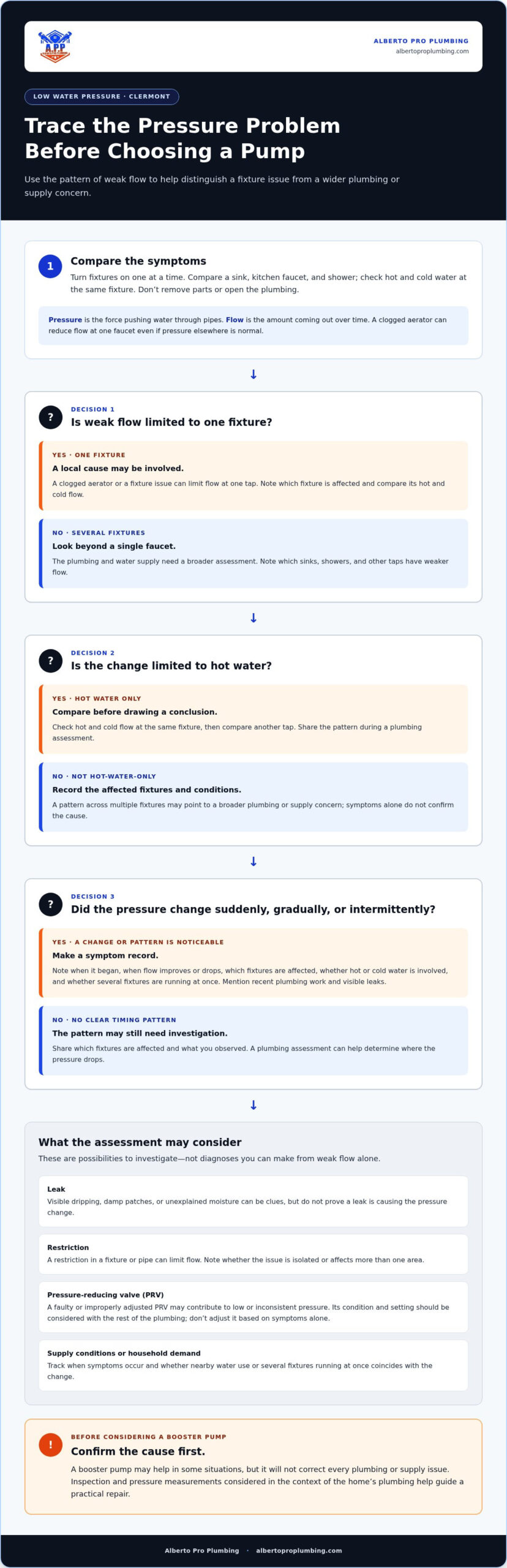
Begin with what you can observe. Check whether the issue affects one tap or several, whether hot water behaves differently from cold, and whether the change appeared suddenly or developed gradually. These clues can help distinguish a fixture problem from a broader plumbing or supply concern. They also give a plumber a clearer starting point for low water pressure repair in Clermont, without requiring you to take apart plumbing or guess at a fix.
- Several fixtures: Note whether sinks, showers, and other taps have weaker flow.
- Hot water only: Compare hot and cold flow at the same fixture, then check another tap.
- Sudden change: Record when it began and whether it affects the whole home.
- Intermittent flow: Track when pressure improves or drops, including which fixtures are in use.
Is the pressure problem limited to one faucet or throughout the home?
Compare a few fixtures, such as a bathroom sink, kitchen faucet, and shower. Turn them on one at a time and compare hot and cold water, without removing parts or opening the plumbing. If only one fixture seems weak, the cause may be local, such as a clogged aerator or a fixture issue. If several fixtures are affected, the plumbing and water supply need a broader assessment.
What changed before the water pressure dropped?
Consider whether the change was sudden, gradual, or intermittent. Note recent plumbing work, visible leaks, and unusual water use, such as several fixtures running at once. Write down which fixtures are affected, whether hot or cold water is involved, and when you notice the change. These observations help a plumber understand the pattern and decide what to investigate next.
When and where the symptoms occur can help distinguish a fixture-level issue from a wider pressure problem. A single weak tap and a sudden drop at several fixtures are different patterns, even if both feel like “low pressure.” Share those details rather than relying on a general description. They can help focus the inspection on the right part of the system.
If you notice water where it shouldn’t be, or pressure changes sharply across the home, don’t dismiss the pattern. A plumbing assessment can help determine whether the next step involves a fixture, leak investigation, or wider system check. Starting with the symptoms helps avoid choosing equipment before the cause is understood.
What Causes Low Water Pressure in Clermont Homes?
A weak shower or slow-filling sink is a symptom, not a diagnosis. The cause might be within one fixture, somewhere in the home’s plumbing, or on the water-supply side. A plumber considers the pattern and inspects the system before recommending a repair. Similar pressure symptoms can have different causes and require different solutions.
Possible causes include a leak, buildup or another restriction in a pipe, a valve problem, or changing supply conditions. These are possibilities to investigate, not conclusions you can draw from low flow alone. Note where and when the problem occurs, then share those details during an assessment for low water pressure repair in Clermont.
Could a leak, blockage, or valve issue be responsible?
A damp patch, unexplained moisture, or visible dripping can be a clue to a leak, but it doesn’t prove that the leak is causing the pressure change. Household demand can also affect flow temporarily, such as when several fixtures are being used at once. A plumber can investigate whether water is escaping or whether normal use better explains the pattern.
A restriction in a fixture or pipe can limit flow. A pressure-reducing valve (PRV) controls incoming pressure; if it’s faulty or improperly adjusted, it may contribute to pressure that seems too low or inconsistent. Don’t adjust the valve based on symptoms alone. Its condition and setting should be considered alongside the rest of the plumbing.
When might the water supply or pressure vary?
If several fixtures are affected, the investigation may need to look beyond any one faucet and consider the home’s supply conditions. Note whether symptoms change at certain times or when nearby water use increases. The timing can help distinguish a recurring supply pattern from a problem inside the home. Water-system context matters; the American Water Works Association offers information about water industry standards and practices.
- Possible leak: Record visible drips, damp areas, or moisture with no clear explanation.
- Possible restriction: Note whether the issue is isolated to one fixture or affects more than one area.
- Possible valve issue: Mention pressure that feels consistently unusual or changes across multiple fixtures.
- Possible supply variation: Track the time of day and whether nearby water use seems to coincide with the change.
These observations help guide the next steps, but they can’t confirm a cause on their own. A plumbing professional can assess the symptoms, inspect for leaks or restrictions, and determine whether a valve or supply condition may be involved. Utility information and applicable local requirements should be considered during the investigation rather than assumed from the symptoms.
If weak pressure persists or you suspect a leak, Clermont plumbing and leak investigation can help determine what needs attention before you commit to equipment or a repair.
Booster Pump Installation vs. Other Low-Pressure Repairs
A booster pump can increase pressure in a plumbing system, but it isn’t a universal fix for weak flow. If a leak, restriction, or faulty valve is reducing pressure, adding equipment may leave the underlying problem unresolved. A sound decision starts with an assessment of the existing system, including where pressure drops and whether the incoming supply is the limiting factor.
Repairs and equipment address different conditions. A targeted repair corrects a fault in the plumbing. A booster pump may be worth considering when measurements show that supply conditions call for additional pressure and the home’s plumbing can support the proposed setup. Neither choice should be based on one weak shower or a generic pressure number.
When is a water pressure booster pump worth considering?
Consider a booster only after measurements indicate that supply conditions are contributing to the problem. The assessment should account for pressure at relevant points, the home’s plumbing layout, and the water demand the system needs to serve. Minimum pressure criteria and pump sizing depend on technical requirements that should be verified for the specific system, not assumed from a general rule.
Pump selection depends on measured conditions and the suitability of the home’s plumbing system. A plumber can use that information to determine whether a booster is a reasonable option or whether another repair is more appropriate.
When is another plumbing repair the better first step?
If a leak is suspected, a pipe or fixture may be restricted, or a pressure-reducing valve may be malfunctioning, investigate that condition before adding a pump. Correcting the source may address the symptoms without introducing equipment that doesn’t solve the underlying issue. The right repair depends on inspection and measurements, not just how weak the flow feels.
Pipe condition deserves attention when restrictions appear to affect multiple fixtures or persist across the home. If the plumbing itself may be involved, repiping can be assessed as a possible solution. The Whole Home Repipe in Clermont, FL: The 2026 Homeowner’s Guide explores factors involved in evaluating that option.
As you weigh the possibilities, keep the decision tied to evidence:
- Repair the existing system when inspection points to a leak, restriction, valve fault, or another correctable plumbing issue.
- Consider a booster pump when measured supply conditions support it and the home’s system is suitable for the equipment.
- Assess pipe condition when symptoms suggest a broader restriction or aging plumbing may be involved.
For low water pressure repair Clermont homeowners should avoid treating a booster as the default answer. A professional diagnosis can distinguish a supply-side concern from a plumbing fault and guide a repair that fits the actual conditions. Alberto Pro Plumbing provides plumbing support and repiping for Clermont homes, helping identify the cause before settling on a solution.
How to Evaluate Water Pressure Booster Pump Installation
Consider a booster pump only after the pressure problem has been documented and assessed. Measurements are useful, but a reading alone doesn’t tell the whole story. Its meaning depends on where and when it was taken, how the home is supplied, and how the existing plumbing performs during use. A careful process can distinguish a supply concern from a problem that needs repair elsewhere in the system.
- Document the symptoms. Record which fixtures are affected, whether hot and cold water differ, and when pressure changes. Include recent plumbing work or unusual water use.
- Inspect accessible plumbing. Look for visible leaks and note the location and condition of accessible valves and fixtures. Don’t dismantle pipes or adjust a pressure-reducing valve.
- Measure pressure in context. A plumber can compare readings at relevant points and consider whether the pattern changes as water is used.
- Diagnose the cause. Assess whether the evidence points to the supply, a valve, a restriction, a leak, or another plumbing condition.
- Select a repair. Choose a targeted repair or consider a booster pump only if the findings support it and the system is suitable.
What should a professional assess before recommending a pump?
A professional assessment considers pressure patterns alongside the incoming supply, existing valves, and fixtures where symptoms appear. The plumber can inspect accessible plumbing components and compare conditions across the home rather than relying on one reading. Before installation details are specified, applicable code, local requirements, and any backflow-protection requirements need to be verified for the property and proposed setup.
This context matters. A measurement taken at one fixture may not represent conditions elsewhere, and a pressure change during water use can tell a different story from a steady low reading. The assessment should connect the measurements to the property’s layout and plumbing, then explain why a pump or another repair fits the findings.
What should homeowners expect during installation planning?
Planning depends on the home’s layout, available access, the proposed equipment location, and how it can connect to the existing plumbing. Share your symptom notes, including timing and affected fixtures, along with any recent plumbing changes. These details help shape the assessment. The work plan should address system compatibility and verified installation requirements rather than assume one arrangement fits every home.
If the assessment uncovers broader plumbing concerns, the next step may involve repairs beyond a pump. A repipe or other system work should be evaluated on its own merits; the Professional Plumbing Services in Clermont, FL: The 2026 Homeowner’s Guide can provide broader context for plumbing needs.
For low water pressure repair Clermont homeowners can rely on a diagnosis grounded in the home’s actual conditions. Alberto Pro Plumbing serves Clermont and Central Florida with plumbing support and leak investigation. Schedule a plumbing assessment to discuss the symptoms and determine a practical next step.
Get Low Water Pressure Repair in Clermont from Alberto Pro Plumbing
A booster pump is the right answer only when the diagnosis supports it. Weak flow can come from a fixture, a leak, a valve, restricted pipes, or supply conditions, and each calls for a different response. Alberto Pro Plumbing serves Clermont and Central Florida, helping homeowners investigate plumbing problems and choose a repair based on what the system shows.
What happens when you request help for low water pressure?
Describe which fixtures are affected, whether hot or cold water is involved, and when you first noticed the change. Mention whether the symptoms are constant or intermittent, along with any recent plumbing work or visible signs of a leak. Those details help focus the assessment. A plumber can inspect the relevant plumbing and recommend a repair based on the observed issue instead of assuming a pump will solve it.
Depending on the findings, the next step may involve leak detection, a plumbing repair, or repiping if the pipe condition warrants further assessment. If pressure dropped suddenly alongside an urgent plumbing problem, Alberto Pro Plumbing provides emergency plumbing response. For persistent weak flow without an immediate leak, a planned assessment can help you avoid choosing equipment before the cause is understood.
When should you seek prompt plumbing assistance?
Act promptly if low pressure appears with an active leak, visible water damage, or a sudden change affecting multiple fixtures. Water escaping from a pipe can cause damage even if the pressure issue seems manageable. Avoid adjusting unfamiliar valves or pump equipment yourself. Changing a setting without understanding the system may complicate the diagnosis or fail to address the cause.
Alberto Pro Plumbing responds to urgent plumbing issues around the clock and serves residential and commercial customers in Clermont and across Central Florida. If the problem is urgent, describe the active leak or sudden system change when requesting help. For ongoing weak flow, share your symptom notes and arrange an assessment before deciding whether a booster pump belongs in the repair plan.
Good information makes the first conversation more useful. Before reaching out, note the affected fixtures, whether hot and cold water behave differently, when symptoms occur, and any recent plumbing changes. You don’t need to diagnose the problem yourself. A plumber can use those details to assess the system, investigate possible leaks or other plumbing issues, and recommend a practical next step.
For low water pressure repair Clermont homeowners can turn to Alberto Pro Plumbing for local plumbing help grounded in a professional diagnosis. Contact Alberto Pro Plumbing for local plumbing help and explain what you’ve noticed. Those observations can help guide the conversation toward the repair your home needs.
Take the Next Step With Confidence
You don’t need to identify the fault or choose equipment before asking for help. Gather what you’ve noticed and let a plumbing professional assess the system. That gives the conversation a practical starting point and helps ensure a pump is considered based on the home’s needs, not as a guess.
If weak flow is disrupting everyday routines, a plumbing assessment can help identify the cause and appropriate next step. Alberto Pro Plumbing serves Clermont and Central Florida, with a 24/7 response for urgent plumbing issues. For low water pressure repair Clermont homeowners can count on an assessment and repair recommendation shaped by the home’s needs.
Request local plumbing help from Alberto Pro Plumbing to discuss what’s happening and arrange a practical next step.
Frequently Asked Questions
Is low water pressure an emergency?
It can be, especially if the pressure loss happens suddenly alongside an active leak, flooding, or another sign of plumbing failure. Seek prompt professional help in those situations. If the change is minor, stable, and there’s no visible damage, note which fixtures are affected and when you notice it, then arrange an assessment. Don’t adjust an unfamiliar valve or pump to restore pressure, since the change may have a cause that needs repair.
Can a booster pump increase water pressure throughout a house?
Yes, a booster pump can raise pressure in a suitable system, but it won’t correct every cause of weak flow. A leak or restricted pipe, for example, may need attention before a pump is considered. A plumber can assess incoming supply conditions and the home’s existing plumbing to decide whether equipment is appropriate. That evaluation helps avoid adding a pump when a targeted repair would better address the underlying issue.
Why is water pressure low in only one faucet?
Weak flow at one faucet may point to a local issue, such as a clogged aerator or partially restricted supply valve, but those are possibilities rather than a diagnosis. Compare hot and cold flow at that faucet, then check another fixture nearby. If the other taps work normally, don’t assume the whole home needs new equipment. Share what you observe with a plumber before replacing parts or changing settings.
Can water pressure change at different times of day?
It can seem to change as household or supply demand varies, but the timing alone doesn’t reveal the cause. Keep a brief log of when flow weakens, which fixtures are in use, and whether it later returns to normal. For example, note whether the change happens only while several taps are running. A consistent record gives a plumber more useful clues than a single pressure observation.
Should I adjust my home pressure-reducing valve myself?
Don’t adjust a pressure-reducing valve if you aren’t sure what it controls or how your plumbing is configured. Changing it without understanding the system could create another problem or make the original symptoms harder to assess. Instead, note when the pressure changes and which fixtures are affected. A plumber can inspect the valve in context and determine whether it may be contributing to the issue.
Can a booster pump fix low pressure caused by a leak?
No. A booster pump doesn’t repair a leak, so adding one before finding the source may leave the plumbing problem unresolved. If you see damp areas, notice unexpected water use, or experience a sudden pressure change, arrange an assessment. A professional can investigate the plumbing and use the findings to guide the repair. A proper diagnosis is the right starting point for low water pressure repair Clermont homeowners need.