
What if a small, often-overlooked part could help protect your water heater’s steel tank from rust? Water heater anode rod replacement can help maintain that protection, but the right timing depends on the rod’s condition, your tank, and the manufacturer’s guidance, not just a calendar reminder. If you’re unsure how to assess wear or concerned about loosening a stubborn connection, you’re not alone.
The anode rod is designed to corrode in the tank’s place. As it wears down, the tank may become more vulnerable, but discolored hot water, unusual odors, or rumbling noises don’t confirm that the rod is the cause. Inspecting the rod and considering the heater’s overall condition can help you decide what to do next.
This guide explains how the rod works, what to look for when assessing it, and how to choose a compatible replacement. You’ll also learn when the job may be manageable as a DIY task and when a seized rod, an older tank, or uncertainty about safely isolating the heater makes professional plumbing help the wiser choice.
Key Takeaways
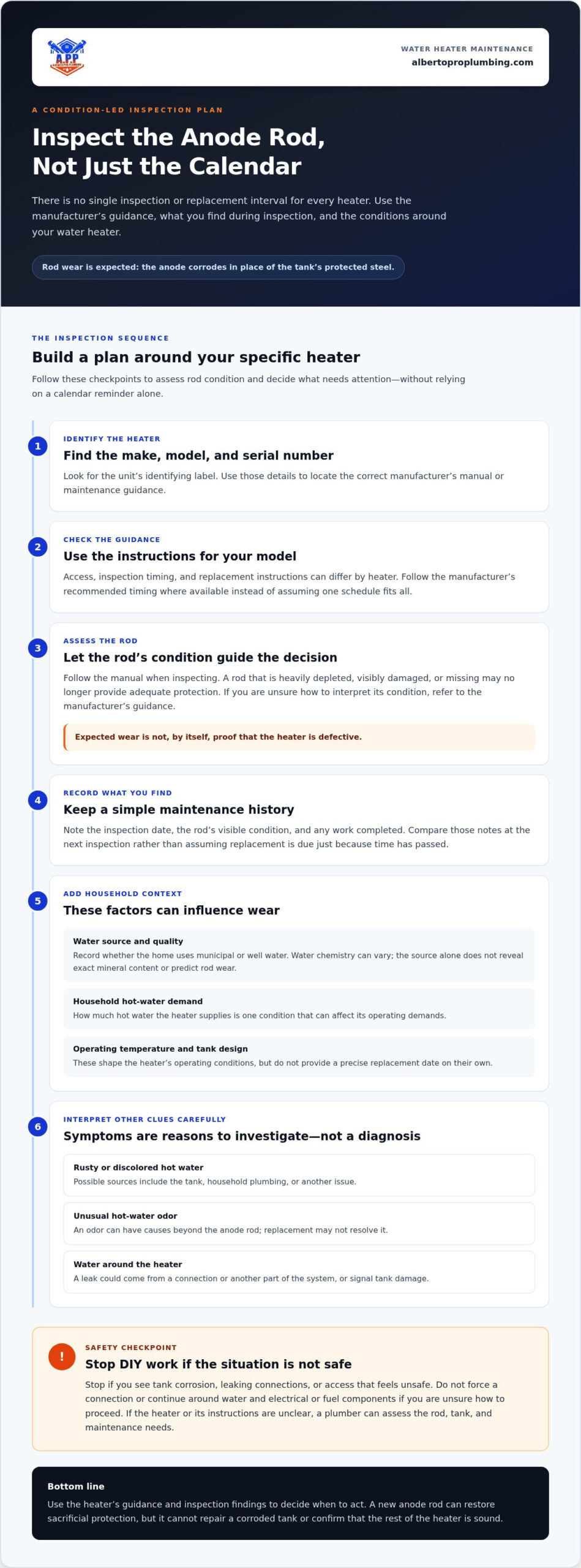
- The anode rod corrodes in place of the tank’s protected surfaces, so wear is expected and doesn’t automatically mean the heater is defective.
- Use the manufacturer’s guidance and inspection findings to decide when to inspect or replace the rod; one schedule won’t suit every heater or water supply.
- Before attempting water heater anode rod replacement, assess access, tools, physical demands, and whether you can safely isolate the heater.
- Identify your water heater and confirm the replacement rod is compatible before starting. Rods aren’t a universal fit.
- After the work, follow the heater manual when restoring water, power, or fuel, and check the tank separately for signs of damage.
What a water heater anode rod does, and the signs it may need replacement
A water heater’s tank holds hot water against a steel interior, so corrosion protection matters. The anode rod provides a replaceable layer of protection: it gradually wears down so the tank is less likely to corrode in its place. That wear is expected. It’s part of the rod’s job, not proof that the water heater is defective.
How sacrificial protection works inside a tank
A sacrificial anode is a metal component that corrodes preferentially to help protect another metal surface. In many tank water heaters, the rod is made from magnesium or aluminum. Its material reacts in the stored water, helping protect exposed steel inside the tank. The Sacrificial Anode Principle is also used in other applications where one metal helps limit corrosion of another.
This protection has limits. The rod can become depleted, and other conditions can still allow the tank to corrode. An anode rod isn’t a promise that a tank will never rust or leak. It’s one maintenance component to assess alongside the water heater’s overall condition.
Signs to investigate before deciding on replacement
The clearest evidence comes from inspecting the rod itself, following the water heater manufacturer’s instructions. A rod that is heavily depleted, visibly damaged, or missing may no longer provide adequate protection. If you’re unsure how to interpret what you see, use the manufacturer’s guidance to determine what condition calls for replacement.
Other clues deserve attention, but they don’t confirm that the rod is the cause:
- Rusty or discolored hot water: The source could be the tank, household plumbing, or another issue. Persistent discoloration needs a broader assessment.
- Unusual odor: An odor in hot water can have causes beyond the anode rod. Note whether it occurs only with hot water, but don’t assume replacement will resolve it.
- Water around the heater: A leak may come from a connection or another part of the system, or it may signal tank damage. The location and condition need careful attention.
These symptoms are reasons to investigate, not a diagnosis. Water heater anode rod replacement may be appropriate when inspection shows the rod is worn, but changing it won’t repair a corroded tank or automatically solve an odor, discoloration, or leak.
Stop DIY work if you see corrosion on the tank, leaking connections, or access that feels unsafe. Don’t force a connection or continue around water and electrical or fuel components if you’re unsure how to proceed. A plumber can assess whether the rod, tank, or another part of the system needs attention. That distinction matters: a new rod can restore sacrificial protection, but it can’t establish that the rest of the heater is sound.
When to inspect an anode rod and what affects its service life
There isn’t one inspection or replacement interval that fits every water heater. A rod’s service life depends on the heater’s design, the water passing through it, and how the household uses hot water. Use the manufacturer’s instructions and the rod’s actual condition to guide decisions instead of relying on a calendar reminder alone. Keeping inspection notes makes it easier to compare the rod’s condition over time.
Set an inspection plan using the heater’s own guidance
Start by locating the water heater’s make, model, and serial number. You’ll usually find identifying information on a label attached to the unit. Use it to find the correct manufacturer’s manual or maintenance guidance, since access, recommended inspection timing, and replacement instructions can differ by model.
Follow the manual’s recommended timing where available, then note the inspection date and what you found. A simple maintenance log could record whether the rod was inspected, its visible condition, and any work completed. Use those notes at the next inspection. This creates a useful history without assuming that water heater anode rod replacement is due just because a certain amount of time has passed.
If you can’t identify the heater or find its instructions, don’t guess about the rod’s fit or inspection procedure. A plumber can help assess the heater and its maintenance needs, particularly if access is difficult or the tank appears damaged.
How water quality and household use influence wear
Water contains dissolved substances that interact with an anode rod. Their type and amount can vary, so two similar heaters in the same area may show different wear. A home’s water source is useful context, but it doesn’t reveal the exact chemistry by itself.
In Clermont and across Central Florida, a home may receive municipal water or use a private well. Don’t assume that either source has one uniform mineral content or causes a predictable rate of rod wear. If water-quality information is available from the utility or from testing, use it as context alongside the heater’s inspection findings.
Other conditions matter, too. Household demand affects how much hot water the heater supplies, while operating temperature and tank design shape its operating conditions. These factors don’t provide a precise replacement date on their own, but they help explain why a neighbor’s maintenance schedule may not suit your home.
- Record the source: Note whether the home uses municipal or well water.
- Track changes: Record a change in water source or available water-quality information.
- Compare inspections: Look at findings over time, not just one observation.
- Use model-specific guidance: Let the manufacturer’s instructions inform the inspection plan.
For help connecting inspection findings with broader water-heater maintenance, professional plumbing maintenance and inspections can provide a practical next step. Alberto Pro Plumbing’s home protection membership includes proactive maintenance and regular system inspections.
DIY or plumber? Compare the risks before replacing an anode rod
An anode rod can look easy to reach, but access alone doesn’t make removal safe or simple. The rod may be tightly stuck, need more clearance than the space allows, or sit in a tank connection that could be damaged by force. Before starting, weigh the whole job: your heater’s instructions, the tools and physical effort required, and whether you can safely shut off and isolate the unit.
When a capable homeowner may consider DIY
A DIY attempt may be reasonable if you can identify the exact heater, follow its manufacturer’s procedure, reach the rod comfortably, and use the required tools. You must also know how to shut off the heater’s energy source and water supply as directed. Don’t rely on a generic tutorial instead of model-specific instructions. If the rod won’t loosen with controlled effort, stop rather than forcing it.
When professional help is the safer choice
Choose professional plumbing help if the rod is seized, the fitting is corroded, there’s a leak, or you’re unsure how to isolate the heater safely. A plumber can assess the rod and the surrounding tank condition together, which is useful if signs of corrosion or damage are present. If you’re uncertain about a critical step, pause and get help rather than risking damage to the heater.
Use this quick comparison before deciding:
- Access: Is there enough room to reach and remove the rod without bending it against surrounding pipes or surfaces? Restricted overhead clearance can complicate even a rod that appears easy to access.
- Tools and effort: Do you have the tools specified in the manual and the strength to apply steady force? A long rod or tight fitting can demand leverage and control. If you can only turn it by straining or using an unstable position, stop.
- Condition: Does the fitting appear intact, with no visible corrosion or leaking? A damaged connection can turn a maintenance task into a repair.
- Safe isolation: Can you confidently follow the manufacturer’s shutdown and isolation procedure for your heater? If the power or fuel controls are unclear, don’t proceed by trial and error.
One common mistake is treating a visible rod as an easy one. The threaded connection can be stuck, and excessive force may damage the fitting or tank. Limited room can also make it difficult to pull out a full-length rod or install the correct replacement without bending it. These are practical limits, not a test of how handy you are.
For water heater anode rod replacement, a careful homeowner with clear access and model-specific directions may decide to proceed. If anything feels unsafe or the rod resists, leave it in place and get help. A plumber can assess the concern and help protect the heater from avoidable damage. If you’re unsure how to proceed, get help with a water heater concern from Alberto Pro Plumbing in Clermont.
How to replace a water heater anode rod safely
This is a general sequence, not a substitute for the instructions for your specific heater. The location of the anode port, shutdown procedure, and installation details vary by model. If you can’t identify the heater or confirm the replacement rod is compatible, don’t start. A rod that looks similar may not be the right fit.
Prepare the heater and work area
Before opening anything, read the manual and make sure you can safely complete each step. Anode access may be at the top of the heater or in another location identified by the manufacturer. Clear the area, protect nearby surfaces from water, and make room to handle the rod without striking pipes or walls.
- Identify the heater and rod. Find the heater’s model information and use its manual to locate the anode port. Confirm the replacement rod matches the model’s requirements. Don’t assume rods are universal.
- Shut down the heater as directed. Determine whether the unit uses gas or electricity, then follow the manufacturer’s shutdown procedure. If you’re unsure which controls to use or how to isolate the energy source, stop and get professional help.
- Let the unit cool and isolate water. Hot water and components can cause burns. Follow the manual’s instructions to let the heater cool, shut off the water supply, and relieve pressure before opening the anode port. Don’t skip a step or improvise if the instructions are unclear.
- Prepare for water at the opening. Place a suitable container or protective covering near the access point, as directed by the manual. Keep the work area clear so you can control the rod and respond if water escapes.
Remove the old rod and install the compatible replacement
Use the tool and removal method specified for your heater. Keep it aligned with the fitting and apply controlled force. If the connection resists, shifts, or appears damaged, stop. Forcing a seized rod can damage the tank or fitting and turn a maintenance task into a larger repair.
- Remove and examine the rod. Once loosened, withdraw it carefully, accounting for its full length and the available clearance. If it can’t come out without bending against surrounding surfaces, don’t force it.
- Install the correct replacement. Follow the manufacturer’s directions for preparing and installing the rod, including any guidance for the connection. Tighten it as instructed. Avoid guessing at fit or installation details.
- Restore service and inspect. Follow the manual’s sequence for restoring water and then power or fuel. Check the access point and nearby connections carefully for leaks. Don’t operate the heater if water is leaking or you’re uncertain about safe startup.
Water heater anode rod replacement should stop at the first unsafe or unclear step. If the rod is stuck, fittings are corroded, or you’re unsure about isolation or startup, contact Alberto Pro Plumbing for plumbing help with your water heater.
After replacement: check the tank, plan maintenance, and get local help
Installing a new rod is one maintenance step, not a full health check for the water heater. After restoring the water supply and the heater’s power or fuel, follow the manufacturer’s restart instructions in order. Keep an eye on the connection and surrounding area as the unit returns to service. A dry fitting and normal operation are reassuring, but they don’t prove that the tank has no other corrosion or damage.
What to monitor after the new rod is installed
Check the anode opening and nearby fittings for moisture after the system is back in service. Look again after the heater has had time to operate, following any inspection guidance in the manual. If you notice a leak, stop and address it promptly rather than tightening parts or changing settings without instructions.
Pay attention to how the heater operates, too. If rusty or discolored water, unusual odors, or other symptoms continue, don’t assume the old rod was the only cause. Those signs can point to issues elsewhere in the tank or plumbing. Record what you observe and when it occurs. That detail can help a plumber investigate the right part of the system.
Know when the tank needs a broader assessment
A successful water heater anode rod replacement means the rod has been changed; it doesn’t establish that the tank itself is sound. Visible tank corrosion, persistent leakage, or recurring water-quality symptoms call for a broader assessment. The problem could involve the tank, a connection, or another part of the plumbing system.
Rod replacement and water heater installation are separate decisions. If the heater shows signs of damage, consider its overall condition before deciding whether another maintenance repair is appropriate. Alberto Pro Plumbing provides water heater installation, a separate option to consider when assessing the heater’s condition. A worn rod alone doesn’t mean the heater needs to be replaced.
Keep the heater’s model information and a brief maintenance record, including the replacement date and any follow-up observations. Future inspections can then build on what’s already known instead of starting from guesswork. If a leak appears, symptoms persist, or you’d rather have a professional assess the tank and connections, Alberto Pro Plumbing serves homeowners across Lake, Polk, Osceola, and Orange Counties in Central Florida, including Clermont.
For a practical assessment or help with a water heater concern, contact Alberto Pro Plumbing about plumbing service.
Make your next maintenance step a confident one
Good water heater care isn’t about replacing parts on a rigid schedule. It’s about using the heater’s guidance, paying attention to its condition, and choosing a safe next step when something doesn’t look right. Keep a simple maintenance record so future decisions are based on what you’ve observed, not guesswork.
If water heater anode rod replacement feels beyond your comfort level, or you’re concerned about the tank itself, Alberto Pro Plumbing provides residential plumbing service and water heater installation. Its home protection membership includes proactive maintenance and regular inspections.
Contact Alberto Pro Plumbing for help with your water heater. A careful assessment can help you decide what your heater needs next and move forward with confidence.
Frequently Asked Questions
How often should a water heater anode rod be inspected?
Follow the inspection schedule in your water heater’s manual, since timing depends on the model and conditions in your home. If you can’t find the manual, use the model number to locate the manufacturer’s guidance or have a plumber help identify the right instructions. Keep a note of the inspection date and result. That record can help you spot a change in rod condition over time.
Does every water heater have an anode rod?
No. Many storage-tank water heaters have an anode rod, but designs vary, and some models may use a different corrosion-protection approach. Check the owner’s manual or parts diagram for your exact model rather than assuming the rod is hidden under a cover. If the documentation doesn’t identify one, a plumber can help determine how that heater’s tank is protected.
Can a tankless water heater have an anode rod?
Most tankless water heaters don’t store hot water in a large tank, so they generally don’t use the same sacrificial anode rod found in many storage-tank heaters. Their maintenance needs differ by model. Look in the manual for the unit’s maintenance components and service instructions; don’t try to locate or install a tank-style rod unless the manufacturer specifies one for that heater.
Does replacing an anode rod affect a water heater warranty?
It depends on the warranty terms and the manufacturer’s maintenance instructions. Before doing the work, check whether the documentation specifies approved parts, procedures, or records to keep. Save the replacement details and date, along with receipts if you have them. If you’re unsure how a DIY repair relates to your particular warranty, contact the manufacturer using the information in your heater’s paperwork.
Can I replace an anode rod with a different material?
Only use a different rod material if the water heater manufacturer identifies it as compatible with your specific model. Material choice can depend on the heater’s design and water conditions, so a rod that fits physically may still not be the right replacement. Check the manual or parts information before buying. Don’t rely on a general claim that a rod fits most heaters.
What should I do if the anode rod will not come loose?
Stop if the rod resists controlled effort. Don’t keep increasing leverage or strike the fitting, since that could damage the connection or tank. Check that you’re using the removal method and tool specified in the manual, but don’t proceed if the fitting shifts, looks corroded, or begins to leak. A plumber can assess the connection and remove a seized rod without guesswork.
Can an anode rod be replaced without draining the water heater?
It depends on the heater’s design and the manufacturer’s procedure. Some replacement instructions may call for lowering the water level, while others describe a different process. Don’t assume the tank can stay full or open the port under pressure. Follow the model-specific directions for shutting off the supply and relieving pressure. If those steps aren’t clear, have a plumber handle the work.
Will replacing an anode rod stop a leaking water heater?
Usually, replacing the rod won’t repair a leak. Water may be escaping from a connection, valve, or a corroded tank, and the source needs to be identified. If you see water around the heater in your Clermont home, note where it appears and whether it continues, then arrange plumbing help. A professional assessment can determine whether the issue calls for repair or broader water heater service.