
Imagine you’ve just finished a great family dinner and flip the switch to clear the sink, but instead of the usual grind, you hear a low, vibrating drone. Finding your garbage disposal making humming noise can be a real headache, especially when you’re worried about an expensive replacement or a potential electrical shock. It’s a common frustration that often leads to a clogged kitchen sink and a lot of unnecessary anxiety. We understand that a broken appliance feels like a major disruption to your home’s rhythm, but that sound is often a simple cry for help rather than a total breakdown.
We’ve helped countless neighbors through this exact situation, and the good news is that a hum doesn’t always mean the motor is dead. This guide will show you how to safely unjam your unit in just a few minutes using basic tools you likely already have. You’ll learn the difference between a simple fix and a burnt-out motor, plus the specific safety steps to protect your hands and your plumbing. We’ll walk through the reset process and explain when it’s time to call a professional plumber to ensure your kitchen stays tidy and functional.
Key Takeaways
- Stay safe by turning off the power and unplugging your unit before you start any repairs.
- Understand that a garbage disposal making humming noise usually means the motor is stuck, not broken.
- Use a 1/4-inch Allen wrench to manually clear jams through the bottom of the disposal.
- Learn to spot the signs of a dead motor, like electrical smoke or a complete lack of sound.
- Keep your sink clear by running cold water first and keeping fibrous scraps out of the drain.
Why Your Garbage Disposal is Making a Humming Noise
Hearing your garbage disposal making humming noise is a clear signal from your appliance. It tells you that the electrical current is reaching the motor, but the internal components are physically unable to move. Think of it like a car trying to drive with the parking brake engaged. While the motor is struggling to turn, it generates heat rapidly. You should never let the unit hum for more than a few seconds. If you do, you risk burning out the motor entirely or triggering the thermal overload protector, which shuts the unit down to prevent a fire. Shut the power off immediately if you hear this sound.
The Mechanics of a Jammed Disposal
A Garbage disposal unit relies on a spinning flywheel and small impellers to fling food waste against a stationary shredder ring. It’s a high-speed dance of metal parts. However, the gap between the flywheel and the ring is quite small. Common kitchen debris often creates the perfect wedge that brings everything to a halt. When an object gets stuck, the motor shaft tries to rotate against the resistance, creating that low-frequency vibration.
The most frequent culprits we see in local homes include:
- Peach pits or large fruit stones that drop in unnoticed.
- Accumulated coffee grounds that have packed into a thick, sandy paste.
- Small pieces of silverware like teaspoons or corn holders.
- Popcorn kernels or unpopped seeds that slip under the impellers.
Electrical Safety 101 for Kitchen Appliances
Before you even think about reaching toward the sink, you must understand the risks. The biggest danger isn’t just the jam itself, but the automatic start that can happen the moment a physical obstruction is cleared. If the power is still on, the motor will immediately resume spinning at high speeds. This is why safety protocols are non-negotiable for every homeowner.
Don’t rely solely on the wall switch. In many homes, a switch might not fully isolate the unit, or someone could accidentally flip it while you’re working. To stay safe, always unplug the disposal from the outlet under your sink. If your unit is hardwired, locate the dedicated circuit breaker in your electrical panel. This is common for kitchen islands where the wiring is tucked away. Taking these extra seconds ensures you can work without the fear of a sudden, dangerous activation. We take pride in our tidy service and safety-first approach, and we want you to have that same peace of mind during a DIY fix.
3 Immediate Steps to Take When You Hear the Hum
Hearing your garbage disposal making humming noise is stressful, but acting quickly prevents permanent damage. First, flip the wall switch to the “off” position. To be truly safe, reach under the sink and pull the plug from the outlet. If the unit is hardwired, head to your breaker panel and shut off the specific circuit. Never skip this step. Powering down the unit is the only way to ensure your safety while you investigate the cause of the jam.
Once the power is disconnected, you need to check the status of the motor. If the hum was loud and then suddenly stopped on its own, the thermal overload protector likely kicked in. This is a built-in safety feature designed to keep the motor from melting or starting a fire. It’s a common occurrence when a disposal is struggling against a physical obstruction.
The Red Reset Button: Your First Line of Defense
Look at the very bottom of the disposal unit under your sink. You’ll see a small, red square or circular button. This is the reset for the thermal overload sensor. When a jam occurs, the motor draws too much power and generates heat. The sensor “trips” and the button pops out about a quarter-inch. If you see it sticking out, the system has successfully protected itself from an electrical failure.
Don’t press it immediately. Give the motor at least three to five minutes to cool down. If you try to reset it while it’s still hot, it won’t stay engaged. Once it’s cool, push the button back in. You should feel a firm click. If the button won’t stay in after several minutes, or if the unit continues to struggle, you might need a professional for drain cleaning or a deeper inspection of the motor’s health.
Visual Inspection Safety Protocols
Grab a bright flashlight and shine it down the drain. You’re looking for whatever is wedging the impeller blades against the shredder ring. It could be a stray cherry pit, a piece of bone, or even a small metal pull-tab. Never, under any circumstances, put your hand down the disposal. Even with the power off, the blades are sharp and the interior is cramped. Your safety is much more important than a quick fix.
Use long-handled needle-nose pliers or kitchen tongs to retrieve any visible debris. If you see heavy rust or green corrosion around the impellers, the unit’s seal may have failed long ago. Also, avoid the temptation to pour chemical drain cleaners down the sink. These harsh liquids won’t clear a mechanical jam and will only create a splash hazard for you or a plumber later on. Keeping the area clear and following these steps ensures a tidy service environment for any necessary repairs.
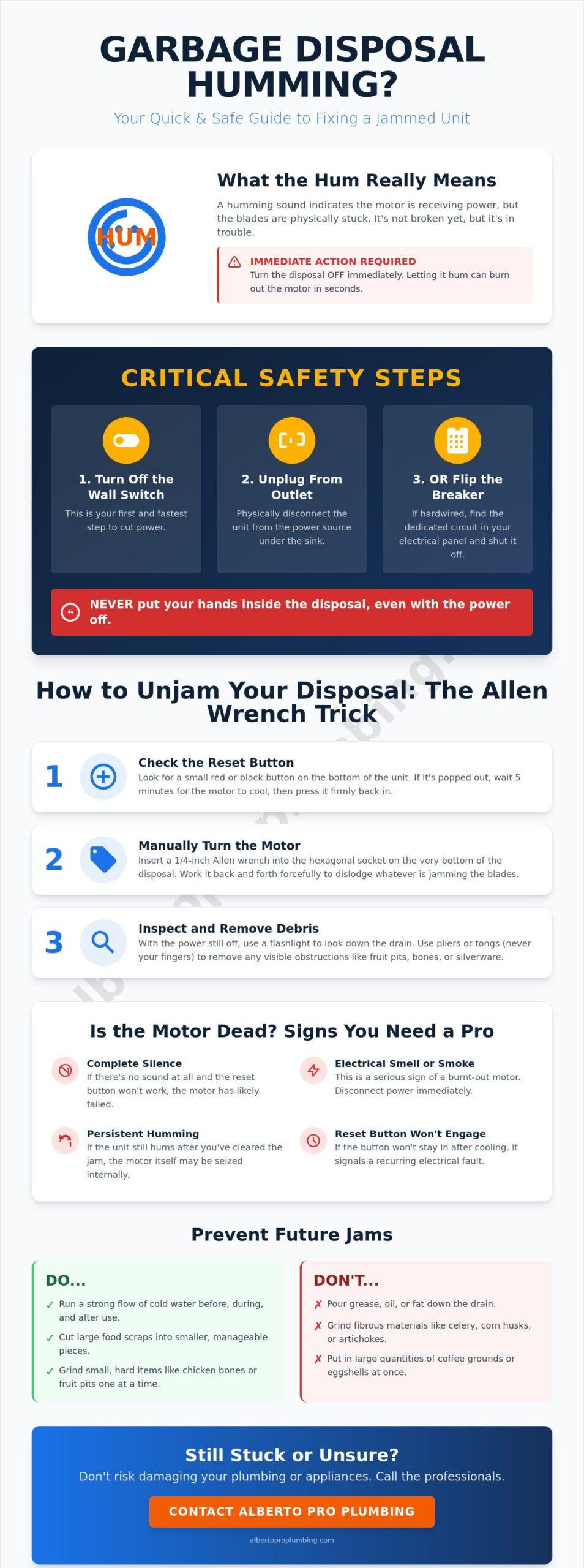
How to Safely Unjam Your Disposal (The Allen Wrench Trick)
If you still hear your garbage disposal making humming noise after a reset, you likely have a physical obstruction wedged against the grinding components. This is where most homeowners get nervous, but there’s a built-in way to handle this without ever putting your hands near the blades. Almost every modern disposal unit features a manual override at the bottom of the canister. By using a simple tool to rotate the motor shaft from the outside, you can often break the jam in under a minute.
Tools You Will Need for the Job
You don’t need a massive toolbox for this repair. Most units require a standard 1/4-inch Allen wrench, also known as a hex key. Many manufacturers actually include a specialized jam wrench with the unit, often taped to the side or tucked into the manual. If you can’t find yours, a standard 1/4-inch key from a hardware store works perfectly. You’ll also want a high-quality flashlight to see into the dark corners under your sink and a pair of long-handle pliers to pull out the debris once it’s loose.
Step-by-Step Manual Rotation
Clear out the items under your sink so you have a tidy workspace. Locate the small, hex-shaped hole in the very center of the disposal’s bottom plate. Insert the Allen wrench into this hole. If it doesn’t seat fully, wiggle it slightly until it locks into the motor shaft. Now, apply firm, steady pressure. It doesn’t matter which way you turn first; the goal is simply to get the flywheel moving again.
Use the “Back-and-Forth” method. Instead of trying to force a full circle, rock the wrench clockwise and then counter-clockwise. This rocking motion helps vibrate the obstruction loose. You might feel a lot of resistance at first. Don’t panic. Apply more pressure, but avoid using a hammer or a cheater bar, as excessive force can bend the motor shaft. Once the obstruction gives way, the wrench will suddenly move easily. Continue rotating the shaft until you can complete several full 360-degree free spins without any catching or grinding sounds.
After the shaft spins freely, use your flashlight to look down the drain. Use your pliers to fish out the object that caused the garbage disposal making humming noise. Once the debris is removed and the area is clear, you can restore power and test the unit with a heavy flow of cold water. This simple manual fix saves you the cost of a new appliance and gets your kitchen back in order quickly.
Humming vs. Silence: Identifying a Dead Motor
If your garbage disposal making humming noise suddenly goes silent, it doesn’t necessarily mean you’re headed to the appliance store. Often, this shift from sound to silence indicates that the internal safety switch has done its job. However, if you’ve already tried the reset button and the Allen wrench trick without success, the silence might point to a deeper electrical failure. Understanding these nuances helps you decide whether you need a simple fix or a full replacement.
One of the most obvious signs of a dead motor is the smell of electrical smoke. If you notice a sharp, metallic odor coming from under the sink after the unit was struggling, the internal windings have likely overheated. This usually happens when the motor is left to strain against a jam for too long. Once the insulation on those wires melts, the motor is officially burnt out and cannot be repaired. At this stage, trying to force the unit to work can be a fire hazard.
Another major red flag is water dripping from the very bottom of the canister. This usually indicates that the internal seal has failed, allowing water to enter the motor housing. Because water and electricity are a dangerous mix, a bottom leak is a clear sign that the unit is reaching the end of its lifespan. Most disposals last between 5 and 10 years; if your unit is in that age bracket and leaking, it’s time for a change.
Signs Your Disposal is Beyond Repair
Chronic jamming is a common symptom of dull grinding plates or a weak motor. If you find yourself using the Allen wrench every other day despite careful use, the unit is telling you it’s tired. Excessive vibration or a loud, metal-on-metal screeching sound even when the chamber is empty often points to worn-out bearings. These mechanical failures are internal and typically cost more to fix than the price of a brand-new unit. We always recommend replacing a unit if the repair costs approach half the price of a new installation.
Motor Burnout vs. Simple Electrical Issues
Before you give up, rule out a simple power loss. Check the GFCI outlet under your sink. If the little “test” button has popped out, push it back in to restore the circuit. You can also test the outlet by plugging in a small lamp or a phone charger to see if it actually receives power. A silent disposal often just needs a reset button press. If the outlet works but the disposal stays dead after a reset, the internal capacitor may have failed. In these cases, professional Fixture Installation is the most reliable way to get your kitchen back to normal without the risk of future leaks or electrical hazards.
Preventing Future Jams and Professional Maintenance
Take proactive steps to ensure you don’t find your garbage disposal making humming noise again next month. While the manual fix we discussed is effective, frequent jams put unnecessary stress on your kitchen’s electrical system and plumbing. Maintaining your unit is mostly about habit. If you treat the disposal like a high-speed shredder rather than a trash can, it’ll serve your family reliably for years.
Always follow the “Cold Water First” rule. Run a steady stream of cold water for at least fifteen seconds before you turn the unit on. Cold water is essential because it keeps fats and greases in a solid state. If you use hot water, those fats melt and coat the grinding components, eventually cooling into a thick sludge that traps other food particles. Continue running the water for thirty seconds after the grinding stops to ensure everything has cleared the P-trap and reached the main drain line.
Be mindful of what goes down the drain. Florida kitchens often deal with specific waste that can be tough on standard units. Avoid putting fibrous vegetables like celery, corn husks, or onion skins into the disposal. These long fibers act like string, wrapping around the motor shaft and creating a seized motor. Similarly, hard shells from shrimp or eggs don’t grind well and often settle in the bottom of the canister, leading to another garbage disposal making humming noise. If your sink is draining slowly despite your best efforts, it might be time for professional drain cleaning services to clear the deeper lines.
Hard Water and Your Disposal
Local Clermont homeowners face a unique challenge: Central Florida’s hard water. Our water is rich in calcium and magnesium, which can leave mineral deposits inside your appliances. Over time, this scale builds up on the impeller blades and the shredder ring, making them “sticky” and more prone to catching on small food scraps. This corrosion is a leading cause of premature failure in our region.
To combat this, perform a monthly flush using one cup of baking soda followed by one cup of white vinegar. Let it fizz for ten minutes, then rinse with boiling water. This natural reaction helps break down light calcium deposits and keeps the interior smelling fresh. It’s a simple, neighborly tip that saves you from a messy kitchen emergency later on.
The Alberto Pro Plumbing Difference
We believe in doing the job right the first time and leaving your home better than we found it. Our commitment to tidy service means we always protect your cabinets and floors, ensuring the workspace is spotless before we leave. We’re proud of our local heritage and treat every customer like a member of the family. This is why our Home Protection Membership includes comprehensive plumbing inspections to catch small leaks or motor issues before they turn into flooded kitchens.
If your disposal is still humming after following these steps, or if you’ve noticed a persistent leak, don’t risk an electrical hazard. Our team is ready to provide the technical expertise you need with the respect your property deserves. Contact our emergency plumbing experts today to get your kitchen back in perfect working order.
Restore Your Kitchen’s Peace and Quiet
Dealing with a garbage disposal making humming noise doesn’t have to be a source of constant stress. Most of the time, that drone is just a signal that a small object has wedged the motor. By following the safety protocols we’ve discussed, like disconnecting power and using the manual override wrench, you can often clear the obstruction yourself in minutes. Remember to check that red reset button and listen for the click. If your unit remains silent or you smell electrical smoke, it’s likely a sign the motor has worked its last shift.
You don’t have to tackle complex plumbing repairs alone. As a family-owned and locally operated business, we take pride in supporting our Central Florida neighbors with 24/7 emergency response. We stand by our professional tidy service guarantee, ensuring your kitchen is left in its original condition. Need a hand with a stubborn disposal? Call Alberto Pro Plumbing for fast, tidy service today! We are here to help you keep your home running smoothly and safely. You’ve got this, and we’re just a phone call away if the job gets tough.
Frequently Asked Questions
Is it safe to use a garbage disposal that is humming?
No, it is not safe to leave the power on. Leaving the electrical current flowing while the unit is seized generates excessive heat. This can lead to a burnt-out motor or even melt the internal wiring. If you hear your garbage disposal making humming noise, flip the switch to the “off” position immediately. Acting quickly prevents a simple jam from turning into a permanent appliance failure that requires a full replacement.
How do I reset my garbage disposal if it is not making any noise?
Locate the small red button at the very bottom of the unit. This is the thermal overload protector. If the disposal is silent, it likely tripped to prevent overheating during a jam. Push the button in until you hear a click. If it doesn’t stay in, wait five minutes for the motor to cool down. If it is still silent after the reset, check your GFCI outlet under the sink or the main breaker panel.
Can I use a broom handle to unjam my garbage disposal?
You can use a broom handle as a last resort, but it is not the most reliable method. While you can stick the handle into the drain to try and leverage the blades, this can sometimes damage the internal impellers or the motor shaft. Using the 1/4-inch Allen wrench at the bottom of the unit is a much more precise and safer method. It allows you to feel the resistance and clear the jam without risking further damage.
Why does my garbage disposal keep jamming even when I do not put food in it?
Persistent jamming often stems from hard water mineral buildup or worn-out bearings. In our local area, calcium deposits can settle on the grinding ring, creating a rough surface that catches on even the smallest particles. If your disposal keeps jamming without food, the internal bearings might be failing. This creates enough friction to seize the motor, even if the chamber looks clear to the naked eye.
Will a humming garbage disposal cause a fire?
While modern units have safety shut-offs, a humming disposal is a potential fire hazard if left unattended. The electrical current continues to flow into a motor that cannot turn, creating intense heat. If the thermal overload protector fails to trip, the heat can damage the wiring insulation. Always turn off the power at the wall and unplug the unit the moment you realize the motor is stuck.
What size Allen wrench do I need for a garbage disposal?
Most garbage disposals require a standard 1/4-inch hex key or Allen wrench. This size fits the manual override socket located in the center of the bottom plate. Many homeowners find that a specialized disposal wrench with a long handle provides better leverage. If you don’t have one, a standard L-shaped Allen wrench from a basic tool kit will usually get the job done just fine.
How much does it cost to have a plumber unjam a garbage disposal in Clermont?
Professional repair costs vary based on the severity of the jam and whether parts need replacement. Most local plumbing companies charge a diagnostic service fee to evaluate the unit, followed by labor costs for the actual repair. If the motor is burnt out or the seals are leaking, replacing the unit is often more cost-effective than attempting a complex repair. We always provide tidy service and transparent communication before starting any work.
Why is my garbage disposal humming but the blades are not stuck?
If the blades spin freely but you still hear the garbage disposal making humming noise, the motor’s internal capacitor has likely failed. The capacitor provides the initial jolt of energy needed to start the motor. Without it, the motor will hum but won’t have the torque to begin rotating. In this case, the motor is electrically damaged, and a professional fixture installation is typically the most reliable solution for your kitchen.