
That ugly, dry patch of grass over your drain field isn’t a permanent sentence for your curb appeal. We understand the hesitation many homeowners feel when staring at that bare spot in the middle of the lawn. You want a lush, vibrant yard that follows the state’s environmental guidelines, but the fear of roots clogging your pipes or damaging your system’s integrity often leads to total inaction. The good news is that implementing Florida friendly landscaping over septic field areas is not only possible, it’s actually beneficial for your system when done correctly.
In Central Florida, we face unique challenges with our sandy soil and heavy seasonal rains. This guide will help you bridge the gap between a functional utility and a beautiful landscape. You’ll learn how to select shallow-rooted native plants that maximize water evaporation without threatening your underground infrastructure. We are going to cover the essential rules for protecting your drain field while ensuring your yard remains the pride of the neighborhood and stays compliant with local environmental standards.
Key Takeaways
- Learn why oxygen and drainage are the most critical factors for a healthy Central Florida septic system.
- Discover the specific native species that make Florida friendly landscaping over septic field areas both safe and beautiful.
- Master the four golden rules to prevent root intrusion and soil compaction that lead to expensive repairs.
- Identify the common “water-seeking” trees and landscaping habits that can suffocate your system’s beneficial bacteria.
- Find out why a professional inspection and system mapping are the essential first steps before you dig or plant.
Understanding Your Central Florida Septic Drain Field
Your septic system is essentially a small, private water treatment plant buried in your backyard. While the tank gets most of the attention, the real work happens in the septic drain field. This area consists of a network of perforated pipes laid in gravel-filled trenches. Its primary job is to take the liquid effluent from your tank and allow it to slowly percolate into the ground. This process relies on the soil to filter out harmful pathogens and nutrients before they ever reach our precious groundwater.
In Central Florida, the “drainage” part of the name is absolutely critical. Our region’s sandy soil is excellent for filtration, but it’s also sensitive. When you begin planning Florida friendly landscaping over septic field areas, you must protect the soil’s ability to breathe. If the ground becomes too saturated or compacted, the aerobic bacteria responsible for treating the wastewater will suffocate. Without these tiny workers, your system will fail. One of the most common ways homeowners accidentally destroy their drain field is by using heavy landscaping equipment. A single pass with a Bobcat or a heavy truck can crush your pipes or pack the soil so tightly that it becomes an impermeable barrier. Always keep heavy machinery away from this zone.
How Septic Systems Work in Clermont and Lake County
Clermont and Lake County homeowners deal with a unique set of environmental factors. Our high water table means there is often very little “dry” soil between your drain field and the water below. Because our sandy soil allows water to move quickly, any failure in the filtration process can immediately impact local springs and lakes. Florida Statute 381.0065 sets strict guidelines for these systems, including a 75-foot setback from wells and surface water. Maintaining a healthy, uncompacted landscape isn’t just about your yard; it’s about protecting our local community’s water supply.
The Risk of Root Intrusion
Plants are naturally designed to seek out moisture and nitrogen. Your septic pipes are a constant, high-quality source of both. This creates a major risk for root intrusion. Aggressive root systems from large trees can sense the moisture leaking from your pipes and will grow directly into the perforations. Once inside, they expand and create a “root mat” that causes massive clogs. Passive root systems from grasses and small perennials are much safer. If you see patches of grass that are suddenly much greener and taller than the rest of the yard, it’s often a sign that roots are already feeding on your septic effluent. Addressing these signs early can save you from a total system replacement.
The 4 Golden Rules of Florida-Friendly Landscaping Over Septic
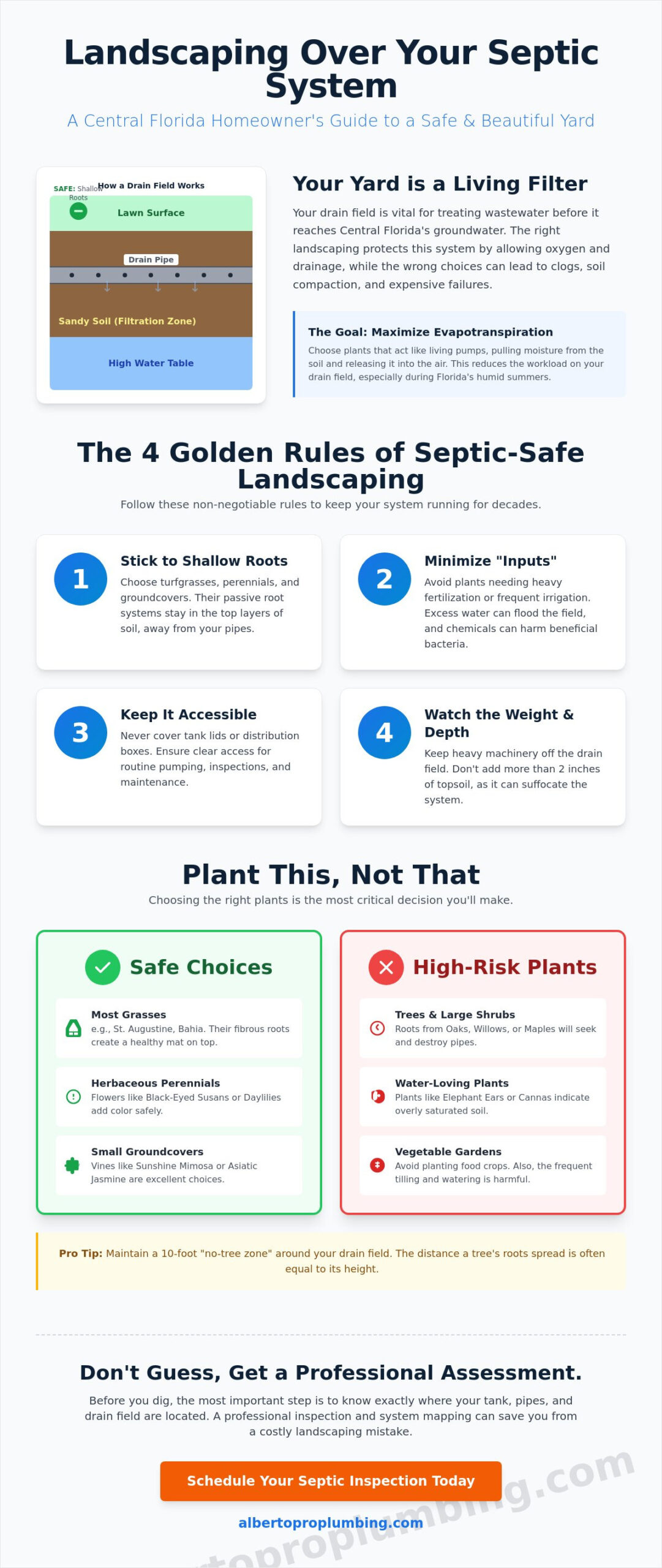
Creating a beautiful yard while protecting your home’s infrastructure requires a shift in perspective. You aren’t just planting a garden; you’re managing a biological filter. When planning your Florida friendly landscaping over septic field areas, follow these four non-negotiable rules to keep your system running smoothly for decades.
- Rule 1: Stick to shallow roots. Choose herbaceous perennials, turfgrasses, and small groundcovers. These plants have “passive” root systems that stay in the top layers of soil rather than diving deep to find your pipes.
- Rule 2: Minimize “inputs.” Avoid plants that need heavy fertilization or constant irrigation. Excessive water can flood the drain field, while fertilizers can disrupt the delicate bacterial balance inside the tank.
- Rule 3: Keep it accessible. Never plant anything over your tank lids or distribution box that you aren’t willing to lose. Our team needs clear access for routine pumping and inspections.
- Rule 4: Watch the weight and depth. Never use heavy machinery in this zone. Additionally, don’t add more than two inches of topsoil to the area, as this can “smother” the soil and prevent oxygen from reaching the beneficial bacteria.
Maximizing Evapotranspiration
The best plants for a drain field act like living pumps. They pull moisture from the saturated soil and release it into the air through their leaves. This process, known as evapotranspiration, helps your system process wastewater more efficiently. According to the University of Florida’s guide to drain field landscaping, selecting sun-loving plants that thrive in our local climate ensures they “breathe” at a high rate. This naturally reduces the workload on your soil, especially during our humid Central Florida summers.
Safety First: Protecting the Infrastructure
Infrastructure protection is about distance and design. Always maintain at least a 10-foot “no-tree zone” around the entire perimeter of your drain field. While it’s tempting to build a raised bed or a vegetable garden over that open sunny spot, you should avoid this at all costs. The extra weight of the soil and the frequent watering required for vegetables will quickly lead to system failure. Plus, there is a risk of crops absorbing contaminants from the effluent. Before you start digging, consider a professional septic system mapping to clearly mark your tank lids and pipe locations. Knowing exactly where your lines run is the only way to ensure your new landscape doesn’t become an expensive mistake.
Best Florida-Friendly Plants for Drain Fields
Choosing the right species is the most exciting part of the process. You want plants that look great but don’t have thirsty, aggressive roots. When you implement Florida friendly landscaping over septic field areas, you are looking for a balance of beauty and utility. Native plants are your best allies here because they’ve already adapted to our Central Florida heat and sandy soil without needing extra help from you. These selections will help you properly manage the landscaping near your septic system while keeping your curb appeal high.
Beyond grasses and wildflowers, low-maintenance succulents like Yucca or Agave can work well in the sun-drenched spots of your yard. They require almost no supplemental water once they’re established. This is a huge plus for your drain field, as it prevents the soil from becoming oversaturated. Just be sure to choose smaller varieties that won’t become too heavy for the soil over time.
Ornamental Grasses: The Septic Field Superstars
Grasses are the safest choice for pipe protection because their roots are fibrous and shallow. Muhly Grass is a local favorite for a reason. In the fall, it produces stunning pink plumes that can transform a boring drain field into a vibrant meadow. Fakahatchee Grass is another powerhouse, offering a lush, tropical look with very little effort. These grasses are excellent at pulling moisture from the ground and releasing it into the air. To maintain them, you only need to cut them back once a year in late winter. This “meadow” approach provides a soft, intentional look that hides the utility nature of the area perfectly.
Flowering Perennials for Curb Appeal
If you want more color, native wildflowers are the way to go. Coreopsis, which is the Florida state wildflower, and Black-eyed Susans thrive in our climate and attract vital pollinators like bees and butterflies. Because these are non-woody perennials, they won’t develop the thick, invasive roots that lead to clogs. When planting, aim for a density that covers the ground to prevent soil erosion during our heavy summer downpours. However, don’t over-plant to the point where you’re adding too much weight or trapping too much moisture. A well-spaced arrangement of Florida friendly landscaping over septic field wildflowers creates a beautiful, resilient ecosystem that protects your system while supporting local wildlife.
- Sunshine Mimosa: A low-growing groundcover with sensitive leaves and “powderpuff” pink flowers.
- Perennial Peanut: A hardy, yellow-flowering groundcover that replaces traditional turf and requires no fertilizer.
- Blue-Eyed Grass: A small, clump-forming perennial that adds a pop of blue in the spring.
Common Landscaping Mistakes That Lead to Septic Failure
Even with the best intentions, a few common mistakes can turn your beautiful yard into a plumbing nightmare. While we’ve discussed the safe plants for Florida friendly landscaping over septic field areas, it’s just as important to recognize the “red flag” choices that lead to system failure. Many homeowners don’t realize that a single thirsty tree or a poorly placed irrigation line can cause thousands of dollars in damage. Avoiding a total system replacement starts with knowing what not to do.
One of the biggest mistakes is planting “water-seekers” like Willows, Maples, or even certain flowering shrubs like Azaleas too close to the lines. These plants have aggressive root systems that can detect the moisture and nutrients inside your pipes from a distance. They’ll grow through the tiniest perforations, eventually causing a total blockage. Additionally, avoid the temptation to “beautify” the area by adding thick layers of mulch or extra topsoil. Anything more than two inches of cover can suffocate the beneficial bacteria that break down waste. These microbes need oxygen to survive; plastic weed barriers and heavy mulch effectively cut off their air supply.
If you suspect your current landscaping has already caused a blockage or root intrusion, you need a professional drain cleaning and septic inspection to clear the lines before the damage spreads.
The Hidden Danger of “Innocent” Shrubs
Homeowners often think small shrubs are safe, but woody stems present two major problems. First, even small shrubs can have surprisingly deep, invasive roots that seek out the effluent. Second, woody plants are difficult to remove if a technician needs to dig up a section of the field for repairs. If you’re looking for privacy, avoid traditional hedges. Instead, use clumping native grasses or tall herbaceous perennials. These provide the screen you want without the risk of woody roots interfering with your underground infrastructure.
Soil Compaction and Drainage Issues
Your drain field is not a driveway or a high-traffic zone. Frequent walking or using heavy riding mowers over the area packs the soil down. This compaction ruins the soil’s natural ability to filter water. Similarly, decorative rocks or heavy pavers might look tidy, but they add significant weight and block the essential process of evaporation. You should also ensure your home’s gutter downspouts aren’t directed toward the septic area. When rainwater pools over the field, the ground becomes saturated. This prevents your household wastewater from being absorbed, which often leads to messy backups inside the home.
Ensuring Septic Health with Alberto Pro Plumbing
A beautiful yard is a major investment in your home’s value, but it shouldn’t come at the expense of your plumbing infrastructure. Before you pick up a shovel or visit the nursery, scheduling a professional inspection is the smartest move you can make. We’ve seen too many Central Florida homeowners spend thousands on a Florida friendly landscaping over septic field project only to have it dug up months later because of a preventable system failure. Our goal is to ensure your new garden and your septic system thrive together for years to come.
Regular maintenance is the best way to protect your landscaping investment. When we perform routine pumping or inspections, we check for early signs of trouble that might be hidden beneath the surface. If your yard has standing water, slow drains, or patches of grass that stay unusually lush even during a dry spell, your landscaping might already be interfering with your septic lines. We use our technical expertise to identify these issues early, providing professional remedies that keep your property tidy and your system functional.
Professional Drain Field Mapping
Guessing where your pipes are located is a recipe for disaster. Even if you have an old site map, things can shift over time, or previous owners might have made undocumented changes. We use specialized electronic locating equipment to find the exact path of your lines and the depth of your tank. This process creates a clear “no-dig” zone for your project. Consulting with us before installing large features or heavy groundcovers ensures that your Florida friendly landscaping over septic field stays well away from sensitive components. We take the guesswork out of the process, giving you the confidence to plant without fear.
When Landscaping Goes Wrong: Rehab vs. Replacement
If roots have already found their way into your pipes, you don’t always have to face a total system replacement. We specialize in finding ways to save your yard and your wallet. In many cases, we can use professional drain cleaning or specific repair techniques to restore flow. You can learn about septic drain field rehab options that address clogs without destroying your entire landscape. To prevent these emergencies from happening in the first place, we offer a Home Protection Membership. This plan includes annual inspections and discounts on services, serving as your best defense against the “out of sight, out of mind” problems that plague septic systems.
Contact Your Local Clermont Septic Experts
We are proud to serve our neighbors across Lake, Polk, Osceola, and Orange Counties. As a local, family-oriented business, we take pride in leaving every workspace in its original condition, ensuring your new landscape stays beautiful. Don’t wait for a backup to think about your septic health. Let us help you map your system and verify its condition before you begin your next outdoor project. Schedule your septic inspection today and get the expert guidance you need for a functional, Florida-friendly yard.
Start Your Central Florida Landscape Transformation Today
Combining a stunning yard with a reliable septic system is entirely possible when you follow the right principles. By choosing shallow-rooted native grasses and avoiding heavy soil compaction, you protect your home’s most vital infrastructure. Successful Florida friendly landscaping over septic field areas rely on a balance of proper plant selection and respecting the underground “no-dig” zones that keep your pipes clear.
Don’t leave your system’s health to guesswork. As a local, family-owned business, we provide specialized septic and drain field expertise to homeowners throughout Lake, Polk, Osceola, and Orange Counties. Whether you need precise system mapping before you plant or 24/7 emergency support in Clermont for an unexpected backup, our team is here to help. We take pride in our tidy service and honest craftsmanship. Protect Your Septic System: Schedule a Professional Inspection with Alberto Pro Plumbing to ensure your project is a success.
You can have the lush, low-maintenance yard you’ve always wanted while ensuring your septic system serves your family for decades to come. We look forward to helping you grow a beautiful and functional property.
Frequently Asked Questions
Can I plant a vegetable garden over my septic drain field in Florida?
No, you shouldn’t plant a vegetable garden over your drain field. Tilling the soil for a garden can easily damage the underground pipes, and the extra irrigation needed for crops often floods the system. There is also a significant health risk because edible plants can absorb bacteria or contaminants from the wastewater. Stick to ornamental, non-edible plants for your Florida friendly landscaping over septic field project to keep your family safe.
How far away should I plant trees from my septic system?
You should plant trees at least as far away as their expected mature height or canopy width. For most common species, a minimum distance of 15 to 25 feet is necessary to prevent roots from seeking out the moisture in your pipes. Highly aggressive species like willows or maples should stay at least 50 feet away. Always consider how far roots will spread before you decide on a final planting location.
Is it okay to use a sprinkler system over my septic field?
It’s not recommended to install a permanent irrigation system directly over your septic field. These systems add excessive water to an area that is already handling a large volume of household wastewater. This extra moisture can drown the aerobic bacteria that treat your sewage and lead to premature system failure. If you must water new plants, do so sparingly by hand only until they are established.
What are the best groundcovers for a septic field in Central Florida?
Sunshine Mimosa and Perennial Peanut are two of the best groundcovers for our local climate. These native plants are drought-tolerant, have shallow root systems, and don’t require heavy fertilization. They provide excellent coverage that prevents soil erosion while allowing the drain field to breathe properly. Native turfgrasses like Bahia or St. Augustine are also reliable, low-impact choices for maintaining a functional and tidy yard.
Can I put a shed or a patio over my septic drain field?
You cannot place a shed, patio, or any heavy structure over your drain field area. The weight of these objects will crush the perforated pipes and compact the soil, which stops the essential filtration process. Additionally, covering the field with impermeable materials like concrete or wood prevents oxygen from reaching the soil and stops evaporation. Always keep this area clear for airflow and easy maintenance access.
What should I do if I see bright green grass over only one part of the septic field?
Bright green or unusually lush grass in one specific spot is often a warning sign that your system is struggling. This often indicates that wastewater is surfacing or that roots have already entered the pipes and are feeding on the nutrients. You should contact a professional for an inspection immediately. Addressing this early can help you determine if you need a simple repair or more extensive drain field work.
How often should I have my septic tank pumped if I have heavy landscaping?
You should generally have your septic tank pumped every three to five years regardless of your landscaping choices. However, if you have dense plantings, you should be more vigilant about scheduling annual inspections. A professional can check if roots are encroaching or if the soil is becoming too compacted. Regular maintenance ensures that your Florida friendly landscaping over septic field doesn’t hide developing problems that could lead to a household crisis.
Does Florida-Friendly Landscaping require a special permit for septic areas?
The Florida-Friendly Landscaping program is an educational set of principles, but any physical modifications to your actual septic system require a permit. Florida Statute 381.0065 governs these systems statewide. If your project involves moving significant amounts of soil or changing the grade near the pipes, you must check with the local Department of Health. Standard planting of shallow-rooted groundcovers usually doesn’t require a permit, but consulting a professional first is always the safest move.