
Imagine sitting in your living room during a heavy Central Florida downpour, only to realize the water isn’t just rising outside; it’s bubbling up through your guest bathroom shower drain. It’s a nightmare scenario that brings immediate anxiety, especially when you consider that much of Florida’s wastewater infrastructure is now averaging between 60 and 130 years old. You shouldn’t have to spend every storm pacing the hallways, worried that saturated ground or municipal overflows will ruin your floors and furniture. We understand that your home is your sanctuary, and keeping it sanitary is our top priority as your local plumbing experts.
Effective sewer backup prevention Florida homeowners can rely on starts with understanding your specific risks, whether you’re on a city line or one of the state’s two million septic systems. You’ll learn exactly how to protect your property from costly and unsanitary backups using expert prevention strategies and local maintenance tips tailored for our unique climate. We’ll preview the essential differences between backwater valves and sewer plugs, explain the impact of the new 2026 FDEP septic regulations, and show you how to ensure your system remains resilient. By the end of this guide, you’ll have a clear plan to keep your home dry, safe, and tidy, no matter what the weather brings.
Key Takeaways
- Discover why Florida’s high water table and intense tropical storms create unique plumbing pressures that demand specialized sewer backup prevention Florida strategies.
- Learn how a backwater valve acts as a mechanical gatekeeper to stop municipal sewage from reversing into your home’s clean living spaces.
- Understand the critical differences between septic system hydraulic overload and city sewer lift station failures to better protect your specific property.
- Follow a proactive maintenance checklist, including professional drain cleaning, to eliminate snag points and ensure your pipes are ready for the summer rainy season.
- Find out how year-round protective memberships and professional inspections from a local specialist can provide peace of mind and keep your home tidy and safe.
Why Florida Homes Face Unique Sewer Backup Risks
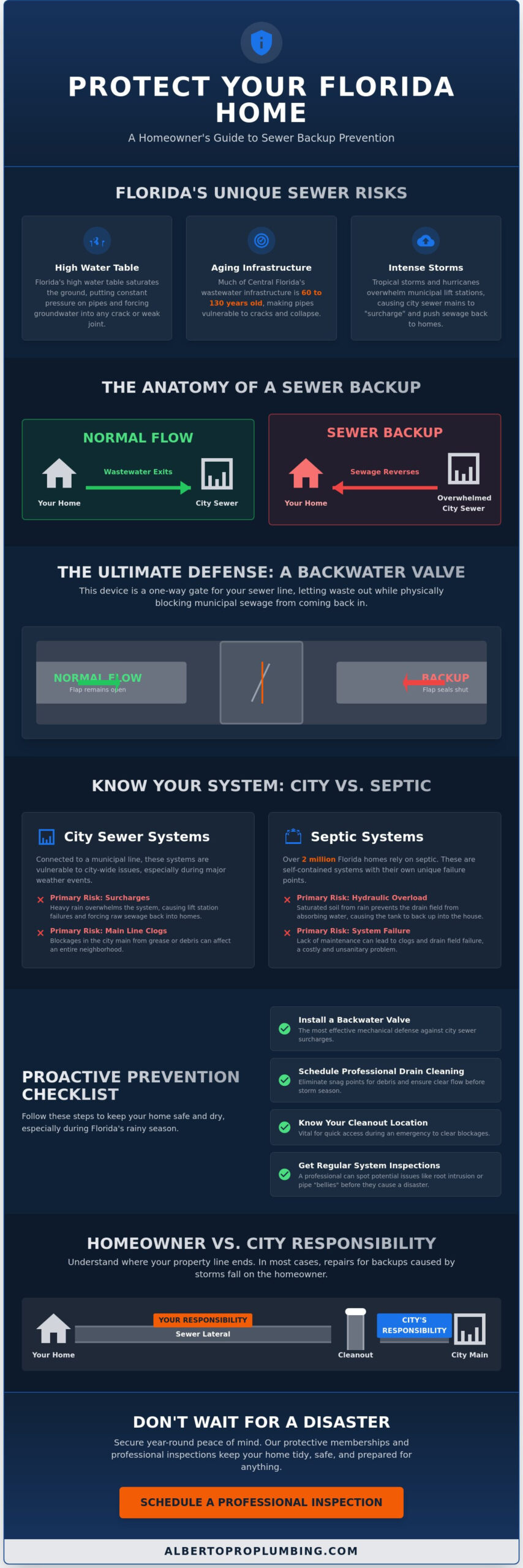
Florida’s geology presents challenges that homeowners in other states rarely encounter. Because our state sits on a massive limestone aquifer, the high water table is often just a few feet below your foundation. This subterranean environment puts constant pressure on your plumbing. When the ground becomes saturated, water seeks any tiny crack or loose joint in your sewer lateral. This process, known as infiltration, fills your private lines with groundwater, leaving little room for actual wastewater. In older Central Florida neighborhoods where infrastructure is between 60 and 130 years old, these aging pipes are particularly vulnerable to shifting and cracking under the weight of wet soil.
During hurricane season, the risk intensifies. Tropical storms can dump massive amounts of water that quickly overwhelm municipal lift stations. These stations are designed to pump sewage to treatment plants, but they have a finite capacity. When they lose power or hit their limit, a “surcharge” occurs. This is a polite way of saying the city main is full and starts pushing raw sewage back toward your home. To combat this, a Sewer Backwater Valve is often the most effective tool for sewer backup prevention Florida residents can install. It acts as a one-way gate, allowing your waste to exit while blocking the city’s mess from entering your bathrooms.
The Role of Heavy Rainfall in Lake County
In areas like Lake County, it isn’t uncommon to see three or more inches of rain fall in a single hour. This volume of water creates immediate hydraulic pressure against your buried pipes. Saturated soil can actually cause pipes to displace or “belly,” creating low spots where debris snags and builds up. If you notice your toilets gurgling or drains slowing down specifically during a heavy downpour, it’s a major warning sign. The ground is too wet for your system to breathe, and a backup is likely imminent. Acting quickly with professional sewer backup prevention Florida strategies can save your flooring from permanent damage.
Municipal vs. Residential Responsibility
Many homeowners are surprised to learn that the city is rarely liable for backups caused by storm surges or heavy rain. Generally, your responsibility begins at the house and extends all the way to the “tap” where your pipe meets the city main. This includes the cleanout, which is the white capped pipe usually found in your yard. Knowing your cleanout’s location is vital. It’s the primary access point for a plumber to clear a blockage or install protective devices. If the backup happens because of a storm, the financial burden of the cleanup and repair almost always falls on you, making proactive protection a smart investment for your peace of mind.
What is a Sewer Backwater Valve and How Does It Work?
A sewer backwater valve is a specialized plumbing fixture installed in your main sewer line. It acts as a one-way check valve, ensuring that wastewater only flows in one direction: away from your home. This is the cornerstone of sewer backup prevention Florida homeowners use to defend their properties against municipal system failures. While many Florida homes are built on concrete slabs rather than over basements, they remain highly susceptible to backups because the drains are often only inches above the height of the city’s sewer mains.
The mechanics are simple but effective. Inside the valve, a small flap or “gate” hangs open under normal conditions. This allows your sinks, showers, and toilets to drain freely. However, if the city’s main line becomes overwhelmed and sewage begins to flow backward toward your house, the reverse pressure lifts the flap and seals it shut. This creates an airtight and watertight barrier. You can visualize it as a security guard for your pipes, only letting residents out and keeping intruders from the street at bay. According to the EPA Sewer Backup FAQ, these overflows can pose significant health risks, making mechanical prevention a vital safety feature for any household.
Types of Backwater Prevention Devices
Automatic flood gate valves are considered the gold standard for Central Florida homes. They use a buoyant float to seal the gate tightly, even during slow-rising backups. For seasonal residents who might be away during hurricane season, manual sewer gate valves offer a way to physically lock the line before leaving, though they aren’t practical for daily use. Finally, simple sewer check valves are a cost-effective option. While they work well, they require more frequent cleaning because debris can sometimes snag on the flap, preventing a perfect seal when you need it most.
Installation Requirements and Placement
Installing these devices isn’t a DIY project. Florida building codes are strict about where and how these valves are placed to ensure they don’t interfere with the city’s infrastructure. Experienced specialists like Fast Plumbing, LLC advocate for professional installation to ensure these mechanical barriers function correctly during a sewage surge. We typically determine the “farthest point” on your property to install the valve, providing maximum protection for every drain in the house. This ensures that even the lowest fixtures, like a guest shower or a laundry room floor drain, are fully shielded.
Many people worry that adding a valve means digging a massive trench through their beautiful lawn. We pride ourselves on a tidy service approach. We use precise excavation techniques to install your protection without destroying your landscaping. If you’re unsure if your home is currently protected, having a professional perform a sewer line repair assessment or inspection can identify the best placement for your needs. Proper placement ensures that even if the street is flooded, your master bathroom stays dry and clean.
Septic Systems vs. City Sewer: Different Backup Dangers
While city sewer systems struggle with municipal lift station failures, septic owners face a different set of challenges. If you live in a community like Clermont, a sewage backup often means your private tank has become a victim of “hydraulic overload.” This happens when the soil surrounding your tank is so saturated from heavy rains that it can no longer absorb wastewater. Instead of moving into the drain field, the water has nowhere to go but back into your home. Understanding this distinction is a vital part of sewer backup prevention Florida homeowners must master to avoid property damage.
A failing drain field often mimics a standard sewer line clog, but the solution is entirely different. A clog is a physical obstruction in a pipe, while a failing drain field is a biological and environmental issue. When the ground is soaked, the biomat layer in your septic system cannot process effluent efficiently. This causes the system to stall. The Florida DEP guide to preventing sewer overflows highlights how environmental factors and improper maintenance contribute to these messy failures. For septic owners, prevention isn’t just about valves; it’s about managing your system’s capacity during peak rain events.
Signs of Septic Drain Field Failure
You don’t always need a professional to spot early warning signs. Keep an eye out for these red flags on your property:
- Spongy grass: If the area over your tank or drain field feels like a wet sponge even days after it stops raining, your system is struggling.
- Standing water: Puddles forming directly over the septic components suggest the soil is fully saturated and cannot accept more liquid.
- Gurgling pipes: If your drains make “glug-glug” sounds while you’re doing laundry or showering during a storm, the air in your pipes is being pushed back by rising water levels.
If you notice these issues, you might need a septic drain field rehab in Clermont, FL to restore your system’s function without the massive expense of a full replacement.
Protecting Your Septic System During Hurricanes
When a hurricane or tropical storm is looming, your septic strategy must change. First, drastically reduce your water usage. Every gallon you flush or drain adds stress to a system that is already fighting against saturated soil. Avoid using the dishwasher or washing machine until the ground has had a chance to dry out. Most importantly, never pump your septic tank while the ground is still underwater or heavily saturated. The pressure from the wet earth can actually cause an empty tank to pop out of the ground or collapse. This leads to catastrophic damage that is far more expensive than a standard backup. Once the storm passes, perform a quick visual inspection of your yard and check for any new depressions or surfacing sewage before returning to normal water use.
The Ultimate Florida Sewer Backup Prevention Checklist
Proactive maintenance is the only way to avoid the stress and mess of a sewage overflow. While previous sections explained why our local geology and infrastructure are under pressure, this checklist gives you the tools to take control. Annual maintenance is the foundation of sewer backup prevention Florida families need to stay safe. By following these steps, you can ensure your home remains a dry sanctuary during even the most intense tropical storms.
- Schedule Annual Drain Cleaning: Over time, grease and small debris create snag points in your pipes. Professional drain cleaning services in Clermont, FL remove these build-ups before they turn into full-blown blockages.
- Install a Backwater Valve Early: Don’t wait for a hurricane to be named. Install your protective valve before the summer rainy season begins in June to ensure the seal is set and tested.
- Perform Camera Inspections: Have a professional inspect your sewer lateral with a high-definition camera every 2 to 3 years. This allows us to see root intrusions or pipe offsets before they cause a backup.
- Adjust Your Landscaping: Ensure the ground around your home slopes away from your sewer cleanout. Diverting surface water prevents it from seeping into your pipes through the cleanout cap.
- Debunk “Flushable” Myths: Educate your household that “flushable” wipes, paper towels, and feminine products do not break down. They are the leading cause of residential clogs in Central Florida.
Taking these steps now is far more affordable than dealing with a flooded living room later. If you haven’t had your lines checked this year, we recommend a professional sewer inspection to catch hidden issues before the next heavy downpour hits.
Routine Maintenance Tasks for Homeowners
You don’t need a heavy toolbox to perform basic checks. Every six months, unscrew your sewer cleanout cap to ensure the threads are clear and the seal is tight. If you have an automatic backwater valve, use a flashlight to check the flap for any caught debris. A small piece of paper or a stray twig can prevent the gate from sealing during a backup, rendering the device useless when you need it most. Keeping these components clean ensures your sewer backup prevention Florida strategy remains reliable year-round.
Emergency Preparation for Storm Season
When a major storm surge is imminent and you don’t have a permanent valve installed, temporary drain plugs can offer a last line of defense. These expandable rubber plugs are inserted into floor drains and toilets to physically block rising water. Additionally, make sure every adult in the house knows the location of the main water shut-off valve. Turning off the water prevents accidental flooding from within while your drains are struggling to process waste. If you find yourself in a crisis despite your best efforts, our team provides 24/7 emergency plumbing repair in Clermont, FL to get your home back to normal quickly and safely.
How Alberto Pro Plumbing Secures Your Home Year-Round
Choosing a local specialist means working with someone who understands the unique geological pressures of Central Florida. We’ve spent years studying how our local limestone shelf and sandy soils impact subterranean pipes. This specialized knowledge is the backbone of the sewer backup prevention Florida homeowners need to stay protected. We don’t just apply one size fits all solutions. We look at your specific neighborhood, the age of your infrastructure, and your home’s elevation to create a defense plan that actually works. Whether you’re in a historic district or a new development, we bring technical authority and a neighborly touch to every service call.
We know that inviting a plumber into your home can be stressful, especially during an emergency. That’s why we stand by our “Tidy Service” promise. We treat your property with the highest level of respect, ensuring that our workspace is left in its original condition. You’ll never have to worry about messy footprints or discarded debris. If a crisis does strike, our team is ready to respond. We specialize in rapid sewer line repair and emergency plumbing, making us the first call for families who want the job done right the first time. We take immense pride in our craftsmanship and our heritage as a family oriented local business.
Professional Backwater Valve Installation
Every home has a different risk profile based on its plumbing layout and proximity to municipal lift stations. Our installation process begins with a customized assessment of your property’s elevation. We select high quality hardware specifically designed to withstand Florida’s intense humidity and ground heat. These aren’t generic parts; they are durable components built for our climate. We ensure every installation fully complies with Lake and Orange County plumbing standards, giving you a system that is both legal and reliable. By placing these valves at the optimal point in your line, we provide maximum protection for your lowest drains.
Join the Home Protection Membership
The most effective way to prevent a disaster is to catch small issues before they escalate. Our Membership That Protects Your Home Year-Round offers a proactive approach to sewer backup prevention Florida residents can trust. Members receive priority scheduling, which is vital when storm season approaches and demand for services spikes. We perform regular system “tune ups” and inspections to identify root intrusions or minor clogs that could cause a backup during the next heavy rain. This membership provides peace of mind, knowing that local experts are looking out for your home’s well being. It’s a disciplined, methodical approach to maintenance that saves you from the high costs of emergency repairs and property restoration.
Secure Your Home Before the Next Storm
Protecting your property from sewage intrusion requires a combination of the right mechanical hardware and consistent local expertise. You’ve learned how Florida’s high water table and aging infrastructure create a persistent risk for backups, but you don’t have to be a victim of circumstance. By installing a backwater valve and sticking to a professional maintenance schedule, you can ensure your living spaces stay dry and sanitary year-round. Effective sewer backup prevention Florida homeowners can trust is about being proactive rather than reactive.
As a family-owned and locally operated business, we are genuinely invested in our community’s safety. We are specialists in Central Florida septic and sewer systems, and we understand exactly what it takes to keep your lines clear. Whether you need a routine system tune-up or a 24/7 emergency response, our team is here to provide the tidy, reliable service you deserve. Don’t wait for the next tropical downpour to test your plumbing’s limits.
Schedule your sewer prevention inspection with Alberto Pro Plumbing today!
Take the first step toward total peace of mind and let our local experts secure your home against the unexpected. We’re proud to serve our neighbors and keep our community’s homes safe and clean.
Frequently Asked Questions
Does Florida homeowners insurance cover sewer backups?
Standard Florida homeowners insurance policies typically don’t cover sewer backups unless you’ve specifically added a “Water Backup and Sump Overflow” endorsement. Without this rider, you are likely responsible for all cleanup and repair costs out of pocket. We recommend reviewing your policy details with your agent to ensure you have the necessary protection before the next tropical storm hits.
How much does it cost to install a backwater valve in Florida?
The total investment for a backwater valve installation depends on factors like the depth of your sewer line and the specific type of valve required for your home’s layout. While some basic devices are less expensive, professional installation ensures the unit meets local building codes and functions correctly during a crisis. We recommend a site assessment to provide an accurate estimate based on your property’s unique plumbing needs.
Can tree roots cause a sewer backup during a storm?
Tree roots are a leading cause of backups because they enter through tiny cracks and act as a net, catching grease and debris that eventually block the line. When heavy rain saturates the soil, it puts extra pressure on these already compromised pipes. During a storm, the increased flow of water can’t pass these obstructions, leading to a sudden and messy overflow in your lowest drains.
What is the difference between a backflow preventer and a backwater valve?
A backflow preventer is designed for your clean, potable water lines to prevent contaminated water from entering your drinking supply. A backwater valve is a separate device installed on your wastewater line to stop sewage from flowing back into your home. Both are essential for the comprehensive sewer backup prevention Florida homeowners need, but they serve entirely different parts of your plumbing system.
Should I pump my septic tank before a hurricane hits?
You should never pump your septic tank immediately before a hurricane when the ground is already saturated. An empty tank is much lighter than a full one and can actually “float” or pop out of the wet soil due to intense hydrostatic pressure. This can cause catastrophic damage to your tank and landscaping. It’s much safer to wait until the ground has fully dried before scheduling your next service.
What are the first signs of a main sewer line clog?
Common warning signs include multiple drains running slowly and toilets that gurgle when you run a sink or shower. If you see water backing up into your guest shower when you flush the master toilet, you likely have a blockage in the main line. Catching these signs early allows you to address the issue before it becomes a full-blown sanitary emergency.
How do I know if my backwater valve is working correctly?
You can verify your valve’s function by performing a simple visual inspection through its access cover. Check the flap or “gate” to ensure it moves freely and isn’t obstructed by debris or toilet paper. If the flap is stuck open, the valve won’t be able to block a backup, so regular cleaning is a vital part of your maintenance routine. Starting July 1, 2026, new regulations also require most septic systems to be inspected every five years, which is a perfect time to check your valve’s status.
Is a sewer backup a health emergency?
Yes, a sewage backup is a significant health emergency because raw wastewater contains harmful bacteria, viruses, and parasites. This “black water” can contaminate your floors and furniture, creating a hazardous environment for your family. Professional cleanup and disinfection are required to ensure your home is safe to inhabit after an overflow event.