
In Florida, your home’s greatest enemy isn’t just the humidity or the hurricane season; it’s the aggressive water chemistry running through your pipes. You’ve likely spent nights worrying about a damp spot on the drywall or the sudden drop in water pressure that signals another expensive leak. It’s frustrating to deal with the constant cycle of temporary patches, especially when different contractors give you conflicting advice. When it comes to copper vs pex repiping Florida homeowners often feel stuck between a traditional material they know and a modern alternative they’ve heard mixed reviews about.
This guide will clear the confusion by showing you exactly how each material holds up against our unique local environment. You’ll discover how to secure a leak-free home for decades while maximizing your property’s value. We’ll break down the 2026 building code updates, compare long-term durability, and explain how a tidy, professional installation can be completed with minimal disruption to your daily life. Our goal is to give you the technical facts and the neighborly advice you need to make a confident decision for your family’s future.
Key Takeaways
- Learn why Florida’s specific mineral content and water treatments cause early pipe failure and how to spot the signs before a major leak occurs.
- Compare the long-term ROI and durability of copper vs pex repiping Florida to see which material better resists pinhole leaks in our local climate.
- Discover the modern “fishing” method used with PEX that allows for a whole-home repipe with significantly less wall damage and a faster turnaround time.
- Understand how 2026 building code updates and choosing the right material can protect your home’s resale value and long-term structural integrity.
- Find out why working with a local specialist who understands Central Florida’s plumbing codes ensures a professional, tidy installation that leaves your home in its original condition.
Why Florida Homeowners Face Unique Repiping Challenges
Repiping is the total replacement of a home’s supply lines to prevent catastrophic water damage. It’s a major step for any homeowner, but in our region, it’s often the only way to find peace of mind. Choosing between copper vs pex repiping Florida homes require a specific understanding of our local environment. Our state presents a perfect storm of conditions that can turn a standard plumbing system into a liability in just a few decades.
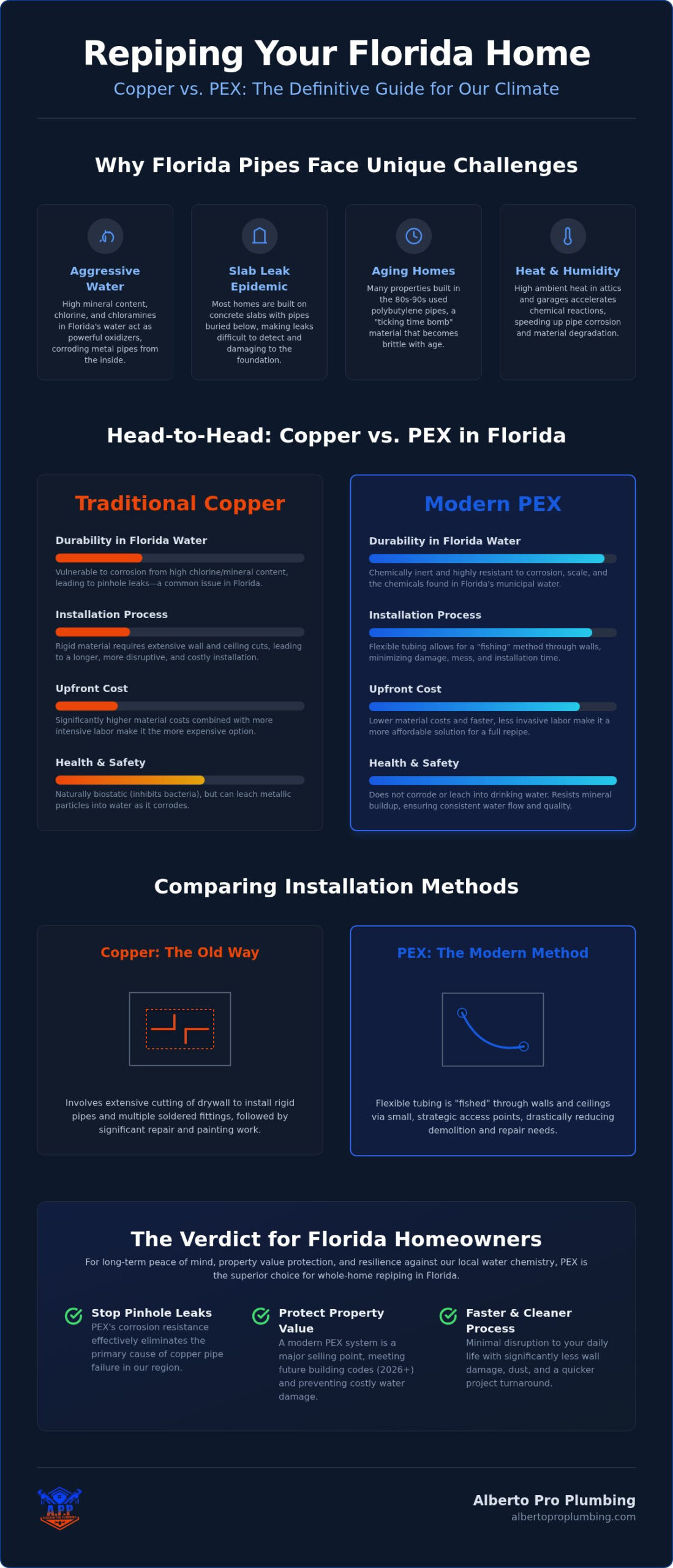
Florida’s water chemistry is a primary culprit for early pipe failure. Our local water contains high mineral content and significant levels of disinfectants like chlorine and chloramines. While these chemicals ensure our water is safe to drink, they act as powerful oxidizers. Over time, they eat away at the interior walls of metal pipes from the inside out. This chemical reaction is particularly aggressive in Central Florida, where the heat can accelerate these corrosive processes.
We also face the “Slab Leak” epidemic. Most homes in Clermont and surrounding areas are built on concrete slabs with plumbing lines buried directly in the soil or encased in the concrete. When these lines fail, water seeps into the foundation. This leads to cracked tiles, damp carpets, and even structural instability. If you notice a sudden spike in your water bill, warm spots on your floor, or the sound of running water when all your faucets are off, your home is likely ready for a whole-home repipe.
The Problem with Aging Florida Infrastructure
In Lake County, many neighborhoods built in the 1980s and 1990s utilized polybutylene pipes. These grey plastic lines are a “ticking time bomb” because they become brittle and shatter when exposed to chlorinated water. It’s vital for you to identify the difference between a simple emergency plumbing repair and a system-wide failure. While a quick patch might stop a visible leak today, it won’t address the underlying degradation of your entire network. Additionally, our high humidity and salt air can accelerate the corrosion of any exposed valves or fittings in your garage or attic.
Health and Safety Considerations
Corroded pipes do more than just leak; they impact your family’s daily health. As metal pipes break down, they can leach metallic particles into your drinking water, affecting both taste and clarity. Addressing slow, hidden leaks early is also the best way to prevent mold growth, which thrives in our warm, humid climate. Pinhole leaks are the primary symptom of copper pitting in Florida. To combat these issues, many homeowners are switching to Cross-linked polyethylene (PEX). This material is naturally resistant to the chemical corrosion that plagues metal systems. When weighing the options of copper vs pex repiping Florida professionals often recommend PEX for its ability to withstand our unique water chemistry for decades.
Copper Piping: The Pros and Cons for Central Florida Properties
For generations, copper has been considered the “Gold Standard” of residential plumbing. It’s the material most homeowners associate with quality and longevity. When you’re weighing copper vs pex repiping Florida, it’s easy to see why copper remains a contender. It’s a rigid, time-tested metal that doesn’t just feel sturdy; it adds a sense of permanent value to a home. In the Orlando area, an appraisal might even reflect a slight premium for a home with a fully updated copper system because of its reputation for lasting 50 years or more under the right conditions.
Benefits of Traditional Copper
Copper offers several unique advantages that modern plastics struggle to match. It is naturally biostatic, meaning it helps inhibit the growth of bacteria inside your pipes. This contributes to cleaner, safer water for your family. Additionally, copper handles extreme heat exceptionally well. This is a major plus in Central Florida, where water heaters work overtime and attic temperatures can soar. If your home has well-balanced water pH, copper provides a level of long-term reliability that has been documented for nearly a century.
The “Florida Factor” for Copper
Despite its reputation, copper faces significant hurdles in our local environment. While some general sources claim copper is naturally corrosion-resistant, Florida’s “aggressive” water tells a different story. The high concentrations of chlorine and chloramines used by local municipalities can lead to internal pitting. This process thins the pipe walls from the inside out until a tiny hole appears. These pinhole leaks are notoriously difficult to detect until they’ve already caused significant damage to your drywall or flooring.
Cost is another major factor. Copper is a commodity, and its price fluctuates significantly based on global markets. Between the high material costs and the intensive labor required for soldering joints, a copper repipe is a significant investment. It’s also worth remembering that copper is less forgiving during Central Florida’s occasional hard freezes. Since the metal is rigid, it’s more likely to burst if the water inside expands. If you’re seeing signs of blue-green staining around your fixtures, it might be time to have a professional perform expert leak detection to see if your copper lines are thinning.
In a detailed Pex Vs. Copper Piping comparison, the decision often comes down to your specific water quality. While copper is beautiful and high-performing in many regions, the unique chemistry of our local water supply often makes it a riskier choice for long-term protection. Balancing the initial expense against the potential for future pitting is the key to choosing the right system for your home’s future.
PEX Piping: The Modern Standard for Florida Repiping
PEX, or Cross-linked Polyethylene, has revolutionized how we approach residential plumbing in Central Florida. While copper was the mainstay for years, this flexible, high-density plastic has become the preferred choice for most modern homeowners. When comparing copper vs pex repiping Florida, the biggest shift is in the material’s adaptability. PEX is not just a cheaper alternative; it’s a specialized solution designed to handle the high-pressure demands and chemical treatments common in our local water supply.
One of the most significant advantages of PEX is the “fishing” method of installation. Because the tubing is flexible, our technicians can snake it through your walls and ceilings much like electrical wiring. This technique drastically reduces the need to cut large holes in your drywall. For you, this means a much faster project and a significantly cleaner home. Most PEX installations are completed in about half the time of a traditional copper project, making it the most cost-effective and least disruptive option available today.
PEX-A vs. PEX-B: What You Need to Know
Not all PEX is created equal. We primarily focus on PEX-A, which is manufactured using the “Engel” method. This process creates a more flexible pipe that allows for the use of expansion fittings. These fittings don’t restrict water flow like the crimp rings used with PEX-B, ensuring your showers and appliances have consistent pressure. PEX-A possesses a unique thermal memory that allows the material to expand to accommodate a fitting and then shrink back to its original size for a permanent, leak-proof seal. This material is incredibly durable and can withstand the occasional high-pressure surges that can occur in municipal systems.
Potential Drawbacks of PEX
While PEX is an excellent material, it does have specific requirements that must be respected. The most critical factor for Florida residents is UV sensitivity. PEX must never be installed in areas with direct sunlight exposure, as the rays will break down the plastic and cause it to fail prematurely. This means it’s perfect for your attic or inside your walls, but it shouldn’t be used for outdoor hose bibs without proper protection.
We also emphasize the importance of using high-quality, lead-free brass or poly fittings to ensure the longevity of the system. There is a common myth that PEX can affect the taste of your drinking water. In reality, high-quality PEX-A is thoroughly tested and certified for potable water, and most homeowners find that their water actually tastes better once the old, corroded metal pipes are removed. By combining this modern material with our commitment to tidy service, we ensure your home remains protected without the headaches of traditional plumbing methods.
Head-to-Head: Copper vs. PEX for Your Home’s Value and Performance
Choosing between copper vs pex repiping Florida often comes down to balancing the immediate experience of the renovation with the long-term performance of the system. While both materials meet stringent building codes, the impact on your daily life during the project is vastly different. A typical PEX repipe for a standard Clermont home takes about 2 days to complete. In contrast, a traditional copper installation usually stretches to 5 days or more because of the intricate cutting and soldering required at every single joint.
Performance goes beyond just moving water; it’s about how that water sounds and feels in your home. PEX offers a much quieter plumbing system. It’s a flexible material that naturally absorbs the pressure changes that cause “water hammer” or banging noises in metal pipes. From an environmental perspective, the choice is nuanced. Copper is 100% recyclable and holds its value as scrap metal, but the production of PEX requires significantly less energy and generates fewer greenhouse gases. For most modern families, the quiet operation and energy-efficient manufacturing of PEX make it a compelling choice for a 50-year home investment.
The “Disruption Factor” for Homeowners
One of the biggest concerns we hear from our neighbors is the mess associated with major repairs. Because PEX is flexible, we can often “fish” it through your attic and walls with minimal intrusion. This significantly reduces the number of holes we have to cut in your drywall. Copper is rigid and requires larger access points to accommodate the long sections of pipe. Perhaps more importantly, copper installation requires the use of open flames for soldering. While our technicians are highly trained, using a torch inside an older, dry Florida attic carries a small but real fire risk that simply doesn’t exist with PEX expansion fittings.
We take our “Tidy Service” promise seriously. Regardless of which material you choose, we treat your property with the utmost respect. We use drop cloths, wear shoe covers, and ensure the workspace is left in its original condition. Our goal is to leave you with a high-performing plumbing system, not a cleaning project.
Cost vs. Quality Analysis
When you look at the bottom line, PEX is significantly more budget-friendly. This isn’t because the material is “cheap,” but because it’s much faster to install. Labor is the largest expense in any repiping project, and the efficiency of PEX allows us to pass those savings on to you. Additionally, copper is a volatile commodity. Its price can spike overnight based on global market trends, whereas PEX pricing remains relatively stable. To ensure you get the best return on your investment, it’s vital to rely on professional plumbing services that understand how to optimize the layout of your new system for maximum lifespan.
Ready to see which option fits your budget and your home’s needs? Contact the experts at Alberto Pro Plumbing today for a detailed assessment and a clear path to a leak-free future.
Choosing Your Repipe Partner in Clermont and Beyond
Selecting the right contractor is just as important as choosing the material itself. In Clermont, Lake, and Orange Counties, plumbing systems must adhere to strict local building codes that account for our sandy soil and high water table. When you’re deciding on copper vs pex repiping Florida homes, you need a partner who doesn’t just see a job site, but a neighbor’s property. We bring a blend of local heritage and technical mastery to every project, ensuring your home is treated with the same care we’d give our own families.
The process starts with a comprehensive inspection where we identify the specific failure points in your current lines. From there, we create a clear, step-by-step plan that minimizes downtime. You’ll know exactly what to expect, from the moment we arrive to the final walkthrough where we verify every fixture is performing perfectly. To safeguard this significant upgrade, we recommend our Home Protection Membership. This program provides ongoing maintenance and priority care, ensuring your new investment remains in peak condition for decades.
Our Tidy Service Commitment
We know that the biggest fear for many homeowners is the mess. Our team follows a strict “Leave No Trace” policy. We use specialized floor protection and dust barriers to shield your furniture and belongings from the start. Our goal is to leave your home as clean as we found it, if not cleaner. This family-oriented approach is what sets us apart; we prioritize your comfort and safety throughout the entire installation. We aren’t just technicians; we’re guests in your home, and we act like it.
Next Steps for Your Florida Home
If you’re tired of the anxiety that comes with every “drip” you hear, it’s time for a professional assessment. We don’t believe in one-size-fits-all answers. Sometimes, the best approach is a hybrid solution that utilizes the strengths of both materials in different areas of the house. For example, we might use copper for exposed lines where UV resistance is needed and PEX for the internal runs to save you money and time.
Schedule a leak detection and pipe assessment today to get a clear picture of your system’s health. Don’t wait for a catastrophic slab leak to force your hand. Take control of your home’s future and get your peace of mind back with a professional repipe that’s built to last. When you’re ready to compare copper vs pex repiping Florida options for your specific layout, our team is here to provide the honest, expert guidance you deserve.
Secure Your Home’s Future with the Right Repiping Strategy
Choosing between copper vs pex repiping Florida homeowners face depends on your specific goals for durability and budget. You now understand how our state’s aggressive water chemistry can compromise metal pipes over time and why flexible PEX-A has become a modern favorite for its speed and reliability. Whether you prefer the traditional value of copper or the noise-reducing, efficient installation of PEX, the key is a professional installation that respects your property.
Our team of certified repipe specialists in Central Florida is ready to help you navigate these choices with technical authority and neighborly care. We offer 24/7 emergency support and back every project with our Tidy Service Guarantee, ensuring we leave your home spotless. Don’t let the stress of potential leaks disrupt your peace of mind any longer.
Schedule Your Free Repipe Consultation with Alberto Pro Plumbing Today!
We look forward to helping you protect your family’s home for decades to come.
Frequently Asked Questions
Is PEX or copper better for Florida’s hard water?
PEX is generally the superior choice for homes dealing with Florida’s hard water. Because it’s a non-metallic material, it’s naturally immune to the pitting and internal corrosion caused by high mineral content and chlorine. This makes it a reliable solution for long-term protection against the specific chemistry found in our local aquifers, whereas copper often thins and leaks under the same conditions.
How much does it typically cost to repipe a home in Central Florida?
The total investment for your project depends on several factors, including your home’s square footage, the number of plumbing fixtures, and your choice of copper vs pex repiping Florida materials. While we don’t provide flat rates without a physical inspection, PEX is typically the more budget-friendly option. It requires less labor and the material prices are more stable than the fluctuating copper market.
Can I stay in my house while it is being repiped?
You can absolutely stay in your home during the entire process. Our technicians work methodically to ensure your water service is restored at the end of each workday so you can shower and use your kitchen. We prioritize a tidy workspace and minimal disruption, so your family’s routine stays as normal as possible while we upgrade your system.
Will PEX pipes affect my home’s resale value compared to copper?
PEX pipes won’t negatively impact your home’s resale value in today’s market. In fact, most modern buyers and home inspectors in Florida now prefer PEX because it doesn’t suffer from the pinhole leaks that plague older copper systems. It’s viewed as a smart, durable upgrade that protects the home’s foundation and prevents future water damage insurance claims.
How long does a whole-home repipe take to complete?
A whole-home repipe typically takes between two and seven days depending on the material you choose. PEX installations are much faster, often finishing in just two or three days because the material is flexible. Copper requires more time for precise cutting and soldering joints, which usually extends the project to a full week for a standard-sized home.
Does PEX piping attract rodents or pests in Florida?
PEX doesn’t contain any organic material or “sweet” scents that would attract pests. While rodents can chew through various household materials if they are already inside your walls, they don’t seek out PEX as a food source. Maintaining a standard pest control boundary around your home’s exterior is the best way to protect all your internal systems from local wildlife.
What is the lifespan of PEX vs. copper in a high-humidity environment?
PEX has a typical lifespan of 30 to 50 years, while copper can theoretically last over 70 years. However, copper’s lifespan is often significantly shorter in Florida due to aggressive water chemistry and humidity that causes external oxidation. PEX performs exceptionally well in our climate because it doesn’t corrode or degrade when exposed to moist, salty air.
Is a permit required for repiping a house in Lake County, FL?
Yes, a plumbing permit is mandatory for any whole-home repipe in Lake County. This ensures the installation complies with the Florida Building Code and passes a professional inspection. We handle the entire permitting process for you, ensuring your project is officially recorded, which is vital for maintaining your homeowner’s insurance coverage and facilitating a smooth future home sale.