
What if a leak starts under a sink while you’re asleep or away from home? A smart detector may alert you when water reaches its sensor, but it won’t necessarily stop the leak or detect every plumbing problem. If you’re researching water leak detection Clermont options, knowing what a device can and can’t do is just as important as choosing one.
Early warning can be useful without making installation complicated. This guide explains the difference between sensor-only detectors and whole-home systems, where sensors can help, and how to plan their placement around likely leak sources. You’ll also learn which setups may involve plumbing work and when a detector alert, damp spot, or unexplained sign of water calls for professional investigation. Smart monitoring adds a layer of awareness, while professional leak detection can help locate a suspected plumbing leak. By the end, you’ll have a practical plan for choosing a setup and responding if you spot a problem in your Clermont home.
Key Takeaways
- Match the detector type to your goal, from an alert at the sensor to remote notifications or a system designed to control a shutoff valve.
- For water leak detection Clermont homeowners can plan sensor locations around likely leak sources and the coverage each device provides.
- Keep water detection, alert delivery, and automatic shutoff distinct. One capability doesn’t necessarily include the others.
- Plan installation step by step: identify your monitoring goals, choose locations, follow device instructions, and test alerts.
- Treat a detector as a monitoring aid, not a substitute for professional leak detection when water appears or concerns persist.
Why Clermont Homeowners Consider Smart Water Leak Detectors
A smart water leak detector senses water at a monitored location and alerts you to its presence. Its purpose is to help you notice a potential problem sooner, not to inspect every pipe or prevent all water damage.
Early warning can matter when a drip starts beneath a bathroom sink, a supply line leaks beside a washing machine, or water collects near a water heater. If you learn about the issue promptly, you can check the area and decide what action to take before the leak has more time to spread. The benefit depends on water reaching the sensor and the device delivering an alert you can receive.
For homeowners considering water leak detection Clermont options, it helps to distinguish home monitoring from professional plumbing service. A detector reports water at a sensor; it doesn’t identify the plumbing fault or establish how far a hidden leak has spread. Alberto Pro Plumbing provides professional leak detection to investigate suspected plumbing leaks in Clermont. A monitoring device can complement that service, but it isn’t a substitute for a plumber when you see water, receive a recurring alert, or suspect a concealed leak.
What a smart water leak detector can, and cannot, do
A sensor monitors the area immediately around its placement. It may be useful on the floor near a fixture or appliance, but it can’t alert you to water that never reaches it. A leak inside a wall, under flooring, or outside the monitored area may go undetected.
Alert delivery also depends on the device’s features, connection, and setup. Before relying on a detector, learn how it signals an alert and follow its instructions for setup and testing. An alert is useful information, not a diagnosis. You may still need to inspect the area or arrange professional investigation to find the source.
When a detector may be useful in a Clermont home
Think about where a leak could first become visible. Possible sensor locations include the floor near sinks, toilets, dishwashers, washing machines, and water heaters. Choose locations based on your home’s fixtures and the device’s instructions. Each sensor monitors only the area it covers.
Alerts can be valuable when you’re asleep or away, since you may not notice a small leak by sight or sound. Consider which areas you most want to monitor and whether you can receive alerts in those situations. No single sensor covers an entire home, so prioritize likely leak locations rather than assuming one device can monitor every pipe. If water is visible or a concern continues, treat the alert as a prompt to act, not proof that the issue is contained.
How Smart Water Leak Detectors Work and Which Type to Compare
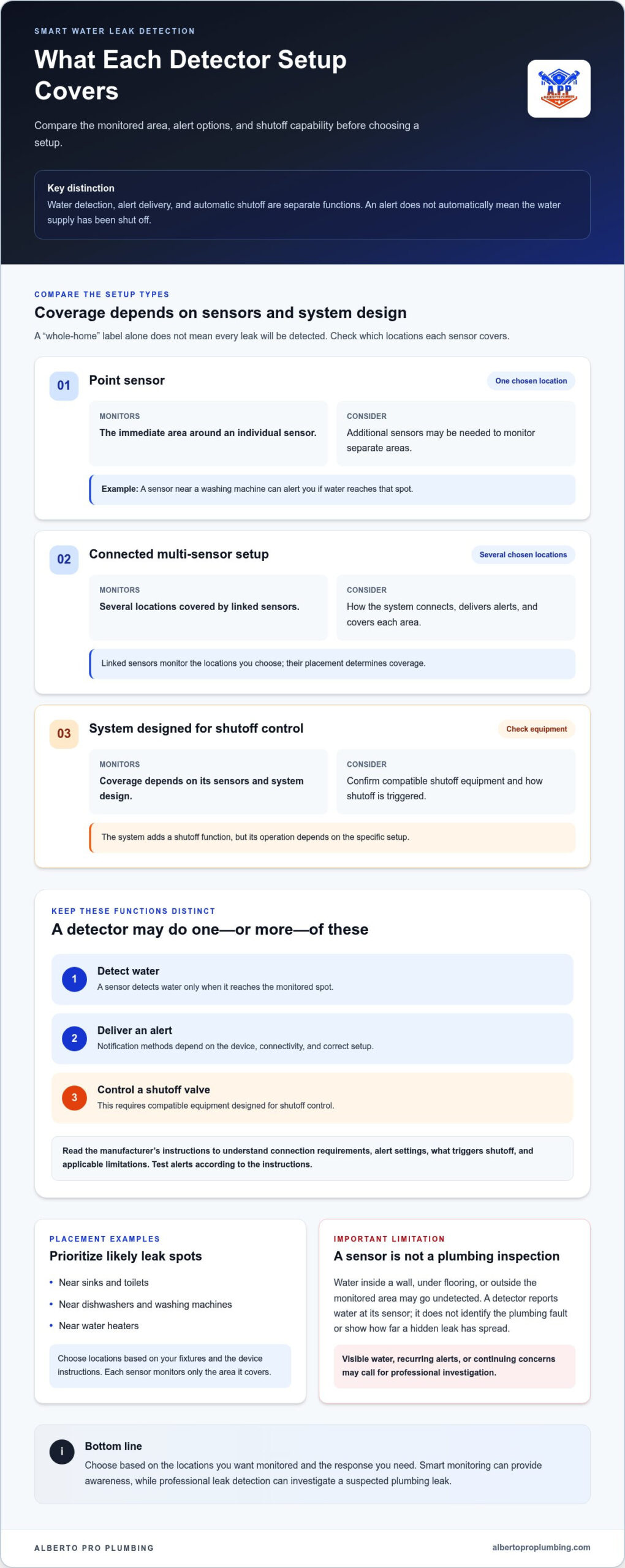
Smart leak detection setups differ in what they monitor and what happens after they sense water. A sensor may detect moisture at one location, send an alert, or work with separate equipment designed to control a shutoff valve. Compare these as distinct functions. An alert does not automatically mean the water supply has been shut off.
Point sensors versus whole-home monitoring
A point sensor monitors the area where it’s placed. For example, one near a washing machine can alert you if water reaches that spot, while another sensor is needed for a separate area. Connected multi-sensor setups link sensors so you can monitor several chosen locations. The system’s design and sensor placement determine its coverage, not simply the label “whole-home.” No setup should be assumed to detect every possible leak.
Use the comparison below to see which category matches the coverage and response you want:
| Type | Monitored area | Homeowner considerations |
|---|---|---|
| Point sensor | The immediate area around an individual sensor | Easy to plan by location; additional sensors may be needed to monitor other areas. |
| Connected multi-sensor setup | Several locations covered by linked sensors | Check how the system connects, how it delivers alerts, and which areas each sensor covers. |
| System designed for shutoff control | Coverage depends on its sensors and system design | Confirm what compatible shutoff equipment is included or required and how shutoff is triggered. |
Alerts, connectivity, and water shutoff
Connected devices may send notifications through the methods their features support. Delivery can depend on connectivity and correct setup, so read the instructions for connection requirements, alert settings, and testing. Don’t assume every model sends remote notifications or works the same way.
Automatic shutoff is a separate capability that requires compatible equipment. A sensor that detects water may only notify you. A system designed to control a shutoff valve adds another function, but how it works depends on the specific setup. Review the manufacturer’s instructions to understand what triggers an alert, what triggers shutoff, and what limitations apply.
Responding promptly to leaks also supports water conservation. The EPA WaterSense program provides homeowner resources on finding and fixing leaks. A detector can alert you to water at a monitored spot, while professional water leak detection can investigate a suspected plumbing leak that needs more than a sensor reading.
How to Choose a Smart Leak Detector for Your Home
Start with the job you want the detector to do. Do you need an alert at the sensor, a notification you can receive while away, or a system designed to work with compatible shutoff equipment? These goals call for different features. For homeowners comparing water leak detection Clermont options, a clear priority list helps narrow choices without mistaking one sensor’s coverage for protection throughout the home.
Which features matter for your household?
Think about who needs to receive an alert and where that person will be. Then check the manufacturer’s details for connection requirements, supported alert methods, battery type, maintenance, and compatibility limits. Don’t assume remote notifications, app access, or shutoff control come with every detector. Choose based on the capabilities and limitations the device maker states.
Use this checklist to compare devices:
- Goal: Decide whether you want a local alert, remote notifications, or compatible shutoff control.
- Coverage: Identify the number of monitored spots and whether sensors work individually or in a connected setup.
- Alerts: Confirm how the detector signals water and what connection or setup is needed to receive notifications.
- Power and upkeep: Review stated battery requirements, maintenance steps, and testing instructions.
- Limits: Note where the device can be placed and what types of leaks or conditions may fall outside its detection.
Where should sensors be placed?
Make a room-by-room list of the plumbing fixtures and water connections you want to monitor. Possible locations include beneath sinks, near toilets, beside a water heater, or near a dishwasher or washing machine. Follow the manufacturer’s directions for placement and suitable surfaces. A sensor monitors its chosen area, so plan coverage around priority locations rather than expecting it to inspect concealed plumbing.
For example, if you’re most concerned about a leak near a washing machine, place a sensor in that area according to its instructions. That sensor won’t also monitor a bathroom sink across the house. Add or reposition sensors only in line with the system’s stated coverage and setup guidance.
After choosing a setup, keep the instructions accessible and test the alert function as directed. Make sure everyone at home knows what an alert means and who will respond, especially if notifications are intended for times when people are asleep or away. A detector can provide useful notice at a monitored spot, but it can’t guarantee damage prevention or replace a plumbing inspection when you suspect a hidden leak.
Plan Smart Leak Detector Installation in Clermont
A straightforward sensor setup starts with choosing where to monitor and following the device’s instructions. Equipment that connects to plumbing or operates a shutoff valve involves a different level of installation. Keep these tasks separate as you plan, and don’t treat placing a sensor as a plumbing inspection. For water leak detection Clermont homeowners can use a detector as one monitoring layer, while suspected leaks still need appropriate investigation.
A practical setup and testing sequence
Plan before placing anything. List the spots you want to monitor, then follow the manufacturer’s directions for placement, connection, and testing. Requirements and alert procedures vary by device, so use the supplied instructions.
- Set your goal. Decide which locations matter most and whether you need local alerts or notifications you can receive away from home.
- Map monitoring points. Mark areas near fixtures, appliances, or water connections that you want covered. Plan for separate locations individually.
- Set up the device. Place and connect each sensor as directed. Follow the manufacturer’s guidance for any app, network, or other connection requirements.
- Test the alert pathway. Use the recommended test procedure, then confirm how the device signals detected water and what to do if an alert arrives.
Keep the instructions available after setup. If a sensor is moved or its connection changes, follow the maker’s guidance to check that it’s positioned and operating as intended. A planned setup makes it easier to know which areas are monitored and which remain outside the system’s coverage.
When installation planning becomes a plumbing issue
Placing a sensor according to its instructions is different from opening a pipe, changing plumbing, or fitting equipment that controls a shutoff valve. Those tasks involve plumbing components and may require qualified plumbing work. Don’t improvise on supply lines to make a monitoring device fit. If your plan involves plumbing changes, pause before altering the system.
Recurring pipe concerns are also different from routine detector setup. Repeated signs of leaks or ongoing concerns about pipe condition deserve attention beyond repositioning sensors. This whole-home repiping guide can help you understand the topic.
If you find active water or signs that a leak is continuing, act promptly rather than waiting for a detector test. For an urgent plumbing problem, Alberto Pro Plumbing provides emergency plumbing repair in Clermont. For suspected leaks that need investigation, Alberto Pro Plumbing provides professional leak detection. Arrange plumbing help for a suspected leak when an alert or visible sign points to a possible plumbing problem.
When to Call Alberto Pro Plumbing for Water Leak Detection
A smart detector can alert you to water at a monitored location, but it can’t diagnose the plumbing problem behind the alert or repair a leak. Professional water leak detection Clermont homeowners seek is useful when an alert points to a suspected plumbing issue, water appears without an obvious explanation, or signs keep returning. Don’t wait for a detector to confirm what you can already see.
Smart monitoring or professional leak detection?
Think of home monitoring as an alerting tool and professional leak detection as a way to investigate a suspected plumbing leak. A detector may tell you that water reached a sensor. It won’t necessarily locate the source, show whether water has spread beyond that spot, or determine what repair is needed.
Visible water, a recurring alert, or a concern that persists deserves attention even if a sensor stays silent. A leak outside a sensor’s coverage may not trigger it. Alberto Pro Plumbing provides leak detection for suspected plumbing problems in Clermont. For broader plumbing needs, professional plumbing services in Clermont can address concerns beyond a detector reading.
Your next step when you suspect a leak
Keep the details clear. Note where the water or alert appeared, when you noticed it, and whether the sign returned or continued. If you can do so without disturbing the area, a photo may help you describe what you observed. These details can help a plumber understand the concern and investigate it.
- Water is actively appearing or spreading: Treat the situation as urgent and seek plumbing help promptly.
- An alert repeats or dampness returns: Arrange professional investigation rather than relying on sensor resets.
- You notice a new sign of water: Don’t wait for an alert before responding. A sensor only monitors its assigned location.
For urgent plumbing issues, Alberto Pro Plumbing offers 24/7 response. This is for urgent situations, such as an active or escalating leak, and is not a promise of a particular arrival time. If water is actively affecting your home, contact the emergency plumbing service and explain what you’re seeing.
For a suspected leak that needs investigation, take the next step with water leak detection in Clermont. A monitoring device can be a helpful part of your home’s awareness plan. A plumber can investigate the suspected plumbing issue and help determine what needs attention.
Make Your Leak-Response Plan Before You Need It
A detector is most useful when everyone at home knows what to do after an alert. Decide who will check the monitored area, how you’ll respond if water is visible, and when a concern needs a plumber’s investigation. Keep device instructions easy to find, and revisit your sensor plan if you rearrange appliances or change the areas you want to monitor.
Think of that plan as part of caring for your home, not a guarantee that every leak will be caught. If you notice water or have a plumbing concern, respond to what you see rather than waiting for a device to sound. A clear plan can make a stressful moment easier to manage.
For professional water leak detection Clermont homeowners can turn to Alberto Pro Plumbing to investigate a suspected plumbing leak. Get help with water leak detection in Clermont and take a confident step toward understanding what’s happening in your home.
Frequently Asked Questions
Can a smart water leak detector find a leak behind a wall?
Usually, a standard sensor won’t identify a leak hidden behind a wall unless water reaches a monitored area. A damp patch, bubbling paint, or a persistent musty smell can still warrant attention, even if the detector hasn’t alerted. Don’t wait for a sensor to confirm a visible sign. If you suspect water is escaping from concealed plumbing, a plumber can investigate the source and determine what repair may be needed.
Do smart water leak detectors need professional installation?
Many standalone sensors are designed for homeowners to place and set up by following the manufacturer’s directions. A system that connects to plumbing or controls a compatible shutoff valve is a different project and may require plumbing work. Review the specific installation instructions before starting. If the setup involves water lines, or you already suspect a leak, qualified plumbing help can keep device installation separate from diagnosing the underlying issue.
Where should I place a water leak detector in my home?
Choose spots where a leak could reach the sensor, such as near a sink trap, toilet connection, water heater, dishwasher, or washing machine. Consider which areas are harder to notice during everyday routines, then follow the maker’s directions for surface and placement. If a room has several separate plumbing connections, one sensor may not monitor all of them. Keep a simple note of the areas each sensor covers.
Will a smart leak detector automatically shut off my water?
Not necessarily. Some detectors only alert you, while certain systems can work with compatible shutoff equipment. Read the product description and instructions to see whether automatic shutoff is included, what equipment it needs, and what conditions trigger it. Even if water flow stops, the device won’t explain why the leak happened. Arrange plumbing investigation if the cause is unclear or the problem returns.
Is a smart water leak detector worth it for a Clermont home?
It may be worthwhile if you want an alert from a selected area while you’re asleep or away. Consider which locations matter most, whether the alert method suits your household, and what connection or upkeep the device requires. A detector is one part of a response plan, not a promise that every leak will be caught. Choose coverage that fits your needs and know what you’ll do if an alert arrives.
What should I do if my leak detector alerts me?
Check the indicated area promptly and look for active water, damp materials, or a continuing drip. Follow the device instructions, and if you can safely reach an appropriate shutoff, use it to limit water flow. Don’t open walls or take plumbing apart to trace the source. If water is spreading, the source remains unclear, or the problem seems urgent, seek plumbing help rather than relying on the detector alone.
Can a plumber detect a leak that my smart sensor missed?
Yes. A sensor only reports conditions within the area or system it monitors, so an alert may not occur when a leak is elsewhere. Professional water leak detection Clermont homeowners request can help investigate signs such as recurring dampness or unexplained water near plumbing. Alberto Pro Plumbing provides leak detection in Clermont, and its emergency plumbing service responds to urgent plumbing issues. Describe what you noticed and where it appeared.