
A plumbing issue that disrupts your next rush may start with a slow sink drain, not a major leak. In a busy kitchen, grease-clogged drains, backed-up floor drains, and fixtures that stop working can interrupt prep, dishwashing, and service. The practical question is what needs prompt attention and what can be planned. Reliable restaurant plumbing helps protect the flow of your operation, not just address visible leaks.
This guide covers common disruptions, signs that call for prompt attention, and practical maintenance and service steps. Alberto Pro Plumbing provides commercial plumbing, emergency repairs, drain cleaning, and water heater installation for businesses in Clermont and across Lake, Polk, Osceola, and Orange Counties. Use the guidance below to report plumbing concerns clearly and plan service around your kitchen’s needs.
Key Takeaways
- Map the water supply, fixtures, drains, restrooms, and hot-water equipment to understand how each part supports daily operations.
- Use the symptoms and timing of a plumbing issue to decide whether it needs prompt repair, further investigation, or planned maintenance.
- Coordinate routine restaurant plumbing work around kitchen operations to help reduce avoidable service interruptions.
- Record where a problem occurs, when it started, and how it affects the kitchen before reporting it.
- Alberto Pro Plumbing provides commercial plumbing support in Clermont and Lake, Polk, Osceola, and Orange Counties.
Restaurant Plumbing in Central Florida: Why Kitchen Reliability Matters
Restaurant service depends on more than ingredients and staffing. Water, drains, and fixtures support food preparation, dishwashing, restrooms, and guest areas throughout the day. A blocked kitchen drain can slow cleanup and prep, while a leaking fixture can leave a work area wet. If hot water stops flowing, routine washing tasks may be interrupted until the problem is assessed and addressed.
Restaurant plumbing includes the repair, drain, fixture, and water-heating work that helps a food-service business maintain dependable daily operations. It can involve fixing a leak, cleaning a drain, installing a fixture or water heater, or planning plumbing work around business needs. The right next step depends on what staff observe and how the issue affects operations.
Which plumbing problems can interrupt restaurant service?
Start by noting where the symptom appears and which routine it affects. Slow or standing water in a kitchen sink can delay washing and cleanup. A leaking toilet or restroom fixture that stops working can affect guest access. A drain problem or interruption to hot water in the dishwashing area can slow the return of clean equipment. A leak in a customer-facing area may also mean staff need to keep people clear of the affected spot.
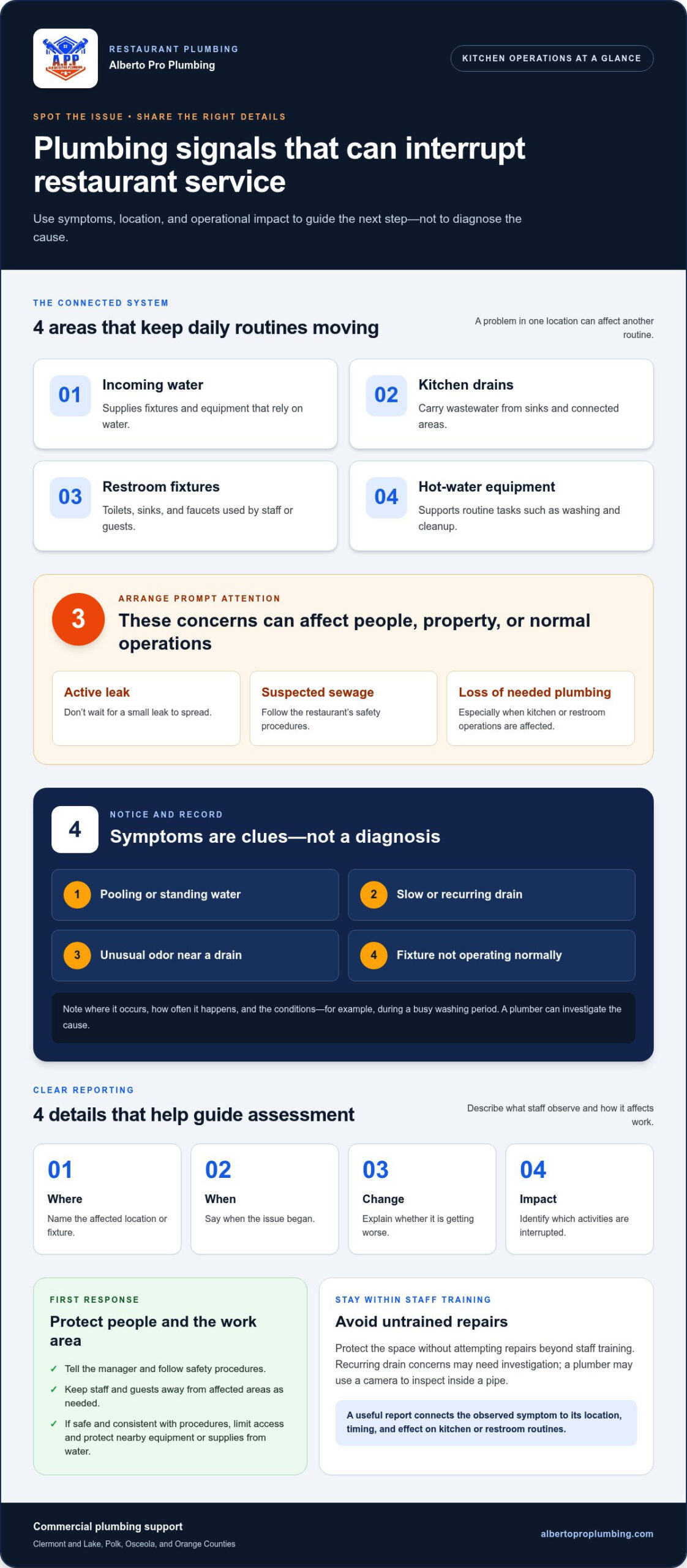
Record what you see, such as pooling water, a slow drain, an unusual odor, or a fixture that no longer operates normally. These are symptoms, not a diagnosis. A plumber can investigate whether the cause is within a fixture, drain, or less visible part of the plumbing system. For recurring drain concerns, a plumber may use a camera to inspect inside a pipe. The CCTV Drain Camera (Plumbing) overview explains this inspection method.
When does a restaurant plumbing issue need urgent attention?
Arrange prompt attention for an active leak, suspected sewage, or loss of plumbing needed for kitchen or restroom operations. These issues can affect people, property, and the ability to continue normal work. Don’t wait for a small leak to spread or a drain problem to worsen. Tell the manager, follow the restaurant’s safety procedures, and keep staff and guests away from affected areas as needed.
Protect the space without attempting repairs beyond staff training. If it’s safe and consistent with your procedures, limit access to the affected area and prevent nearby equipment or supplies from getting wet. When reporting the issue, tell the commercial plumber where it is, when it began, whether it’s getting worse, and which activities it’s interrupting. Those details help guide the assessment and service plan.
Restaurant Plumbing Systems: Drains, Fixtures, and Hot Water
A restaurant’s plumbing works as a connected system. Incoming water supplies kitchen and handwashing sinks, faucets, toilets, and hot-water equipment. Drains carry wastewater away from food-preparation, dishwashing, restroom, and other service areas. A problem in one location can affect another routine. Tracking where a symptom appears helps staff describe it clearly and supports a focused assessment.
- Incoming water: Supplies fixtures and equipment that rely on water.
- Kitchen drains: Carry wastewater from sinks and other connected areas.
- Restroom fixtures: Include toilets, sinks, and faucets used by staff or guests.
- Hot-water equipment: Supports routine tasks such as washing and cleanup.
Restaurant drains need attention suited to their use because food-service activity can send grease, food residue, and other debris into sinks and connected drain lines.
How kitchen drains and grease interceptors affect operations
Grease interceptors, often called grease traps, are designed to collect fats, oils, and grease before wastewater continues into connected plumbing. The terms are often used interchangeably, but equipment and layouts vary. Don’t assume every restaurant has the same setup or maintenance needs. Follow the restaurant’s procedures and verify applicable local requirements before relying on a particular rule or schedule.
Watch for patterns such as a persistent odor near a drain, repeated slow drainage at the same sink, or recurring backups. These signs don’t identify the cause on their own. Note the location, frequency, and conditions when the symptom occurs, such as during a busy washing period. That information helps a plumber assess whether the concern involves a fixture, drain line, interceptor, or another part of the system.
Why fixtures and hot water matter in a working restaurant
Sinks and faucets support handwashing, food preparation, and cleanup. Toilets and restroom sinks help keep guest and staff facilities usable. A dripping faucet, malfunctioning fixture, or inconsistent water supply can interrupt routines and create extra work for staff. Report which fixture is affected and what changed instead of assuming the cause.
Hot-water equipment also needs to suit the restaurant’s practical demands. If hot water becomes inconsistent or unavailable, dishwashing and other routine tasks may be affected. Staff can record when the change occurs and which fixtures are involved, then share those details during service. For background on water-heater options, see this water heater installation guide.
Good plumbing supports reliable cleaning and sanitation routines, but it’s only one part of food safety. The FDA Food Safety Guidelines provide broader food-safety information. For restaurant repairs, drain cleaning, or fixture and water-heater installation, commercial plumbing support can help address the plumbing side of daily operations.
Restaurant Plumbing Repairs vs. Preventive Maintenance: What to Prioritize
Not every plumbing concern calls for the same response. A sudden failure affecting essential operations needs attention before a minor issue that can be assessed by appointment. A recurring clog or leak also deserves more than another temporary fix. A clear record of symptoms helps a plumber distinguish an immediate repair from a pattern that calls for investigation or planned maintenance.
Set priorities by impact and timing. Is water actively escaping? Is there a sewage concern? Has a plumbing failure made an essential area unusable? Is the problem recurring, or can a developing concern be scheduled for review? These questions help staff communicate the issue without trying to diagnose the cause.
Which restaurant plumbing problems should be handled first?
Prioritize active leaks, sewage concerns, and failures that affect essential kitchen or restroom operations. Follow the restaurant’s procedures to protect people and property, and arrange prompt professional assessment. A contained concern that doesn’t prevent essential work may be suitable for scheduled service, but recurring symptoms still deserve attention. Record when the issue occurs, where it appears, and which tasks or areas are affected.
- Prompt attention: Active leaks, suspected sewage, or a failure disrupting essential plumbing.
- Schedule an assessment: A contained concern that isn’t interrupting essential operations.
- Request an investigation: A symptom that keeps returning, even after a temporary remedy.
When can planned plumbing work help prevent repeat disruptions?
Repeated drain trouble, recurring leaks, and aging fixtures are useful reasons to request a professional review. A maintenance plan can help identify developing concerns and organize service around the restaurant’s operating needs. Rather than assuming a fixed schedule or a particular result, have the plumber assess the symptoms and priorities, then discuss suitable next steps.
For example, if one drain slows repeatedly, note when it happens and what work is taking place nearby. Repeatedly clearing the symptom without investigating why it returns may leave the underlying issue unresolved. Professional drain cleaning can address drain concerns, while an assessment can help determine whether further investigation is appropriate.
Planned work can be coordinated with the restaurant’s workflow. Share operating constraints, identify lower-impact windows, and clarify which areas need attention so the service plan accounts for kitchen and guest-area routines. This won’t eliminate all disruption, but it helps staff prepare and set practical expectations before work begins.
Keep a simple service log with dates, locations, observed symptoms, prior work, and operational effects. Patterns in the record give the plumber useful context and help management decide what to address first. For restaurant plumbing repairs, drain cleaning, or planned commercial service, Alberto Pro Plumbing’s commercial plumbing team can assess the concern and discuss practical next steps.
A Practical Restaurant Plumbing Checklist for Clermont and Central Florida
A clear report turns a plumbing concern into a useful service conversation. For restaurant plumbing in Clermont and across Central Florida, staff can follow a simple sequence: observe the symptom, record where and when it occurs, note whether other fixtures are affected, and report what they found. This gives the manager and plumber practical details without asking employees to diagnose the problem.
What restaurant staff can document before requesting service
Keep the steps simple and consistent. Follow business safety procedures first, and don’t attempt complex plumbing repairs. A short note can help distinguish a one-time symptom from a recurring issue and clarify which part of the operation needs attention.
- Identify the location. Note the specific sink, restroom, dishwashing area, drain, or customer-facing space involved.
- Describe what’s visible. Record signs such as slow drainage, a leak, standing water, an unusual odor, or a fixture that isn’t working normally. Report observations rather than guessing at the cause.
- Note timing and recurrence. Record when the problem began, whether it has happened before, and whether it appears during a particular task or busy period.
- Check nearby fixtures. From a safe position, note whether other sinks, drains, or fixtures show similar symptoms. Share what you observe with the manager.
- Report operational impact. Explain whether the issue affects prep, cleanup, dishwashing, restrooms, or guest access, and follow the restaurant’s procedures to protect people and property.
Keep service notes together. Add the date, any earlier plumbing work, and whether the symptom returned. For example, reporting that the same prep sink drains slowly again is more useful than noting only “drain problem.” Don’t delay reporting an active leak, sewage concern, or plumbing failure affecting essential operations while collecting routine details.
How to plan service around business operations
Before scheduling planned work, identify the affected areas and the practical limits of the operation. Consider which tasks depend on those fixtures, how staff access the space, and whether work can be sequenced to keep other areas usable. Share these details with Alberto Pro Plumbing so the project scope and work plan can be discussed for the property.
For an urgent plumbing issue, review the 24/7 emergency plumbing service. For planned commercial plumbing, repairs, drain cleaning, or installation needs, explore restaurant plumbing support from Alberto Pro Plumbing. The company serves Clermont and customers across Lake, Polk, Osceola, and Orange Counties, with service focused on helping protect business operations.
Restaurant Plumbing Service in Clermont: How Alberto Pro Plumbing Can Help
A restaurant plumbing concern calls for a practical response that considers both the affected system and the work happening around it. Alberto Pro Plumbing provides commercial plumbing support for businesses in Clermont and across Lake, Polk, Osceola, and Orange Counties. Whether a manager is reporting a repair need or planning an installation, clear information about the issue helps start a useful discussion about next steps.
Commercial plumbing support for restaurant needs
Alberto Pro Plumbing handles commercial plumbing needs that can include emergency repairs, drain cleaning, fixture installation, and water heater installation. The right service depends on the reported symptom and a professional assessment. A recurring drain concern, a fixture that isn’t working as expected, or a hot-water equipment issue calls for attention suited to the system involved, rather than guesswork or repeated temporary fixes.
Restaurant projects can also involve construction or remodeling plumbing. If an updated kitchen or other renovation includes new or altered plumbing systems, discuss the project scope and intended use with Alberto Pro Plumbing. Planning plumbing as part of the broader project helps clarify what needs attention and how different tasks may be sequenced around the business.
- Repairs: Describe the affected fixture or area and how the issue is affecting daily work.
- Drain cleaning: Share whether a drain problem is recurring and which locations are involved.
- Installation: Identify the fixture or water-heating need and the area it serves.
- Construction or remodeling: Explain the planned work and the plumbing changes involved.
Good service also means treating the restaurant as a working environment. Clear communication about access, affected areas, and operating needs gives the team useful context as it discusses service. Alberto Pro Plumbing brings a professional, neighborly approach to commercial plumbing across its Central Florida service area.
What to expect when arranging restaurant plumbing service
Start with a concise description: what you noticed, where it’s happening, when it began, and whether it has happened before. Explain the operational impact, such as a sink or restroom staff can’t use normally, a drain slowing during cleanup, or a water-heating concern affecting routine tasks. These details help focus the discussion without asking restaurant staff to identify the technical cause.
Next, discuss the plumbing need and a suitable service plan for the property. For an urgent concern, describe what’s happening and which areas are affected. For planned repairs or installation, share relevant project details and operating constraints. Alberto Pro Plumbing provides commercial plumbing support in Clermont and Lake, Polk, Osceola, and Orange Counties.
Ready to discuss your restaurant’s plumbing needs and practical next steps? Contact Alberto Pro Plumbing about restaurant plumbing.
Make Plumbing Readiness Part of Your Operating Plan
A dependable kitchen is easier to manage when plumbing concerns have a clear path from first observation to professional assessment. Set a simple expectation for staff: report changes early, share useful details, and follow established procedures while the issue is addressed. For management, those reports help distinguish what needs attention now from what can be planned around the business.
This approach helps your team respond with clarity instead of piecing together what happened during a busy shift. It also gives a commercial plumber useful context for discussing repairs, maintenance, or project needs. Make restaurant plumbing part of ongoing operations planning, not just a topic that comes up during a disruption.
Ready to plan a practical next step for your kitchen? Discuss your restaurant’s plumbing needs with Alberto Pro Plumbing. A clear conversation can help you move forward and keep your team focused on serving guests.
Frequently Asked Questions
Can a restaurant stay open during plumbing repairs?
Sometimes, but it depends on the repair and which areas need to be taken out of use. Work confined to one fixture may affect operations differently from work that interrupts water or drainage across a larger area. Discuss the affected spaces and work scope with the plumber, then have management decide whether service can continue safely under the restaurant’s procedures. Don’t assume the impact before the work is assessed.
How often should restaurant drains be professionally cleaned?
There’s no single cleaning interval for every restaurant. Drain use, past problems, and the plumbing layout all affect what’s appropriate. Review service records and note when slowdowns or backups tend to return. That history gives a plumber useful context for discussing whether cleaning or further assessment makes sense for your property. Don’t rely on a calendar alone if symptoms appear sooner or change.
What causes recurring clogs in a restaurant kitchen drain?
Grease, food particles, and other residue can contribute to buildup in kitchen drains, but a recurring clog doesn’t reveal its exact cause. For example, a sink that slows after repeated prep shifts may need more than another quick clearing. Note which drain is affected and what was happening before the slowdown. A plumber can assess the system and recommend appropriate drain cleaning or further investigation.
Is a slow drain in a restaurant an urgent plumbing problem?
A slow drain may be suitable for a scheduled assessment if it’s isolated and not disrupting essential work. Treat it more urgently if water backs up, the problem worsens quickly, several fixtures are affected, or suspected sewage is present. Keep staff from using an affected fixture if your procedures call for it, and report the change to management. A drain that still empties may still have a developing issue.
What should restaurant staff do when a plumbing leak starts?
Notify the manager, follow the restaurant’s safety procedures, and keep people away from water on floors or near supplies. If staff are trained and authorized, and it’s safe to do so, they can use the appropriate shutoff. Don’t handle unfamiliar valves or attempt a complex repair. Report where the leak is, whether it’s ongoing, and what nearby areas or equipment are affected so the issue can be assessed.
Can a plumber install or replace a restaurant water heater?
Yes. Alberto Pro Plumbing provides water heater installation, including for commercial plumbing needs. Share what the existing unit serves, what operational issue prompted the replacement, and any access or project constraints. A plumber can discuss the installation scope and next steps. If hot water has become inconsistent, describe when that happens and which tasks or fixtures are affected rather than guessing at the equipment fault.
What information should I provide when requesting restaurant plumbing service?
Describe the affected area, the visible symptom, when it started, and whether it has happened before. Include related fixtures or equipment and explain how the issue affects staff, guests, or routine work. If you have a service record, share relevant past repairs or cleaning. Clear observations help Alberto Pro Plumbing understand the concern and discuss an appropriate next step without requiring staff to diagnose it.