
What if a weak shower isn’t a sign that your whole plumbing system needs major work? The pattern matters. If one faucet is slow, the cause may be limited to that fixture. If several fixtures lose pressure, a valve, hidden leak, or pipe issue may need closer attention. A careful low water pressure diagnosis Clermont homeowners can use starts by finding out where the problem occurs, not by replacing parts and hoping for the best.
Weak showers and slow-filling fixtures can throw off your routine. It’s unsettling when you can’t tell whether water is leaking somewhere out of sight. You can make a few basic observations before calling a plumber, but some symptoms need professional attention to limit the risk of further damage.
This guide explains how to tell whether low pressure affects one fixture or your whole property, which checks are useful, and when to bring in a plumber. You’ll also learn how professional diagnosis can distinguish a fixture problem from a leak, valve concern, or pipe issue, so the next step is based on the likely cause rather than guesswork.
Key Takeaways
- Notice whether low pressure affects one fixture, several fixtures, or the entire property to help narrow down where the problem may be.
- Compare hot and cold water, inspect accessible aerators, and note valve positions without adjusting unfamiliar components.
- Share your observations so a Clermont plumber can build on them instead of guessing at parts or repairs.
- Watch for active leaks, water damage, or a sudden major pressure change, which warrant prompt plumbing attention.
- Professional diagnosis can help distinguish a fixture restriction from a leak, valve concern, or pipe issue before a repair is recommended.
Low Water Pressure in Clermont: What the Symptoms Can Tell You
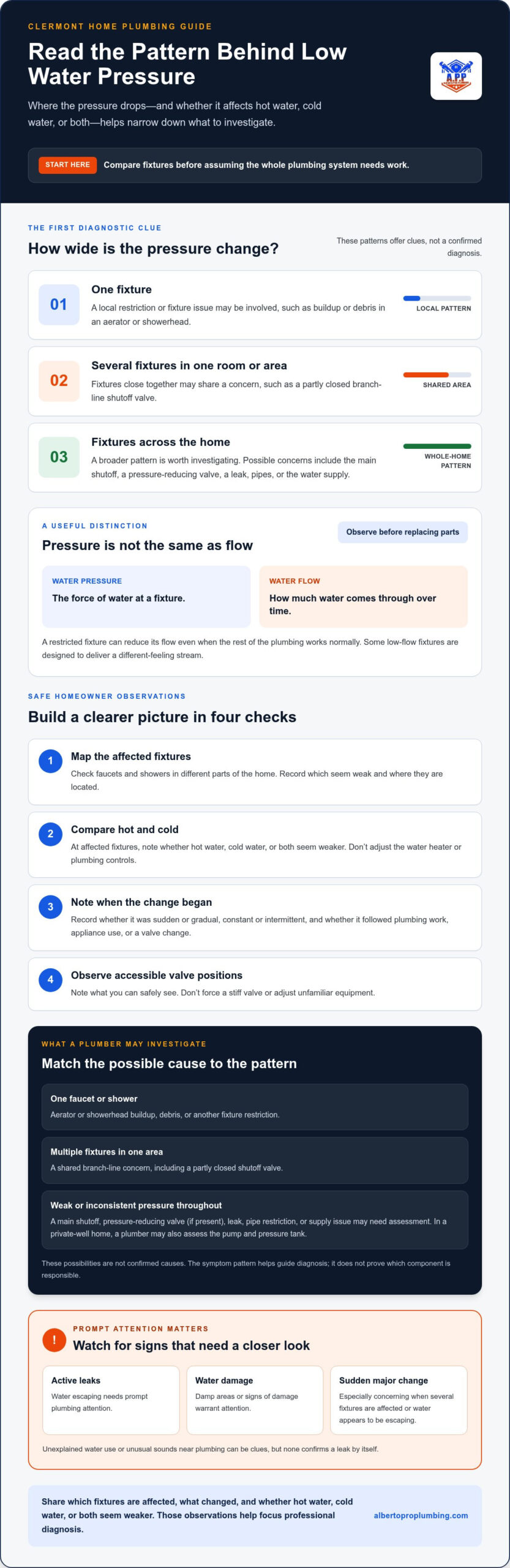
A weak shower or faucet can make a routine task frustrating, especially when you’re unsure whether one fixture or the whole home is affected. Start by comparing fixtures rather than guessing at a repair. Low water pressure describes reduced force at a fixture; flow describes how much water comes through over time. They’re related, but a restricted fixture can reduce its flow even when the rest of the plumbing works normally. That distinction is a useful starting point for low water pressure diagnosis in Clermont.
The pattern offers clues, not a confirmed diagnosis. A clogged aerator or showerhead may affect one fixture, while symptoms in several areas can point to a broader plumbing or supply concern. Some fixtures are designed to use less water, too. Low-flow fixtures can deliver a different-feeling stream by design, so consider the fixture itself before assuming the plumbing has failed.
- One fixture: A local restriction or fixture issue may be involved.
- One room: Several affected fixtures close together may suggest a concern shared by that area.
- Whole home: Weak flow at fixtures in different parts of the property points to a broader issue worth investigating.
- Sudden change: A quick shift across multiple fixtures deserves attention, especially if you also notice signs of water escaping.
The number and location of affected fixtures are your first useful diagnostic clues. They help distinguish a local restriction from a wider plumbing concern.
Is low pressure affecting one faucet or the whole Clermont home?
Test several cold-water fixtures in different parts of the home, such as a bathroom sink, kitchen faucet, and shower. Then compare hot and cold water at the affected fixtures. If only one faucet seems weak, a restriction at that fixture is possible. If several fixtures have the same symptom, the issue may extend beyond a single aerator or showerhead. These patterns narrow the possibilities, but they don’t identify the cause on their own.
What a sudden or gradual pressure change may suggest
Note when you first noticed the change and whether it stays constant or comes and goes. Record whether it began after plumbing work, appliance use, or a valve change. This context can help a plumber understand the pattern, but timing alone can’t confirm a leak or pipe failure. Keep track of which fixtures are affected and whether hot water, cold water, or both seem weaker. Those observations make the next check more focused.
Common Causes of Low Water Pressure in Clermont Homes
Low pressure can start at a single fixture, affect a group of fixtures, or involve the home’s water supply. The location of the symptoms helps narrow down what to investigate, but it doesn’t prove the cause. A useful low water pressure diagnosis Clermont homeowners can act on considers the fixture, nearby plumbing, main supply, and any pressure-control equipment before recommending a repair.
Fixture restrictions, shutoff valves, and pressure-reducing valves
At one faucet or shower, mineral buildup or debris in an aerator or showerhead can restrict water as it exits. If several fixtures in one area are affected, a partly closed shutoff valve on a branch line may be worth investigating. A partly closed main shutoff can affect water flow across the home. Note any valve positions you can safely see, but don’t force a stiff valve or adjust unfamiliar equipment.
A pressure-reducing valve (PRV) helps control incoming water pressure in homes that have one. If it isn’t working as intended, pressure symptoms may show up at multiple fixtures. The causes of low water pressure in your house can also include clogged pipes or supply issues, which is why the affected areas matter. A plumber can assess whether a valve or another part of the system is involved before replacing parts.
Leaks, pipe restrictions, and private-well system issues
A leak may be hidden, so note clues such as unexplained water use, damp areas, or unusual sounds near plumbing. These signs deserve attention, but none confirms a leak by itself. Pipe condition and internal restrictions also need professional diagnosis. Don’t assume that a gradual pressure change means pipes need replacement.
For a home supplied by a private well, the pump and pressure tank are additional components a plumber may assess if pressure is weak or inconsistent throughout the property. This possibility applies only to well-served homes, not every Clermont property.
Matching the suspected cause to the affected area helps prevent unnecessary part replacement. If the pattern points beyond one fixture or safe checks don’t explain the change, Alberto Pro Plumbing’s Clermont plumbing diagnosis can help identify whether a leak, valve, or pipe concern needs attention.
How to Diagnose Low Water Pressure: A Safe Step-by-Step Check
A few careful checks can give a plumber a clearer picture without taking your plumbing apart. For a low water pressure diagnosis in Clermont, focus on what you can observe and leave unfamiliar valves and equipment alone.
Checks homeowners can make without dismantling plumbing
- Map the affected fixtures. Try faucets and showers in different parts of the home. Record which ones seem weak and where they’re located.
- Compare hot and cold. At an affected fixture, check whether the change seems limited to hot water, cold water, or both. Note any difference rather than trying to adjust the water heater or plumbing controls.
- Inspect an accessible aerator. If one faucet is affected and its aerator can be removed and reinstalled safely, clean it and check whether flow changes. Don’t force a stuck part or dismantle a fixture you’re unsure how to reassemble.
- Observe visible valve positions. Look at accessible fixture shutoff valves and the main shutoff, if you can see them. Record what you notice, but don’t turn unfamiliar, stiff, or hard-to-reach valves.
- Consider a pressure gauge only if you can use it correctly. A compatible gauge, attached and read according to its instructions, can provide a pressure measurement at that outlet. A single reading is only one piece of information; it doesn’t identify a faulty component. No pressure threshold is needed for these initial observations.
Stop if you find active leaking, see water near electrical equipment, or encounter a valve you can’t operate safely. Avoid experimenting with system components. A pressure change combined with a safety concern needs professional attention.
What to record before requesting plumbing diagnosis
Write down when you first noticed the problem and whether it stays steady or comes and goes. Note which fixtures are affected, whether hot or cold water seems weaker, and any visible moisture or unusual sounds near plumbing. Include recent plumbing work, appliance use, or valve changes that may be relevant. If you know whether the property uses public water or a private well, add that information too.
Measurements and a fixture-by-fixture record help narrow the diagnosis, but they don’t prove a specific fault. Share your notes with a plumber if the checks don’t explain the symptoms or if the problem affects several areas. This gives the professional a useful starting point to assess the likely source without relying on guesswork.
When Low Water Pressure Needs Prompt Plumbing Attention
A weak stream from one faucet, without other symptoms, may call for a simple fixture check rather than emergency service. The response should change if pressure drops suddenly across several fixtures or you see signs of water escaping. Low pressure alone doesn’t prove a pipe has burst, but a major change can be a reason to investigate promptly.
Warning signs that should not be ignored
Look for visible leaks, spreading dampness, or water damage alongside the pressure change. A sudden drop affecting multiple fixtures deserves prompt attention, especially if you hear unusual sounds or notice moisture near plumbing. Don’t attempt pipe repairs or operate unfamiliar valves. If water is actively damaging the property, treat the situation as urgent and seek emergency plumbing help.
Use this simple decision path:
- Safe observation: One fixture is weak, with no leak or damage. Note the symptoms and check accessible fixture parts without forcing them.
- Prompt plumbing assessment: Several fixtures are affected, pressure changes suddenly, or safe checks don’t explain the problem. Arrange an inspection to identify the cause.
- Emergency response: Water is actively leaking or causing damage. Seek emergency plumbing help rather than continuing to troubleshoot.
When an inspection can prevent guesswork
A plumber can assess accessible valves and piping, check pressure regulation, and investigate whether a leak or restriction may be contributing to the symptoms. This helps distinguish a fixture-level concern from a wider plumbing issue, without assuming that every pressure change calls for major repairs. If the problem remains unexplained across multiple fixtures, a professional low water pressure diagnosis in Clermont is a practical next step.
Alberto Pro Plumbing provides leak detection and plumbing repairs in Clermont. If several fixtures are affected or you’ve noticed signs of a leak, request plumbing help for low water pressure and share what you’ve observed.
Get Low Water Pressure Diagnosed in Clermont
You don’t need to identify the exact failed part before asking for help. Note which fixtures are affected, whether hot water, cold water, or both seem weak, and when the change began. These details give a plumber a clearer picture and help keep the diagnosis focused on the symptoms you’re seeing.
What to expect from a pressure diagnosis
A professional assessment starts with your observations and the pressure pattern across the home. The plumber can check affected fixtures and accessible plumbing components, then investigate likely sources such as a valve, pressure regulation concern, leak, or pipe restriction. A weak faucet doesn’t automatically mean the whole system needs work, and multiple affected fixtures don’t prove that a particular part has failed.
The repair plan should follow the findings. Depending on the cause and the property’s plumbing setup, the next step may involve a fixture or plumbing repair, leak detection, or repiping if the assessment supports it. Diagnosis comes first, so you can understand why a repair is recommended instead of guessing at a solution.
Take the next step with a Clermont plumbing team
For a low water pressure diagnosis in Clermont, bring along any notes about affected fixtures, hot-versus-cold differences, changes over time, and signs of moisture or unusual sounds. You don’t need a pressure reading or a technical explanation. Your observations are enough to begin a practical assessment.
Alberto Pro Plumbing serves Clermont and surrounding Central Florida communities with plumbing repairs and leak detection. If low pressure continues across several fixtures, or you’ve noticed signs of a leak, request professional plumbing help. The team can assess the likely source and recommend next steps based on the condition of your plumbing, including leak detection or repiping when appropriate.
Take the Next Step Toward Steady Water Pressure
Start with the pattern: note which fixtures are affected, whether hot water, cold water, or both seem weak, and when the change began. These details can help narrow down the cause, but they can’t confirm whether the issue is a fixture restriction, valve, leak, or pipe concern. A professional low water pressure diagnosis in Clermont focuses on identifying the likely source before recommending a repair.
Alberto Pro Plumbing serves Clermont and Central Florida with leak detection, plumbing repairs, and repiping when the diagnosis supports it. If you notice active leaking or water damage, seek prompt help. For unexplained weak flow, you don’t need to identify the failed component yourself.
Request plumbing help for low water pressure in Clermont. With a clear diagnosis, you can take the next step with confidence and get back to your routine.
Frequently Asked Questions
Is low water pressure in my Clermont home an emergency?
Low pressure alone isn’t always an emergency. A single weak faucet with no other warning signs may only need a basic fixture check. But a sudden drop across several fixtures, visible leaking, or water damage deserves prompt attention. If water is actively escaping or damage is spreading, treat the situation as urgent and seek emergency plumbing help. If simple fixture checks don’t help, arrange an assessment.
Can a clogged faucet aerator cause low water pressure?
Yes. Mineral buildup or debris in an aerator can restrict flow at one faucet while nearby fixtures work normally. If only that faucet is affected, check its removable aerator if you can safely remove and reinstall it. Don’t force a stuck part. If several fixtures have weak flow, an aerator is less likely to explain the whole pattern, so don’t assume it’s the only cause.
How do I tell whether low water pressure affects the whole house?
Test several fixtures in different rooms, including hot and cold water where practical. If one fixture has weak flow, the restriction may be local. If multiple fixtures are affected, note whether the change is sudden or gradual and whether it occurs throughout the home. These observations can help with a low water pressure diagnosis in Clermont, but they don’t identify the fault by themselves.
What causes sudden low water pressure in a house?
A sudden pressure change can have several possible causes, including a valve that isn’t fully open, an issue with pressure-regulating equipment, a leak, or a change in the water supply. Note which fixtures are affected and whether hot water, cold water, or both seem weak. If the drop affects multiple fixtures, especially alongside visible moisture, arrange prompt investigation instead of guessing at a repair.
Can a water leak cause low water pressure?
A leak can affect water flow, but low pressure by itself doesn’t prove there’s a leak. Look for other clues, such as visible moisture, unexplained dampness, water damage, or unusual sounds near plumbing. If several fixtures lose pressure or you notice signs of water escaping, arrange a plumbing assessment. Identifying the cause first helps determine whether leak detection or another repair is appropriate.
Could a private well cause low water pressure?
A private-well system can involve a pump and pressure tank, and a problem with either may affect household flow. First determine whether your property uses a private well or public water; Clermont homes don’t all have the same setup. Note which fixtures are affected and when the pressure changes. Sharing these details helps a plumber assess the relevant parts of your system.
Should I adjust my home’s pressure-reducing valve myself?
Avoid adjusting an unfamiliar pressure-reducing valve yourself. The valve may not be causing the symptoms, and an incorrect adjustment can affect the plumbing system. Instead, note whether low pressure affects one fixture or the whole home and arrange a plumbing assessment if the cause isn’t clear. If you have a pressure reading, share it with the plumber; don’t rely on an unverified threshold to diagnose the problem.