
What if the best construction plumber for your home isn’t the one with the shortest estimate, but the one who makes every responsibility clear before work starts? When the builder, plumber, and other trades need to work in sequence, an unclear scope or missed handoff can disrupt the build. Choosing a residential construction plumber Clermont homeowners can rely on means looking beyond promises and comparing what each contractor will actually handle.
You’re right to want a clear estimate, defined responsibilities, and a plan for permits and inspections before construction begins. This guide explains how to compare plumbers using consistent criteria, define installation needs, and coordinate plumbing with your builder and other trades. It also covers why you should confirm which permitting authority applies: a Clermont mailing address doesn’t always mean a property is within city limits. Alberto Pro Plumbing serves Clermont with construction and remodeling plumbing. The steps ahead can help you prepare for a practical project discussion.
Key Takeaways
- Learn how construction plumbing differs from emergency repairs and routine fixture replacement, so you can match the work to the right contractor.
- Use a consistent checklist to compare written scope, relevant experience, communication, project fit, and how changes will be handled.
- Find out what plans, fixture selections, site access, and scheduling details to gather before discussing your project with a residential construction plumber Clermont homeowners may consider.
- Clarify who supplies fixtures and materials, who provides project documentation, and how plumbing work will fit around the builder and other trades.
- Identify site questions early, including whether the property uses municipal sewer or onsite septic, and verify which authority handles its permitting and inspections.
What a Residential Construction Plumber in Clermont Does
A residential construction plumber plans and installs plumbing as part of a home build, coordinating the work with project plans, site conditions, the builder, and other trades. Unlike a repair visit focused on an existing leak or blockage, construction plumbing establishes plumbing systems as the project takes shape. For an overview of modern plumbing systems, including common concepts and materials, see Wikipedia’s plumbing article.
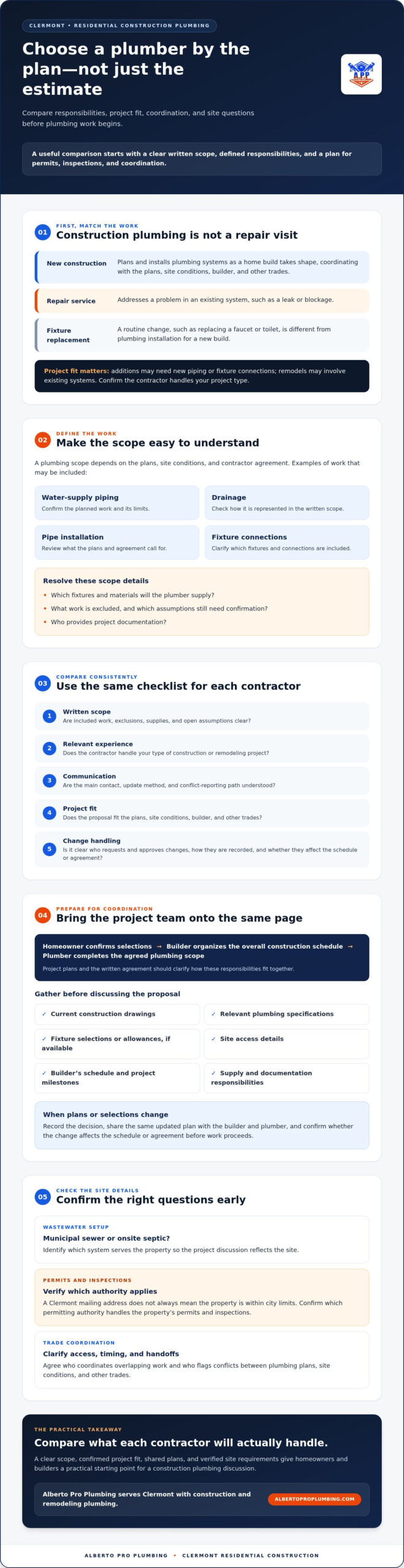
The plumber’s role connects with, but doesn’t replace, the homeowner’s and builder’s responsibilities. Homeowners make or confirm selections, the builder organizes the overall construction schedule, and the plumber works within the agreed plumbing scope. Clear communication helps everyone understand what must happen, when site access is needed, and which decisions are still pending. The project plans and written agreement should spell out those responsibilities.
Which residential projects need a construction plumber?
New single-family homes need plumbing planned alongside the rest of the build. A residential addition may also need new plumbing when the plans call for new piping or fixture connections. Remodeling can involve different considerations because it may use parts of an existing system. A general plumbing provider may not be the right fit if the project calls for construction scheduling, coordination with a builder, or work tied to a set of plans. Confirm that a contractor handles your type of project before comparing estimates.
Construction plumbing is the planned installation and coordination of plumbing systems in a build. Repair service addresses a problem in an existing system. Routine fixture replacement, such as changing a faucet or toilet, is also different from plumbing installation for new construction. If you’re planning a remodel rather than a new build, check whether the proposed scope accounts for existing systems and project coordination. Don’t assume the same work or scheduling needs apply.
What work may appear in a plumbing scope?
Depending on the project, the written scope may cover water-supply piping, drainage, pipe installation, and fixture connections. These are examples, not a standard package: the plans, site conditions, and contractor agreement determine what’s included. Ask which fixtures or materials the plumber will supply, what work is excluded, and which assumptions still need confirmation. A clear scope gives you and the builder a practical reference for coordinating plumbing with other trades.
When comparing a residential construction plumber Clermont homeowners are considering, look for a clear explanation of how the proposed work fits the project, not just a general promise to handle the plumbing. Alberto Pro Plumbing serves Clermont and offers construction and remodeling plumbing. Homeowners and contractors can discuss installation needs and project coordination while defining the scope.
How Clermont Residential Plumbing Work Fits Into a Build
Plumbing coordination is about making sure the right people are working from the same information, not following one universal schedule. Current plans, fixture selections, site access, and the builder’s schedule all affect how plumbing work can be planned. Confirm project milestones with the builder and plumber rather than assuming every home follows the same sequence.
Before work begins, agree on the written plumbing scope, the main contacts, how the plumber will access the site, and how the team will share updates. Ask who coordinates overlapping work and who will flag a conflict if the plumbing plans, site conditions, or another trade’s work don’t align. A named contact and an agreed way to communicate can save you from relaying conflicting instructions between the project team.
Agree on how decisions and changes are handled
Changes to fixtures or design can affect the plumbing scope. Ask who can request a change, how it will be recorded, and who must approve it before work proceeds. Keep updated plans and written decisions together, and make sure the builder and plumber receive the same revision. Confirm whether a change could affect the schedule or agreement instead of relying on an informal conversation.
Share the information needed for a useful proposal
Before requesting a proposal, gather the current construction drawings and relevant plumbing specifications. Share fixture selections or allowances if you have them, and ask the contractor to state whether each item is included or supplied by someone else. Confirm who provides materials and project documentation. These details help contractors price the same scope rather than make different assumptions.
Site details matter, too. Share any utility information you have and flag unresolved questions for review. The property’s connection needs, access arrangements, and other site conditions may affect planning, so distinguish what’s known from what still needs confirmation. For code-related reference, consult the Florida Building Code for plumbing and verify which requirements and authority apply to the specific project.
A residential construction plumber Clermont homeowners are evaluating should be able to explain how the proposed work fits the plans and how project questions will be handled. Alberto Pro Plumbing works with homeowners and contractors on construction and remodeling plumbing in Clermont. Once you’ve gathered your plans and selections, you can discuss your construction plumbing scope with the team.
How to Compare Residential Construction Plumbers in Clermont
Compare proposals against the same plans and project assumptions, not just the total. A lower bid may exclude fixture connections, assume different selections, or leave coordination tasks undefined. Until you know what each contractor priced, the totals aren’t a fair comparison.
Use the same record for each residential construction plumber Clermont homeowners are considering. Write down each answer and note what you’ve verified. This makes gaps easier to spot before you choose.
| What to compare | Questions to ask | Your notes |
|---|---|---|
| Written scope | Which tasks are included and excluded? What assumptions or allowances does the proposal use? How are changes documented and approved? | Record inclusions, exclusions, and open questions. |
| Relevant experience | Have you handled residential projects similar in type and scope? How do you coordinate with the builder? | Note relevant examples discussed. |
| Communication | Who handles scheduling, site questions, and updates? How will the homeowner and builder receive changes? | Write down the contact and agreed method. |
| Credentials | Can you provide current license and insurance details for verification? | Record what you checked and through which source. |
| Project fit | Does the proposal address your plans, selections, access needs, and builder’s coordination process? | List anything that still needs confirmation. |
Ask questions that reveal how the work will be managed
Ask each contractor about comparable residential construction work and how they communicate with builders. Find out who your contact will be for scheduling and site questions, and how the contractor records scope details and project updates. Specific answers help you picture how coordination will work. If an answer is vague, ask for more detail in writing.
Make proposals comparable before weighing the price
Give each contractor the same current drawings and fixture assumptions. Then compare included tasks, exclusions, allowances, and the process for handling changes. If one proposal assumes you’ll supply fixtures and another includes them, the totals don’t describe the same work. Clarify unclear responsibilities before deciding.
Check current licensing through an appropriate official source, such as the Florida Department of Business and Professional Regulation’s license lookup, and request current proof of insurance. Verify the details rather than relying on an unsupported claim or an online review. The goal isn’t to choose the longest proposal. It’s to choose a contractor whose experience, communication, verified credentials, and written scope fit your project.
Clermont Construction Planning: Site Questions to Resolve Before Work
Before requesting a plumbing proposal, gather the project details you have and separate confirmed facts from open questions. This gives the builder and plumber a clearer starting point without asking you to make decisions that belong to the project team or local authority.
- Collect the basics. Prepare the project address, current construction plans, anticipated schedule, and any fixture selections or allowances you already know.
- List what needs checking. Note unanswered questions about site access, utilities, plumbing scope, and who will provide materials or documentation.
- Confirm ownership. Ask the builder who will contact the plumber about site questions, approvals, or changes, and who is responsible for confirming applicable requirements.
Verify utilities, permits, and inspections for the property
Ask the builder or relevant local authority whether the property is planned to connect to municipal sewer or use an onsite septic system. Treat this as a site-specific question, not an assumption based on the property’s mailing address or nearby homes. The answer can affect planning, so have the appropriate people confirm it before the plumbing scope is finalized.
Also ask who will check which plumbing requirements apply and confirm the permits and inspections needed for the project. First establish whether the property is within Clermont city limits or in unincorporated Lake County. Then use current guidance from the City of Clermont or Lake County, as applicable. Don’t rely on a general online summary to determine the authority for a particular property.
Prepare a useful project handoff
Send the residential construction plumber Clermont homeowners are considering the same current plans and known selections you shared with the builder. Include the anticipated schedule and a short list of unanswered questions. Ask the contractor what can be assessed from the information provided and what needs confirmation before the proposal can define the work.
This preparation keeps responsibilities visible. If a fixture selection is still undecided, note that rather than assuming a particular fixture or connection is included. If site access or utility details are unknown, mark them for review. Keep answers and revisions in writing so the homeowner, builder, and plumber can refer to the same information.
With those details in hand, you can discuss your residential plumbing project with Alberto Pro Plumbing. The company serves Clermont and offers construction and remodeling plumbing, including pipe and fixture installation.
Choosing Alberto Pro Plumbing for Residential Construction in Clermont
A sound contractor choice comes down to practical checks: Is the plumbing scope clear? Does the contractor understand this type of residential project? Is there a straightforward way to communicate about plans and changes? Have project requirements and credentials been verified? These questions keep the decision focused on what your build needs, rather than broad promises or assumptions.
Alberto Pro Plumbing serves Clermont and offers construction and remodeling plumbing. Homeowners and builders can explain the planned work and ask whether the plumbing needs fit those services. If you’re evaluating a residential construction plumber for a Clermont project, focus on a clear conversation about the work rather than assuming every contractor handles the same scope.
What can homeowners and builders discuss with the company?
Bring questions about the plans, pipe or fixture installation needs, and expected plumbing scope. You can also discuss how project questions will be communicated and what information the contractor needs to understand coordination expectations. If an item is uncertain, ask what must be confirmed before it can be included in a proposal. This helps separate known requirements from decisions still pending.
Keep the discussion specific to your project. Share what the builder has established, identify open utility or access questions, and ask which details need review by the builder or applicable local authority. Verify credentials and project requirements through appropriate sources rather than treating them as settled without confirmation.
What information should you have before reaching out?
A little preparation makes the conversation more useful. Gather the project location in Clermont, the build type, current plans, and anticipated schedule. Note known fixture selections and utility arrangements, along with questions about inclusions, exclusions, or responsibilities. You don’t need every decision finalized to begin a discussion, but label unknowns clearly so they aren’t mistaken for confirmed details.
Use the conversation to understand the proposed next steps: what the team can assess from the information you provide, what remains to be verified, and how the plumbing scope will be defined. Then compare the written proposal with your project documents before deciding. Clear answers at this stage can help you and your builder plan with fewer assumptions.
Contact Alberto Pro Plumbing to discuss your project. Bring your plans, schedule, known selections, and a short list of questions so you can start with the details that matter.
Start Your Clermont Project With a Clear Plumbing Plan
A good construction plumbing decision starts with a defined scope, not just a number on an estimate. Compare proposals using the same plans and assumptions, and clarify who handles communication, materials, and changes. Before work is planned, identify open site questions and confirm which local authority applies to permits and inspections.
If you’re considering a residential construction plumber, Clermont homeowners can discuss their project with Alberto Pro Plumbing. The company serves Clermont and offers residential construction and remodeling plumbing, working with homeowners and contractors. Bring your current plans, anticipated schedule, known fixture choices, and questions about installation or coordination to begin a focused conversation.
Contact Alberto Pro Plumbing to discuss your Clermont construction project. With the right details on hand, you can take the next step with greater clarity and confidence.
Frequently Asked Questions
What does a residential construction plumber do?
A residential construction plumber installs plumbing as part of a new home or addition and coordinates that work with the project plans and build team. Depending on the written scope, work may include water-supply piping, drainage, and fixture connections. This differs from a repair visit, which addresses an issue in an existing system. Confirm the specific inclusions and exclusions with the contractor before work begins.
How do I choose a construction plumber in Clermont, Florida?
Compare contractors by written scope, experience with similar residential projects, communication practices, project fit, and verified credentials. Ask each one to identify inclusions, exclusions, assumptions, and how changes are documented and approved. Use the same plans and fixture information when requesting proposals so you can assess comparable work. A residential construction plumber Clermont homeowners consider should be able to explain how the proposed scope fits the project.
When should I hire a plumber for a new home construction project?
Start discussing plumbing while plans and project decisions are being prepared, before the build schedule and scope are locked in. Early communication gives the builder and plumber a chance to identify open questions about fixture selections, utilities, site access, and responsibilities. There’s no universal milestone for every project, so ask your builder when the plumber should review the current plans and confirm the timing for your specific build.
What should a residential construction plumbing estimate include?
A useful estimate should describe the work covered and identify exclusions, assumptions, allowances, and who supplies fixtures or materials. It should also explain how changes to the plans or selections will be documented and approved. Check that the estimate is based on the same drawings and project details as other proposals. If a responsibility or allowance is unclear, ask for clarification before comparing totals or agreeing to the scope.
Does a Clermont home need a septic system or a municipal sewer connection?
The property’s planned wastewater connection determines whether it will use municipal sewer or an onsite septic system. Don’t infer the answer from a Clermont mailing address or nearby properties. Ask the builder or relevant local authority to verify the arrangement for the specific site, then share that information with the plumbing contractor. Confirm unanswered utility details before treating them as part of the proposal or project plan.
Do I need permits or inspections for residential construction plumbing in Clermont?
Plumbing work for a new home may require permits and inspections, but confirm the current requirements and responsible authority for the property. First check whether the site is within Clermont city limits or in unincorporated Lake County, since the permitting authority can differ. Ask the builder and plumber who will verify applicable requirements and coordinate documentation or inspections. Use current City of Clermont or Lake County guidance, as appropriate.
Can a plumbing contractor work directly with my home builder?
Yes. Alberto Pro Plumbing states that it works with homeowners and contractors on construction and remodeling plumbing. Before work starts, agree on who will communicate about scheduling, plan questions, and changes, and how updates will be shared. Ask the builder and plumber to clarify who coordinates overlapping work and how decisions are recorded. A clear contact process helps everyone work from the same project information.