
A drain that clears quickly isn’t always a drain that’s fixed. When a clog keeps returning, or more than one fixture starts draining slowly, it can be hard to tell whether the blockage is local or part of a wider problem. Choosing professional drain cleaning Clermont homeowners can rely on starts with a careful assessment, not just a promise to get water moving again.
A recurring clog can disrupt the household, and you deserve to know what a plumber plans to check before you authorize work. A good service conversation starts with your symptoms, explains the recommended next step, and connects that recommendation to what you’ve noticed.
This guide explains how to compare drain cleaning options, what to expect during a professional visit, and which questions can help you choose with confidence. You’ll also learn when symptoms may call for a broader assessment. Alberto Pro Plumbing serves Clermont and offers drain cleaning for local homeowners who need professional help.
Key Takeaways
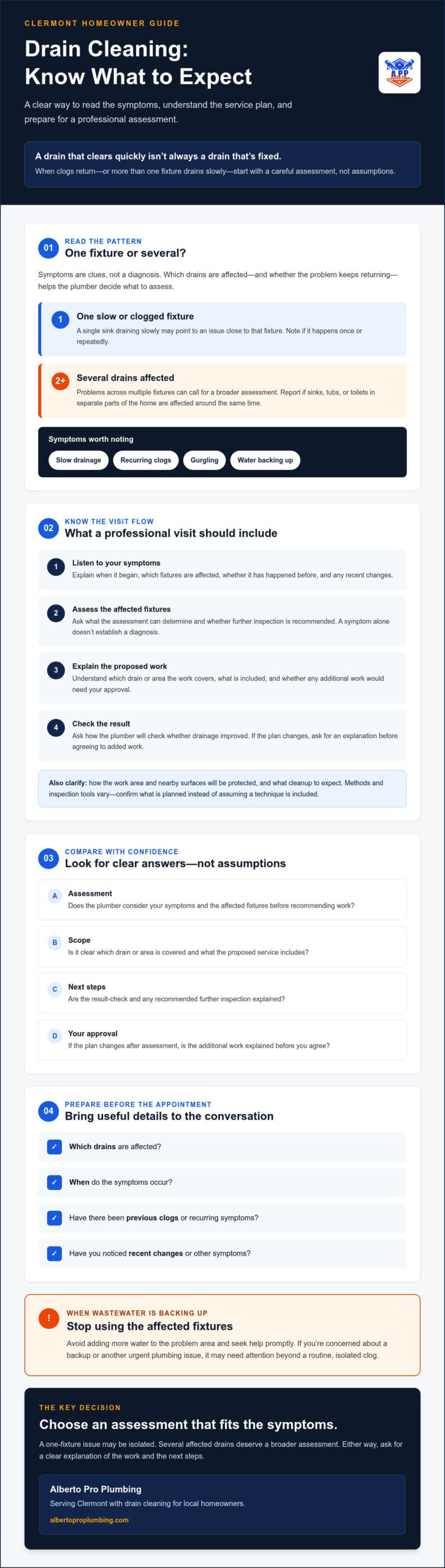
- Notice whether the issue affects one fixture or several, and watch for slow drainage, gurgling, recurring clogs, or backups.
- Expect a plumber to ask about symptoms, assess affected fixtures, explain the proposed work, and check the results.
- Compare professional drain cleaning Clermont options by how clearly the plumber explains the assessment, work scope, and next steps.
- Before the appointment, note which drains are affected, when symptoms occur, previous clogs, and any recent changes.
- Choose a local provider whose assessment fits the symptoms. Alberto Pro Plumbing serves Clermont and offers drain cleaning.
When to Call for Professional Drain Cleaning in Clermont
Slow drains, recurring clogs, gurgling, and water backing up are symptoms worth noting. A single sink draining slowly may point to an issue close to that fixture, while problems affecting several drains can call for a broader assessment. These are clues, not a diagnosis. A plumber needs to consider the affected fixtures and circumstances before recommending work.
A clog in one fixture may be isolated; problems across several drains deserve a broader assessment. That distinction helps you describe what’s happening when you contact a plumber. It also sets a useful expectation: professional drain cleaning Clermont service should begin by understanding the symptoms and choosing an appropriate next step, rather than assuming every clog has the same cause.
Which drain symptoms suggest a recurring or wider problem?
A one-time slow drain differs from a blockage that returns after it seems to clear. Note whether the same fixture repeatedly drains poorly or whether sinks, tubs, or toilets in separate parts of the home are affected around the same time. Gurgling or water backing up along with other symptoms is also useful to report. Household drains connect as part of larger plumbing and drainage systems, so issues affecting multiple fixtures merit professional assessment. These signs alone can’t identify a sewer, septic, or vent issue.
When should Clermont homeowners seek professional help?
Contact a plumber when a clog keeps returning, ordinary household use is disrupted, or multiple fixtures are draining poorly. Share which drains are affected and when the symptoms occur. Those details can help guide the assessment. If wastewater is backing up, stop using the affected fixtures to avoid adding more water to the problem area, and seek help promptly.
Some symptoms may indicate an urgent plumbing issue rather than a routine, isolated clog. If you’re concerned about a backup or another urgent problem, review this professional plumbing emergency guidance to consider the appropriate next step. An assessment can clarify whether drain cleaning fits the symptoms or whether another concern needs attention. Don’t use the sound or location of a clog alone to decide what’s happening.
What Professional Drain Cleaning in Clermont Should Include
A useful service visit follows a clear process: the plumber listens to what you’ve noticed, assesses the affected fixtures, explains the proposed work, and checks the result. This gives you a chance to understand the plan before work begins instead of authorizing a service without knowing what it covers.
The appropriate approach depends on the drain, the symptoms, and what the assessment reveals. Ask which drain or drains the proposed work addresses, what the service includes, and whether any additional work would require your approval. Methods and inspection tools vary, so confirm what the plumber plans to use instead of assuming a particular technique is included.
How should a plumber diagnose a drain problem?
Explain when the symptoms began, which fixtures are affected, and whether the problem has happened before. Mention changes you’ve noticed, such as a drain that worsens with ordinary use or a clog that returns after clearing. These details can help a plumber consider possible causes, but a single symptom doesn’t establish a diagnosis. Ask what the assessment can determine and whether further inspection is recommended.
What should homeowners expect during the service visit?
Before authorizing work, ask the plumber to explain the proposed scope in plain language. Find out what’s included, which fixture or area the work covers, and how the plumber will check whether drainage has improved. If the plan changes after assessment, ask for an explanation of the added work before agreeing to it.
You can also ask how the work area and nearby surfaces will be protected, and what cleanup to expect. Clear answers help you make an informed choice and set expectations for the visit. For broader guidance on comparing contractors and recognizing warning signs, consult the Federal Trade Commission’s advice on how to choose a reputable plumber.
Use these standards to evaluate professional drain cleaning Clermont providers. Alberto Pro Plumbing serves Clermont and offers drain cleaning. You can learn more about Alberto Pro Plumbing as you compare your options.
How to Compare Drain Cleaning Options and Avoid a Repeat Clog
A drain that flows again is a relief, but clearing a blockage may not explain why it formed or whether it will return. Compare providers by the quality of their assessment, how clearly they define the work, and whether they explain what to do if symptoms come back. A clear plan you understand is more useful than a broad promise of speed.
When a clog returns, seek a reassessment instead of repeating the same fix by guesswork. The next step depends on which fixtures are affected and what a plumber finds. Use this guide to describe the pattern, not to diagnose the cause yourself:
| What you notice | What to ask |
|---|---|
| One fixture drains slowly or clogs once | What did the assessment find, and what work will address this drain? |
| The same clog keeps returning | Could something be contributing to the repeat blockage, and what would you check next? |
| Several fixtures drain poorly or back up | Does this pattern call for a broader plumbing assessment? |
These patterns help organize the conversation, but they don’t confirm whether the cause is in a household drain, sewer line, or another part of the plumbing system. Ask the provider to explain what the assessment supports and what remains uncertain.
What questions help you evaluate a drain cleaning provider?
Before approving work, ask what the assessment found, which drains the proposed work covers, and whether additional work would need separate approval. Clarify what the plumber recommends if the clog returns. A provider should be able to describe the scope in plain language, without asking you to rely on vague promises.
Don’t treat a chemical drain opener as a complete answer to a recurring problem. The U.S. Environmental Protection Agency includes drain openers among household hazardous waste; review its guidance on the dangers of chemical drain cleaners and follow product disposal directions.
Could the problem involve a sewer line or septic system?
Several affected drains can justify a broader assessment, but they don’t prove there’s a sewer or septic problem. A household clog and septic drain field failure are different issues. If a plumber’s assessment raises a drain field concern, learn about septic drain field rehabilitation as a separate service. When choosing professional drain cleaning Clermont homeowners should look for an explanation that connects the recommendation to the symptoms.
How to Prepare for a Professional Drain Cleaning Appointment
A few clear notes can help the plumber understand what’s happening before work begins. You don’t need to identify the cause. Focus on what you’ve observed, make the affected area accessible if you can do so safely, and prepare questions about the service.
What information should you share before the visit?
Write down which drains are affected and whether their symptoms began together or at different times. Include when the problem started, whether it comes and goes, and whether the same clog has returned. Mention previous service, recurring blockages, or wastewater backups. These details can help distinguish a new issue from a pattern that needs closer assessment.
Share relevant information about the property, too, such as recent plumbing changes or anything unusual you’ve noticed nearby. If you know whether the home uses a septic system, mention that, but don’t assume a particular pipe layout or diagnose a system problem yourself.
- List affected fixtures and describe what each one is doing.
- Note when symptoms started and whether they happen at the same time.
- Recall previous clogs, service visits, backups, or recent changes.
- Keep the work area accessible, but don’t take apart plumbing or try a risky repair.
What should you clarify before authorizing work?
Before the plumber starts, ask what the proposed service is meant to address and which drains or areas it covers. Confirm any diagnostic steps the provider recommends and ask what they’re intended to clarify. If the assessment leads to a recommendation beyond the original scope, request an explanation of the added work and its purpose before deciding whether to approve it.
Ask how the plumber will check whether drainage has improved after cleaning. This gives you a clear point of reference for discussing the result and what to do if symptoms persist or return. You can also ask how the work area will be protected and what access the plumber needs. Move personal items out of the way where practical, but leave plumbing components and repairs to the professional.
Preparing these details makes it easier to compare the recommendation with the symptoms you’ve observed. Clermont homeowners can discuss their concerns and service needs with Alberto Pro Plumbing, which offers drain cleaning locally. Contact Alberto Pro Plumbing about drain cleaning to start the conversation.
Choosing Alberto Pro Plumbing for Drain Cleaning in Clermont
Choosing a plumber is easier when you understand the reasoning behind the recommendation. Look for a clear assessment of your symptoms, an understandable explanation of the proposed work, and a next step that fits what the plumber finds. Ask which drains the service will address and what the plumber recommends if the clog returns. You should feel comfortable discussing the scope before authorizing work.
Why choose a local Clermont plumbing provider?
A provider serving Clermont is a practical option when you need help with a drain problem at home or at a business. Alberto Pro Plumbing serves Clermont and customers across Lake, Polk, Osceola, and Orange Counties, and offers drain cleaning. Confirming the service area helps you check whether the company serves your location; it doesn’t imply a particular response time or neighborhood coverage. Review the Alberto Pro Plumbing drain cleaning services page for service-specific details.
As you compare professional drain cleaning Clermont providers, consider the conversation as well as the service listing. Can the plumber explain what the assessment suggests? Is the proposed scope clear? Do you know what to do if symptoms persist? Straightforward answers help you make a decision based on your situation rather than a broad promise.
What is the next step if the clog keeps returning?
A repeat clog deserves a fresh assessment. Don’t assume the same symptom always has the same cause, or that repeating the same cleaning will resolve the underlying issue. Tell the plumber what has happened since the last service, which fixtures are affected, and whether the problem has changed. Then ask what the new assessment indicates and how the recommended work relates to those findings.
If several drains are involved or the assessment points beyond an individual fixture, a broader plumbing review may be appropriate. Septic drain field concerns are separate from ordinary household drain clogs, so let the assessment guide whether that possibility needs attention. Alberto Pro Plumbing offers septic drain field services as well as drain cleaning, but the right next step depends on the symptoms and professional findings.
Ready to discuss what you’re seeing? Describe the affected drains, explain whether the clog has returned, and ask what the proposed service covers. Contact Alberto Pro Plumbing to discuss your drain symptoms and arrange next steps.
Choose a Clear Path to Reliable Drainage
Recurring clogs deserve more than a quick fix. Note whether one fixture or several are affected, share the symptom pattern with the plumber, and ask for a clear assessment, work scope, and explanation of how results will be checked. Those details help you choose professional drain cleaning Clermont service based on the problem, not just a promise to clear it.
Alberto Pro Plumbing offers drain cleaning in Clermont and serves Lake, Polk, Osceola, and Orange Counties. If an assessment points to a separate septic drain field concern, the company offers septic drain field services as well. The right next step depends on your symptoms and a professional assessment.
Ready to discuss a stubborn or recurring clog? Contact Alberto Pro Plumbing to discuss your drain symptoms and arrange next steps. A clear account of what’s happening and the right questions can help you make an informed decision about your drainage problem.
Frequently Asked Questions
How do I know if I need professional drain cleaning?
Consider professional help if a drain repeatedly clogs, stays slow despite ordinary care, or disrupts daily use. Gurgling or water backing up can also signal that the issue needs assessment. Note whether symptoms affect one fixture or several, and when they occur. These clues help a plumber evaluate the situation, but they don’t identify the cause on their own. If wastewater backs up, stop using the affected fixtures and seek plumbing help.
Can a recurring drain clog indicate a bigger plumbing problem?
Yes. A clog that repeatedly returns is a reason to reassess the drain rather than assume the same fix will work again. The cause might be limited to one fixture, or a plumber may find reason to look more broadly. Symptoms alone can’t confirm a sewer line, septic, or vent issue. Describe the clog’s history and affected fixtures so the plumber can assess what’s happening and explain a suitable next step.
How much does professional drain cleaning cost in Clermont?
The cost depends on the problem, the drains involved, and the work recommended after assessment, so there isn’t one price that applies to every Clermont home. Ask what the quoted service includes, which fixtures it covers, and whether assessment or additional work would be separate. Get the scope and charges explained before authorizing service. This helps you compare providers based on the actual work, not an unclear estimate.
What should I expect during a professional drain cleaning appointment?
Expect the plumber to ask about your symptoms, assess the affected fixtures, and explain the proposed work before proceeding. The method and any diagnostic steps depend on the drain and what the assessment indicates, so ask what the provider plans to do and why. Before authorizing the work, clarify what’s included and how the plumber will check whether drainage has improved. Share whether the clog has happened before or affects multiple fixtures.
Is professional drain cleaning different from using a store-bought drain cleaner?
Yes. A store-bought drain cleaner is a product you apply yourself, while professional service includes a plumber assessing the symptoms and recommending work based on the drain and the findings. A product may not resolve the reason a clog keeps returning. Follow all label directions and don’t mix cleaning products. If you’re unsure what’s safe for your plumbing or the blockage persists, pause DIY attempts and ask a plumber for guidance.
What happens if multiple drains in my Clermont home are clogged?
Several affected drains are a reason to contact a plumber for a broader assessment, especially if symptoms appear together or water backs up. Note every affected fixture and when each problem began. Multiple slow drains don’t prove a specific sewer or plumbing fault, so avoid guessing at the cause. A professional can consider the pattern and explain whether drain cleaning or another assessment is the appropriate next step for your Clermont home.
Can a clogged household drain mean there is a septic drain field problem?
A clogged household drain doesn’t by itself mean the septic drain field has failed. One fixture may have a localized blockage, while symptoms across several drains may warrant a broader plumbing assessment. Share what’s affected and any known septic-system information with the plumber, but let the assessment guide the next step. Septic drain field services address a separate system concern from ordinary drain cleaning, and symptoms alone can’t confirm that such work is needed.