
You turn on the shower and get only cold water. Before assuming the water heater needs replacing, check for signs of a more urgent problem. A no hot water emergency service visit can help identify the cause, but an active leak or gas odor calls for immediate caution. If you suspect a leak, shut off your home’s main water valve only if you can reach it safely. If you smell gas near the heater, leave the house and call your gas utility from a safe distance.
A sudden loss of hot water can disrupt bathing, cooking, and cleaning, and it isn’t always clear whether to inspect the heater or call a plumber. This guide explains which first steps are safe, when the problem may need urgent attention, and what an emergency plumber can assess. The right choice between repair and replacement depends on an on-site diagnosis.
Alberto Pro Plumbing provides emergency plumbing response and water-heater installation in Clermont. Read on to learn what details to share when you contact a local provider and what to expect during an assessment, so you can make an informed decision without guessing.
Key Takeaways
- Learn how to distinguish a potential safety or water-damage emergency from an isolated loss of hot water.
- Understand how heater type, symptoms, and hot water at other fixtures can help a plumber assess the problem.
- Find out which basic steps can help protect people and your home while you wait, and which heater components to leave alone.
- See what to share when arranging no hot water emergency service so a local provider can understand the situation.
- Alberto Pro Plumbing provides 24/7 emergency plumbing response across Lake, Polk, Osceola, and Orange Counties, including Clermont.
No hot water in Clermont? Know when to request emergency plumbing service
A sudden loss of hot water can throw off daily routines, but a cold shower alone doesn’t always mean there’s immediate danger. First, look for signs of leaking, overheating, or other damage. These symptoms can help you judge how quickly to seek help, but they can’t confirm what has failed. A qualified plumber needs to assess the heater and diagnose the cause.
Which no-hot-water symptoms need prompt attention?
Water pooling around the heater or a steady drip deserves prompt attention. Even a small leak can damage floors, walls, or nearby belongings, and the source may not be obvious. If water is flowing actively or the area is getting wet, treat the situation as urgent rather than waiting to see whether hot water returns.
Smoke, a burning odor, or visible signs of overheating are safety concerns. Don’t touch the heater or try to open it. If you smell gas, leave the home and contact your gas utility from a safe distance. New or unusual noises and discolored water also warrant professional assessment. They can have different causes, so don’t assume a sound or color reveals exactly what’s wrong.
When is a hot-water outage less urgent?
If there’s no visible leak, smoke, burning smell, or other apparent hazard, the outage may be less urgent than an active plumbing emergency. After unusually heavy use, a tank-style heater may need time to heat more water. Give it time to recover, then check whether the problem affects every faucet or just one. Don’t open the heater or remove panels to investigate.
How a heater stores or produces hot water varies by type and energy source. For a basic overview of how water heaters work, see the linked reference. That background may help you describe your system, but it can’t identify the cause of the outage.
If cold water continues at every fixture, or a warning sign appears, contact a plumbing professional for advice. A no hot water emergency service provider can use your observations to understand the urgency, then assess the equipment before recommending next steps. Share when the outage began, whether it followed heavy use, and any leak, noise, odor, or water-color change. These details help the plumber focus the visit, while an on-site assessment determines the cause.
What can cause a sudden loss of hot water?
A heater that stops producing hot water may have a different issue from one that delivers lukewarm water or changes temperature during use. Possible causes depend on the heater type, what you notice, and whether the problem affects every fixture or only one. A symptom can help narrow the possibilities, but an inspection is needed to confirm the fault.
Note when the change began and whether it’s constant or intermittent. A complete outage, a gradual drop in temperature, and hot water that fluctuates can point a plumber toward different areas to assess, but none proves that a specific component has failed.
Possible causes in a tank water heater
With a tank-style heater, a thermostat or heating-element problem could affect water temperature, but only a professional assessment can establish whether either is involved. If the unit is electric, you can note whether its breaker appears tripped from outside the equipment, but don’t remove covers or handle wiring. Leaks, sediment buildup, and component wear are other possibilities that need evaluation rather than guesswork.
For a gas heater, make a note of any visible warning or change in operation. Don’t attempt to relight or repair the appliance if you’re unsure how to do so safely. Flammable vapors near gas water heaters can pose a fire risk; the U.S. Consumer Product Safety Commission explains the issue in its overview of water heater safety standards.
Possible causes in a tankless water heater
A tankless unit may stop heating because of a fault or another operating issue. If its display shows an error code, write it down or take a photo without removing covers or attempting a repair. If it’s readily available, note the model information too. Sharing those details, along with whether the water is fully cold or inconsistent, gives the plumber useful context before an on-site assessment.
Compare more than one faucet if it’s safe and convenient. If only one fixture has a temperature problem, tell the plumber; if every tap is affected, mention that too. These observations describe the scope of the outage but don’t replace diagnosis. For a no hot water emergency service request, give the provider the heater type if known, the symptoms, and any visible leak or warning code. To learn about local emergency plumbing support, visit Alberto Pro Plumbing’s website.
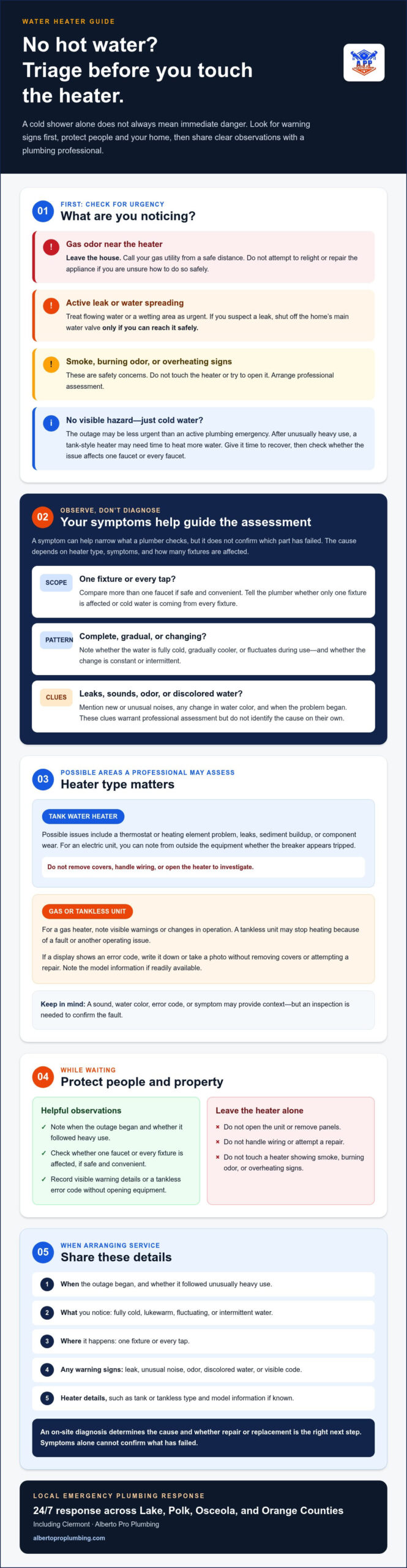
Emergency plumber or routine appointment: how to choose the right response
Choose the response based on risk, not just inconvenience. An active leak, water spreading around the heater, smoke, a burning odor, or another sign of danger calls for prompt professional attention. Don’t wait for a routine opening if conditions appear unsafe. If hot water is unavailable but there’s no visible leak or other warning sign, contact a plumbing provider and ask how they recommend scheduling an assessment.
The appropriate response depends on the problem you report and the provider’s current dispatch options. Calling doesn’t guarantee a particular arrival time or repair outcome. If water seems dangerously hot, avoid testing it on your skin and mention the concern; the U.S. Consumer Product Safety Commission offers guidance on the dangers of scalding water.
What information should you give the dispatcher?
Clear details help the provider understand what’s happening and whether it fits the company’s services. Have your Clermont-area location ready, along with when the hot-water problem began. Explain whether cold water still works and whether the issue affects every fixture or only one.
Be specific about any leak, odor, unusual noise, visible damage, or error code on the heater’s display. If you know whether the unit is tank or tankless, electric or gas, share that too. Don’t delay a call to search for a manual or model number, especially if you’ve noticed a safety concern.
What should you ask before arranging service?
Before booking, ask whether the provider can assess the reported water-heater issue and whether repair may be available for your heater type. Not every provider handles every unit or offers the same work, so confirm rather than assume. Ask what the service process involves, what information they need, and whether there are charges to understand before arranging a visit.
Confirm that the company serves your specific Clermont-area location and can respond to the issue you described. If you’re comparing a routine appointment with a no hot water emergency service request, explain any active leak or safety concern first. That allows the provider to respond to the circumstances, not just the phrase “no hot water.”
For more guidance on recognizing an urgent plumbing problem, read the emergency plumbing repair service guide. Describing the symptoms and confirming service details can help you arrange an appropriate next step with less uncertainty.
What to Do Safely While Waiting for Hot Water Service
Take these steps in order: protect people, limit damage if it’s safe, note what you observe, then contact a plumbing professional. Don’t try to restore hot water by opening the heater or adjusting its internal parts. A careful description of the problem is more useful, and safer, than a rushed repair attempt.
How to reduce risk without repairing the heater yourself
- Keep people clear of hazards. Keep children and pets away from standing water near electrical equipment. Don’t touch a wet heater, exposed wiring, or components that look hot or damaged.
- Leave the equipment alone. Don’t remove heater panels, handle wiring, or attempt gas-appliance repairs. Avoid operating gas controls or electrical components.
- Limit water damage only if safe. If water is actively leaking and the home’s main shutoff is easy to reach without approaching danger, turn off the water. Don’t enter standing water or touch wet equipment to reach a valve.
- Leave if there’s smoke or a strong gas odor. Get everyone outside. For a suspected gas leak, contact the gas utility from a safe distance. If there’s smoke or immediate danger, contact emergency services.
What details help the plumber diagnose the problem?
Once everyone is safe, note what changed. Does the problem affect every tap or only one fixture? When did the outage begin? Is the water fully cold, lukewarm, or inconsistent, and have you noticed a change in water pressure? These observations help the plumber understand the symptoms without you needing to inspect the heater.
If the unit displays an error code, take a photo only if you can do so safely from a dry, clear area. Don’t move equipment or get close to smoke, leaking water, exposed wires, or a gas odor to capture it. Note any unusual sounds or visible leaks, too, and share those details when you call.
Contact a provider promptly if you see a leak or safety concern. For an isolated loss of hot water with no visible hazard, explain the symptoms and ask what response is appropriate. When requesting no hot water emergency service, describe what you observed rather than guessing at the cause. The right next step depends on the situation, and a professional should assess the heater.
For help with an urgent plumbing concern in Clermont, contact Alberto Pro Plumbing and share the symptoms you’ve noted.
How to arrange no-hot-water emergency service in Central Florida
For Clermont homeowners, confirm that the plumbing provider serves your address and handles the kind of problem you’re reporting. Alberto Pro Plumbing provides 24/7 emergency plumbing response in Central Florida, with coverage that includes Lake, Polk, Osceola, and Orange Counties. Dispatch options can depend on the reported issue, so describe what’s happening and confirm current availability when you contact the company. An emergency request doesn’t guarantee a particular arrival time or resolution.
Water-heater installation is a service Alberto Pro Plumbing offers. Confirm directly whether the company can assess your specific heater and problem before arranging service. Ask whether it can evaluate the unit, including its type and symptoms, so you understand what help may be available.
What to expect from an emergency plumbing assessment
Be ready to explain when the hot-water problem started, whether it affects all taps, and any changes or warning signs you’ve observed. An on-site assessment can help the plumber evaluate the reported issue, but the cause and appropriate next steps depend on what they find. Once the problem is identified, the plumber can discuss possible options. Don’t assume repair or replacement is needed before the assessment.
If the assessment indicates that a new unit may be appropriate, Alberto Pro Plumbing offers water-heater installation. Its Clermont water-heater installation guide can help you learn more about that option.
How to request local help and prepare for the visit
When contacting a provider, have your property’s location ready and identify the heater type if you know it, such as tank or tankless. Give a short, factual symptom summary: whether the water is cold or lukewarm, which fixtures are affected, and whether you’ve noticed a leak, unusual sound, or display code. Don’t delay reaching out to find paperwork or a manual.
Before arranging service, ask whether the company can address the specific water-heater issue and what to expect from the assessment. Confirm that your location is within its service area and ask about the process and any charges before agreeing to a visit. Clear answers help you choose the next step without assuming repair is available or necessary.
For local assistance, contact Alberto Pro Plumbing for help and share the symptoms you’ve observed. The company can confirm current dispatch availability and whether it can assess your reported issue.
Take the next step toward restoring hot water
A sudden loss of hot water doesn’t always signal an immediate emergency, but active leaks, smoke, a burning smell, or other safety concerns deserve prompt attention. Keep clear of hazardous equipment, note what you observe, and share those details with a plumbing provider. Symptoms help guide the response, while an on-site assessment determines the cause and appropriate next steps.
If you need no hot water emergency service in Clermont, Alberto Pro Plumbing provides 24/7 emergency plumbing response across Lake, Polk, Osceola, and Orange Counties. Confirm that the company can assess your specific water-heater issue and ask about current availability when you get in touch.
Contact Alberto Pro Plumbing for help and explain what’s happening at your home. Clear information and a professional assessment can help you take the next step with greater confidence.
Frequently Asked Questions
Is no hot water considered a plumbing emergency?
Not always. Urgency depends on what’s happening besides the cold water. A leak causing water damage, smoke, a burning smell, or another apparent safety hazard needs prompt attention. If the heater simply isn’t producing hot water and there’s no visible hazard, contact a plumber for guidance on the appropriate appointment. In Clermont, describe the symptoms clearly so the provider can help determine the next step.
Can I troubleshoot a water heater that suddenly has no hot water?
You can make safe observations, but don’t attempt repairs. Check whether the outage affects every faucet, note any leak or display code, and identify the heater type if you know it. You may look at an electrical breaker from a safe, dry location, but don’t handle wiring or remove heater panels. Don’t attempt gas-appliance repairs or manipulate gas controls. Share your observations with a plumbing professional.
How quickly can an emergency plumber restore hot water?
There’s no reliable time estimate without knowing the cause, heater type, and provider’s current availability. A plumber must assess the reported problem before discussing next steps, and an assessment doesn’t guarantee that hot water can be restored during the visit. When requesting no hot water emergency service in Clermont, explain any active leak or safety concern first and ask about dispatch and what the visit may involve.
What should I do if my water heater is leaking?
Keep people away from the leak, especially if water is near electrical equipment. If the home’s main water shutoff is safely accessible from a dry area, turn it off to limit further water damage. Don’t touch a wet heater, exposed wiring, or damaged components, and don’t approach standing water to reach a valve. Contact a plumbing professional promptly and describe where the water is coming from, if you can tell safely.
Is it safe to use a water heater that smells like it is burning?
No. Treat a burning smell as a safety concern. Don’t touch the heater, remove a panel, or attempt to switch components on or off. If you see smoke or believe there’s immediate danger, get everyone out and contact emergency services. If you smell gas, leave the home and call your gas utility from a safe distance. Tell the plumbing provider what you noticed once you’re safe.
Will a plumber repair my water heater or recommend replacement?
The right option depends on what an on-site assessment finds, including the heater’s condition and the cause of the problem. A plumber can explain the available next steps after evaluating the unit, but repair shouldn’t be assumed. Alberto Pro Plumbing offers water-heater installation; ask directly whether it can assess and repair your specific heater issue before arranging a visit.
Does Alberto Pro Plumbing provide no-hot-water emergency service in Clermont?
Alberto Pro Plumbing provides 24/7 emergency plumbing response, and Clermont is within its stated Central Florida coverage. Its listed counties are Lake, Polk, Osceola, and Orange. Confirm directly whether the company can assess your specific water-heater type or provide the repair needed, along with current dispatch availability. Share your location and symptoms when contacting the company so it can clarify the appropriate service options.