
For running toilet repair Clermont homeowners should start by stopping the water if needed and identifying what is happening, rather than replacing parts by guesswork. A toilet that keeps refilling can disrupt your home and waste water, even when the cause isn’t obvious from the outside.
Before you inspect the tank, listen to the refill and check for visible leaks around the toilet. If you’re comfortable, you can then look at the tank mechanism for common issues such as a flapper that doesn’t seal, a fill valve that keeps running, or a float that isn’t moving freely. These observations can help you decide what to do next without taking the toilet apart.
This guide explains how to distinguish a normal post-flush refill from a continuing problem, what you can safely check, and when to call a plumber. If the toilet keeps running after basic observations, or you’re unsure about handling the parts, Alberto Pro Plumbing can assess the issue and make the repair. Read on for practical steps to limit avoidable water waste and choose a sensible next step for your Clermont home.
Key Takeaways
- Learn how to distinguish an ordinary post-flush refill from a toilet that keeps running.
- Understand how a flapper, fill valve, float, or handle could contribute without assuming one is the cause.
- Use symptoms and safe observations to decide what to check before replacing tank parts.
- For running toilet repair Clermont homeowners can have a plumber inspect the tank and visible connections to identify the likely issue.
- Follow a careful sequence to locate the shutoff valve and recognize when professional help is the safer next step.
Running Toilet Repair in Clermont: Why the Problem Shouldn’t Be Ignored
A running toilet continues sending water into the bowl or refilling its tank after a flush should be complete. A brief refill right after flushing is normal. The tank needs to refill for the next use. The warning signs are a refill that doesn’t stop, a new cycle starting soon after the first, or water moving into the bowl when nobody has flushed.
The sound can be easy to dismiss, especially if it comes and goes. But repeated refills mean water is flowing when it shouldn’t. For homeowners considering running toilet repair Clermont, noticing when the noise starts and whether it repeats is a useful first step toward identifying the problem and limiting ongoing waste.
How to tell whether your toilet is running continuously
After flushing, listen while the tank refills and note whether the sound settles. Steady hissing or trickling, another refill shortly after the first, or water still moving into the bowl once the flush has ended can indicate a problem. These signs don’t identify a specific failed part, but they help distinguish a normal refill from a recurring issue. A basic overview of how a flush toilet works can help explain how the tank and bowl work together.
Why a running toilet needs prompt attention
Continuous flow uses water without providing any benefit. Even if the sound stops temporarily, recurring refills can point to a tank component that is worn, misaligned, or no longer sealing as it should. The repair may be straightforward, but replacing a part before checking the mechanism can waste time and miss the cause.
If you need to stop the flow, look for the toilet’s shutoff valve, commonly located near the toilet where the water supply connects. The valve’s position and style can vary. Turn it gently if it moves freely, and don’t force a stiff valve. If the valve or tank is leaking, stop the water only if you can do so safely and arrange a repair. Water on the floor needs attention, even if the toilet also becomes quieter.
A calm first check can help you understand what’s happening without taking the tank apart. If the toilet continues to refill or you’re unsure how to stop the flow safely, a plumber can inspect it and determine the next step.
What Makes a Toilet Keep Running? Check the Tank Mechanism
A running toilet can have several causes inside the tank, and the sound alone won’t confirm which part is responsible. A flapper that doesn’t seal, a float that isn’t moving or set correctly, a tangled chain, or a fill valve that keeps supplying water are all possibilities. Check only what you can observe safely, and don’t treat a likely cause as a definite diagnosis before the mechanism is inspected.
When water leaks from the tank into the bowl, the fill valve may keep adding water to replace it. This can create a cycle in which the toilet runs on and off even when nobody has flushed.
Could a worn flapper be letting water through?
The flapper covers the tank outlet after a flush and holds water in the tank until the next flush. If it’s worn, misaligned, or unable to settle over the opening, water may seep into the bowl and trigger repeated refilling. With the tank lid removed, you can look for a flapper that appears crooked or doesn’t sit flat. Don’t force it or buy a replacement without checking that the part is compatible with your toilet.
Could the fill valve, float, or chain be the cause?
The float rises with the tank’s water level and signals the fill valve to stop adding water. If it catches, moves improperly, or is set incorrectly, the tank may not stop filling as intended. A chain that’s tangled or too slack can also keep the flapper from opening or closing properly. If water continues entering the tank after it should be full, the fill valve may be involved, but an inspection is needed to narrow down the cause.
These parts work together, so changing one without checking the others may not solve the problem. A chain adjustment may be enough in one case; in another, a worn seal or malfunctioning fill valve could be responsible. The EPA discusses the water-saving benefits of efficient toilets and addressing water loss, but the right repair depends on what is happening inside your tank.
If a visual check doesn’t reveal the issue, or the toilet still runs after a basic adjustment, a plumber can inspect the tank components and identify the next step. For running toilet repair in Clermont, professional diagnosis can help avoid replacing parts that aren’t causing the problem.
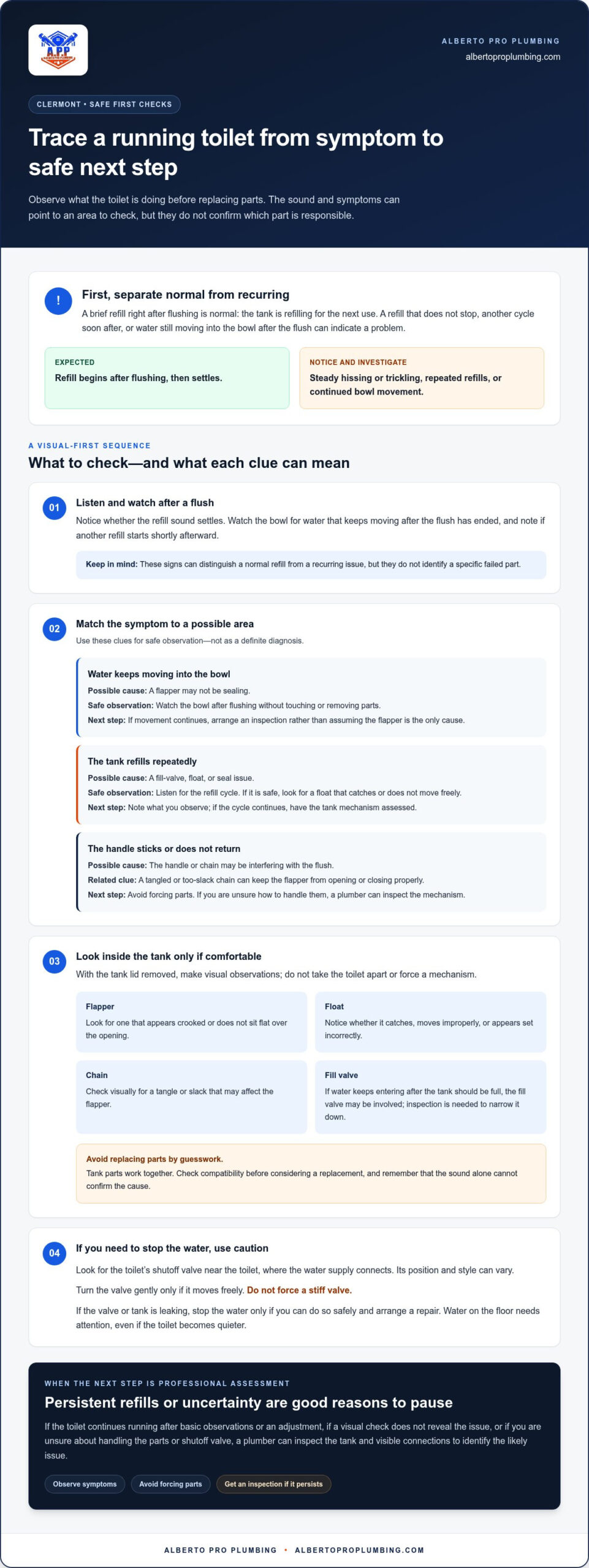
Running Toilet Troubleshooting: Match the Symptom to the Next Step
A symptom can point you toward an area to check, but it can’t confirm which part has failed. Use the table to guide a safe visual observation, not as a reason to force a valve or take apart a mechanism you’re unsure about. The toilet’s flushing mechanism shows how the tank components work together.
| Symptom | Possible cause | Safe observation | Next step |
|---|---|---|---|
| Water keeps moving into the bowl after flushing | A flapper that may not be sealing | Watch the bowl after the flush. Look for continued movement without touching or removing parts. | If it continues, arrange an inspection rather than assuming the flapper is the only cause. |
| The tank refills repeatedly | A fill-valve, float, or seal issue | Listen for the refill cycle and, if safe, look inside the tank for a float that catches or doesn’t move freely. | Note what you observe. If the cycle continues, have the tank mechanism assessed. |
| The handle sticks or doesn’t return | A handle or chain that may be interfering with the flush | Check whether the handle returns to its resting position. Look for an obviously tangled chain without pulling it. | Don’t force the handle or chain. Stop if movement feels stuck or causes a leak. |
| Water is leaking, the shutoff valve is stuck, or the symptoms are unclear | A leak or a problem that needs closer diagnosis | Look for visible water around the tank, supply connection, or valve. Don’t force a stuck valve. | Stop troubleshooting and call a plumber to assess the issue. |
What does water moving into the bowl suggest?
Water that continues entering the bowl after the flush may mean the flapper isn’t sealing the tank outlet, but other issues can produce similar signs. Observe the bowl without dismantling the tank. If checking a part would require force, or you notice water leaking, stop and leave the inspection to a plumber.
What if the tank keeps refilling or the handle sticks?
Repeated refilling is a sign that the flush cycle isn’t settling as it should. A handle that remains down, a chain that catches, a float that doesn’t move freely, or a fill valve that keeps running may be involved. These are possibilities, not a diagnosis. For running toilet repair Clermont homeowners can have a plumber inspect the tank and identify the cause before recommending a repair.
How to Stop a Running Toilet Safely Before Repair
A few careful checks can help you limit water flow and describe the problem clearly without taking the toilet apart. Move in order: listen, inspect around the toilet, locate the shutoff valve, then stop and seek repair if the issue persists or anything looks unsafe.
What can you check without taking the toilet apart?
- Listen after a flush. Let the usual refill finish, then note whether you still hear hissing or trickling, or another refill cycle starting.
- Inspect the outside. Look for water around the toilet base, the supply connection, or the shutoff valve. Don’t reach for tools or disturb unfamiliar plumbing parts.
- Find the shutoff valve. It’s commonly near the toilet where the supply line connects, but the setup can vary. If the valve looks intact and turns easily, turn it gently to stop the water. Don’t force it.
These observations can help narrow down what’s happening, but they don’t replace a repair. Avoid adjusting tank parts if you’re unsure how they work, and don’t remove components just to test them.
When should you stop DIY troubleshooting?
Stop if water is escaping onto the floor, the shutoff valve resists turning, or the valve appears damaged or begins leaking. Forcing a stuck valve can damage it or make a leak worse. If you can’t safely stop the supply, keep clear of the affected area and get professional help.
If the toilet continues running after your basic checks, don’t keep experimenting with the handle, chain, or tank mechanism. Several causes can produce similar symptoms, so an inspection is the practical next step. Homeowners looking for running toilet repair Clermont can have a plumber assess the toilet and recommend a repair based on what’s actually happening.
If water is leaking or you can’t stop the flow, contact Alberto Pro Plumbing for emergency plumbing repair. If there’s no active leak but the toilet keeps refilling, arrange a professional assessment rather than risking damage by forcing a valve or tank part.
Alberto Pro Plumbing: Running Toilet Repair in Clermont
If a toilet keeps running after your basic observations, the next step is a focused inspection, not guesswork. Alberto Pro Plumbing provides residential plumbing repairs in Clermont, including running toilet repair. A plumber can examine the tank and visible connections, identify the likely cause, and explain the repair options before work begins.
What happens during a professional running-toilet repair?
The visit starts with your description of the symptoms and an inspection of the toilet and nearby plumbing. The plumber can check whether the flapper sits and seals properly, whether the fill valve stops the water as it should, and whether the float or handle is interfering with the flush cycle. Visible supply connections are also checked for signs of leaking. These observations help distinguish a faulty component from one that may simply need adjustment.
The repair depends on the toilet’s condition and the inspection findings. A suspected flapper problem, for example, doesn’t automatically mean the flapper needs replacing. The plumber first determines whether it’s actually the source of the water loss. You’ll receive an explanation of what’s been found and the recommended repair. The work is handled with care for your home and attention to keeping the work area orderly.
How to get dependable help in Clermont
Before arranging service, note when the running started and whether the toilet runs continuously or in repeated cycles. Mention any water around the base, tank, supply connection, or shutoff valve. If you safely turned off the toilet’s water supply, share that too. These details help the plumber understand what to inspect, but you don’t need to diagnose the problem yourself.
Alberto Pro Plumbing provides running toilet repair Clermont homeowners can turn to when the cause is unclear or simple checks haven’t stopped the refill. For urgent plumbing issues, the company responds 24/7. For more about the company’s work, visit professional plumbing services in Clermont.
Request help from Alberto Pro Plumbing if your toilet keeps running or you’ve found a leak. A careful diagnosis can identify the right next step and help restore normal operation without unnecessary disruption.
Restore Quiet and Reliable Toilet Operation
A toilet that keeps refilling can waste water and disrupt your home, but the sound alone won’t reveal the cause. A flapper that doesn’t seal, a fill valve or float issue, or a problem with the handle or chain may be involved. Listen, make safe visual checks, and don’t force a stuck shutoff valve or tank part.
If the toilet keeps running or you see water leaking, professional diagnosis can help identify the right repair before more water is wasted. Alberto Pro Plumbing provides residential plumbing repair in Clermont, serves Central Florida counties, and responds 24/7 to urgent plumbing issues. For running toilet repair Clermont homeowners can turn to, get help with a running toilet in Clermont.
Contact Alberto Pro Plumbing to arrange a repair and get help restoring normal toilet operation.
Frequently Asked Questions
Can I keep using a toilet that keeps running?
You can usually use it if it still flushes normally and there’s no visible leak, but continued running wastes water and should be addressed. Listen after flushing to see whether the refill stops or starts again. If water appears around the toilet, tank, or supply connection, stop using it and avoid touching wet plumbing. Shut off the supply only if the valve turns easily and doesn’t leak.
What is the most common reason a toilet keeps running?
A flapper that doesn’t seal properly is a common cause. The flapper covers the tank outlet after flushing, and if it’s worn or misaligned, water can seep into the bowl and trigger repeated refilling. A fill valve that doesn’t stop the incoming water, a float that moves or sits incorrectly, or a chain that interferes with the flapper can also be responsible. An inspection is needed to identify the exact cause.
How do I stop a running toilet until a plumber arrives?
First, look for the toilet’s shutoff valve, commonly near where the water supply connects. Turn it gently if it moves freely. Don’t force it if it’s stuck, damaged, or begins leaking. You can also listen for refilling and look for visible water around the toilet without taking it apart. If the valve won’t operate or water is escaping, stop troubleshooting and seek professional help.
Can a running toilet cause a leak on the bathroom floor?
A toilet that runs into its bowl doesn’t automatically mean water will reach the floor, but a separate leak can occur around the tank, supply connection, shutoff valve, or toilet base. Check these areas for visible moisture or pooling. If you find water, stop using the toilet and shut off its supply only if the valve operates safely. Arrange a plumbing inspection to identify where the water is coming from.
When should I call a plumber for running toilet repair in Clermont?
Call a plumber if the toilet keeps refilling after basic observations, you see water on the floor, the shutoff valve is stuck, or you’re not comfortable checking the tank. For running toilet repair Clermont homeowners can turn to Alberto Pro Plumbing for residential plumbing repairs. The company serves Clermont and surrounding Central Florida counties, with 24/7 response for urgent plumbing issues such as an active leak.
Does a running toilet always need a new flapper?
No. A flapper may be the cause if it doesn’t sit flat or seal the tank outlet, but replacing it without checking can miss the real problem. A fill valve, float, handle, or chain may also interfere with the flush cycle. A plumber can inspect these components and visible connections, then recommend a repair based on the toilet’s condition instead of assuming one part needs replacement.