
When a pump alarm sounds, the safest first response is to use less water, not try to diagnose the equipment. A pump alarm going off on septic system equipment can understandably raise fears about sewage backing up into your home or yard. The alarm is a warning, but it doesn’t identify the cause by itself.
Common causes include unusually high water use, a stuck float switch, a pump problem, or a tripped breaker. Don’t open the equipment or keep resetting it to see what happens. Use the alarm’s mute button if available and described in the manual, then reduce water use throughout the home to limit the risk of an overflow.
This guide explains what the alarm may signal, what you can safely do right away, and when to call a qualified septic professional. Note when the alarm started, whether it stays on, and any signs of backup. Those details can help the professional assess the situation. If you suspect a septic drain-field issue in Clermont, Alberto Pro Plumbing offers septic drain-field services in Central Florida. Contact the company to confirm whether your specific concern fits its services.
Key Takeaways
- If a pump alarm going off on septic system equipment has you worried, treat it as a warning, not proof of a specific failure.
- An alarm without other symptoms, indoor backups, visible effluent, and repeated alarms can call for different levels of urgency.
- Check the system manual and panel labels for guidance. Alarm setups vary, so avoid diagnosing by guesswork.
- Note when the alarm began, what you can observe from a safe distance, and any recent changes in the home before contacting a qualified professional.
- Ask whether the provider handles your specific pump and alarm setup. Refer suspected electrical faults to a qualified electrical professional.
Septic Pump Alarm Going Off? Start With These Safe First Steps
First, limit water use while you decide what to do next. Pause laundry, dishwashing, long showers, and other avoidable water use. A pump alarm going off on septic system equipment warns that something may need attention, but it doesn’t identify the exact fault. Don’t assume the pump has failed based on the alarm alone.
Alarm sounds and indicator lights vary by system. Check the system manual or the label on the alarm panel to understand what each signal means, and follow that guidance over general advice. If you’re unfamiliar with septic systems, the Septic tank overview explains their basic components and treatment process.
What to do in the first few minutes
Take a calm look around without approaching anything that seems unsafe. From a safe distance, check for visible sewage, unusually wet areas, or plumbing backups inside the home. These observations can help a professional assess the situation, but they aren’t a diagnosis.
- Pause nonessential water use, including laundry and dishwashing.
- Note when the alarm started and whether it sounds continuously or intermittently.
- Record any indicator lights or messages you can read without opening equipment.
- Keep people and pets away from visible sewage or suspicious wet areas.
What not to touch or reset
Never enter a septic tank or handle exposed electrical equipment. Don’t open the septic tank, pump chamber, or control panel to inspect components. These areas can present serious hazards, and opening them won’t reliably reveal what triggered the alarm.
Avoid repeated resets or silencing the alarm just to make the warning disappear. If the manual explains how to mute an audible alarm, follow its instructions; muting the sound doesn’t mean the underlying condition is resolved. Don’t troubleshoot electrical components or operate breakers to test the system unless a qualified professional instructs you to. Instead, record what you’ve observed and share it when you contact a professional.
What a Septic Pump Alarm May Mean: Common Causes Explained
An alarm tells you that the system has detected a condition worth attention. It doesn’t identify the component responsible. Alarm panels and signal patterns vary, so check the system manual or panel labels rather than assuming every light or sound means the same thing.
A high-liquid-level warning may mean wastewater isn’t being removed as expected. The cause could involve the pump, a float switch, incoming water, or another part of the system. One alarm does not confirm that the pump has failed. An alarm suggests a possible problem; only an inspection can confirm its cause.
High liquid level, pump trouble, or a float-switch issue
In a pump chamber, a float switch responds to liquid level and helps signal when the pump should operate. If liquid rises beyond the alarm threshold, the system may sound a high-level warning. A float that doesn’t move or signal as expected, pump trouble, or another component issue could be involved. These possibilities can look alike from outside the equipment, so don’t open the chamber to investigate. A qualified professional’s inspection is needed to identify the fault.
Power interruption, heavy use, or site conditions
A tripped circuit or power interruption may affect pump operation, but don’t treat either as the confirmed explanation or attempt electrical troubleshooting. Think about what happened before the alarm: did laundry, showers, or other household water use increase sharply? Heavy inflow can contribute to a temporary rise in the chamber’s liquid level.
For properties in Clermont and elsewhere in Central Florida, heavy rain or saturated ground may also be relevant. Their effect depends on the site and system, so they need to be assessed onsite rather than presumed to be the cause. Note recent rainfall, any wet areas, and whether the alarm has repeated. For general upkeep, the EPA explains inspection practices in its septic system care guidance; systems with pumps may need more frequent attention.
If the alarm may involve the drain field, Alberto Pro Plumbing offers septic drain-field services in Central Florida. You can ask about septic drain-field concerns and confirm whether your specific alarm or pump issue fits the company’s services.
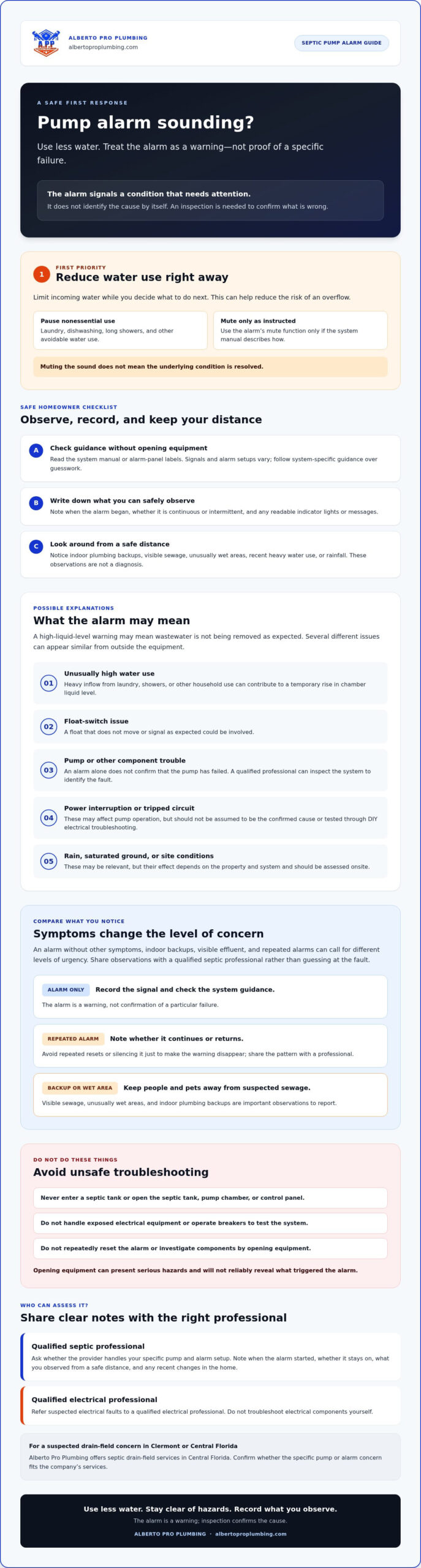
Alarm Still Sounding? Compare Symptoms Without Guessing at the Fault
The pattern you notice can help a septic professional assess urgency, but it can’t confirm what has failed. If a pump alarm going off on septic system equipment is the only symptom, keep conserving water and note the panel indicators. Wastewater backing up indoors or effluent spreading across the ground calls for prompt professional attention.
| What you notice | Possible concern | What to do |
|---|---|---|
| Alarm sounds, but drains appear normal | A high-level warning or another condition the system has detected | Continue limiting water use. Record the sound or lights and check the manual without opening the panel. Contact a qualified septic professional if the alarm persists or returns. |
| Slow drains or indoor plumbing backup | A possible issue affecting wastewater flow or the system’s ability to manage incoming water | Reduce plumbing use as much as practical. If sewage is inside the home, seek prompt professional attention. |
| Visible effluent or spreading wet ground near the system | A possible surface discharge or wider system concern | Keep people and pets away. Don’t walk through, drive over, or dig into the area. Arrange prompt professional assessment, especially if discharge is spreading. |
| Alarm stops, then sounds again | An intermittent condition that may still need attention | Record when it returns and any changes in water use or site conditions. Don’t assume the issue is resolved because the sound temporarily stops. |
Alarm sounds but drains appear normal
Normal drains don’t rule out a developing problem. Keep water use low while the alarm remains unexplained, and write down any indicator lights or messages you can see from outside the enclosure. Use the manual to interpret the signal, since alarm patterns vary by equipment. If the warning continues or returns, contact a qualified septic professional rather than repeatedly resetting it.
Slow drains, backups, or wet ground near the system
Several symptoms together can point to a broader concern that requires an onsite assessment. A septic system’s parts work together, and Penn State Extension’s overview of its basic components explains how the tank, distribution, and drain-field areas relate. Don’t try to inspect underground components yourself.
If wet ground or discharge raises concern about the drain field, review these septic drain field rehabilitation options for related context. Alberto Pro Plumbing offers septic drain-field services in Central Florida. Contact the company to describe what you’re seeing and confirm whether the issue fits its listed services.
Septic Pump Alarm: Safe Homeowner Checklist
A clear record of what you’ve noticed helps a qualified professional understand the situation without putting you at risk. If the pump alarm going off on septic system equipment continues or returns, don’t guess at the cause. Use this checklist to protect your home and share useful details.
- Reduce water use. Pause laundry, dishwashing, long showers, and other nonessential water use. If sewage is backing up indoors, stop using plumbing as much as practical to avoid adding more wastewater.
- Observe from a safe distance. Look for indoor backups, visible discharge, or wet areas. Keep people and pets away from sewage or suspect ground, and don’t open or touch system equipment.
- Record what you notice. Note when the alarm began, whether it’s continuous or intermittent, and any visible warning lights. Write down recent heavy water use, power interruptions, odors, wet areas, and weather that may be relevant.
- Contact a qualified professional. Explain the alarm and symptoms, then ask whether they handle your specific system and the service it may need.
Information to gather before making the call
From outside the equipment, note the system or alarm make and model if you can see it without opening an enclosure. Describe the sound and any warning light, when the alarm started, and whether it has stopped and returned. Mention slow drains or backups, odors, wet ground, a recent outage, unusually high water use, and recent weather. These are observations, not a diagnosis, but they give the professional a useful starting point.
When to seek urgent professional help
Wastewater backing up inside the home or appearing at the ground surface needs prompt professional attention. Keep plumbing use to a minimum, stay away from any suspected contaminated area, and contact a qualified professional. Also seek help if the alarm persists, returns, or has no clear explanation, even if drains still seem normal.
For urgent plumbing symptoms in Clermont, you can review 24/7 emergency plumbing help in Clermont. Describe the symptoms and confirm whether the issue fits the company’s listed services; septic pump and alarm component repairs aren’t confirmed services.
If a septic alarm continues, limit water use, stay clear of hazards, record what you observe, and contact a qualified professional. For septic drain-field concerns, contact Alberto Pro Plumbing to discuss your symptoms and confirm whether the situation fits its septic drain-field services.
Who Should Inspect a Septic Pump Alarm in Central Florida?
If a pump alarm going off on septic system equipment has no clear explanation, contact a professional who can assess the septic system and advise what kind of inspection is appropriate. Septic-system diagnosis and electrical work aren’t interchangeable: suspected wiring or other electrical faults should be referred to a qualified electrical professional. Don’t open the control panel or attempt electrical tests yourself.
Before scheduling, verify that the provider handles your particular pump, alarm panel, and septic-system configuration. An alarm can have several possible causes, and the right person to assess it depends on the equipment and symptoms. In Central Florida, mention any recent heavy rain or saturated ground you’ve observed, but don’t assume weather or drain-field failure is the cause. Site conditions need to be assessed rather than inferred from the alarm alone.
Questions to ask before scheduling an inspection
A few direct questions can help you understand whether the provider is a good fit and what to expect:
- Do you diagnose septic pump alarms, or would you refer that work to a septic specialist?
- Do you handle this pump, alarm panel, and system configuration?
- What details or photos would help you prepare? Only take photos from a safe location, without opening or touching equipment.
- How will you explain your findings and recommended next steps?
Share when the alarm began, whether it’s continuous or intermittent, any lights or messages you can see, household water use before it sounded, and symptoms such as slow drains, backups, odors, or wet areas. Mention recent power interruptions and weather as observations, not proof of the cause.
How Alberto Pro Plumbing may fit your septic concern
Alberto Pro Plumbing serves Central Florida, including Lake, Polk, Osceola, and Orange Counties, and lists emergency plumbing and septic drain-field services. Its septic drain-field expertise may be relevant if your symptoms point to a drain-field concern. Septic pump, float-switch, and alarm-panel diagnosis or repairs aren’t confirmed offerings, so ask directly whether your specific issue fits the company’s services.
For a septic or drain-field concern in Clermont, contact Alberto Pro Plumbing to describe the symptoms and confirm whether the company can help. Clear information and the right service fit are a sensible next step.
Take the Next Safe Step for Your Septic System
A pump alarm going off on septic system equipment is a warning, not a diagnosis. Keep water use low, don’t open equipment or repeatedly reset the alarm, and note any warning lights, backups, or wet areas. Sewage inside the home or visible discharge needs prompt professional attention.
Alberto Pro Plumbing serves Lake, Polk, Osceola, and Orange Counties, with listed services that include emergency plumbing and septic drain-field installation and maintenance. The company also lists 24/7 response for urgent plumbing issues. Septic pump and alarm component repairs aren’t confirmed services, so explain what you’re seeing and ask whether your concern fits the company’s expertise.
Contact Alberto Pro Plumbing to discuss your septic or drain-field concern and confirm the right next step. Stay calm, keep people away from potential sewage, and get qualified guidance for your home.
Frequently Asked Questions
Is a septic pump alarm an emergency?
It can be urgent, but the alarm alone doesn’t prove there’s an immediate emergency or identify the fault. A pump alarm going off on septic system equipment calls for reduced water use and attention to symptoms. Sewage backing up inside your home or effluent appearing at the surface needs prompt professional help. If the alarm sounds but plumbing works normally, keep conserving water, note the warning indicators, and arrange an assessment if it persists or returns.
What should I do first when my septic alarm goes off?
First, pause avoidable water use, including laundry, dishwashing, and long showers. Check for backups or wet areas from a safe distance, then note when the alarm began, whether it’s continuous, and any visible indicator lights. Consult the system manual or panel label for the alarm’s meaning. Don’t open the tank, pump chamber, or control panel. If sewage is backing up indoors or showing at the ground surface, seek prompt professional attention.
Can I silence or reset my septic alarm?
You may use a mute button only as described in your system manual, but silencing the sound doesn’t fix or diagnose the condition. Avoid repeatedly resetting the alarm or treating a quiet panel as proof the problem is resolved. Don’t open the control panel or handle exposed electrical equipment. Continue limiting water use, record whether the alarm returns, and contact a qualified septic professional if it persists or you’re unsure what the signal means.
Why is my septic alarm going off when the power is on?
Power to the home doesn’t rule out a septic-system issue. A high liquid level, unusually heavy household water use, a float-switch problem, or pump trouble may trigger an alarm even when the lights are on. The alarm indicates a possible condition, not a confirmed failure. Check the manual for the panel’s signal meaning, note any indicator lights, and avoid testing electrical components. A qualified professional can inspect the system and determine the cause.
Can heavy rain cause a septic pump alarm to go off?
Heavy rain or saturated ground may be relevant to a septic concern, but weather alone can’t confirm why an alarm sounded. Note when the rain occurred and whether you’ve seen wet areas or surface discharge near the system. Don’t walk through or drive over a potentially affected area. In Clermont, ask a qualified septic professional to assess site conditions rather than assuming rain caused the alarm or that the drain field has failed.
How long can I use water after a septic pump alarm sounds?
There’s no single safe amount of water for every system or alarm condition. Reduce use right away, pausing nonessential activities such as laundry and dishwashing. If wastewater is backing up indoors, stop using plumbing as much as practical and seek prompt professional help. If the alarm continues without a clear explanation, contact a qualified septic professional rather than waiting for a set period or using the system as usual.
Who should I call when my septic pump alarm keeps going off?
Contact a qualified septic professional and ask whether they inspect your specific pump, alarm panel, and system configuration. If you suspect an electrical fault, contact a qualified electrical professional; don’t troubleshoot exposed equipment yourself. Alberto Pro Plumbing serves Clermont and Central Florida with emergency plumbing and septic drain-field services, but pump and alarm repairs aren’t confirmed offerings. Explain the alarm symptoms and confirm directly whether the issue fits the company’s listed services.
In Clermont, contact Alberto Pro Plumbing about your septic drain-field concern and describe the symptoms to confirm whether the company’s services fit your needs.