
What if a leak you can’t see is causing more damage than a drip you can? A damp cabinet, faint stain, or unexplained change in water pressure can point to a pipe problem affecting walls, floors, or belongings. Preventing water damage from leaking pipes starts with knowing what to check and acting when a warning sign appears.
It can be hard to tell which signs matter or whether a leak is serious enough to call a plumber. Regularly checking exposed pipes and plumbing fixtures can help you spot changes early. If water is escaping, shutting off the supply may limit further exposure, but only do so if the shutoff is safe to reach and operate.
This guide covers practical ways to reduce the risk of unnoticed leaks, what to do when you find one, and when DIY steps aren’t enough. You’ll also learn how professional leak detection and plumbing repair can help when a problem is hidden or beyond a simple fix.
Key Takeaways
- Check accessible pipes, fittings, and appliance hoses routinely for moisture, corrosion, or other visible changes.
- Know when a drip can be watched briefly and when signs of hidden or worsening damage call for professional diagnosis.
- Respond calmly and put safety first. Avoid areas where water may contact electrical hazards.
- Make preventing water damage from leaking pipes part of a home maintenance plan by keeping shutoff locations and a plumber’s contact details easy to find.
- Consider how leak detection and recurring plumbing maintenance can help you stay ahead of problems at home.
Preventing Water Damage From Leaking Pipes Starts With Knowing the Risks
A damp spot or musty cabinet can raise questions about whether water is escaping behind a wall. Hidden leaks can be difficult to assess from the surface, and even a slow drip may keep nearby materials damp. The goal isn’t to worry over every pipe. It’s to reduce avoidable risks and respond when a plumbing problem is suspected.
Water damage prevention means reducing the chance of leaks and limiting how long water can reach your home’s materials and belongings. That includes checking visible plumbing, noticing changes around accessible connections, and getting professional help when the source may be hidden. Understanding the possible effects of water damage helps explain why a small plumbing issue deserves attention.
How a small pipe leak can become a home repair problem
Repeated leaks can soak drywall, swell cabinet panels, loosen flooring, or reach stored belongings. Damage may spread beyond the spot where water first appears, especially if it travels along a pipe or beneath a floor. Persistent moisture can also create conditions that support mold growth, though not every leak leads to mold. Dry affected materials promptly, and seek professional advice if they remain damp or the leak’s source isn’t clear.
Prevention and detection are related, but they are not the same. Prevention focuses on lowering the chance of a leak and limiting water exposure. Looking for warning signs helps you recognize a possible problem after it begins. A visual check can’t rule out a leak inside a wall or beneath a floor, so don’t treat a dry surface as proof that hidden piping is sound.
Which pipes and connections deserve routine attention?
Include accessible plumbing in your regular home checks. Look beneath sinks and around visible appliance supply lines, exposed pipe joints, shutoff valves, and water-heater connections. Note moisture, corrosion, or changes to nearby surfaces. Don’t move a heavy appliance unsafely, force a valve, or open walls to inspect pipes. Hidden piping calls for professional assessment, not invasive DIY work.
These checks help you focus on plumbing you can reach without assuming you can inspect every part of the system. If you find moisture, can’t identify its source, or suspect water is coming from inside a wall or floor, a plumber can investigate. Alberto Pro Plumbing offers leak detection to help locate plumbing leaks and identify an appropriate next step. For homeowners in Clermont, the practical aim is steady attention, not alarm: reduce risks where you can and get qualified help when the problem isn’t visible or straightforward.
How to Reduce the Risk of Leaking Pipes at Home
Routine attention can help you notice changes before they become a larger plumbing concern. Prevention doesn’t require taking pipes apart or inspecting areas you can’t safely reach. Focus on visible plumbing, keep track of anything that changes, and ask a plumber to assess issues you can’t identify or safely address.
A simple monthly check for accessible plumbing
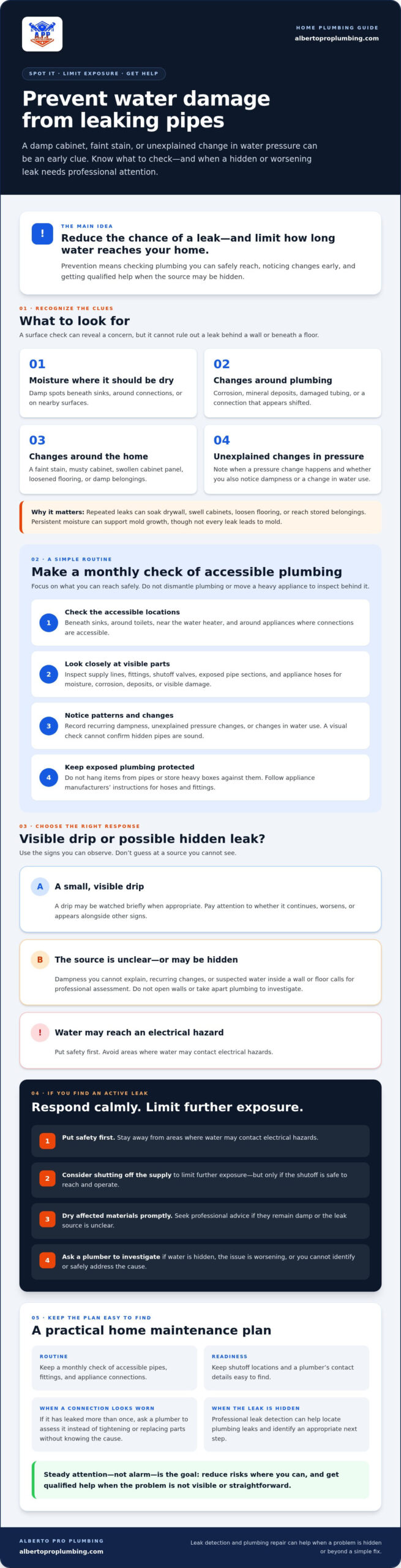
Set a monthly reminder to look beneath sinks, around toilets, near the water heater, and around appliances where connections are accessible. Check visible supply lines, fittings, shutoff valves, and exposed pipe sections. Look for moisture, corrosion, mineral deposits, damaged tubing, or a connection that appears to have shifted. Don’t dismantle plumbing or move a heavy appliance just to inspect behind it.
Pay attention to patterns, too. A change in water pressure can have several causes, but an unexplained or recurring change deserves investigation rather than guesswork. Note when it happens and whether you’ve also noticed dampness or a change in water use. If you’re concerned, arrange an assessment. If you find an active leak, the University of Florida IFAS Extension offers guidance on what to do when a pipe leaks.
Protecting pipes and connections during home upkeep
Keep exposed plumbing clear. Don’t hang items from pipes or store heavy boxes against them. Weight or repeated contact can strain a connection or make a leak harder to notice. For washing machines, dishwashers, and other water-using appliances, follow the manufacturer’s instructions for hoses and fittings. If a connection looks worn or has leaked more than once, ask a plumber to assess it instead of tightening or replacing parts without knowing the cause.
Use this checklist as a simple routine:
- Look: Check accessible pipes, fittings, and appliance hoses for moisture, corrosion, deposits, or visible damage.
- Notice: Record unexplained pressure or water-use changes and recurring dampness.
- Protect: Keep exposed plumbing free from hanging items and heavy objects.
- Follow instructions: Use appliance hoses and fittings as the manufacturer directs.
- Get help: Ask a plumber to assess aging, damaged, or repeatedly leaking components.
These habits make preventing water damage from leaking pipes more manageable, but a visual check can’t confirm the condition of hidden piping. If you’d like recurring plumbing maintenance, learn about home protection membership options and ask what the inspections include.
Does Every Drip Need a Plumber? Prevent Damage Without Guesswork
A drip isn’t always an emergency, but it isn’t automatically harmless. A brief splash from normal use differs from moisture that returns, spreads, or appears when a fixture hasn’t been used. Protect the area, observe only what you can see without disturbing plumbing, and call a plumber when the source or seriousness isn’t clear.
When a homeowner can take a cautious first step
If the water is limited and there’s no electrical hazard, move belongings away and place a container or absorbent material beneath the drip. Dry nearby surfaces and check whether moisture returns. If you can reach the relevant shutoff safely and know how to operate it, turning it off may limit further water flow. Don’t force a stuck valve, tighten connections with tools, or take pipes apart. Travelers also shares guidance on reducing preventable plumbing issues.
A visible drip that stops and doesn’t return may be watched briefly, but continue checking the area. If it comes back, grows, or leaves surfaces damp, don’t rely on observation alone. Recurring leaks in several locations or widespread concerns about older piping may call for a broader assessment. Whole-home repiping is one option to discuss with a plumber, but an evaluation is needed to determine what’s appropriate for your home.
When a leak calls for professional attention
Contact a plumber promptly if water is actively escaping, spreading across a floor, appearing through a wall or ceiling, or returning after a previous leak. Concealed leaks can be especially difficult to diagnose from surface signs alone. Avoid opening walls or attempting a repair that requires tools, disassembly, or plumbing expertise. Professional leak detection can help locate the source, and a plumber can recommend next steps after assessing the system.
If water is spreading or you can’t safely control the leak, prioritize safety and seek emergency plumbing help. The emergency plumbing repair guide explains what to consider in an urgent situation. The right response depends on the leak’s location and severity, so don’t assume what repair is needed before an inspection. For ongoing uncertainty, ask about professional leak detection. It’s a practical next step toward preventing water damage from leaking pipes without taking unnecessary risks.
What to Do Immediately When a Pipe Leaks
A leaking pipe can be stressful, but following a clear sequence can help protect people and limit water exposure. Don’t rush into a wet area or try to patch a pipe that may still be under pressure. Start with safety, then control the water only if you can do so without putting yourself at risk.
Quick sequence: Stay clear of electrical hazards, stop the water if it’s safe, protect belongings, document what you see, and contact a plumber if water continues or the source is unclear.
Limit water flow and protect the affected area
Follow these steps in order, skipping anything that isn’t safe or accessible:
- 1. Check for hazards. Keep people and pets away from wet or waterlogged areas. If water is near outlets, appliances, cords, or other electrical equipment, don’t enter or touch the water. Leave the area and seek appropriate help.
- 2. Stop the flow if you can do so safely. If the leak is connected to a fixture and its shutoff valve is reachable, turn it off only if you know how and it moves easily. If you can’t identify the correct valve, or it’s stuck or difficult to reach, don’t force it. Use the main water shutoff only if you can get to it safely and know how to operate it.
- 3. Protect people and belongings. Move valuables and furniture away from the water if the route is safe. Use towels or a container to catch a small amount of water, but don’t step into standing water near electrical hazards.
Don’t tape, clamp, or dismantle a leaking pipe as a quick fix. A temporary attempt can make a pressurized leak worse, and opening a wall or cabinet may expose you to hazards you can’t assess. Focus on safety and limiting further water exposure.
Document damage and arrange the next step
Once the immediate area is safe, take photos of the leak and affected surfaces. Write down when you noticed it and what steps you took. Don’t delay getting help to document damage if water is still spreading.
- 4. Contact a plumber. Arrange professional help if water continues, the source is concealed or uncertain, or the leak returns after the flow appears to stop. A plumber can assess the situation and determine whether leak detection or repair is appropriate.
- 5. Confirm local availability. Alberto Pro Plumbing lists 24/7 emergency plumbing service. Confirm service availability for your location when you call.
Acting promptly is a practical part of preventing water damage from leaking pipes, but safety comes first. If you need help assessing an active plumbing leak, contact Alberto Pro Plumbing about emergency plumbing.
Preventing Water Damage From Leaking Pipes in Clermont: A Long-Term Plan
A practical plumbing plan doesn’t need to be complicated. Make routine checks part of home upkeep, keep essential information easy to find, and ask a professional about concerns you can’t confirm yourself. For Clermont homeowners, this steady approach to preventing water damage from leaking pipes can help you stay prepared without treating every plumbing change as an emergency.
Build a simple household leak-prevention routine
Choose a regular time to check accessible plumbing, such as during a monthly household check. Keep the areas beneath sinks and around appliances clear enough to see connections and notice new moisture. If you spot recurring dampness or an unexplained change in water use, record when it occurs and where. A brief record can help a plumber understand the pattern.
Know where the main water shutoff is and make sure household members know how to find it. Operate it during a leak only if it’s accessible and safe to reach. Keep a plumber’s contact details with other household emergency information, rather than relying on finding them while water is spreading.
Ask a plumber to assess pipes or connections that appear damaged, are aging, or have leaked repeatedly. A professional can help determine whether the concern is isolated or points to a wider plumbing issue. Periodic inspections may also help identify concerns before they become more disruptive, particularly when included as part of a recurring maintenance plan.
When local plumbing support can help
Some plumbing problems are difficult to assess from visible surfaces alone. Alberto Pro Plumbing offers leak detection to help locate a suspected leak, as well as repiping when a broader piping solution may be appropriate. The right option depends on the plumbing’s condition and a professional evaluation. For an overview of available help, see the professional plumbing services guide.
Homeowners who prefer scheduled maintenance can also consider Alberto Pro Plumbing’s home protection membership. It includes regular system inspections and priority support. Ask the company to confirm the inspection scope and support terms so you know what the membership covers.
Keep the plan simple: check what you can safely see, note changes, keep shutoff information handy, and seek professional advice when a concern persists. These habits are useful for Clermont homeowners. If you’re unsure what a recurring leak or plumbing concern means, contact Alberto Pro Plumbing for guidance.
Keep Your Home’s Plumbing Plan Simple and Ready
Preventing water damage from leaking pipes starts with steady attention: check accessible plumbing, take recurring moisture seriously, and know how to shut off water safely. If a leak is active, hidden, or keeps returning, don’t guess at a repair. A professional assessment can help identify the source and an appropriate next step.
Alberto Pro Plumbing offers emergency plumbing, leak detection, and repiping, with service across Lake, Polk, Osceola, and Orange Counties in Central Florida. Confirm current availability for your location. Homeowners looking for ongoing maintenance can also ask about the membership, which includes regular inspections and priority support, and confirm its current terms.
If you’re concerned about a leak or want guidance on your plumbing, contact Alberto Pro Plumbing for help with a leak. A calm response and simple maintenance routine can help you feel more prepared and protect your home.
Frequently Asked Questions
Can a small pipe leak cause serious water damage?
Yes. A small leak can damage nearby materials if water keeps escaping or becomes trapped. The impact depends on where the leak is, how long it continues, and what the water reaches. To prevent water damage from leaking pipes, move belongings away if it’s safe and stop the flow only if you can reach the shutoff safely. Arrange an assessment if water persists, spreads, or appears to come from a wall or ceiling.
How often should I check my pipes for leaks?
Check accessible plumbing periodically, including beneath sinks and around appliance connections. Look for moisture, corrosion, mineral deposits, or visibly damaged fittings, without taking anything apart. Follow the maintenance guidance for each appliance, and note recurring dampness or unexplained changes in water use. A visual check can’t assess pipes hidden in walls or floors, so ask a plumber about persistent concerns or signs you can’t explain.
Should I turn off the water if a pipe is leaking?
If water is actively escaping, turn off the relevant shutoff valve only if it’s accessible and safe to operate. If you can’t identify the right valve, don’t force one. Avoid entering areas where water may contact electrical equipment. If the leak continues, spreads, or you can’t safely control the flow, contact a qualified plumber. Move nearby belongings only if doing so doesn’t put you at risk.
Can I prevent water damage without replacing my pipes?
Often, routine checks and prompt attention to leaks can help limit damage without replacing all your pipes. The right solution depends on pipe condition, leak location, and whether problems keep returning. Don’t assume a temporary measure has fixed the underlying issue. If you notice repeated leaks or concerns about aging pipes in your Clermont home, ask a plumber to assess the system and explain suitable options, which may include repair or repiping.
What should I do first when a pipe leaks inside a wall?
First, keep people away from unsafe areas and don’t open the wall to search for the pipe. If you can reach the water shutoff safely, turn off the supply. Move nearby belongings only if the area is safe, then photograph visible damage. Contact a plumber to locate the leak, especially if water continues or spreads. If water is near electrical equipment, stay clear and seek appropriate professional help.
Does homeowners insurance cover water damage from leaking pipes?
Coverage depends on your policy, the cause of the leak, and the circumstances, so don’t assume all water damage is covered. Review your policy and contact your insurer for guidance about your situation. If it’s safe, photograph affected areas and keep notes about when you noticed the leak and what happened. A plumber can assess and address the plumbing problem, but your insurer determines whether the damage is covered.
When should I call a plumber for a leaking pipe?
Call a plumber if a leak continues, returns, appears concealed, or causes water to spread. Seek prompt help if you can’t safely stop the flow or identify its source. Alberto Pro Plumbing provides emergency plumbing and leak detection in Clermont and across Lake, Polk, Osceola, and Orange Counties. Confirm current availability for your location when you contact the company. Professional leak detection can help locate the source and guide the next step.