
Imagine waking up to a slow drain in the morning, only to realize that every toilet in your home is gurgling in protest. In Central Florida, these small inconveniences are often the first quiet whispers of a much larger issue hidden beneath your lawn. It is a stressful situation that leaves many homeowners feeling stuck between recurring clogs and the fear of a torn up yard. If you have noticed persistent sewage odors or drains that simply won’t stay clear, you are likely looking for the specific signs you need sewer line repair before a minor headache turns into a major emergency.
We understand that your home is your sanctuary, and the last thing you want is a messy, expensive excavation. You deserve a clear diagnosis and a solution that actually lasts. Our unique environment, with its sandy soil and aggressive root systems, puts extra pressure on underground pipes. This article will help you identify the critical red flags of sewer failure and show you how modern, professional techniques can fix the problem for good. We will preview the most effective ways to restore your plumbing and ensure your home stays tidy and functional throughout the process.
Key Takeaways
- Learn the critical signs you need sewer line repair, including why persistent sewage odors and gurgling drains are more than just a minor nuisance.
- Discover how Central Florida’s shifting sandy soil and thirsty tree roots can compromise your pipes without warning.
- Understand the difference between localized spot repairs and full replacements to make the most cost-effective choice for your property.
- See how modern diagnostic technology identifies the exact source of a failure, preventing the need for massive yard excavation.
- Gain peace of mind by learning how to handle a plumbing crisis with fast, professional solutions that leave your home tidy and restored.
What is a Sewer Line Failure and Why Does it Happen?
Your home’s sewer line is the primary artery of its waste management system. It is a single, heavy-duty pipe buried deep underground that carries every drop of wastewater from your toilets, sinks, and showers away from your property. When this line fails, it isn’t just a simple clog in a kitchen sink; it’s a total breakdown of your home’s ability to dispose of waste. Understanding the difference between a localized blockage and a structural failure is the first step in protecting your property. A localized clog happens in a specific branch line, like the one under your bathroom sink, and usually only affects one fixture. A structural failure means the main pipe itself has cracked, collapsed, or been breached, affecting the entire house.
Sewer line repair is the restoration of structural integrity to the main waste pipe. By addressing these issues early, you can avoid the high costs of complete system failure.
The Role of Your Sewer Main
The sewer main serves as the critical bridge between your home’s internal plumbing and the municipal sewer system or your septic tank. Because every fixture in your house relies on this single exit point, a backup here can cause sewage to surface in the lowest drains of your home, such as a bathtub or floor drain. This makes any main line issue a high-priority emergency plumbing repair. If you ignore the early signs you need sewer line repair, you risk more than just messy backups. Leaking sewage can saturate the ground beneath your home, leading to soil erosion and potentially devastating foundation damage that is much harder to fix than a pipe.
Common Pipe Materials in Central Florida
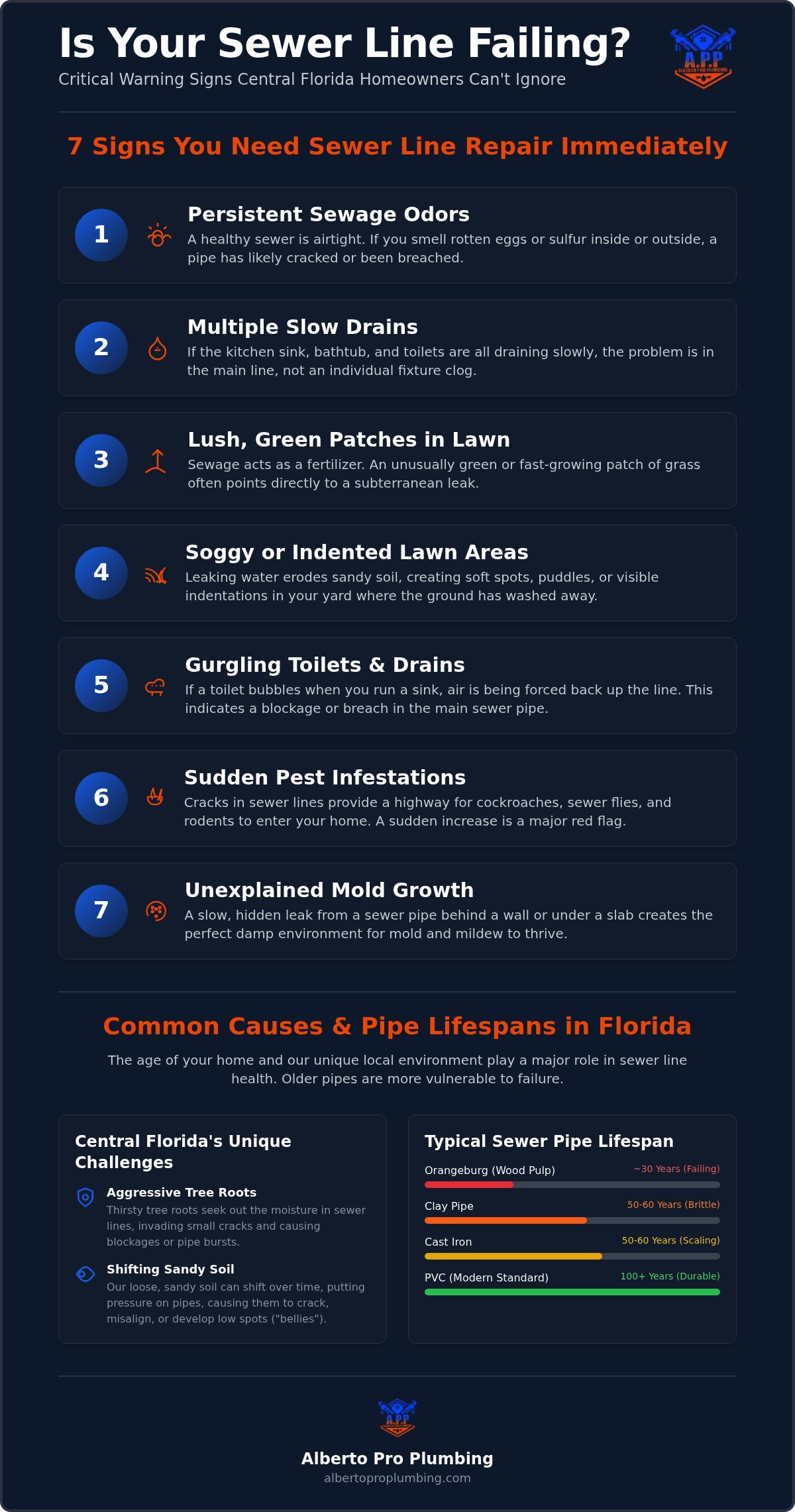
In our local communities, the age of your home often dictates what is happening underground. In older Central Florida neighborhoods, you’ll often find clay or Orangeburg pipes. Clay is brittle and prone to cracking under ground pressure, usually lasting about 50 to 60 years. Orangeburg, made of wood pulp and tar, was common in the mid-20th century but is notorious for collapsing entirely after 30 years. Cast iron was the standard for many decades, but it faces a unique problem called scaling. Over time, the inside of the pipe rusts and creates a rough, jagged surface that catches debris and causes recurring clogs. Most cast iron lines reach the end of their lifespan after 50 to 60 years. Modern homes typically use PVC, which is a durable plastic designed to last 100 years or more. It is the gold standard for new construction and whole-home repipe projects because it resists corrosion and root intrusion. Knowing your pipe material helps you recognize the signs you need sewer line repair before a catastrophic failure happens.
7 Signs You Need Sewer Line Repair Immediately
Spotting a plumbing problem before it becomes a catastrophe is the best way to protect your property and your wallet. While some issues are obvious, others hide beneath your floorboards or under your lawn. If you notice any of these indicators, they are the primary signs you need sewer line repair. Ignoring them often leads to structural damage that requires more invasive and expensive fixes later.
- Persistent sewage odors: A healthy sewer system is airtight. If you smell rotten eggs or sulfur inside or outside your home, a pipe has likely cracked.
- Multiple slow drains: If your kitchen sink, bathtub, and laundry line are all draining slowly, the issue isn’t a simple clog. It’s a main line blockage that won’t be solved by standard drain cleaning services.
- Lush, green patches: Is one part of your lawn significantly greener or taller than the rest? Sewage acts as a potent fertilizer, and extra growth often points to a subterranean leak.
- Soggy or indented areas: In our sandy Central Florida soil, leaking water quickly washes away the ground beneath your grass, creating soft spots or visible indentations.
- Gurgling toilets: When you run the bathroom sink or shower, listen to the toilet. If it bubbles or gurgles, air is trapped in the line due to a structural breach.
- Pest infestations: Cracks in sewer lines are open doors for cockroaches and rodents. A sudden spike in pests near your drains is a major red flag.
- Mold and mildew: Excess moisture from a leaking pipe behind a wall or under the slab can trigger rapid mold growth in Florida’s humid climate.
Interior Warning Signs: Smells and Sounds
Inside your home, your nose is often the first tool for diagnosis. Sewer gas contains methane and hydrogen sulfide, which aren’t just unpleasant; they can cause headaches and sinus issues if you’re exposed for too long. When a pipe cracks, these gases escape the airtight system and drift into your living spaces. You might also notice ‘ghost flushing’ or gurgling sounds. These happen because a damaged pipe can’t maintain the correct pressure, forcing air to push back through your fixtures. If you suspect your home is showing these symptoms, reaching out to a local specialist like Alberto Pro Plumbing for a camera inspection can save you thousands in future repairs.
Exterior Red Flags: Yard and Foundation Issues
Central Florida’s sandy soil presents unique challenges. Because our ground is so porous, a leaking sewer line can create ‘sewage sinkholes.’ These are localized areas where the soil has saturated and collapsed, often near your foundation. This moisture also attracts pests that thrive in damp, organic environments. If you see an unusual number of palmetto bugs or rodents in a specific area of your yard, they may be following the scent of a broken pipe. Because of our high humidity, these leaks also provide the perfect breeding ground for mold, which can spread into your home’s structure before you even realize there’s a leak underground.
Why Sewer Lines Fail in Central Florida
While knowing the signs you need sewer line repair helps you catch problems early, understanding why these failures happen specifically in our region is key to long term prevention. Central Florida presents a unique set of environmental challenges that most plumbing systems weren’t originally designed to handle. Our local landscape is beautiful, but the combination of aggressive vegetation and unstable ground creates a perfect storm for underground pipe failure. Whether you live in a historic home in Orlando or a mid-century property in Clermont, your sewer line is likely battling one of these local factors right now.
One often overlooked factor is our high water table. During the heavy summer rains, the ground becomes completely saturated. If your sewer line has even a hairline fracture, that outside water pressure forces its way into the pipe. This extra volume can quickly overwhelm a compromised system, leading to the sudden backups homeowners dread. When this happens, it is a clear indicator that the structural integrity of your line is gone.
The Battle with Invasive Tree Roots
Florida Live Oaks and various Palm species are notorious for their sprawling, thirsty root systems. These roots are like heat seeking missiles for moisture and nutrients, both of which are found in abundance inside your sewer line. Roots don’t actually “break” pipes; instead, they find tiny gaps in pipe joints or small cracks caused by age. Once they enter, they thrive in the warm, nutrient rich environment. This leads to the “root and fill” cycle. Many homeowners try to solve this by snaking the line, but that only prunes the roots. Like a hedge, they grow back thicker and faster, eventually causing a total collapse. To protect your home, try to keep large trees at least 10 to 15 feet away from your main sewer line path.
Soil Shifting and Pipe Misalignment
Central Florida is essentially built on a massive sand box. Unlike clay or rocky soil, sandy soil is incredibly prone to shifting, especially during our extreme wet and dry seasons. This constant ground movement causes pipes to settle unevenly, creating what we call “bellies” or sags in the line. Waste collects in these low spots, leading to recurring clogs that no amount of chemicals will fix. Furthermore, as the sand moves, it can pull pipe joints apart. These shifted joints allow sand to pour into the sewer line, which acts like sandpaper, quickly eroding the pipe material from the inside out. Recognizing these environmental signs you need sewer line repair can save you from a catastrophic yard failure down the road.
Sewer Line Repair vs. Replacement: Making the Right Call
Deciding between a localized fix and a total system overhaul is one of the most important choices you’ll make as a homeowner. While the signs you need sewer line repair are often clear, the best path forward depends on the age and condition of your pipes. A spot repair is a great, cost-effective solution for localized damage, such as a single root intrusion or a small crack in a modern PVC line. It allows us to fix the specific problem area without disturbing the rest of your yard. However, if your home still relies on aging cast iron or has multiple points of failure, a full replacement is usually the more reliable long-term investment. Repairing the same section every six months quickly becomes more expensive than a one-time permanent fix.
When evaluating your options, consider the “50 percent rule.” If the cost of repairing a specific section of your sewer line is more than half the cost of a full replacement, or if the pipe material is over 50 years old, upgrading the entire line is often the smarter financial move. This proactive approach prevents future emergencies and ensures that you won’t be dealing with the same unpleasant odors and backups again in just a few months. Our goal is to provide a solution that offers lasting peace of mind rather than a temporary patch.
Modern Diagnostic Tools
We believe in providing an honest diagnosis based on visual evidence, not guesswork. High-definition sewer cameras allow us to travel deep inside your pipes to see the exact cause of your trouble in real time. We also utilize hydrostatic testing to confirm that the entire line can hold pressure without leaking into the surrounding soil. A camera inspection is the only way to verify if you need a spot repair or a full replacement. This transparency ensures you aren’t paying for a replacement you don’t need, or a repair that won’t last. If you are seeing red flags, schedule a professional sewer line inspection to get a clear picture of your home’s health.
Trenchless vs. Traditional Methods
Technology has changed the way we handle sewer issues. Trenchless repair methods, such as pipe lining or pipe bursting, allow us to restore your plumbing with minimal digging. This saves your driveway, landscaping, and patio from being torn up. While trenchless is a fantastic option for many, traditional excavation remains the most reliable method for pipes that have completely collapsed or suffered severe structural failure. No matter which method is right for your situation, the team at Alberto Pro Plumbing is committed to tidy service. We take pride in leaving your workspace in its original condition, ensuring your home stays beautiful while your plumbing returns to peak performance. We treat your property with the same respect we would give our own families.
Expert Sewer Solutions with Alberto Pro Plumbing
We are more than just technicians; we are your neighbors. When a sewer emergency strikes, it feels like your whole world is on hold. That is why we offer 24/7 emergency response across Lake, Polk, Osceola, and Orange Counties. Whether it is a holiday or the middle of a Tuesday night, our team is ready to respond. We treat your home with the same care and respect we would give our own families, ensuring you get the technical expertise you need without the cold, corporate feel of a national franchise. Our local heritage in Clermont means we are genuinely invested in the well-being of our community.
Dealing with a plumbing crisis is stressful enough without worrying about the mess left behind. We stand by our promise of tidy service, which means we work diligently to ensure your workspace is left in its original condition. From the moment we arrive until the final check is complete, our focus is on providing a reliable, long-term solution that protects your property value and your family’s health.
Our Professional Repair Process
We follow a methodical, three-step approach to ensure your plumbing is restored correctly the first time. This discipline allows us to move from crisis management to a permanent remedy with total transparency.
- Step 1: Immediate Response: Our first goal is to stabilize the situation. We act quickly to stop any active overflows and protect your foundation and flooring from further damage.
- Step 2: Transparent Diagnosis: We use the latest high-definition camera technology to show you the exact cause of the failure. You see what we see, allowing you to make an informed decision about the repair.
- Step 3: Durable Craftsmanship: We perform the repair using high-tier materials designed to withstand Central Florida’s unique environmental pressures. Our work is built to stand the test of time, giving you confidence that the issue won’t return.
Preventing Future Failures
The best way to manage your underground plumbing is to stay ahead of the damage. Waiting until you see the obvious signs you need sewer line repair often results in more expensive property restoration. Our Home Protection Membership is the best way to catch sewer issues before they become emergencies. This plan includes proactive inspections to identify small cracks or early root intrusions before they lead to a catastrophic backup.
Membership also provides a critical advantage during our intense Florida storm seasons. When heavy rains saturate the ground and put your system to the test, our members receive priority support. This ensures your home remains a sanctuary even when the local weather is at its worst. Schedule your professional sewer inspection with Alberto Pro Plumbing today!
Secure Your Home’s Future with Reliable Sewer Solutions
Your home is a significant investment, and its underground plumbing is the foundation of its daily comfort. By staying vigilant for the signs you need sewer line repair, you can address issues like root intrusion or soil shifting before they compromise your entire system. We have seen how Central Florida’s unique landscape requires a specialized approach, moving from high-definition camera inspections to precision repairs that respect your property. Catching these red flags early is the best way to avoid the stress of major excavation and the high cost of emergency restoration.
Don’t let a small gurgle or a lingering odor turn into a catastrophic failure. As a Clermont-owned and operated specialist, we are here to provide the technical authority you need with the neighborly care you deserve. We offer 24/7 emergency service and a tidy service guarantee, ensuring your home stays clean and your family stays safe. Take the first step toward a worry-free home today. Schedule Your Sewer Camera Inspection Today and get the honest diagnosis you need. We are ready to help you restore your plumbing with integrity and craftsmanship.
Frequently Asked Questions
How much does sewer line repair cost in Central Florida?
The cost of repair varies based on the depth of the pipe, the material used, and the extent of the damage. A localized spot repair is naturally more affordable than a full system replacement. Factors like accessibility under concrete slabs or the need for traditional excavation versus trenchless methods also influence the final investment. We recommend a camera inspection to provide an accurate, honest estimate for your specific property.
Can I use chemical drain cleaners to fix a sewer line backup?
You should avoid using harsh chemical cleaners for main line backups. These products are often caustic and can eat away at older pipe materials like cast iron or clay, making existing structural issues worse. They also rarely reach the actual blockage if it’s deep in the sewer main. Professional cleaning or repair is the only safe way to restore flow without risking a total pipe collapse.
Will my homeowners insurance cover sewer line repair?
Most standard policies do not cover repair for normal wear and tear or root intrusion. However, you might have coverage if the damage was sudden and accidental, or if you have a specific service line rider. It’s best to check your individual policy details with your agent. We can provide the necessary documentation and visual evidence from a camera inspection to help you file a clear claim.
How long does a typical sewer line repair take to complete?
A standard spot repair can often be finished in a single day. More complex projects, such as a full line replacement or extensive excavation, might take two to three days. Our team prioritizes speed and efficiency to minimize the disruption to your home. We work methodically to ensure your water service is restored as quickly as possible while maintaining our high standards of craftsmanship and tidy service.
Is a gurgling toilet always a sign of a sewer line problem?
While a gurgling toilet is one of the common signs you need sewer line repair, it can also indicate a blocked vent stack or a simple clog. If the gurgling happens when you run water in other parts of the house, it likely points to a main line issue. Trapped air in the system is trying to escape, and the toilet is the easiest exit point.
What is the difference between a sewer line and a septic drain field?
A sewer line is a single pipe that carries waste to a municipal system or a septic tank. A septic drain field is a network of perforated pipes that disperses treated liquid waste into the soil. Both systems can fail due to root intrusion or soil shifting. Our specialists are experienced in both septic-to-sewer dynamics and traditional sewer repairs, ensuring we can diagnose the specific point of failure.
How often should I have my sewer line inspected?
We recommend a professional camera inspection every one to two years, especially for homes older than 40 years. Regular checks allow us to spot hairline cracks or early root growth before they turn into expensive emergencies. If you’re noticing early signs you need sewer line repair, don’t wait for a total backup. This routine care is the most effective way to protect your foundation.
Can tree roots be removed without replacing the entire pipe?
Yes, we can often remove roots using specialized mechanical cutters or high pressure water jetting. However, this is usually a temporary fix because roots are naturally attracted to the moisture in your pipes and will grow back. If the roots have caused significant structural cracks, we may suggest a spot repair or lining to seal the pipe. This prevents the root and fill cycle from recurring.