
Imagine walking through your front door after a long day in the Florida sun, only to be hit by a wave of rotten eggs just as your guests pull into the driveway. Dealing with a sewer gas smell in house is more than just an unpleasant inconvenience; it’s a stressful mystery that leaves you worried about your family’s health and embarrassed to host friends. You shouldn’t have to wonder if the air you’re breathing is safe or why the odor seems to vanish one day only to return with a vengeance the next. We know how frustrating it is to feel like you’ve lost control over the comfort of your own living space.
We’re here to help you pinpoint the exact source of that foul scent and provide a permanent solution that restores your peace of mind. In this guide, we’ll explore how Florida’s unique environmental factors, from our high water tables to specific septic system regulations, impact your home’s plumbing. You’ll learn the difference between a simple dry P-trap and a serious venting issue, giving you the clarity you need to protect your property and your loved ones. Let’s get your home smelling fresh and feeling safe again.
Key Takeaways
- Identify why hydrogen sulfide creates that distinct “rotten egg” odor and the risks it poses to your family’s comfort.
- Pinpoint common culprits like dry P-traps or faulty toilet wax rings that lead to a recurring sewer gas smell in house.
- Spot early warning signs of septic system failure, such as soggy yards or slow drains, which are common in our Central Florida environment.
- Learn simple DIY troubleshooting steps to restore your home’s fresh scent before deciding if professional repair is needed.
- Discover how specialized equipment like smoke testing and sewer cameras find hidden leaks for a tidy, permanent solution.
Understanding Sewer Gas: Why Your House Smells Like Rotten Eggs
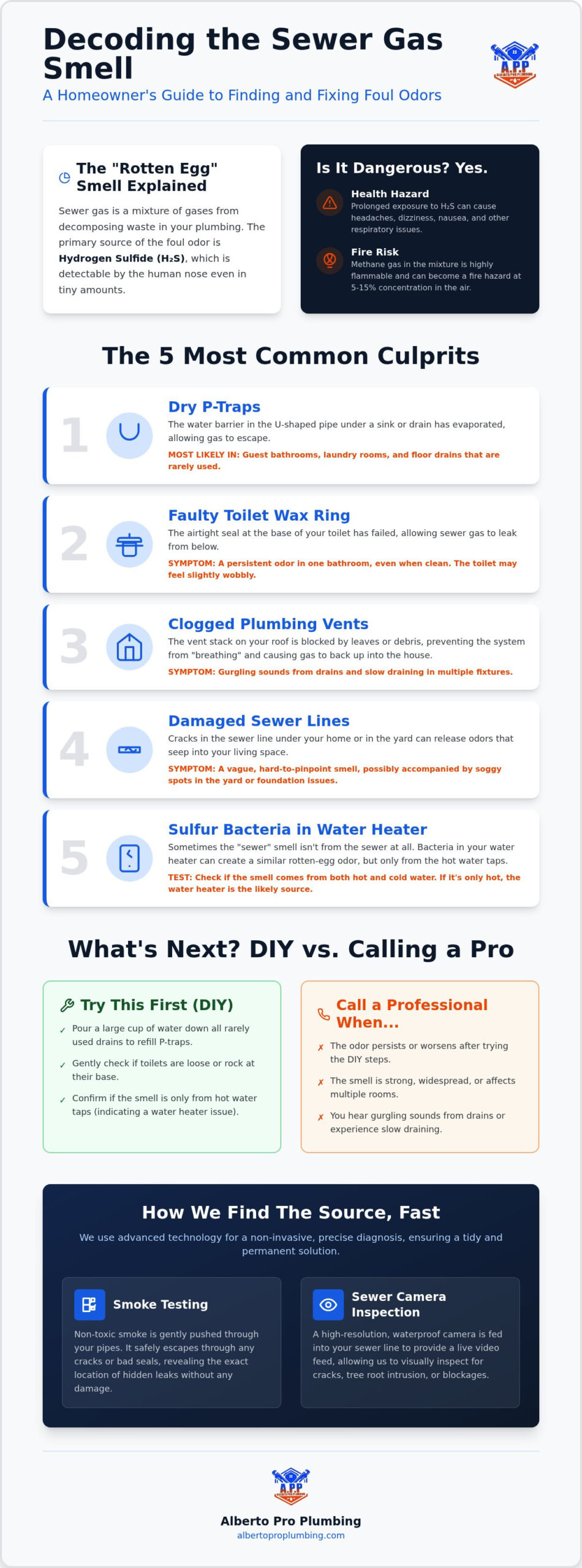
That unmistakable scent of rotten eggs isn’t just an inconvenience for your weekend plans; it’s actually a biological warning system. When you notice a sewer gas smell in house, your plumbing is telling you that the barrier between your living space and the waste system has failed. Sewer gas isn’t a single substance. It’s a complex mixture of gases like methane, ammonia, and hydrogen sulfide created by decomposing organic matter within your pipes or septic system.
Hydrogen sulfide is the specific culprit behind that sulfurous odor. It’s a naturally occurring gas, but it’s highly detectable by the human nose even in tiny amounts. While it might start as a faint whiff near a kitchen sink or floor drain, it’s a signal that should never be ignored. We see this often in Lake County homes where fluctuating temperatures can cause gas to expand and find its way through small gaps in your plumbing seals.
Is Sewer Gas Dangerous to Breathe?
The short answer is yes, though the level of risk depends on the concentration and length of exposure. Hydrogen sulfide is toxic to the human body. Even low-level exposure over a long period can lead to persistent health issues. If you or your family members start experiencing unexplained headaches, nausea, or dizziness, the air quality in your home might be the reason. These symptoms are your body’s way of reacting to the chemical cocktail entering your lungs.
Methane is another major component, and while it’s odorless, it poses a different kind of threat. It is highly flammable and can displace oxygen in confined spaces. Sewer gas reaches a critical fire hazard point when methane concentrations hit a level between 5 and 15 percent by volume in the air. This is why a persistent sewer gas smell in house requires a professional look to ensure your property remains a safe, stable environment for your family.
How Sewer Gas Moves Through Your Central Florida Home
Gases are highly sensitive to changes in air pressure and temperature. In many Clermont homes, the difference between the cool, air-conditioned interior and the sweltering Florida heat outside creates a pressure imbalance. This “stack effect” can literally pull sewer gases up through your drains if your venting system isn’t functioning perfectly. Our local humidity also plays a role. Moist, heavy air can trap these odors closer to the floor, making them feel more concentrated in small, enclosed areas.
To ensure your home’s ventilation system is working efficiently alongside your plumbing, GAP Mechanical provides expert HVAC services to maintain proper air pressure and comfort throughout your living space.
You’ll often find these “odor hotspots” in laundry rooms or guest bathrooms that don’t get daily use. Because the water in plumbing traps evaporates faster in our warm climate, these rooms are often the first place a leak or a dry pipe announces itself. Identifying these areas is the first step toward getting your home back to its fresh, clean state.
The 5 Most Common Culprits Behind Sewer Odors in 2026
Identifying the source of a sewer gas smell in house is the first step toward reclaiming your home’s comfort. Most odors aren’t caused by a single catastrophic failure, but rather by small mechanical issues that have gone unnoticed. Whether it’s a guest bathroom you rarely use or a hidden crack behind a wall, understanding these five common culprits will help you decide if you need a quick DIY fix or professional assistance.
- Dry P-Traps: The water barrier in your pipes has evaporated.
- Faulty Toilet Wax Rings: The airtight seal at the base of your toilet has failed.
- Clogged Plumbing Vents: Debris on your roof is preventing the system from “breathing.”
- Damaged Sewer Lines: Aging pipes under your slab or in your yard have cracked.
- Sulfur Bacteria: Microorganisms in your water heater are mimicking the scent of sewage.
Dry P-Traps and the “Guest Room” Problem
The P-trap is the U-shaped pipe under your sinks and tubs designed to hold a small amount of water. This water acts as a physical plug, preventing gases from drifting up from the sewer into your living space. In Central Florida, our constant air conditioning and high temperatures can cause this water to evaporate surprisingly fast, especially in guest rooms or laundry room floor drains that sit idle for weeks. If you notice a sewer gas smell in house only in a specific, rarely used room, a dry trap is likely the reason. Pouring one cup of water down unused drains every few weeks is often all it takes to restore the barrier. If the odor persists after you’ve refreshed the water, it’s time to look at drain cleaning services near me to ensure there isn’t a deeper blockage causing the issue.
Blocked Vent Pipes: A Florida Environmental Issue
Plumbing systems require air to move waste efficiently. This air comes from vent pipes that exit through your roof. In Lake and Orange Counties, our intense summer storms often toss leaves, twigs, and even bird nests onto rooftops, where they can easily clog these openings. When a vent is blocked, the resulting vacuum can actually siphon the water right out of your P-traps as you flush or run the sink. You might hear a distinct gurgling sound coming from your drains as the system struggles to breathe. This is a common local issue that requires a steady hand to clear safely. If you suspect a deeper problem under your home, our team can provide expert sewer line repair to ensure your entire system is sealed and venting correctly.
Faulty toilet wax rings are another frequent offender. If your toilet wobbles even slightly, that wax seal is likely broken, allowing gas to seep directly from the floor. Finally, don’t forget your water heater. If the “rotten egg” smell only happens when you run hot water, it’s likely sulfur bacteria reacting with the anode rod rather than a true plumbing gas leak. Distinguishing between these causes ensures you apply the right fix without wasting time on the wrong room.
Is it Your Septic System? Identifying Drain Field and Tank Issues
In Central Florida, where we have the second-highest number of septic systems in the country with approximately 2.6 million units, the source of a sewer gas smell in house is often buried in your backyard. Unlike homes connected to city sewer lines, your property relies on a delicate balance of biology and drainage to process waste safely. When your septic tank reaches capacity or the soil around your drain field becomes saturated, the gases produced by decomposing waste can’t escape into the ground. Instead, they are forced back through your plumbing, looking for the path of least resistance.
Florida’s heavy seasonal rainfall and high water table create unique pressure on these systems. During a typical summer storm in Lake or Orange County, the ground can become so waterlogged that the effluent from your tank cannot filter into the soil. This backup creates a pressure head that pushes hydrogen sulfide and methane back toward your home’s vents and drains. It’s a clear signal that your system is struggling to keep up with the load and requires immediate attention to prevent a messy backup into your indoor living spaces.
Signs of Septic Drain Field Failure
One of the most telling signs of a failing system is actually quite beautiful at first glance. If you notice a patch of lush, bright green grass over your drain field while the rest of your lawn looks average, your system is likely leaking excess nutrients. This happens when the soil can no longer process the liquid waste correctly, effectively over-fertilizing that specific area. You might also notice that every drain in your home is running slowly, regardless of which room you’re in. This house-wide sluggishness indicates a systemic blockage rather than a simple clog in one pipe. For those facing these persistent issues, exploring septic drain field rehab can often save your system from a total, costly replacement while eliminating odors for good.
When the Odor is Outside vs. Inside
Determining exactly where the smell originates helps us narrow down the fix. If you catch a whiff of sewage while walking near the septic tank lid, the seal might be loose or the tank might simply need a routine pump-out. However, if the sewer gas smell in house is the primary issue, the problem is likely deeper. Your main cleanout, which is the white pipe sticking out of the ground near your foundation, is a vital diagnostic tool. If you open it and see standing water, the blockage is between the cleanout and the tank. If it’s dry but your house still smells, the issue is likely inside your walls or in your venting system.
Many homeowners assume that pumping the tank will solve the problem forever. While pumping is a necessary maintenance step every three to five years, it’s often just a temporary “reset” if the underlying drain field is failing. If the soil is clogged with biomat or damaged by heavy vehicles, the tank will fill right back up, and the odors will return within weeks. We focus on identifying the root cause so your family doesn’t have to deal with the stress of a sudden backup or recurring smells.
When to DIY vs. When to Call an Emergency Plumber
Finding a sewer gas smell in house often triggers an immediate desire to fix the problem yourself. We understand that homeowners in Lake and Orange Counties take pride in maintaining their properties. While some odors are simple fixes, others signal a deeper failure in your waste system that requires specialized equipment. Knowing the difference can save you time, money, and the stress of an accidental sewage backup.
Start with the basics. If the smell is localized to a single room, walk through your home and run water in every sink, tub, and floor drain for about sixty seconds. This primes the P-traps we discussed earlier, ensuring the water barrier is intact. Next, check your toilets. Give each one a gentle nudge with your foot; if the base wobbles even slightly, the wax ring seal is likely broken. These are straightforward checks that help you rule out the most common minor issues before you assume the worst.
Simple DIY Fixes to Try First
If you’ve identified a specific sink as the source, try a baking soda and vinegar refresh. Pouring half a cup of baking soda followed by half a cup of vinegar down the drain can help clear minor organic buildup in the overflow channel that often mimics sewer smells. You can also step outside and look at your roof vents from the ground. If you see a large branch or a visible bird nest obstructing the pipe, you’ve likely found your culprit. For intermediate DIYers, replacing a toilet wax ring is a manageable weekend project that costs very little in materials but requires careful lifting to ensure a new, airtight seal.
When to Call Alberto Pro Plumbing
There are certain red flags that indicate a DIY approach isn’t enough. If the sewer gas smell in house persists even after you’ve flushed every drain and cleaned every trap, the leak is likely hidden behind a wall or under your foundation. Pay close attention to the sounds of your plumbing. If you hear gurgling in the shower when you flush the toilet, or if multiple drains across the house are running slowly at the same time, you’re likely facing a main line blockage or a venting failure. These issues won’t go away on their own and can lead to a catastrophic backup if left unaddressed.
Your family’s health is the ultimate deciding factor. You should never ignore a persistent odor that leads to symptoms like headaches, dizziness, or nausea. These are signs of high gas concentrations that require professional detection tools to locate and repair safely. If you’re dealing with a sudden increase in odor or suspect a major line break, our team is ready to provide emergency plumbing repair to restore your home’s safety and air quality. We focus on providing a tidy, permanent fix so you can get back to your normal routine without the lingering worry of toxic exposure.
Professional Odor Detection and Sewer Line Repair in Clermont
When simple DIY checks don’t clear the air, you need more than a flashlight and a wrench to find the source of the problem. Our team uses specialized technology to see through walls and under concrete slabs, ensuring we find the exact cause of a sewer gas smell in house without unnecessary guesswork. We treat your property with the same respect we’d show a neighbor’s home, providing a tidy service that leaves your living space exactly as we found it, only much fresher.
We rely on three primary methods to eliminate persistent odors and restore your plumbing’s integrity:
- Smoke Testing: We use non-toxic, odorless smoke to find hidden gaps in your vent and drain lines.
- Sewer Camera Inspections: Our high-definition cameras provide a real-time look at the inside of your pipes.
- Hydro-Jetting: We use high-pressure water to scrub away the sludge and bacteria that cause recurring smells.
Advanced Diagnostic Tools
Smoke testing is one of the most effective ways to pinpoint invisible leaks. We introduce a specialized, non-toxic smoke into your plumbing system under low pressure. If there’s a crack in a pipe behind your drywall or a loose connection in the attic, the smoke will emerge at that exact spot, showing us exactly where to work. This prevents us from having to open up multiple walls just to find a single leak.
For issues deeper in the system, our high-definition camera crawls allow us to visualize cracks, invasive tree roots, or pipe collapses in your main line. Utilizing a high-definition camera inspection saves homeowners money on excavation by identifying the exact point of failure, preventing the need to dig up the entire yard or floor. Once we’ve identified the blockage or break, we can provide an accurate quote and a targeted repair plan that gets the job done right the first time.
Long-Term Prevention with Home Protection
The best way to handle a sewer gas smell in house is to prevent it from ever starting. Our Home Protection Membership is designed to give you peace of mind year-round through scheduled maintenance and annual inspections. We check your pipe integrity, monitor septic levels, and ensure your venting system is clear of the Florida debris we discussed earlier. Catching a small seal failure or a slow-moving clog today prevents an expensive emergency tomorrow.
Regular maintenance is especially vital for our local septic systems, which face constant pressure from heavy rains and high water tables. By staying proactive, you ensure your family remains safe from toxic gas exposure and your home remains a welcoming place for guests. For more information on maintaining your system, you can explore our full range of plumbing services. We are proud to be your local specialists, committed to high-tier craftsmanship and the long-term well-being of our community.
Restore Your Home’s Freshness and Safety Today
You don’t have to live with the embarrassment or worry of a foul odor in your living space. From simple dry P-traps to complex septic drain field issues, we’ve explored how to identify and address the most common sources of these smells. Dealing with a sewer gas smell in house is a clear signal that your plumbing needs attention, and acting quickly protects both your property and your family’s health. Whether the fix is as simple as running water or requires a deeper investigation, knowing the facts helps you take control of your environment.
As a family-owned local business, we’re deeply invested in the well-being of our neighbors. We bring specialized sewer camera and smoke testing equipment to every job to ensure we find the exact cause of the problem without making a mess. Our team provides 24/7 emergency service in Clermont and Orlando to give you immediate peace of mind during a plumbing crisis. Get Rid of Sewer Odors Today—Contact Alberto Pro Plumbing for Expert Detection. We’re ready to help you breathe easier and enjoy a fresh, clean home once again.
Frequently Asked Questions
Is the sewer gas smell in my house toxic?
Yes, sewer gas can be toxic if it reaches high concentrations. It contains hydrogen sulfide, which is a poisonous gas that can cause headaches, nausea, and dizziness even at low levels. It also contains methane, which is highly flammable and can displace the oxygen in your home. If you or your family members feel unwell or notice a persistent rotten egg scent, it’s important to have a professional inspection to ensure your air quality is safe.
Can a dry P-trap cause a whole house to smell like sewage?
A single dry P-trap can definitely cause a sewer gas smell in house to spread through multiple rooms. Since gas is lighter than air and moves with the natural currents in your home, an open drain in a guest bathroom can allow enough hydrogen sulfide to escape to affect the entire hallway. Running water for one minute is the fastest way to see if this simple fix restores the necessary water barrier and eliminates the odor.
How do I know if the sewer smell is coming from my septic tank?
You can usually tell the issue is septic-related if the odor is strongest outside near the tank lid or if your yard has soggy, unusually lush patches of grass. Inside the home, a failing septic system often causes all your drains to run slowly at once rather than just one sink. If the smell is isolated to a single room, the problem is likely a local plumbing issue like a dry trap or a leaky toilet seal.
Why does my bathroom smell like rotten eggs only when I run the water?
If the smell only appears when you run the faucet, the issue is often sulfur bacteria in your water heater or organic buildup in the sink’s overflow channel. This is different from a leak in the sewer line itself. You can try cleaning the sink overflow with a small brush or checking the anode rod in your water heater. If the scent persists with both hot and cold water, you might have a venting problem that requires professional attention.
Will pouring bleach down the drain get rid of sewer gas smells?
Bleach won’t solve the problem because it doesn’t fix the underlying cause, such as a broken seal or a blocked roof vent. While it might temporarily kill some surface bacteria, it can’t restore a dry P-trap or repair a cracked pipe behind your walls. In fact, excessive bleach can damage the natural bacterial balance in your septic system or harm older metal pipes. It’s always better to find and fix the physical source of the gas leak.
Can a clogged roof vent cause sewer odors inside my home?
Yes, a clogged roof vent is a very common cause of indoor odors in Central Florida. When the vent is blocked by debris or bird nests, the air pressure in your pipes changes. This creates a vacuum that siphons water out of your P-traps as you flush the toilet or drain a sink. Without that water barrier, sewer gases flow freely into your living spaces. Clearing the roof obstruction usually restores the balance and stops the smell.
How much does it cost to fix a sewer gas leak?
The cost to fix a sewer gas smell in house depends entirely on the root cause and the labor involved. A simple fix like priming a dry trap costs nothing, while replacing a toilet wax ring is a relatively straightforward and affordable repair. If our camera inspection reveals a collapsed main line or a slab leak, the repair requires more specialized equipment and time. We provide a clear, upfront quote once we’ve diagnosed the specific issue with our detection tools.
What should I do if the sewage smell is coming from my basement floor drain?
First, pour a gallon of water down the drain to prime the P-trap, as these drains often dry out from lack of use. If the smell doesn’t vanish within an hour, check for signs of a sewage backup or a blockage in your main line. Since floor drains are at the lowest point of your plumbing system, they are often the first place a serious sewer issue becomes visible. If the water doesn’t drain, call for professional help immediately.