
Imagine it’s a humid Tuesday evening in Clermont, and as you finish the dinner dishes, you notice water bubbling up in the shower drain while the kitchen sink gurgles. It’s a sinking feeling every Central Florida homeowner dreads. You immediately start wondering if these are the signs of a clogged sewer line or just a simple sink issue. The anxiety about raw sewage and expensive repairs begins to set in, especially when you aren’t sure if the problem lies with your septic tank or the city sewer line.
Recognizing these red flags early is your best defense against catastrophic water damage and the stress of a messy cleanup. In this guide, we’ll share nine critical indicators that your main line is struggling. We’ll also explain how the 2026 Florida Clean Waterways Act requirements might impact your system and how specialized camera inspections provide a clear, honest diagnosis. By the end of this article, you’ll know exactly how to spot trouble before it starts, ensuring your home stays clean and your drains stay clear.
Key Takeaways
- Learn why your main sewer line is the “trunk” of your plumbing system and how it functions differently in Central Florida’s municipal and septic networks.
- Discover the most common signs of a clogged sewer line, including how to tell if multiple slow drains are actually a single, serious main line issue.
- Identify subtle outdoor indicators like unusually lush grass or persistent odors that suggest a leak or blockage near your home’s foundation.
- Understand why a professional video camera inspection is the only way to accurately distinguish between simple grease buildup and invasive tree roots.
- Know the immediate steps to take during a backup to protect your property from water damage while you wait for a local specialist.
Understanding Your Main Sewer Line: The Trunk of Your Home
The main sewer line is the single most important pipe in your home’s plumbing. It acts as the “trunk” that collects waste from every toilet, sink, and shower branch before carrying it away to the larger sanitary sewer system or your private septic tank. Unlike a clogged kitchen sink that only affects one room, a main line issue is a systemic failure. Recognizing the early signs of a clogged sewer line is vital because it prevents “black water” from backing up into your home. This type of sewage contains harmful bacteria and pathogens that pose serious health hazards to your family.
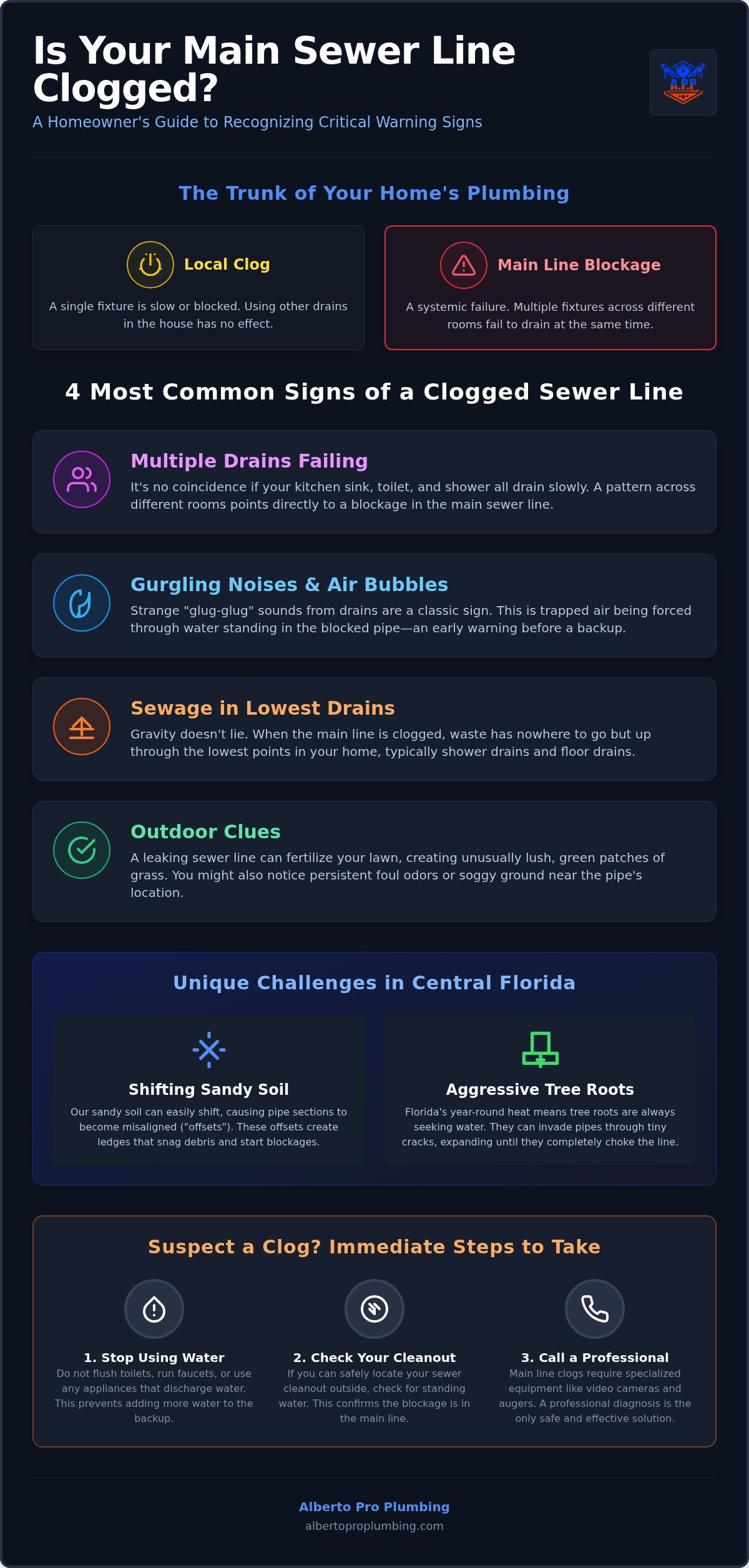
To determine if your issue is local or systemic, look for these differences:
- Local Clog: Only one fixture is slow, and using other drains doesn’t cause a reaction elsewhere in the house.
- Systemic Failure: Running the washing machine causes the toilet to bubble or water to rise in the shower.
- Main Line Blockage: Multiple fixtures across different rooms fail to drain at the same time, indicating the trunk is blocked.
Ignoring these early warning signs often leads to a plumbing catastrophe. When sewage can’t flow out, it has no choice but to come back up through the lowest drains in your house, usually the shower or floor drains. This isn’t just a messy cleanup; it’s a significant property risk. Raw sewage can seep into your drywall, warp your baseboards, and ruin your flooring within hours. Taking action at the first signs of a clogged sewer line, such as a gurgle or slow drain, is the only way to protect your home’s value and your family’s health.
City Sewer vs. Septic System: Why it Matters
In Central Florida, your home’s setup depends on your neighborhood. Most homes in Clermont or Orlando connect to city lines, while rural properties rely on septic systems. You can tell the difference by checking your utility bill or looking for septic lids in your yard. If you have a septic system, a backup might mean you need septic drain field rehab rather than a simple pipe clearing.
Why Central Florida Pipes Are Vulnerable
Our local environment presents unique challenges. Central Florida’s sandy soil shifts easily, causing pipe “offsets” that catch debris. Additionally, the Florida heat encourages year-round root growth. Thirsty roots enter through tiny cracks and expand until they choke the line. Heavy seasonal rains then overwhelm these compromised lines, turning a small blockage into a full-blown emergency.
The 4 Most Common Signs of a Clogged Sewer Line
When your main line is blocked, your home starts acting in ways that feel almost possessed. It isn’t just one slow sink; it’s a house-wide rebellion. Recognizing these early signs of a clogged sewer line can be the difference between a quick drain cleaning and a five-figure restoration bill. Because the sewer line is hidden underground, you have to rely on what your fixtures are telling you.
Multiple Drains Failing Simultaneously
It’s statistically rare for your kitchen sink, guest bathroom toilet, and laundry room drain to all clog at the same time by coincidence. If you notice a pattern of slow drainage across different rooms, the problem is likely deep in your system. A systemic backup is a failure of the main trunk line. Instead of reaching for a plunger, check every fixture in your home. If the water levels are high in multiple spots, you’re dealing with a main line obstruction that requires professional intervention.
Strange Gurgling Noises and Air Bubbles
Your plumbing should be silent. If you hear a “glug-glug” sound coming from your toilet while you’re running the dishwasher, pay attention. This gurgling is the sound of trapped air struggling to escape through a pipe filled with standing water. As the water from one fixture tries to move past a blockage, it forces air back up through other drains. These “percolating” sounds are often the earliest warning to call for professional plumbing services before the air bubbles turn into a sewage backup.
Sewage in Lowest Drains
Gravity is your best diagnostic tool. Because shower and bathtub drains are the lowest points in your home, they are the first places where sewage will appear during a main line clog. If you see dark water or debris rising in the tub while you’re flushing a toilet, stop using all water immediately. This is a clear indicator that the waste has nowhere else to go. Seeing water in the shower when you use the washing machine is one of the most reliable signs of a clogged sewer line.
The Outdoor Cleanout Check
Walk outside and look for your sewer cleanout, usually a white PVC pipe with a cap near your foundation. If you remove the cap and see standing water or visible sewage inside the pipe, the clog is confirmed. This means the blockage is between your house and the city main or septic tank. If you’re feeling overwhelmed by these symptoms, our team at Alberto Pro Plumbing can provide a quick, tidy assessment to restore your peace of mind.
Hidden Signs: What to Look for Outside the Bathroom
Sometimes the most obvious signs of a clogged sewer line aren’t in your bathroom at all. You might find them while you’re mowing the lawn or walking to the mailbox. Because sewer lines run beneath your yard, a break or a major blockage often manifests as physical changes in your landscape. If you notice something unusual in your outdoor space, don’t ignore it. These hidden symptoms are often indicators that a pipe has already failed or is under extreme pressure.
The “Super-Green” Grass Phenomenon
Raw sewage is full of organic waste that acts as a powerful, unintended fertilizer for your lawn. If you see a specific patch of grass that looks significantly lusher and greener than the rest of your yard, take a closer look. This growth often follows the exact path of your underground sewer line. While a green lawn sounds nice, this localized growth usually means water is leaking from a cracked or blocked pipe. In cases where older pipes have completely collapsed under the pressure of Central Florida’s shifting sands, you might need repipe expertise to restore your system’s integrity.
Soggy Patches and Foul Odors
The intense Florida sun has a way of magnifying plumbing problems. If you smell a persistent “rotten egg” odor near your foundation or in your yard, it isn’t just a bad breeze. Sewer gas is escaping through a leak or a backup in your line. You might also find soggy, indented patches of soil where the ground has saturated. It’s easy to mistake these for a broken sprinkler head; however, if the water smells foul or doesn’t dry up after the sun comes out, it’s a red flag for pipe failure.
Pests and Structural Changes
A compromised sewer line also attracts unwanted visitors. Rodents and insects like cockroaches are naturally drawn to the moisture and organic waste found in a leaking pipe. If you suddenly have a pest problem that won’t go away, your sewer might be the source. Additionally, keep an eye out for small sinkholes or indentations. As water leaks out of a blocked or broken line, it washes away the sandy Florida subsoil. This creates a void that eventually leads to the ground sinking. Catching these signs early saves your foundation from expensive structural damage and keeps your property safe.
Professional Diagnosis: How We Find the Clog
Identifying the signs of a clogged sewer line is the first step toward saving your home from water damage. However, pinpointing the exact location and cause of the blockage requires specialized technology rather than guesswork. Digging up a pristine lawn or a concrete driveway based on a hunch is an expensive mistake that we help you avoid. We use non-invasive diagnostic tools to look inside your pipes, ensuring we treat the root cause without causing unnecessary destruction to your property.
Sewer Camera Inspections: Seeing is Believing
A high-definition, waterproof camera is the most powerful tool in our diagnostic kit. We feed a flexible, fiber-optic cable into your sewer line, which transmits real-time footage to a monitor. This allows us to see exactly what’s happening deep underground. We can locate the precise depth and distance of an obstruction from your home’s foundation. Whether the issue is a “soft” clog caused by grease and wipes or a “hard” blockage like invasive oak roots, we’ll know for sure. This visual proof helps us determine if your system requires drain cleaning services near me or a more extensive structural repair.
Hydro Jetting vs. Snaking: Choosing the Right Fix
Once we identify the blockage, we must choose the clearing method that’s safest for your specific pipe material. For many older Florida homes with brittle clay or cast iron pipes, the wrong choice can lead to a total pipe collapse. We weigh the options carefully to ensure a long-term solution.
| Method | How It Works | Best For |
|---|---|---|
| Hydro Jetting | Uses high-pressure water to scour the entire pipe interior. | Removing heavy grease, scale buildup, and stubborn tree roots. |
| Snaking | Uses a mechanical auger to punch a hole through a clog. | Quickly clearing simple obstructions like paper or hair. |
Hydro jetting is typically our preferred method for restoring a pipe to its original flow capacity. While a snake might temporarily restore drainage, it often leaves residue behind that leads to recurring clogs. Hydro jetting cleans the pipe walls thoroughly, which is essential for preventing future signs of a clogged sewer line. Don’t risk your plumbing with DIY rental equipment that can crack your main line. If your drains are gurgling, contact Alberto Pro Plumbing today for a professional camera inspection and a tidy, reliable fix.
What to Do When You Suspect a Sewer Main Clog
Discovering the signs of a clogged sewer line is a stressful moment for any homeowner. Whether you see water rising in your tub or hear that dreaded gurgling sound, your immediate actions can prevent a minor backup from turning into a total property loss. You must act decisively to protect your home’s foundation and your family’s health. Taking the right steps now ensures that a professional can resolve the issue quickly and safely.
Emergency Steps for Central Florida Homeowners
First, stop all water usage in your home. Don’t flush the toilets, run the dishwasher, or use the washing machine. If you’re unsure where the backup is coming from, locate your main water shut-off valve. In most Clermont homes, you’ll find this near the garage or at the street. Closing this valve ensures that no more water can enter your drainage system, which stops the backup from getting worse. While you can take these initial steps, always remember that sewer line work must be done by a professional to ensure the safety of your home’s infrastructure.
Next, head outside and find your sewer cleanout pipe. This is typically a white PVC pipe with a threaded cap. Carefully loosen the cap to relieve the pressure inside the line. This often allows the sewage to spill out into your yard instead of inside your bathroom. Protect your floors by placing old towels around the base of toilets or showers. If the situation escalates, call for emergency plumbing repair immediately. This is especially critical during Lake County’s heavy storm seasons, when saturated ground can worsen a failing line.
Whatever you do, avoid pouring chemical liquid cleaners down the drain. These harsh acids generate heat that can damage older, brittle Florida pipes. They rarely reach a main line clog located dozens of feet from the house. They simply sit in the pipe, creating a toxic hazard for the specialist who eventually has to clear the line. Professional methods like hydro jetting are the only safe way to clear a systemic blockage.
The Alberto Pro Home Protection Membership
The best way to handle a sewer emergency is to prevent it from happening in the first place. The Alberto Pro Home Protection Membership includes annual sewer camera inspections to catch root intrusion or grease buildup before they cause a backup. You also receive priority support, ensuring our team is there the moment you suspect trouble. Proactive maintenance is the most cost-effective way to manage home plumbing.
Take Control of Your Home’s Plumbing Health
A healthy sewer line is the foundation of a safe, functional home. By watching for the early signs of a clogged sewer line, such as gurgling toilets or unusually lush yard patches, you can stop a plumbing crisis before it begins. Remember that a fast response combined with an expert video camera diagnosis is the only way to protect your property from the mess and expense of a full-blown sewage backup. Waiting even a few days can lead to permanent structural damage that is far more difficult to repair.
As a local, family-owned and operated business, we understand the unique challenges Central Florida homeowners face. Whether it’s shifting sandy soil or aggressive tree roots, we have the specialized tools to fix the problem right the first time. Our 24/7 emergency response means you never have to face a drainage disaster alone. We take pride in our tidy service, ensuring your home is left in perfect condition once the job is done.
Schedule Your Sewer Inspection with Alberto Pro Plumbing Today and enjoy the peace of mind that comes with a clear, reliable drainage system. Your home deserves professional care, and we’re here to provide the neighborly support you need.
Frequently Asked Questions
Is a clogged sewer line considered a plumbing emergency?
Yes, a main sewer line blockage is a genuine plumbing emergency. When waste has nowhere to go, it backs up into your home’s lowest drains, creating a “black water” hazard. This water contains bacteria and pathogens that are dangerous to your family’s health. Beyond the hygiene risks, standing sewage can warp floors and damage drywall within hours. You should always treat these signs of a clogged sewer line as a high priority situation.
Can I clear a main sewer line clog myself with a rented snake?
We strongly advise against attempting to clear a main line yourself with a rented mechanical snake. These heavy duty tools are difficult to control and can easily crack old clay or cast iron pipes found in many Central Florida homes. Additionally, a snake only punches a small hole through the blockage rather than cleaning the pipe walls. Without a camera inspection, you’re just guessing at the problem and potentially making it much worse.
How much does it cost to clear a main sewer line in Central Florida?
The cost to clear a main sewer line varies based on several factors. The method used, such as mechanical snaking versus high pressure hydro jetting, will influence the final total. Other variables include the accessibility of your cleanout and the severity of the blockage. Since every home’s plumbing is unique, we recommend a professional video camera diagnosis to provide an accurate assessment. This ensures you pay for the right solution rather than a temporary fix.
Will tree roots grow back after a sewer line is cleared?
Yes, tree roots will almost certainly grow back if you only clear the blockage without repairing the pipe. Roots are drawn to the moisture and nutrients inside your sewer line. Once they find a tiny crack or offset, they’ll continue to expand. While hydro jetting can scour the pipe clean, the only permanent solution is to seal the entry point or replace the compromised section of the pipe through professional repair.
What is the most common cause of sewer clogs in Clermont, FL?
In Clermont, the most common causes are invasive tree roots and shifting sandy soil. Our local oak trees have extensive root systems that aggressively seek out water sources. Additionally, Central Florida’s sandy subsoil can shift during heavy rainy seasons, causing pipes to settle or “belly.” This creates low spots where grease and debris collect, eventually leading to a complete blockage. Regular maintenance is the best way to prevent these environmental issues.
How do I find my sewer cleanout pipe?
You’ll typically find your sewer cleanout pipe near the foundation of your home, often close to a bathroom or the kitchen. It’s usually a white or black pipe with a threaded square cap sticking a few inches out of the ground. In some cases, it might be hidden under mulch or landscaping. If you can’t locate it, a professional plumber can use a locator tool during an inspection to find it quickly and safely.
Does homeowners insurance cover a clogged sewer line?
Standard homeowners insurance policies often don’t cover sewer line backups unless you have a specific “Sewer Backup” rider or endorsement. Coverage usually depends on whether the damage was sudden and accidental or the result of long term neglect. We recommend reviewing your policy with your agent to confirm your specific coverage. Documenting the signs of a clogged sewer line with a professional camera inspection can also help when you’re filing a claim.
What is the difference between a sewer clog and a septic backup?
The main difference is where your waste is processed. A sewer clog occurs in the pipe leading to the city’s municipal treatment system. A septic backup involves a failure in your private septic tank or its drain field. While the symptoms like gurgling drains look similar, a septic issue often includes soggy patches in the yard specifically over the tank area. Both require specialized expertise to diagnose and repair correctly without causing further damage.