
Would your home insurance policy survive a surprise inspection of your plumbing system today? In 2026, many Central Florida homeowners are finding out the hard way that old pipes are more than just a nuisance; they’re a serious liability. Identifying the signs you need to repipe your house early can be the difference between a planned upgrade and a flooded living room while you’re away on vacation.
It’s stressful to worry about a major leak or feel frustrated by a shower that barely trickles. You’ve likely noticed your water bills creeping up or seen a change in water color, and those minor patches just aren’t cutting it anymore. We understand that your home is your biggest investment, and you deserve a plumbing system that doesn’t keep you up at night. This guide will show you how to spot failing pipes before they cause catastrophic damage and explain why a whole-home repipe is the smartest way to protect your Florida property’s value and insurance eligibility. We’ll walk through seven critical red flags, from material failures to hidden leaks, so you can secure your home’s future with confidence.
Key Takeaways
- Understand why PEX has become the 2026 gold standard for durability and why every plumbing system eventually reaches its expiration date.
- Learn to recognize the physical signs you need to repipe your house, including persistent low water pressure and rust-colored water that indicates internal corrosion.
- Identify “ticking time bomb” materials like Polybutylene and galvanized steel that put your Florida home at immediate risk of failure.
- Discover how upgrading your plumbing protects your home insurance eligibility and boosts your property’s resale value in today’s market.
- See how a professional, tidy repipe process can provide a permanent solution that ends the cycle of expensive emergency repairs.
What is Whole-Home Repiping and Why Does Your House Have a “Shelf Life”?
Whole-home repiping is the process of replacing every water supply line in your residence. Instead of fixing a single leak, we install a completely new network of pipes, usually using modern PEX tubing. This material has become the 2026 industry standard because it’s flexible, resistant to scale buildup, and much faster to install than traditional metals. Understanding the different Piping systems used in residential construction helps you see why your home might be approaching its expiration date.
While we often think of our homes as permanent structures, the internal systems have a definite shelf life. Galvanized steel pipes, common in older builds, often corrode from the inside out after 40 years. Modern plastics like PEX offer incredible longevity, but older versions like polybutylene have proven unreliable. If you’re constantly calling a plumber for small fixes, these are clear signs you need to repipe your house rather than continuing to pay for temporary patches.
The Reality of Aging Infrastructure in Central Florida
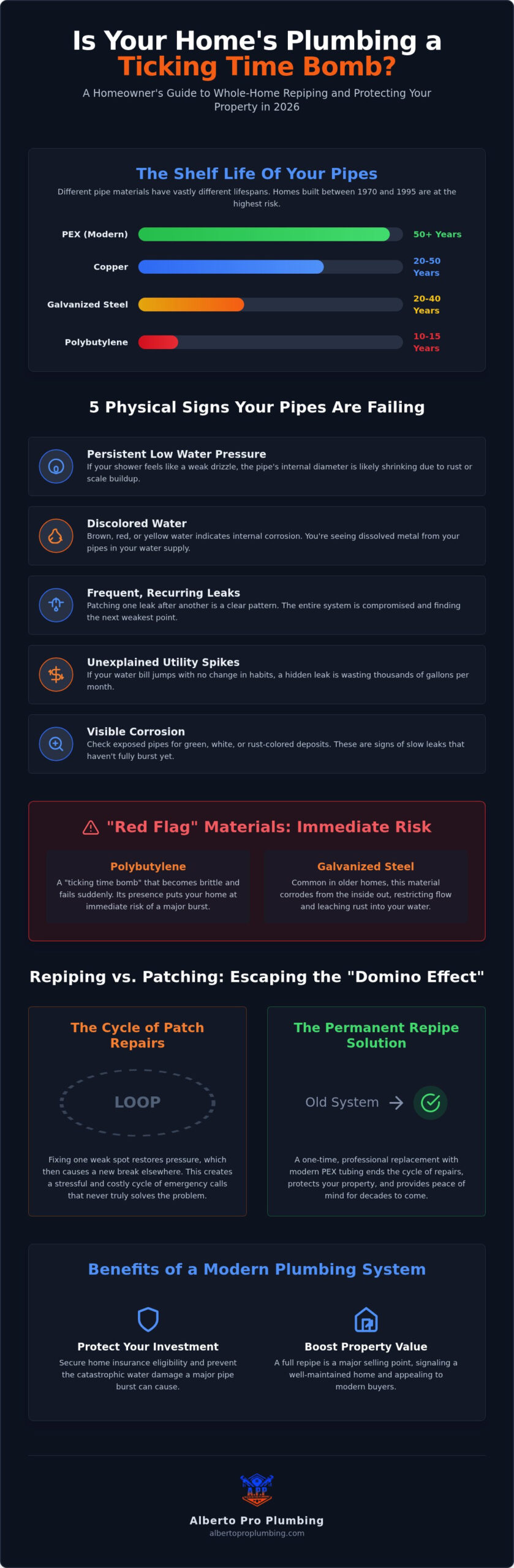
Our local environment is tough on plumbing. High humidity and the specific mineral composition of our water can accelerate the degradation of metal components. In communities across Clermont and Orlando, homes built between 1970 and 1995 are currently at the highest risk for systemic failure. The typical lifespan of residential copper piping is 20-50 years. If you’re noticing frequent damp spots or low pressure, these are the signs you need to repipe your house before a minor leak becomes a major flood.
Repiping vs. Sectional Repair: The Long-Term View
Many homeowners try to save money by patching individual leaks as they appear. We call this the “domino effect.” When you fix one weak spot in an aging system, the restored water pressure often finds the next thinnest point in your old pipes and causes a new break. This creates a cycle of stress and recurring costs that never truly ends. It’s a frustrating loop that eventually costs more than the original replacement would have.
Choosing a Whole Home Repipe in Clermont, FL is a proactive investment. It ends the pattern of emergency calls and protects your property from the catastrophic water damage that a major burst can cause. A one-time professional replacement is almost always more cost-effective than a decade of repeated emergency repairs and rising insurance premiums. Our team ensures the process is smooth and leaves your home exactly as we found it.
5 Physical Signs Your Pipes Are Failing Right Now
Your plumbing system usually gives you plenty of warnings before it finally gives up. The trick is knowing how to read those signals before they turn into a midnight emergency. If you’re paying attention to the small changes in your home’s performance, you can identify the signs you need to repipe your house while the situation is still manageable. Here are the five most common physical indicators that your pipes are at the end of their road.
- Persistent low water pressure: If your shower feels like a weak drizzle instead of a steady stream, and cleaning the showerhead doesn’t help, the pipe’s internal diameter is likely shrinking due to rust or scale.
- Discolored water: Water that looks brown, red, or yellow when you first turn on the tap is a clear indicator of internal corrosion. You’re literally seeing the metal of your pipes dissolving into your water supply.
- Frequent, recurring leaks: Patching a single leak is a repair; patching three leaks in a year is a pattern. This is one of the most reliable signs you need to repipe your house.
- Unexplained utility spikes: If your water bill jumps but your family’s habits haven’t changed, water is escaping somewhere. Even a pinhole leak can waste thousands of gallons over a month.
- Visible corrosion: Take a look at the exposed pipes in your garage or attic. Look for “furry” green, white, or rust-colored deposits around the joints. These are signs of slow, weeping leaks that haven’t fully burst yet.
Water Quality and Pressure Issues
Rust and sediment don’t just slow down your water flow; they actively damage your life. Corroded water is hard on your skin, ruins your laundry, and can eventually destroy expensive appliances like your dishwasher and water heater. It’s easy to mistake a systemic pipe issue for a simple clogged aerator. However, if the pressure is low at every faucet in the house, the problem isn’t the fixture. It’s the aging infrastructure hidden behind your drywall.
Hidden Leaks and Septic Stress
In Central Florida, many of our homes rely on septic systems. A hidden leak in your supply lines does more than just rot your wood or mold your carpet; it can actually kill your septic system. If a pipe leaks constantly, that extra water often finds its way into your drains. This constant flow prevents your septic tank from settling properly and forces the drain field to work overtime. Overwhelmed drain fields eventually fail, leading to much more expensive repairs. If you suspect a leak is stressing your backyard infrastructure, you might need Septic Drain Field Rehab in Clermont, FL to restore the balance. Our team at Alberto Pro Plumbing can help you determine if your supply lines are the root cause of your septic troubles.
The “Red Flag” Materials: Polybutylene and Galvanized Steel
Sometimes the most urgent signs you need to repipe your house aren’t visible in your water pressure or utility bills. Instead, they’re found in the very material used to build your plumbing system. If your home was constructed between the 1970s and the mid-1990s, you likely have “red flag” materials that are known for systemic failure. In Central Florida, these materials are no longer used because they simply cannot withstand the test of time or the chemistry of municipal water supplies.
Polybutylene, often called Poly-B, earned its reputation as a “ticking time bomb” for a reason. This flexible plastic piping reacts poorly to the chlorine used to treat our local water. Over time, the chlorine makes the plastic brittle from the inside out, leading to microscopic cracks. Unlike copper, which might develop a pinhole leak you can catch early, Poly-B tends to fail suddenly and catastrophically. One minute your system is fine; the next, you’re facing a major flood that ruins your flooring and drywall.
Galvanized steel presents a different but equally frustrating problem. These pipes are coated in zinc to prevent rust, but that coating eventually wears away. Once the bare steel is exposed to water, it begins to corrode. This rust doesn’t just eat through the pipe; it builds up inside like a clogged artery. This internal “pitting” is why you see brown water or experience the low pressure we discussed earlier. By the time you notice the symptoms, the pipes are usually too far gone for simple repairs.
Identifying Your Pipe Material
You don’t need to be a master plumber to check what’s under your hood. Start by looking under your kitchen sink or near your water heater. Homeowners should look for gray plastic piping as a sign of Polybutylene. If you see metal pipes and aren’t sure if they’re copper or galvanized steel, try the “Magnet Test.” Simply grab a refrigerator magnet and see if it sticks to the pipe. If the magnet clings tight, you have galvanized steel. If it doesn’t stick, you likely have copper or a plastic alternative.
Why Waiting for a Failure is a Risky Strategy
Waiting for a pipe to burst is a gamble with your home’s safety. Poly-B failures are rarely slow drips that give you time to react. They often happen when you’re at work or sleeping, leading to thousands of dollars in avoidable damage. Furthermore, insurance companies in 2026 have become much stricter about these materials. Many providers now refuse to renew policies for homes with known Poly-B or aging galvanized systems because the risk is too high. If you’re unsure about the state of your system, scheduling professional leak detection is a smart first step. It’s better to identify these signs you need to repipe your house on your own terms rather than during a midnight emergency.
The Hidden Cost of Old Pipes: Insurance and Home Value
While the physical damage of a leak is obvious, the financial damage of aging plumbing often happens behind the scenes. If you’re noticing signs you need to repipe your house, you can be certain that insurance adjusters and home inspectors are looking for them too. In 2026, a house with outdated supply lines is no longer just a maintenance concern; it’s a significant financial liability that affects your monthly budget and your long-term wealth.
Navigating the Florida Insurance Crisis
The Florida insurance market has reached a point where carriers prioritize risk mitigation above all else. In 2026, many providers require a four-point inspection for homes over a certain age. If the inspector finds polybutylene or corroded galvanized steel, you may face immediate non-renewal. Even if your policy stays active, you might find “water damage” exclusions added to your coverage, leaving you unprotected if a pipe fails. The national average cost of home insurance has climbed toward $3,000 a year, and upgrading your plumbing is one of the most effective ways to lower those premiums. A whole-home repipe demonstrates to your insurer that you’ve eliminated the primary cause of residential flood claims.
Boosting Your Property ROI
If you plan to sell your home in Clermont or the surrounding Central Florida area, your plumbing system will be a major factor in the closing price. Modern buyers are savvy; they don’t want to inherit a “ticking time bomb” plumbing system. Lenders often refuse to finance homes with known material issues like Poly-B, which can kill a sale before it even starts. By proactively addressing the signs you need to repipe your house, you turn a potential deal-breaker into a high-value selling point. A new PEX system provides peace of mind for the next 50 years and often includes a transferable warranty that builds immediate trust with a buyer.
You also avoid the “emergency premium” of having to fix a burst pipe in a rush before a closing date. Investing in a permanent solution now ensures your property remains competitive and fully insurable for years to come. Modern smart home water monitoring systems also perform better on reliable, new pipes, as they won’t be triggered by the “noise” of internal corrosion or minor weeping leaks. If you’re concerned about your home’s eligibility, you can schedule a professional plumbing assessment to see where your system stands.
Professional Repiping with Alberto Pro Plumbing
Deciding to act on the signs you need to repipe your house is a major decision for any homeowner. At Alberto Pro Plumbing, we don’t treat your project as just another service call. We live and work in Lake and Polk Counties, and we treat every home with the same care we’d give our own neighbors. Our “Tidy Service” promise is the foundation of our work; we respect your property and your time by ensuring our workspace is left in its original condition once the job is done.
Our team stays current with the latest industry standards, including the 2026 updates to the PEX Plumbing Distribution Systems guide. This ensures your new system isn’t just functional but fully compliant with the most recent Florida building codes. We use professional-grade materials and specialized techniques to provide a one-time solution that ends the cycle of emergency calls and patching. By choosing a local specialist, you’re investing in craftsmanship that stands up to the unique water chemistry found in Central Florida.
What to Expect During the Repiping Process
Many homeowners worry that a whole-home repipe will turn their life upside down. We use a minimally invasive process designed to keep your home livable throughout the project. Our technicians map out the most efficient paths for your new lines, which allows us to minimize wall cuts and avoid unnecessary damage to your finishes. Most residential repipes in our area take between 2-4 days to complete. Once the new lines are in place, we perform rigorous pressure testing and a final inspection to ensure total reliability before we consider the job finished.
Your Partners in Home Protection
Our relationship with you doesn’t end when the last pipe is joined. We believe in proactive care to ensure your new system remains in peak condition for decades. Our Home Protection Membership offers year-round maintenance and priority service, giving you an extra layer of security for your investment. We take deep pride in serving the Clermont community with integrity and disciplined craftsmanship. If you’ve noticed the signs you need to repipe your house, don’t wait for a catastrophic failure to occur. Schedule your repipe consultation with Alberto Pro Plumbing today!
Secure Your Home’s Future with Modern Plumbing
Don’t let aging pipes dictate the safety of your property or the stability of your insurance premiums. By recognizing the signs you need to repipe your house today, you can avoid the stress of a sudden flood and the frustration of declining water pressure. Whether you’re dealing with the “ticking time bomb” of polybutylene or the slow corrosion of galvanized steel, a professional repipe is the only permanent solution to protect your Central Florida home’s value and your peace of mind.
At Alberto Pro Plumbing, our licensed and insured local experts are ready to help you transition to a reliable, modern system. We provide 24/7 emergency support and stand by our Tidy Service Guarantee, ensuring your home remains clean and respected throughout the process. It’s time to stop patching problems and start investing in a plumbing system that lasts for the next fifty years. Get a Professional Repipe Estimate from Alberto Pro Plumbing today. We look forward to being your trusted partner in maintaining a safe and efficient home for your family.
Frequently Asked Questions
How long does it typically take to repipe a house in Central Florida?
Most residential repipes in Central Florida take between 2-4 days to complete. The exact timeline depends on the size of your home and the complexity of the access points. We work methodically to ensure your project stays on schedule while maintaining our tidy service standards. Our team handles everything from the initial mapping to the final pressure test, ensuring your new system is ready for the next 50 years of reliable use.
Will I have to move out of my house during the repiping process?
You do not need to move out during the process. We design our workflow to be minimally invasive so you can stay in your home comfortably. While we turn off the water during active work hours, we typically restore service every evening so your family can go about their normal routines. We take great care to protect your floors and furniture, ensuring your living space remains clean and respected throughout the project.
Does homeowners insurance cover the cost of a whole-house repipe?
Homeowners insurance typically does not cover the cost of a proactive repipe because it is considered a maintenance upgrade. However, if your current system causes a sudden, accidental flood, your policy might cover the resulting damage to your walls and floors. In 2026, many Florida carriers require a repipe as a condition for policy renewal, making it a necessary investment to maintain your home’s protection and avoid high premiums.
What is the most reliable material for a home repipe in 2026?
PEX (cross-linked polyethylene) is the gold standard for home repiping in 2026. This material withstands Florida’s unique water chemistry far better than traditional metal options. PEX is flexible, which means we use fewer fittings behind your walls, significantly reducing the number of potential leak points. While copper is still an option for some homeowners, PEX provides a more cost-effective and durable solution that won’t pit or corrode over time, ensuring your peace of mind for decades.
Can I just replace the visible pipes and leave the ones behind the walls?
Replacing only the visible pipes is a temporary fix that leaves your home at risk. The most dangerous corrosion and weak spots usually hide behind your walls or under the slab where you cannot see them. If you only address the exposed sections, you are ignoring the primary signs you need to repipe your house. A complete replacement is the only way to ensure total system reliability and satisfy modern home insurance requirements.
How much does a whole-home repipe affect my property value?
A whole-home repipe is a major selling point that can significantly increase your property’s marketability and value. In the current Clermont real estate market, buyers and lenders are wary of older plumbing materials like Polybutylene. Providing documentation of a new, code-compliant system removes a massive hurdle during the inspection process. It gives potential buyers confidence that they won’t face immediate repair costs or insurance non-renewal after they move in.
What happens if I ignore signs of Polybutylene pipe failure?
Ignoring Polybutylene failure is a high-stakes gamble that often leads to catastrophic water damage. These pipes don’t just drip; they tend to burst suddenly without warning, potentially destroying flooring, drywall, and personal belongings. Beyond the physical damage, you risk long-term mold growth and the possibility of being dropped by your insurance provider. Addressing the signs you need to repipe your house now prevents a manageable upgrade from turning into a total household emergency.
How do I know if my low water pressure is a city issue or a pipe issue?
Check the water pressure at your outside hose bibs to see if the issue is systemic. If the pressure is strong outside but weak at your indoor faucets, the problem is likely localized within your home’s aging infrastructure. If the pressure is low everywhere, it might be a municipal supply issue. However, persistent low pressure across multiple indoor fixtures is one of the most common indicators of internal pipe corrosion or scale buildup.