
What if the soggy patch in your backyard doesn’t actually mean you’re on the hook for a total system replacement? Many homeowners assume that once the grass gets swampy, their only option is a massive construction project. However, a professional septic drain field repair in Central Florida can often save your existing system through advanced rehabilitation techniques. It’s stressful to deal with foul odors or a system that fails just weeks after you paid for a pump-out. You have likely spent nights worrying about the cost and the mess a crew might leave behind in your yard.
This guide will show you how to identify the real cause of failure, like “biomat” buildup, and outline a plan to restore your drainage without the price tag of a full install. We will walk through the specific requirements for Lake, Polk, Osceola, and Orange Counties while explaining how to keep your property tidy and functional. You can avoid the headache of a total replacement and get back to enjoying your home with peace of mind. From a clear diagnosis to a professional rehab plan, here is your path to a reliable, worry-free septic system.
Key Takeaways
- Learn to spot early warning signs like spongy grass and sewage odors before they turn into a full-scale household emergency.
- Understand the role of “biomat” buildup and how this organic layer can be managed to restore your soil’s natural drainage.
- Discover how professional septic drain field repair Central Florida or specialized rehabilitation can save your system for a fraction of the cost of a total replacement.
- Explore proactive maintenance steps, such as installing effluent filters and following a strict pumping schedule, to protect your investment for years to come.
- See how choosing a local specialist with a “tidy service” promise ensures your yard remains clean and your property is respected throughout the process.
Signs Your Central Florida Septic Drain Field is Failing
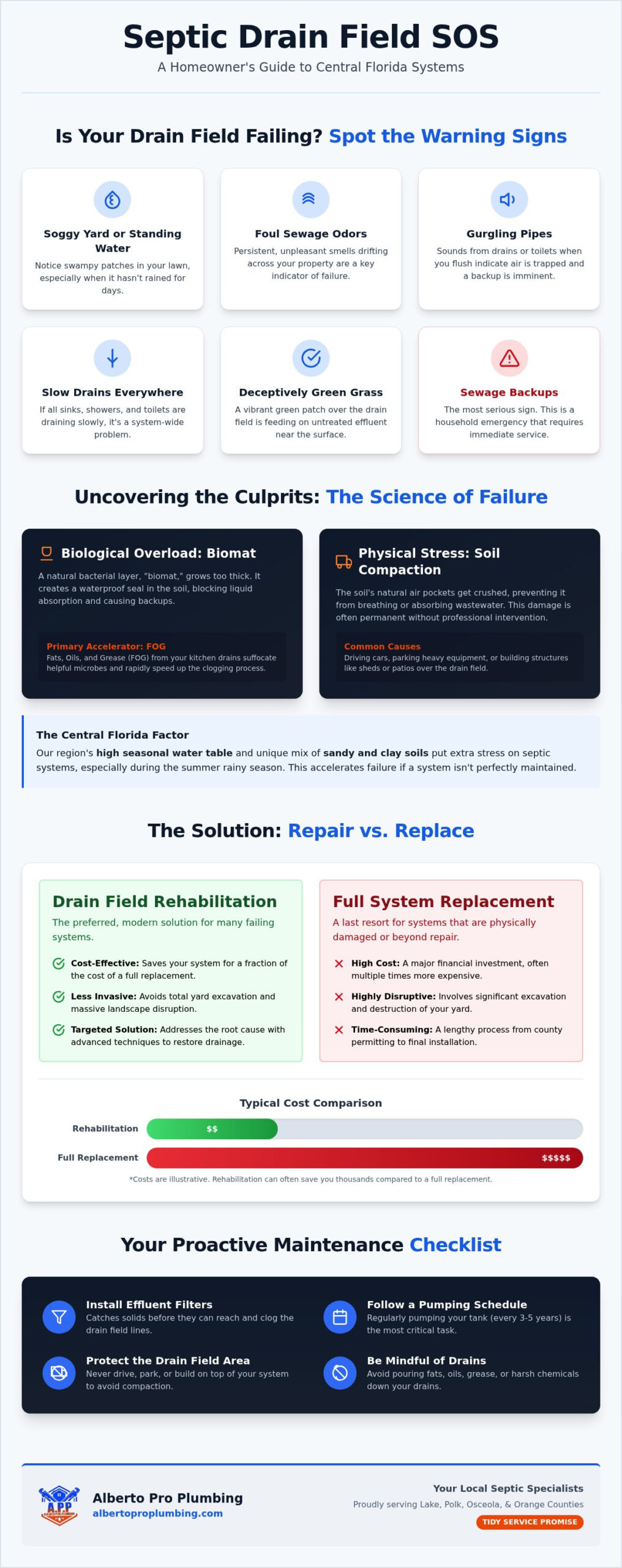
Noticing a soggy patch in your yard when it hasn’t rained for days is often the first sign that something is wrong. While how a septic drain field works relies on gravity and natural soil filtration, visible standing water near your tank suggests the soil has reached its limit. You might also notice a persistent, unpleasant sewage odor drifting through your lawn. This happens because the treatment process in the soil is breaking down, allowing gases to escape into the air. If you hear gurgling sounds coming from your pipes when you flush the toilet or run the laundry, take it seriously. These sounds are a precursor to a total system backup, indicating that air is being pushed back into the house because the drain field cannot accept more liquid.
One of the most deceptive signs is a patch of lush, vibrant green grass directly over your pipes. While it looks like a healthy lawn, this “bright green” growth usually means the grass is feasting on untreated effluent that has risen too close to the surface. It is a clear warning that you may need a professional septic drain field repair in Central Florida before the issue becomes a messy, expensive emergency. Identifying these red flags early can be the difference between a simple fix and a total yard excavation.
The Impact of Central Florida’s High Water Table
In counties like Lake and Polk, the seasonal high water table plays a massive role in how your system performs. During the summer, Central Florida’s heavy afternoon thunderstorms can dump inches of rain in minutes, quickly reaching the “saturation point” of the soil. When the ground is already soaked from a high water table, your drain field has no room to absorb wastewater from your home. This leads to temporary failures that often resolve once the ground dries, but it’s a sign that your system’s efficiency is declining and can no longer handle the local environmental stress.
Slow Drains vs. Septic Failure: How to Tell
It is easy to confuse a simple pipe clog with a systemic failure. If only one sink is slow, you likely have a local blockage. However, if every drain in the house is sluggish, the problem is likely at the tank or the field. Professionals often use a “reverse flow” test to see if water is pushing back from the field into the tank. If you experience multiple backups at once, you should call for emergency plumbing repair to prevent property damage. Catching these signs early allows for a more cost-effective septic drain field repair in Central Florida rather than a complete system overhaul.
Why Drain Fields Fail: The Science of Biomat and Compaction
Understanding why your system is struggling is the first step toward a successful septic drain field repair in Central Florida. Failure isn’t usually a sudden event; it’s often a slow biological or physical process. Inside every drain field, a biological layer called “biomat” forms naturally. This is a dense, black mat of anaerobic bacteria and organic matter that helps filter out pathogens. While a thin layer is necessary for treatment, it becomes a problem when it grows too thick. An overgrown biomat acts like a waterproof seal, preventing effluent from reaching the soil and causing water to back up into your yard. Fats, oils, and grease (FOG) accelerate this clogging by coating soil particles and suffocating the microbes that keep the biomat under control. If you notice signs of a failing septic system, it’s often because this biological balance has tipped too far.
Physical stress also plays a major role in system failure. Your drain field relies on tiny air pockets in the soil to function properly. Driving vehicles, parking heavy equipment, or placing structures like sheds over the area crushes these pores and can even break the underground pipes. Once the soil is compacted, it can’t breathe or drain. This physical damage is often permanent without professional intervention, making it vital to protect the area from heavy weight.
Sandy Soil vs. Clay: The Florida Soil Factor
Most of Central Florida is famous for its sandy soil, which usually offers excellent drainage. However, sand can allow wastewater to move too quickly, which sometimes leads to leaching issues. In specific areas like Clermont, you might encounter pockets of heavy clay. Clay traps water instead of letting it filter down, which causes the system to stay saturated and fail prematurely. Understanding these soil variations is critical when planning a septic drain field repair in Central Florida, as the solution for sandy soil differs greatly from the techniques used in clay-heavy zones. Over time, fine silt particles can also migrate into the gravel layers, acting like cement and blocking the flow of water.
The Role of Household Chemicals
Your septic system is a living ecosystem that requires healthy bacteria to thrive. Many products labeled “septic-safe” can still disrupt this delicate balance if used in excess. Harsh chemicals like bleach and heavy-duty drain cleaners kill the beneficial microbes that digest organic waste. When these bacteria die off, the biomat grows unchecked and clogs the soil pores. Hydraulic overloading occurs when leaking fixtures or excessive laundry days force too much water through the tank, pushing solids into the drain field before they can settle. If you suspect your system’s bacterial health is declining, a quick consultation with a local plumbing expert can help identify the issue before it leads to a total breakdown.
Repair, Rehab, or Replace: Which is Right for You?
When your system starts acting up, you don’t always have to jump straight to a total replacement. Most homeowners believe there are only two states for a septic system: working or broken. In reality, there is a middle ground that can save you thousands of dollars. A localized septic drain field repair in Central Florida is often sufficient if the issue is isolated, such as a single crushed pipe or a distribution box that has shifted over time. These targeted fixes address the specific mechanical failure without disturbing the rest of your yard. However, if the entire field is sluggish due to biological buildup, you need to decide between a total rehabilitation and a full system replacement.
Choosing septic drain field rehab is a strategic way to restore your system’s drainage capacity for a fraction of the cost of a new installation. This process targets the “biomat” layer we discussed earlier, using specialized techniques to open up the soil pores again. It’s an excellent option for systems that are structurally sound but biologically “clogged.” By understanding the health of your soil and maintaining your septic system properly, you can often avoid the “point of no return” where the only legal solution is a complete, high-cost overhaul.
The Benefits of Septic Rehabilitation
Rehabilitation is a specialized service that breathes new life into a failing field. We use mechanical or chemical aeration to break up the thick biomat layer that prevents water from soaking into the ground. One of the biggest advantages is the minimal disruption to your property. Unlike a total replacement, which requires heavy excavators to dig up your entire lawn, rehab is much less invasive. We take great pride in our tidy service promise; we treat your property with respect and ensure that the workspace is left in its original condition. A successfully rehabilitated system in Central Florida’s sandy soil can provide many more years of reliable service, provided you keep up with routine maintenance.
When Replacement is Unavoidable
There are times when even the best rehab efforts won’t work. If the soil around your pipes has become completely “dead” or saturated with fine silt and clay, it may no longer be able to process effluent. Additionally, Florida health department regulations have changed over the years. If you live in an older home with an undersized system, you might be legally required to upgrade to a larger septic drain field to meet modern safety standards. This is especially true if you have added bedrooms or bathrooms to your home. In these cases, a professional design is essential to ensure your new system can handle your household’s specific water demands while protecting the local environment in Lake, Polk, Osceola, and Orange Counties.
Central Florida Septic Maintenance: Avoiding Future Repairs
Preventing the need for a septic drain field repair in Central Florida starts with a consistent maintenance plan. Most homeowners wait until a backup occurs to call for service, but proactive care is far more affordable. You should establish a pumping schedule based on your household size and tank capacity. For a typical family of four, a pump-out every three to five years is the standard. This removes the “sludge” layer before it can escape the tank and clog your soil. Installing an effluent filter is another smart move. This small device acts like a goalie, catching lint, hair, and small solids before they can enter the drain field and cause a permanent blockage.
Water conservation is your system’s best friend. Every gallon of water you save is a gallon your drain field doesn’t have to process. Low-flow fixtures and spread-out laundry days prevent the system from becoming overwhelmed. When it comes to landscaping, keep it simple. Only plant shallow-rooted grass over your septic area. Trees and large shrubs should stay at least 15 feet away. Their roots are naturally drawn to the moisture in your pipes and can easily crush or penetrate the system, leading to a costly septic drain field repair in Central Florida.
Managing Water Flow During Florida Storms
Florida storms move fast. Your gutters should too. Ensure your downspouts are directed far away from the septic tank and drain field area. If your yard is graded poorly, rainwater can pool over the system, saturating the soil and preventing effluent from draining. This creates a “drowning” effect where the system simply cannot breathe. It is also vital to check for hidden water leaks inside your home. A running toilet or a dripping faucet might seem minor, but they add hundreds of gallons of unnecessary water to your system every week.
The Home Protection Membership Advantage
Our Home Protection Membership is designed to catch “silent” septic issues before they turn into yard-destroying emergencies. Regular inspections allow us to monitor your sludge levels and check the structural integrity of your tank. This professional oversight gives you peace of mind, knowing that a local expert is watching out for your property. Members also receive priority support, which is a massive benefit during Central Florida’s busy hurricane and storm seasons when service demand is high. If you want to ensure your system stays in top shape, contact Alberto Pro Plumbing to learn more about our protective membership options.
Expert Septic Drain Field Services in Clermont & Beyond
Alberto Pro Plumbing is the trusted authority for homeowners across Lake, Polk, Osceola, and Orange Counties. We understand that a failing septic system is a major stressor for any family. That’s why we focus on providing a clear, honest path forward when you need a septic drain field repair in Central Florida. Our team doesn’t just show up to dig; we arrive as your neighbors, committed to our signature “tidy service” promise. This means we treat your property with the highest level of respect, ensuring that we leave your yard clean and restored once the work is finished. You shouldn’t have to choose between a working septic system and a beautiful lawn.
We use specialized diagnostic tools, including high-definition sewer cameras and soil probes, to determine if your system is a candidate for rehabilitation. As we’ve explored in this guide, many systems can be saved through advanced rehab techniques rather than a total, high-cost replacement. Acting early is the most effective way to protect your budget. If you wait until sewage is backing up into your home, the damage to your soil structure might be irreversible. A proactive septic drain field repair in Central Florida can often restore your system’s function for a fraction of the cost of a full new installation.
Why Local Heritage Matters
Our deep roots in the community mean we aren’t just reading from a general plumbing manual. We understand the specific challenges of Central Florida’s terrain, from the sandy ridges of Clermont to the high water tables in Polk County. This local expertise allows us to navigate complex county regulations and permitting requirements with ease, saving you time and frustration. We pride ourselves on a family-oriented approach built on ethical standards and transparent communication. You’ll never deal with a cold, clinical service; you’ll get a hardworking specialist who is genuinely invested in the well-being of your home and our local community.
Get a Professional Septic Assessment Today
The first step to peace of mind is a professional assessment. During our initial visit, we perform a comprehensive walk-through of your septic area, checking for signs of saturation, biomat buildup, and structural wear. We’ll provide you with a straightforward diagnosis and a cost-effective plan to get your system back in balance. Don’t wait for a sluggish drain to become a yard-wide catastrophe that ruins your landscaping and your weekend. Take control of your home’s health by scheduling a visit with a team that values craftsmanship and integrity. Contact Alberto Pro Plumbing for a septic drain field assessment today and let us help you save your system.
Restore Your Property and Protect Your Budget
Dealing with septic issues is stressful, but you don’t have to face them alone. By identifying early warning signs and understanding the biological causes of failure, you can make an informed choice between rehabilitation and replacement. Remember that specialized septic drain field repair in Central Florida often saves homeowners thousands of dollars while avoiding the massive upheaval of a total system install. Proactive maintenance, such as regular pumping and water conservation, remains your best defense against future yard-wide catastrophes.
Alberto Pro Plumbing is here to provide the expert guidance you need across Lake, Polk, Osceola, and Orange Counties. Whether you require 24/7 emergency septic support or a routine inspection, our team delivers with a neighborly touch. We stand by our tidy service promise, ensuring your yard looks its best even after we finish our work. Don’t let a minor drainage problem turn into a major expense. Save Your Septic System – Schedule a Drain Field Assessment with Alberto Pro Plumbing today. We’re ready to help you restore your peace of mind and your property’s value with reliable, ethical service.
Frequently Asked Questions
How much does septic drain field repair cost in Central Florida?
Costs for a septic drain field repair in Central Florida depend on several factors like the size of the system and local permitting requirements in Lake or Polk County. A simple pipe fix is much less expensive than a full soil rehabilitation. We focus on finding the most cost-effective solution first. Since every property is different, a professional assessment is the only way to get an accurate estimate for your specific situation.
Can a septic drain field be repaired without digging up the whole yard?
Yes, specialized rehabilitation techniques allow us to restore your system without excavating your entire lawn. We use mechanical aeration or targeted treatments to break up the biomat layer that clogs the soil. This approach is much less invasive than a traditional replacement. Our “tidy service” promise ensures that we leave your workspace in its original condition, protecting your landscaping while we fix the underlying drainage issues.
How long does a typical septic drain field last in Florida?
A well-maintained drain field in Florida typically lasts between 15 and 25 years. However, Central Florida’s unique environment plays a major role in this timeline. Systems in sandy soil might last longer, while those in clay-heavy areas like Clermont may face challenges sooner. Regular maintenance and avoiding hydraulic overloading are the best ways to extend the life of your system and avoid premature failure or expensive repairs.
What is the difference between septic pumping and drain field repair?
Septic pumping involves removing the accumulated solids and sludge from the tank itself. This is a routine maintenance task. In contrast, a septic drain field repair in Central Florida addresses the pipes and soil where the liquid waste is filtered. If your tank is empty but your drains are still slow, the problem lies in the field’s ability to absorb water, not the tank’s capacity.
Why is my yard wet around the septic tank after it rains?
Standing water after a storm often indicates that the soil has reached its saturation point. In Central Florida, a high water table can prevent your system from draining properly during heavy rain. If the water persists, it may be a sign that the biomat has become impermeable or that the field is failing. We recommend a professional inspection to determine if your yard grading or the system itself is the cause.
Can I drive my lawnmower over the septic drain field?
You can generally use a light push mower over the area, but you should never drive heavy riding mowers or tractors over your drain field. The weight of heavy equipment causes soil compaction, which crushes the air pockets needed for wastewater filtration. It can also break the underground lateral lines. Protecting the area from heavy traffic is one of the simplest ways to prevent physical damage and system failure.
Do septic additives actually help fix a failing drain field?
Most professional plumbers suggest that additives are rarely helpful for a failing system. In some cases, they can actually stay in suspension and move into the drain field, causing further clogging. Your system naturally produces the bacteria it needs to break down waste. Instead of relying on store-bought chemicals, focus on routine pumping and professional assessments to address the root cause of any drainage issues.
How often should I have my septic system inspected in Clermont?
We recommend a professional inspection at least once every one to three years, depending on your household size. For homeowners in Clermont, our Home Protection Membership offers a proactive way to monitor your system year-round. These regular check-ups allow us to catch small issues, like a worn distribution box or high sludge levels, before they turn into a major household emergency or require a complete system replacement.