
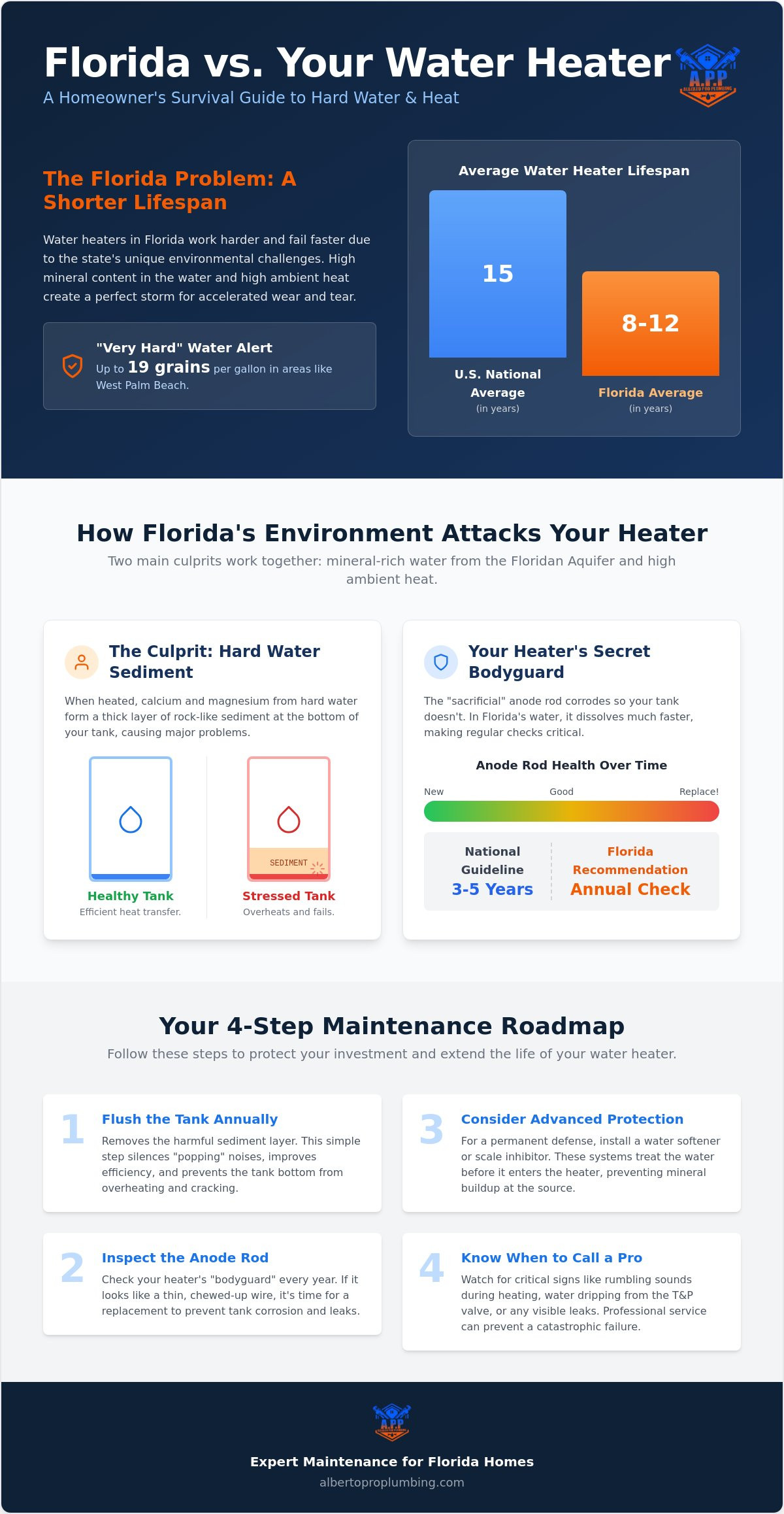
Did you know that the average water heater in Florida works twice as hard just to survive half as long as those in other states? It is a frustrating reality for many of our neighbors who deal with “very hard” water reaching up to 19 grains per gallon in places like West Palm Beach. You have likely noticed the signs already, like that faint sulfur smell in your morning shower or the stubborn white scale building up on your fixtures. We know how stressful it is to worry about a catastrophic tank leak or a sudden $1,500 replacement bill when you least expect it.
The good news is that you don’t have to just wait for your system to fail. This guide will show you exactly how to extend water heater life in Florida by neutralizing the harsh effects of our local environment. We agree that your home should be a place of comfort, not a source of constant repair anxiety. We will provide a clear, step-by-step roadmap for 2026 maintenance that focuses on sediment removal and efficiency. You’ll learn how to protect your investment, lower your monthly energy costs, and keep your home’s plumbing running smoothly for years to come.
Key Takeaways
- Understand why the Floridan Aquifer’s mineral content causes local tanks to fail years earlier than the national average.
- Learn how to monitor your “sacrificial” anode rod to prevent the internal tank corrosion caused by our unique water chemistry.
- Master a simple tank-flushing routine to silence “popping” sounds and discover how to extend water heater life in Florida by removing heavy sediment.
- Discover how scale inhibitors and water softeners create a permanent defense for your heating elements against stubborn mineral buildup.
- Identify the critical signs that require a professional touch to avoid catastrophic leaks and expensive emergency replacements.
Why Florida’s Water and Climate Are Tough on Water Heaters
Florida is a paradise for people, but it is a harsh environment for your home’s appliances. If you’ve lived here long, you know that standard household systems seem to wear out faster than they do in other regions. Water heaters are no exception. While a traditional tank might last 15 years in a state with soft water, Florida homeowners usually see their units fail between 8 and 12 years. Understanding these local challenges is the first step in learning how to extend water heater life in Florida.
Our water primarily comes from the Floridan Aquifer. As rain filters through layers of limestone, it picks up high concentrations of calcium carbonate and magnesium. This hard water creates a constant battle inside your tank. When the water is heated, these minerals crystallize and settle at the bottom. This isn’t just a minor nuisance; it’s a physical barrier that changes how your heater functions every single day.
The “Hard Water” Tax on Central Florida Plumbing
Think of the sediment at the bottom of your tank as a thick layer of insulation. In a gas or electric tank, the heat source is located at the bottom. When limestone particles settle, the burner has to heat through several inches of rock before it even touches the water. This forces your unit to run longer and hotter than intended just to reach the temperature set on your thermostat.
This extra strain causes the metal at the base of the tank to overheat and eventually lose its structural integrity. Over time, the tank bottom can become brittle and develop microscopic fractures. Regular maintenance is the only way to combat this tax on your plumbing. Scheduling professional plumbing services for an annual inspection can identify this buildup before it leads to a total system failure.
Ambient Heat and Tank Pressure
Florida garages often reach temperatures well over 100 degrees during the summer months. This high ambient heat puts a unique type of stress on your water heater. Because the air around the tank is so hot, the unit cannot shed excess heat efficiently. This leads to increased internal pressure and frequent cycling of the Temperature and Pressure (T&P) relief valve. If you notice water dripping from the discharge pipe, it’s a sign your tank is under immense pressure. In any region with extreme heat, from Florida to California, keeping home systems in peak condition is essential—much like how Christensen Heating and Cooling helps residents manage climate-related wear on their cooling units.
Additionally, the chemical reactions that cause corrosion happen much faster at higher temperatures. Your sacrificial anode rod is designed to attract these corrosive elements, but in the Florida heat, it dissolves much quicker than the manufacturer’s estimate. When you are looking for ways for how to extend water heater life in Florida, you must account for this environmental pressure. If you hear a rumbling sound during a heating cycle, your tank is likely struggling with the combined weight of heat and mineral scale.
The Sacrificial Anode Rod: Your Heater’s Secret Bodyguard
Inside your water heater, a silent battle occurs every single day. This battle involves the sacrificial anode rod. This long metal rod is made of a more reactive material than the steel tank itself. Its sole purpose is to attract the corrosive elements in your water through a process called electrolysis. Essentially, the rod “sacrifices” itself by rusting so that your tank doesn’t have to. If you want to know how to extend water heater life in Florida, you must understand that this rod is your unit’s primary line of defense.
Florida’s unique water chemistry “eats” these rods significantly faster than in other parts of the country. Our high mineral content and warm temperatures accelerate the electrochemical reaction. While some national guides suggest checking the rod every three to five years, Florida homeowners should be much more vigilant. Following U.S. EPA maintenance guidelines for annual system checks can help you spot a failing rod before the tank itself begins to corrode. Once the rod is completely dissolved, the water starts attacking the steel walls of your tank. This leads to pinhole leaks that cannot be repaired.
How to Check Your Anode Rod
You can usually find the anode rod on top of your unit. It looks like a large, silver hex-head bolt. To inspect it, you’ll need to turn off the water and power, then use a socket wrench to unscrew the bolt and lift the rod out. A healthy rod is thick and covered in a layer of pitted metal. A “spent” rod looks like a thin, chewed-up wire core. If you see that wire, the rod is gone. Replacing a rod costs very little compared to a full tank replacement, making it the most cost-effective maintenance task you can perform.
Aluminum vs. Magnesium Rods for Florida Homes
Most standard heaters come with a magnesium rod. It offers the best protection because it is highly reactive. However, Florida water often contains sulfur. When magnesium reacts with certain bacteria and sulfur in the water, it can create a strong “rotten egg” smell. If you notice this odor, switching to an aluminum rod can often solve the problem. While aluminum provides slightly less protection than magnesium, it doesn’t cause the same smelly chemical reaction. Choosing the right material depends on your specific water quality. If you are unsure which rod is best for your home, consulting a plumber for water heater installation or maintenance can ensure you make the right choice for your equipment.
Staying on top of this small component is a simple way to avoid a major household emergency. If you’d rather not handle the heavy tools yourself, our neighborly experts can help by inspecting your rod during a routine maintenance visit. We take pride in keeping your home’s plumbing in top shape so you can focus on enjoying the Florida sunshine.
Flushing Your Tank: A Step-by-Step Florida Guide
If your water heater sounds like it is cooking popcorn, it is trying to tell you something. That “popping” or “rumbling” sound is the result of steam bubbles struggling to escape through a thick layer of sediment at the bottom of the tank. In Lake and Orange Counties, where water hardness is a daily reality, this buildup happens quickly. If you want to know how to extend water heater life in Florida, annual flushing is a non-negotiable task. Without it, that “mud” of limestone and minerals will eventually overheat the tank bottom and lead to a premature replacement.
Safety is your first priority. Before you touch a single valve, turn off the power at the circuit breaker for electric units or turn the gas valve to “Pilot” for gas models. This is critical because if the heating elements are exposed to air while the power is on, they will burn out in seconds. Once the power is off, let the water cool for a few hours if possible to avoid handling scalding liquid. This simple precaution protects both your equipment and your safety.
The Full Flush Process
Start by connecting a standard garden hose to the drain valve located near the bottom of your unit. Run the other end of the hose to a safe drainage spot, like your driveway or a floor drain. Close the cold water supply valve at the top of the heater. To help the water flow out smoothly, open the Temperature and Pressure (T&P) relief valve or a hot water faucet elsewhere in the house. This breaks the vacuum and allows the tank to drain quickly.
Open the drain valve and watch the water. You will likely see white limestone flakes or “muddy” water at first. Let it drain until the water runs completely clear. For a thorough cleaning, briefly open the cold water supply valve in short bursts to stir up any remaining sediment at the bottom. Once the water is crystal clear, close the drain valve, remove the hose, and turn the cold water supply back on. Only restore power or gas once you are certain the tank is completely full of water.
What to Do if the Drain Valve is Clogged
Many standard water heaters come with plastic drain valves. Over time, the intense Florida heat and constant contact with minerals make these valves brittle. If you open the valve and nothing comes out, sediment has likely blocked the opening. Do not try to force it or poke sharp objects into the valve, as this can cause the plastic to snap, leading to an uncontrollable leak.
If you encounter a stubborn clog or a leaking valve that won’t close, it is time to call for emergency plumbing repair to avoid a flood in your garage or home. When we perform maintenance, we often recommend upgrading these to high-quality brass drain valves. Brass is far more durable and handles the “hard water tax” of Central Florida much better than plastic. This small upgrade is a smart way to ensure your next annual flush is a smooth, stress-free process.
Advanced Protection: Softeners and Scale Inhibitors
While flushing your tank removes existing sediment, stopping those minerals from entering your home in the first place is a superior strategy. Water softeners use a process called ion exchange to swap heavy calcium and magnesium ions for sodium ions. This change is why your water feels “slippery” or “soft.” Conditioned water doesn’t just feel better on your skin; it prevents the rock-hard scale from ever bonding to your water heater’s internal elements. If you are serious about how to extend water heater life in Florida, a high-quality softening system is your most powerful tool.
There is one unique trade-off you should know about. Softened water is more conductive than hard water, which means your sacrificial anode rod will actually dissolve faster. To balance this, you must check your rod every 12 to 18 months rather than waiting for the standard three-year mark. If you prefer a lower-maintenance alternative, consider a scale inhibitor. These systems don’t remove minerals but instead use a sequestering agent to keep them in suspension so they can’t stick to the tank walls.
Whole-Home Filtration vs. Point-of-Use
Protecting your water heater is a great start, but Central Florida’s water affects every pipe in your house. Whole-home systems treat water as it enters your property, shielding your dishwasher, laundry machine, and fixtures from corrosion. This comprehensive approach also has a positive impact on your drain cleaning services. When scale doesn’t build up in your pipes, hair and soap scum have a harder time catching on the interior walls, which prevents frequent clogs. Choosing a system that also addresses local chlorine levels will preserve the rubber seals and gaskets throughout your entire plumbing network.
The Salt Bridge Problem
Florida’s high humidity creates a specific challenge for salt-based softeners. Moisture in the air can cause the salt in your brine tank to clump together. A salt bridge is a hardened crust of salt that prevents brine formation. When this happens, the salt at the bottom of the tank is used up, but the crust at the top makes it look like the tank is still full. Your system will stop softening the water, leaving your heater vulnerable to scale once again.
To identify a salt bridge, use a broom handle to gently push down on the salt. If the top layer is solid and there is empty space underneath, you’ve found the bridge. Carefully break up the crust and ensure the salt can fall freely into the water below. Keeping your salt tank in a cool, dry area or using high-quality salt pellets can help prevent this issue. If you’re ready to upgrade your home’s defense, contact us today for a professional water quality consultation to find the perfect system for your needs.
Professional Maintenance: The Alberto Pro Plumbing Advantage
DIY maintenance is a fantastic start for any homeowner. However, older units in Central Florida often require a more technical eye to spot deep-seated issues. Our local water conditions are so aggressive that even a well-maintained tank can hide signs of internal fatigue. We believe in building trust through neighborly service and technical authority. When you need a partner to help you master how to extend water heater life in Florida, our team is ready to step in with the right tools and expertise.
One of the best ways to protect your investment is through our Home Protection Membership. This program provides year-round peace of mind by ensuring your home’s most critical systems are checked regularly. Members enjoy priority scheduling during those stressful plumbing emergencies that always seem to happen at the worst times. We are deeply proud of our community heritage and treat every property with the highest level of respect. This includes our promise of tidy service. We ensure your workspace is left in its original condition, so you aren’t left cleaning up after us. It’s this commitment to craftsmanship and ethical standards that distinguishes our work.
What’s Included in a Professional Water Heater Tune-Up
A professional inspection goes much deeper than a simple flush. Our technicians perform a comprehensive battery of tests to ensure every component is functioning safely and efficiently. We focus on speed and reliability to get your hot water back to peak performance. This includes:
- Testing the Temperature and Pressure (T&P) relief valve to prevent dangerous pressure buildup.
- Checking gas lines for microscopic leaks or loose connections in gas-powered units.
- Testing electrical heating elements for continuity to ensure you aren’t overpaying on energy bills.
- A deep assessment of anode rod health and sediment levels at the base of the tank.
When It’s Time to Consider a Whole Home Repipe
Sometimes, a struggling water heater is actually a symptom of a larger problem. If you constantly find sediment in your fixtures despite regular flushing, your old copper or galvanized pipes might be corroding from the inside out. In these cases, a repipe may be the only permanent solution to protect your home. Modern PEX piping is a popular choice for Florida homes because it resists mineral buildup and chemical corrosion much better than traditional metal pipes.
Don’t wait for a major leak to disrupt your life. Schedule your inspection with Alberto Pro Plumbing today to ensure your water heater and entire plumbing system are ready for the years ahead. We are your local specialists, dedicated to providing reliable, affordable service to every neighbor we serve.
Take Control of Your Home’s Efficiency and Safety
Florida’s unique environment doesn’t have to mean a shorter lifespan for your home appliances. By staying ahead of sediment buildup and monitoring your anode rod, you’ve already taken the most important steps in learning how to extend water heater life in Florida. Whether you choose a whole-home softener or commit to a consistent annual flushing routine, these small actions save you from the high cost of emergency replacements and the mess of a catastrophic tank leak. We believe that a little bit of proactive care goes a long way in protecting your family’s comfort.
We are a family-owned and locally operated business, and we take immense pride in being your expert septic and water heater specialists. You don’t have to manage these technical maintenance tasks alone. Our team provides 24/7 emergency response to keep your household running smoothly, no matter when a plumbing crisis strikes. We’ll always leave your home as tidy as we found it and treat your property with the discipline and respect it deserves.
Protect your home year-round with our Plumbing Membership Plan and enjoy the peace of mind that comes with professional, neighborly care. We’re here to help you keep your water hot and your energy bills low for years to come.
Frequently Asked Questions
How often should I flush my water heater in Florida?
You should flush your water heater at least once every year to combat the high mineral content found in the Floridan Aquifer. Because our local water is classified as hard or very hard, sediment accumulates at the bottom of the tank much faster than the national average. If you have a large household or notice popping sounds, flushing every six months is a proactive way to ensure your heating elements remain efficient and scale-free.
Why does my hot water smell like rotten eggs in Clermont?
This unpleasant odor is usually the result of a chemical reaction between sulfur-reducing bacteria and your sacrificial anode rod. When these bacteria interact with a standard magnesium rod, they produce hydrogen sulfide gas. We often solve this issue for our neighbors by replacing the magnesium rod with an aluminum-zinc alloy version. This simple swap neutralizes the smell while continuing to protect your tank’s interior from the aggressive local water chemistry.
Is it worth replacing the anode rod on a 10-year-old water heater?
Replacing the rod on a decade-old unit is only worth the investment if the tank is still in good structural condition. Since Florida water heaters typically last between 8 and 12 years, a 10-year-old system is already nearing the end of its reliable life. If the tank is clear of heavy rust and hasn’t started leaking, a new rod might buy you a few more years of service. If you see signs of external corrosion, a replacement is usually the smarter choice.
What temperature should I set my Florida water heater to for maximum life?
Set your thermostat to 120 degrees Fahrenheit to strike the perfect balance between comfort and equipment longevity. Higher temperatures accelerate the chemical reactions that cause corrosion and scale buildup inside the tank. By keeping the setting at 120 degrees, you reduce thermal stress on the metal and lower your monthly energy bills. This is one of the easiest strategies for how to extend water heater life in Florida without spending a dime on repairs.
Can a water softener really double the life of my water heater?
A water softener can significantly increase the lifespan of your unit by preventing the “hard water tax” from destroying your heating elements. Softeners remove the calcium and magnesium that create a thick, insulating layer of rock inside your tank. This allows your heater to work less to reach the same temperature. Just keep in mind that softened water is more conductive, so you’ll need to inspect your anode rod every 18 months to stay protected.
Why is my water heater making a loud rumbling noise?
That rumbling or popping sound is caused by steam bubbles struggling to escape through a layer of hardened sediment. As the burner heats the water, bubbles get trapped under the mineral “mud” at the bottom of the tank. When they finally burst through, they create the noise you hear. This is a loud cry for help from your water heater. It indicates that you need an immediate flush to prevent the tank bottom from overheating and developing a leak.
Does Florida humidity affect my water heater if it is in the garage?
High humidity and salt air can cause the exterior jacket and electrical components of your water heater to rust prematurely. While the glass lining protects the inside, moisture in a Florida garage can corrode the T&P valve and the outer steel shell. Ensure your garage has adequate ventilation and check the exterior for signs of pitting or rust. Keeping the area dry and clean helps prevent external structural failure before the internal tank reaches its limit.
Maintaining a functional garage door is essential for regulating the internal environment and protecting your appliances; for professional maintenance and repair solutions, you can visit Affordable Garage Door Repair & Sales LLC.
What is the T&P valve and why is it leaking?
The Temperature and Pressure (T&P) relief valve is a critical safety device that opens if internal pressure becomes dangerous. If it is dripping, it might be reacting to thermal expansion or a failing expansion tank. However, mineral buildup from our hard water often prevents the valve from closing tightly once it has opened. If your valve is leaking constantly, it requires a professional replacement to ensure your home remains safe from a high-pressure tank failure.