
Imagine waking up after a heavy tropical downpour to find raw sewage bubbling up through your shower drain, soaking into your expensive flooring and creating a costly, unsanitary mess. For many of our neighbors, this nightmare becomes a reality during intense storm seasons when aging infrastructure and Florida’s high water tables collide. Mastering sewer line backup prevention Florida residents can rely on is not just a technical chore. It is a vital step in protecting your family’s health and your home’s integrity.
We know the anxiety that builds with every hurricane forecast, especially when you are caught between confusing city ordinances and the mystery of your own septic system. You deserve to feel confident that your pipes will hold up when the clouds break. This guide provides the expert strategies and maintenance tips you need to stay ahead of the 2026 building code updates. We will walk through exactly what belongs in your drains, how to manage your soil drainage, and why professional backflow prevention is the ultimate line of defense for a dry, clean home.
Key Takeaways
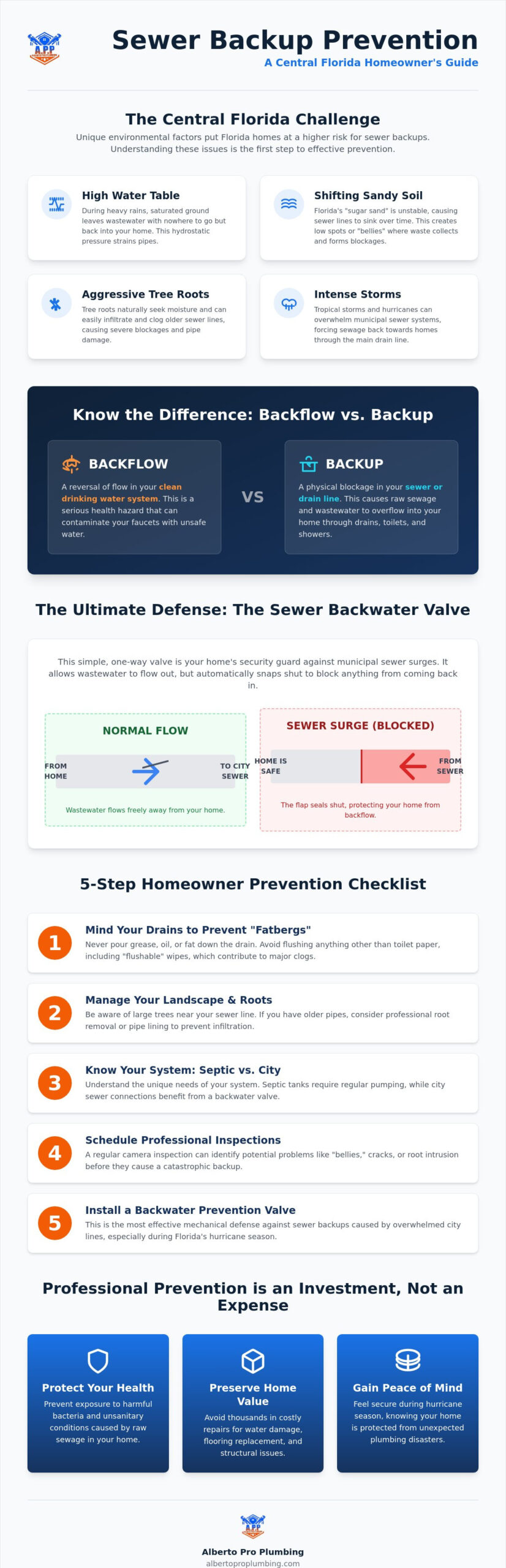
- Understand how Central Florida’s high water table and shifting sandy soil create “bellies” in your pipes that lead to major blockages.
- Learn the mechanics of backwater valves and how these one-way seals block sewage from returning to your property during storm surges.
- Differentiate between city sewer needs and septic tank care to prevent hydraulic overload during the peak of the Florida wet season.
- Master our five-step homeowner checklist to avoid “fatbergs” and implement the most effective sewer line backup prevention Florida has to offer.
- See how professional maintenance and a commitment to tidy service protect your home’s value and prevent expensive emergency plumbing repairs.
Why Sewer Backups Happen Frequently in Central Florida
Central Florida presents a unique set of challenges for residential plumbing. While homeowners in other states deal with frozen pipes, we contend with a high water table that sits just feet below the surface. This proximity means that during our frequent afternoon downpours, the ground becomes saturated almost instantly. When the soil is full of water, there’s nowhere for your wastewater to go but back up. This environmental reality is why sewer line backup prevention Florida strategies are essential for every household.
Our state’s famous “sugar sand” also plays a significant role. Unlike clay or rock-heavy soils, sandy soil is incredibly unstable. Over time, this shifting ground causes sections of your sewer line to sink, creating what we call “bellies.” These dips collect grease, hair, and solid waste, eventually forming a stubborn blockage. Add to this the aggressive root systems of Live Oaks and Sabal Palms seeking moisture; you have a recipe for a major plumbing crisis. When tropical storms hit, municipal sewer systems often surcharge, sending pressure back toward your home’s drains.
Hydrostatic Pressure and Your Plumbing
Hydrostatic pressure is the force exerted by standing water against your buried pipes. In areas like Lake County, where older homes may still have clay or cast-iron lines, this pressure can lead to structural failures. If a local power outage causes a drop in water pressure, you also face the risk of backsiphonage. This occurs when the lack of pressure actually pulls contaminated water back into your clean supply lines. It’s a serious health hazard that requires a professional eye to monitor and prevent.
Backflow vs. Backup: Knowing the Difference
Understanding the terminology helps you communicate better with your technician. Backflow refers to the reversal of water flow in your potable drinking water system, which can contaminate your faucets. A backup is a physical blockage in the sewer line that causes waste to overflow into your tubs and toilets. Both situations are emergencies that require a professional plumbing service to resolve. To keep your home safe, you should understand how a backwater valve works to stop these reversals before they reach your living room. We treat every home with respect, providing a tidy service that leaves your property in its original condition.
How a Sewer Backflow Preventer Works to Protect Your Home
A sewer backflow preventer is a one-way valve that allows waste out but blocks sewage from returning. Think of it as a security guard for your home’s main drain line. When your plumbing functions normally, the valve stays open or moves easily to let water and waste flow toward the city main or your septic tank. However, if the municipal system becomes overwhelmed, a situation often caused by the common causes of sewer system overflows like heavy rain or line blockages, the valve snaps shut. This mechanical action is the cornerstone of effective sewer line backup prevention Florida homeowners need during our intense hurricane seasons.
The anatomy of a backwater valve is surprisingly simple but highly effective. It usually features a buoyant flap or float. If water begins to flow backward toward your house, the float rises with the liquid level and pushes the flap into a sealed position. High-quality seals ensure that even under pressure, no gray water or sewage can seep past the gate. In Central Florida homes, we typically install these devices on the main lateral line, often just outside the house or near the cleanout, where they can be easily monitored.
The Florida Building Code specifically mandates these devices for properties where the flood level of the lowest floor is lower than the manhole cover of the next upstream municipal sewer manhole. Even if your home isn’t strictly required to have one by code, installing a preventer is a smart move for any low-lying property in Orlando or Clermont. If you aren’t sure where your home stands, our team can perform a quick check of your sewer line repair needs and current protection levels.
Types of Backflow Prevention Valves
Most residential setups use check valves. These are reliable, budget-friendly, and function automatically using a weighted flap. Investing in the right hardware is a major part of sewer line backup prevention Florida residents use to keep their properties safe and dry. For families in extreme flood zones, automatic flood gate valves offer a more robust seal using motorized components. While manual gate valves exist, we rarely recommend them for primary protection. They require you to be home and awake to manually turn a wheel when a storm hits, which isn’t practical for most busy families.
Installation and Access Requirements
Proper installation is all about precision. The valve must be set at the correct depth and pitch to ensure gravity carries waste away without getting stuck on the flap. We always install an access box over the valve. This allows you to peer inside and verify the flap is clear of debris without digging up your yard. Following local Orlando and Clermont municipal codes isn’t just about passing inspection. It’s about ensuring your system remains functional for years to come. Our technicians take pride in their craftsmanship, ensuring every installation is a tidy service that respects your landscaping.
Prevention for Septic vs. City Sewer Systems
Whether your home relies on a septic tank or is connected to a municipal main, your strategy for sewer line backup prevention Florida must be tailored to your specific setup. Homeowners on city sewer often face backups when municipal lines become surcharged during heavy rain. In contrast, those with septic systems deal with a closed-loop environment where the ground itself determines how well the system functions. Florida has approximately 2.6 million septic systems, and each one is uniquely vulnerable to our state’s wet season.
One of the most common issues we see is hydraulic overload. This happens when excessive water from heavy storms or leaking fixtures floods the septic tank faster than the soil can absorb it. If your drains are gurgling or slow, it might not be a simple clog. It could be a signal that you need a septic drain field rehab. When the drain field fails, waste has nowhere to go but back into your home. Our team at Alberto Pro Plumbing takes a neighborly approach to these stressful situations, ensuring we find the most cost-effective way to restore your system’s integrity.
City sewer users aren’t off the hook, though. When the city’s infrastructure is overwhelmed, the problem is often outside your property line. However, you are still legally responsible for the lateral line that connects your home to the city main. If the city system surcharges, a backwater valve is your only real defense. Understanding where your responsibility ends and the city’s begins can save you from a legal and financial headache after a major storm event.
Protecting Your Septic Drain Field
Your drain field is the most sensitive part of your plumbing. To prevent backups, you must keep heavy vehicles, trailers, and even temporary structures like sheds off the leach field area. Soil compaction prevents the ground from filtering effluent properly. You should also be mindful of your landscaping. Aggressive roots can puncture lines, while excessive mulch can trap moisture. Learning how to care for your septic system is the best way to avoid the telltale signs of failure, such as spongy grass or sewage smells in the yard. We always provide a tidy service when inspecting these systems, leaving your lawn as clean as we found it.
City Sewer Backflow Challenges
During a hurricane or flash flood, city mains can reach capacity. When this happens, sewage can be forced back through your lateral line and into basement-level or low-lying fixtures. A whole-house backwater valve is essential for these properties. It’s important to remember that most standard insurance policies won’t cover these overflows without a specific rider. By installing professional prevention devices, you take control of your home’s safety rather than relying on the city’s aging infrastructure to hold up under pressure.
Homeowner Checklist: 5 Steps to Prevent Sewer Backups
While mechanical valves provide a vital safety net, your daily habits are the true first line of defense. Implementing a consistent routine for sewer line backup prevention Florida homes require is the best way to avoid a messy and expensive emergency. By following these five steps, you can protect your pipes from the inside out and ensure your system is ready for the next big storm. We recommend focusing on these core areas:
- Monitor your drains: Never flush anything other than waste and toilet paper.
- Manage kitchen grease: Use jars to collect cooking oils rather than rinsing them down the sink.
- Landscaping awareness: Keep trees with aggressive roots at least 10 feet away from your sewer lateral.
- Regular valve checks: Ensure your backwater valve flap moves freely and is clear of debris.
- Professional cleaning: Schedule annual maintenance to clear out sand and scale buildup.
Proper Waste Disposal Habits
You’ve likely seen “flushable wipes” in the grocery store, but these are the leading cause of local clogs we encounter. Despite what the packaging says, these wipes don’t disintegrate like toilet paper. Instead, they snag on pipe imperfections and bind with Fats, Oils, and Grease (FOG) to create “fatbergs.” In Central Florida’s relatively warm ground, grease stays viscous longer, allowing it to travel deeper into your system before it solidifies. This creates a sticky trap for hair and lint. To prevent these blockages, always scrape your plates into the trash and use hair traps in every shower to catch small particles before they reach the main line.
Annual Maintenance and Inspections
A professional camera inspection is the only way to truly see if sand or scale is beginning to narrow your pipes. This is especially important for older homes where cast iron pipes may be deteriorating. During an inspection, we also check your backwater valve for mineral buildup from our hard Florida water, which can sometimes cause the flap to stick. If we find significant debris, we may recommend hydro jetting. This high-pressure cleaning is a cornerstone of sewer line backup prevention Florida residents use to clear out the sand, silt, and grease that traditional snaking might leave behind.
While hydro jetting handles the internal health of your lines, maintaining the external surfaces of your property is equally important in our humid climate; for those in the Jacksonville area, Ehrman’s Power Wash provides professional solutions to maintain your property’s integrity and curb appeal.
At Alberto Pro Plumbing, we believe in doing the job right the first time. Our team is dedicated to providing a tidy service that respects your property while ensuring your home’s integrity. If you’ve noticed slow drains or gurgling toilets, don’t wait for a total blockage. You can find expert drain cleaning services near me to get your system back in top shape before the rain starts.
Why Professional Prevention Saves You Thousands
The true cost of a sewage backup goes far beyond a single repair bill. While the physical blockage is a crisis, the secondary damage to your home’s value and your family’s health is often much worse. In Florida’s humid climate, even a small overflow can lead to rapid mold growth within 24 to 48 hours. Professional remediation, flooring replacement, and structural drying can quickly reach five figures. Investing in sewer line backup prevention Florida homeowners can trust is a proactive way to avoid these devastating financial hits; for those looking for comprehensive drainage and facility management, you can learn more about CH Enviro and their specialized solutions.
We believe that a plumbing service should leave your home better than we found it. Our neighborly approach includes a tidy service guarantee, meaning we protect your workspace and clean up thoroughly once the job is finished. You shouldn’t have to deal with a messy yard or a stained bathroom floor after a technician leaves. If you are currently facing a crisis, having a reliable emergency plumbing repair specialist on speed dial ensures that a minor leak doesn’t turn into a total property loss.
Expertise You Can Trust
As a locally owned business with deep roots in Lake and Orange Counties, we understand the specific environmental stressors on your pipes. Our heritage is built on personal accountability and community pride. We don’t just see a job site; we see a neighbor’s home that needs protection. Beyond mechanical repairs, we provide the technical authority required for certified backflow testing. This ensures your system stays in compliance with local Florida regulations while providing the highest level of safety for your drinking water.
Next Steps for Your Home
Protecting your property starts with a clear understanding of your system’s current condition. We recommend scheduling a comprehensive sewer line evaluation to identify potential “bellies” or root intrusions before they cause a backup. If our inspection reveals a need for a preventer, we will guide you through the installation process with total transparency. To ensure your home is guarded throughout the year, consider our Membership That Protects Your Home Year-Round. This program provides priority support during the peak of Florida’s storm season, giving you peace of mind when the clouds turn gray. Don’t wait for the next hurricane to test your plumbing; take action today to secure your home’s future.
Secure Your Home Against the Next Florida Storm
Your home is likely your biggest investment, and protecting it from the threat of a sewage overflow is a year-round commitment. By combining professional mechanical protection with smart daily habits, you can effectively master sewer line backup prevention Florida residents need to stay dry. Small steps, such as installing a backwater valve and scheduling annual camera inspections, prevent thousands of dollars in remediation costs and property damage. You have the power to stop a crisis before it ever reaches your bathroom floor.
As a local Clermont family-owned business, we take pride in serving our neighbors with integrity and technical expertise. We understand that plumbing emergencies don’t wait for convenient business hours; that’s why we offer 24/7 Emergency Response to keep your family safe. Our Tidy Service Guarantee ensures that your home remains clean and respected throughout every visit. Don’t leave your property’s safety to chance during the next wet season.
Protect your home from backups—schedule your sewer line inspection with Alberto Pro Plumbing today!
We are ready to help you build a reliable, efficient plumbing system that gives you the peace of mind you deserve.
Frequently Asked Questions
Is a backflow preventer required by law in Florida?
Yes, Florida law requires these devices for specific low-lying properties. The Florida Building Code mandates a backwater valve when the lowest floor of a home is below the next upstream manhole cover of the public sewer. Local municipalities often supplement these rules with their own ordinances, so it’s best to verify requirements with your local building department to ensure compliance.
How often should I have my sewer line inspected in Central Florida?
You should schedule a professional inspection at least once a year. In Central Florida, the best time for this is right before the June 1 hurricane season kickoff. Regular checks allow us to catch sandy soil shifts or “bellies” in your line before they cause a total blockage, ensuring your system is ready for heavy summer rains.
What are the first signs of a sewer line backup?
Gurgling toilets and slow drainage in multiple fixtures are the most common early warnings. You might also notice a persistent sewage odor near your drains or spongy, unusually green grass over your septic field. These signs indicate that waste is already struggling to leave your property and needs immediate professional attention before it overflows into your living space.
Can heavy rain cause my sewer to back up?
Heavy rain is a leading cause of backups in our region. Saturated ground puts pressure on pipes and can lead to municipal sewer surcharges where the city main literally runs out of room. For those on septic, intense rainfall causes hydraulic overload, which prevents the tank from draining into the already saturated soil around your drain field.
Does homeowners insurance cover sewer line backups in Florida?
Most standard Florida homeowners insurance policies do not cover backup damage. You generally need a specific sewer backup endorsement or rider to be protected from this type of loss. In 2026, these riders typically cost between $50 and $120 annually. This is a small price to pay for a financial safety net against a very common Florida risk.
How much does it cost to install a sewer backflow valve?
Installation costs vary based on your system’s complexity and local permitting requirements. In 2026, the average residential install across Florida is approximately $350, though the typical range can move from $135 to $1,100 depending on the depth of the line. Homeowners should also plan for permitting fees, which often start around $50 in most Central Florida counties.
What is the difference between a check valve and a backwater valve?
These terms are often used interchangeably, but a check valve is actually a specific type of backwater valve. While “backwater valve” refers to the entire category of one-way devices designed to stop sewage reversals, a check valve typically uses a simple mechanical flap. Both are essential tools for effective sewer line backup prevention Florida homeowners use to keep their properties dry.
Can I install a backflow preventer myself?
While a handy homeowner might feel tempted, this isn’t a DIY project. Proper installation requires precise pipe pitching and specific depth calculations to ensure gravity carries waste away without it getting stuck on the flap. Most local codes also require a permit and professional testing to ensure the device meets health and safety regulations for your community.