
Imagine stepping into your morning shower only to be met with a blast of ice-cold water, or worse, walking into your laundry room to find a growing puddle. It’s a stressful situation that every homeowner dreads, and it often leaves you wondering if a simple repair will do or if it’s time for a total upgrade. Understanding how to know if you need a new water heater is the best way to prevent a flooded home and the high costs of emergency restoration, especially since standard tank units typically only last 10 to 15 years.
We agree that your home should be a place of comfort, not a source of constant worry about aging appliances. You deserve clear answers on whether your unit is a ticking time bomb or just needs a minor adjustment. In this guide, we’ll share the critical physical and economic indicators that signal it’s time to replace your unit before a major leak occurs. You’ll get a clear checklist to verify your unit’s health and learn about the long-term value of newer, high-efficiency models. This information will give you the confidence to make the right choice for your family and finally reclaim your peace of mind.
Key Takeaways
- Spot the five physical red flags that help you understand how to know if you need a new water heater before an expensive tank failure occurs.
- Learn how the “Rule of 10” serves as a benchmark for determining when a standard tank unit has reached its reliable expiration date.
- Discover how the hard water in Central Florida accelerates sediment buildup and impacts the lifespan of your heating elements.
- Apply the “50% Rule” to decide if a repair cost makes financial sense compared to the long-term ROI of a new installation.
- Explore the differences between traditional tanks and modern tankless systems to choose the most reliable and efficient solution for your family.
5 Warning Signs You Need a New Water Heater Immediately
Identifying the physical red flags of a failing unit is the first step in mastering how to know if you need a new water heater. Many homeowners ignore small changes in performance, but waiting for a total breakdown usually results in expensive emergency plumbing costs and potential property damage. By the time a tank actually bursts, you’re no longer just paying for a new appliance; you’re paying for water extraction and floor repairs too. Understanding these signs helps you move from reactive panic to a planned, stress-free upgrade.
The tech behind Water heating has advanced significantly, and 2026 brings new energy standards that make older, struggling units even more expensive to operate. New Department of Energy standards, including the requirement for condensing technology in many commercial units starting in October 2026, reflect a broader industry shift toward efficiency. If your current unit is showing these signs, it’s likely costing you more in utilities and risk than a new installation would.
Rusty or Discoloured Water
If your hot water looks like tea or has a metallic tint while the cold water remains clear, your tank’s internal lining is likely corroding. Inside every tank is a sacrificial anode rod designed to attract corrosive elements and protect the steel shell. Once this rod fully dissolves, the water begins attacking the tank itself. You can test this by draining a few gallons from the tank into a white bucket. If the sediment and rust are concentrated there, the tank is reaching its end of life.
Strange Noises: Popping, Rumbling, and Kettling
When you hear popping or banging sounds, it’s often a sign of “kettling.” This happens when hard water minerals settle at the bottom of the tank, forming a thick layer of sediment. As the burner heats the water, steam bubbles get trapped under this crust and eventually burst through, creating that signature popcorn sound. This sediment layer doesn’t just make noise; it acts as an insulator that causes the tank to overheat and eventually crack from the constant thermal stress.
Visible Leaks and Moisture Around the Base
Not every puddle means you need a total replacement, but you must act fast to verify the source. Check the Temperature and Pressure (T&P) relief valve at the top or side. If it’s dripping, it might just be a faulty valve. However, moisture or standing water around the base of the unit often points to a fractured inner tank hidden behind the outer metal jacket. These “silent leaks” are dangerous because they can escalate into a catastrophic failure without warning, especially in older units that have been weakened by years of high-pressure operation.
- Check the cold water: If cold water is also rusty, the issue is likely your home’s piping, not the heater.
- Listen for vibrations: Excessive vibration during a heating cycle suggests heavy scale buildup on the elements.
- Look for “weeping”: Small amounts of moisture on the tank’s exterior can indicate pinhole leaks caused by internal corrosion.
Understanding Water Heater Lifespan: Is Your Unit “Timed Out”?
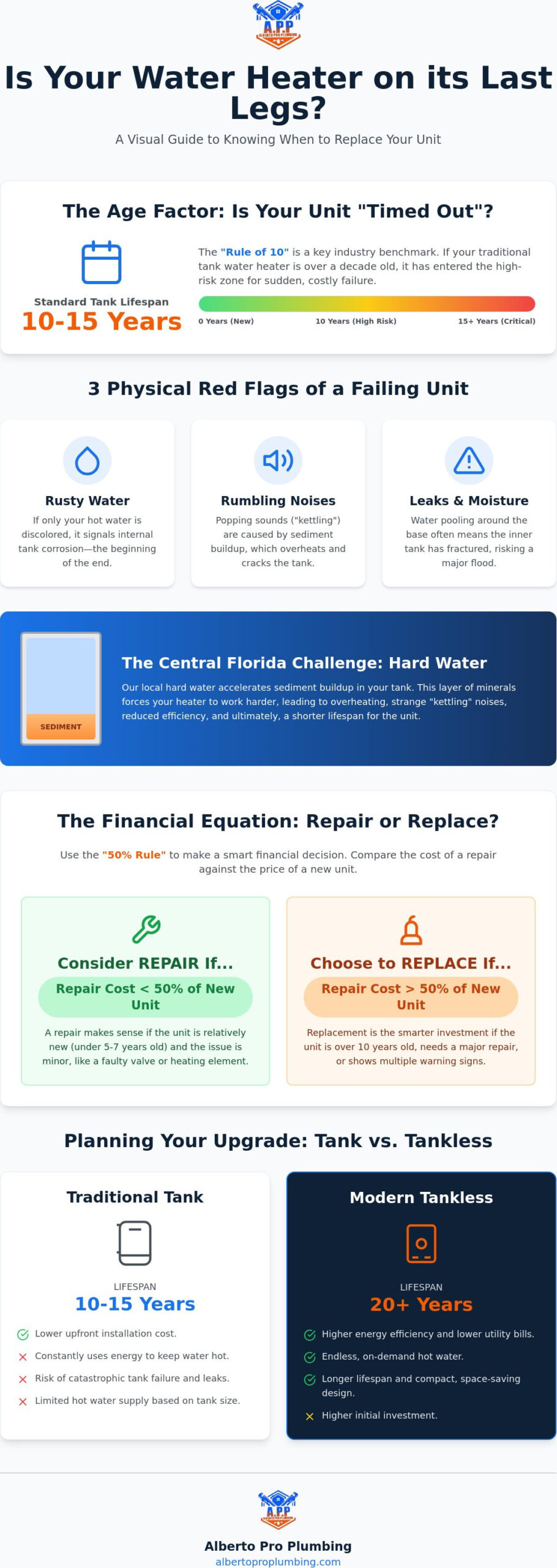
A major part of understanding how to know if you need a new water heater involves looking past the exterior and checking the calendar. While a unit might look perfectly fine on the outside, the internal components are constantly under pressure. We define water heater lifespan as the period before the inner tank lining inevitably succumbs to thermal expansion stress. Once that lining is compromised, a leak isn’t just a possibility; it’s a certainty. In 2026, the industry standard for a traditional tank unit remains 10 to 15 years, while modern tankless models can often reach the 20-year mark with proper care.
Plumbing professionals often refer to the “Rule of 10” when evaluating home systems. If your tank is over 10 years old, it has entered the high-risk zone for sudden failure. Maintaining awareness of Residential Water Heater Safety standards is vital, as an aged unit isn’t just inefficient; it’s a potential liability for your property. If you aren’t sure where your unit stands, it’s time to do some detective work on your rating plate.
How Long Do Water Heaters Last in Central Florida?
Our local climate presents unique challenges that can shorten the standard 10-year estimate. The combination of 24/7 heat and high humidity puts extra stress on external fittings and electrical components. Additionally, high hot water demand in larger households means the tank is constantly cycling. While professional plumbing services can extend a unit’s life through regular flushing and anode rod replacements, the environmental factors in Clermont often mean units lean toward the shorter end of the lifespan spectrum.
Finding the Manufacture Date
You don’t need to be a detective to find your unit’s age, but you do need to know how to decode the serial number on the manufacturer’s label. Most brands, like Rheem or AO Smith, hide the date in plain sight. For AO Smith, the first letter usually represents the month, where A is January, B is February, and so on. The following two digits typically indicate the year. For Rheem, the first four digits of the serial number often represent the month and year of production. A unit manufactured 12 years ago is a ticking time bomb, even if it hasn’t started leaking yet. If your label is faded or missing, a quick visit to albertoproplumbing.com can help you get a professional assessment of your system’s remaining life.
- Standard Tanks: Expect 10 to 12 years of reliable service in local conditions.
- Tankless Units: These can last 20 years because they don’t store water that causes constant tank corrosion.
- The 12-Year Mark: At this point, the risk of a catastrophic floor-flooding leak increases by over 70 percent.
The Impact of Central Florida’s Hard Water on Your Tank
Central Florida’s groundwater is famous for its high mineral content, specifically calcium and magnesium. In Clermont, these minerals are more than just a nuisance for your glassware; they’re a direct threat to your plumbing’s longevity. When hard water enters your tank and is heated, these minerals solidify and settle at the bottom. This creates a thick “insulation effect” that separates the water from the heat source. Understanding this local environmental factor is a key part of how to know if you need a new water heater before a disaster strikes.
This sediment layer forces your system to work significantly harder. For electric units, the lower heating element often becomes completely buried in mineral “sand,” causing it to overheat and burn out. For gas units, the burner must stay on twice as long to heat the water through that layer of stone. This constant overheating weakens the steel floor of the tank and wastes a significant amount of energy every month. If you’ve noticed white scale on your showerheads, your water heater is likely struggling with the same buildup. In some cases, heavy mineral deposits can even affect your home’s drainage, leading homeowners to seek a septic drain field rehab to restore their system’s health.
Mineral Buildup and Sediment “Kettling”
Over time, minerals solidify into a rock-like layer that can be several inches thick. As your tank heats and cools, it naturally expands and contracts. This movement causes the hard sediment to rub against the tank’s protective glass lining. Eventually, the lining flakes off, exposing the raw steel underneath to corrosive water. This is why we often warn against flushing a tank that’s been neglected for over a decade. In many cases, the sediment is actually “plugging” tiny pinhole leaks. Removing that buildup can sometimes trigger an immediate leak, signaling that the unit has already failed internally.
Why Florida Humidity Accelerates External Corrosion
Most water heaters in our area are located in garages, where they’re exposed to intense heat and humidity. This moisture reacts with the metal water heater jacket, leading to “pitting” corrosion. You’ll often see this first on the top of the tank near the intake lines. If you see small, rusty craters or a white, powdery substance on the pipes, the metal is being eaten away. This humid environment also shortens the life of pilot light assemblies and sensitive electronic control boards. When you combine internal mineral damage with external humidity, it’s easy to see why Florida tanks often fail years earlier than units in drier climates. This reality makes mastering how to know if you need a new water heater even more important for local homeowners.
- Listen for “knocking”: This is the sound of steam bubbles escaping from under the sediment layer.
- Check the color: If your hot water has a milky appearance, it’s often a sign of high mineral saturation.
- Inspect the jacket: Rusty spots on the exterior of the tank are a sign that the metal is thinning.
The Repair vs. Replace Equation: Calculating the Best Value
Deciding whether to keep an old unit running or invest in a new one is a major financial crossroads for every homeowner. We define the 50% rule as the threshold where repair costs exceed 50% of the value of a new plumber for water heater installation. This simple formula provides a clear answer on how to know if you need a new water heater without the guesswork. If your unit is already out of its manufacturer warranty, every dollar you spend on a “band-aid” fix is a dollar that could have gone toward a more reliable, efficient system.
A new unit brings more than just hot water; it brings a fresh manufacturer warranty and long-term peace of mind. While a repair might solve a single component failure today, it cannot reverse the years of internal corrosion we discussed in previous sections. Investing in a new system in 2026 allows you to take advantage of the latest safety features and construction standards that simply weren’t available a decade ago. Expert specialists like WellPlumbed recommend looking at the total cost of ownership rather than just the immediate bill on the kitchen table to make the most informed decision.
The 50% Rule for Plumbing Repairs
When you’re faced with a broken thermostat or a failed heating element, you have to look at the big picture. Calculate the total cost of parts and labor for the repair. If that number is more than half the price of a brand-new installation, the math clearly favors replacement. Multiple small repairs in a single year are another warning sign. If you find yourself calling a plumber every few months to keep the water warm, you’re likely pouring money into a failing tank that will eventually leak anyway. A new system stops that cycle of unexpected expenses and protects your home from the risk of a sudden flood.
Energy Efficiency Gains with Modern Units
Modern units are significantly more efficient than those manufactured around 2010. Thanks to updated NAECA standards, newer tanks feature much better insulation, which reduces “standby” heat loss. Moving from a 12-year-old unit to a 2026 model can lead to noticeable monthly utility savings. In Florida, there are often rebates available for high-efficiency or heat pump water heaters that can help offset the initial cost. These savings, combined with the lack of repair bills, mean a new unit often pays for itself over its first few years of operation. If you’re ready to see how a modern system can improve your home’s efficiency, visit our service page to explore your options.
- Warranty Protection: New units typically come with 6 to 12 years of tank protection.
- Sunk Costs: Don’t let a $400 repair on an 11-year-old tank trick you into thinking you’ve saved money.
- Safety Standards: 2026 models meet the highest federal safety and performance requirements.
Planning Your Water Heater Installation in Clermont
Once you’ve mastered how to know if you need a new water heater, the next step is choosing a replacement that fits your family’s lifestyle. You shouldn’t have to settle for lukewarm showers or worry about the next big leak. Planning an installation requires more than just picking a unit off a shelf; it’s about matching the right technology to your home’s specific demand. At Alberto Pro Plumbing, we guide you through every choice with a focus on long-term reliability and a promise of tidy service that leaves your workspace exactly as we found it.
Proper sizing is the most overlooked part of the process. If a unit is too small, your family will constantly run out of hot water during peak morning hours. If it’s too large, you’re paying to heat water you’ll never use. We take the time to calculate your “first-hour rating” to ensure your new system can keep up with every shower, dishwasher cycle, and laundry load. Our goal is to provide a seamless transition that restores your comfort without the stress of future performance issues.
Tank vs. Tankless: Which is Right for Your Home?
Modern tankless units are a popular choice in Central Florida because they offer endless hot water on demand. They are also incredible space-savers, which is a major benefit for smaller Clermont utility closets or garage setups. However, moving to tankless often requires specific upgrades to your gas lines or electrical panel to handle the higher energy draw. Traditional tanks remain a reliable and cost-effective option for many households. We help you weigh the upfront costs against the long-term energy savings to find the best fit for your budget.
Professional Installation vs. DIY Risks
While DIY projects are great for some home improvements, water heater installation isn’t one of them. An improperly installed Temperature and Pressure (T&P) valve creates a genuine safety risk for your family. Furthermore, most major manufacturers will void your warranty if the unit isn’t installed by a licensed expert. We handle all necessary permits, ensure full code compliance, and take care of the heavy lifting involved in the disposal of your old unit. This professional approach protects your investment and your property.
The same principle applies to your heating and cooling systems, where HVAC Inspections Los Angeles provides the specialized oversight needed to ensure all residential equipment operates at peak safety and efficiency.
Proactive Protection with a Home Membership
The best way to avoid a crisis is through consistent maintenance. Our membership plans provide year-round protection, helping us catch the physical signs of aging before they turn into a flood. If your current unit is already struggling, we offer priority support for emergency plumbing repair to get your home back to normal quickly. Don’t wait for a puddle to appear in your garage. Schedule your water heater inspection with Alberto Pro Plumbing today!
- Code Compliance: We ensure every installation meets the latest 2026 safety standards.
- Tidy Service: Our team respects your home, using floor protection and cleaning up every scrap of debris.
- Local Expertise: As a family-oriented local specialist, we understand the specific challenges of Clermont’s water supply.
Protect Your Home and Comfort Today
You now have a clear roadmap for how to know if you need a new water heater. By keeping an eye on the “Rule of 10,” watching for the physical signs of internal corrosion, and understanding the impact of Central Florida’s hard water, you can make a proactive decision for your household. Upgrading to a 2026 model doesn’t just prevent a sudden flood; it improves your daily comfort and lowers your monthly utility bills through modern efficiency standards.
Don’t let an aging unit leave you in the cold. As a local, family-owned and operated specialist, Alberto Pro Plumbing is here to ensure your transition to a new system is seamless and stress-free. We provide 24/7 emergency response for those unexpected failures and back every installation with our clean workspace guarantee. Get a Professional Water Heater Evaluation from Alberto Pro Plumbing to secure your home’s hot water for years to come. We’re proud to serve our neighbors and look forward to helping you regain your peace of mind.
Frequently Asked Questions
How many years does a typical water heater last?
A standard tank water heater typically lasts between 10 and 15 years, while tankless models can reach 20 years with proper maintenance. In Central Florida, the high mineral content in the water often shortens this lifespan to approximately 7 to 10 years. Keeping an eye on the manufacture date is a key part of how to know if you need a new water heater before a leak starts.
Is it worth repairing a 12-year-old water heater?
It is generally not cost-effective to repair a unit that has passed the 12-year mark. Most tanks are designed for a 10-year service life, so a 12-year-old heater is already operating on borrowed time. We recommend applying the 50% rule; if the repair bill is more than half the cost of a new installation, replacing the unit is the smarter financial move for your home.
What are the signs that a water heater is about to explode?
A leaking or stuck Temperature and Pressure (T&P) relief valve is the most critical warning sign of a potential safety crisis. If you notice the tank shaking, hear internal boiling sounds, or see the tank walls bulging, you should shut off the power and water immediately. These symptoms indicate that internal pressure has reached dangerous levels, requiring immediate professional attention to ensure your family’s safety.
Can I replace a water heater myself in Florida?
While Florida law allows homeowners to pull permits for their own residences, we strongly advise against DIY water heater replacement. Professional installation ensures full compliance with local building codes and maintains your manufacturer’s warranty, which is often voided by uncertified labor. Our team handles the heavy lifting, permitting, and safe disposal of your old unit while ensuring all safety valves are correctly calibrated.
Why is my water heater making a loud popping noise?
Loud popping or banging noises are caused by sediment buildup at the bottom of the tank, a process known as kettling. As the burner heats the water, steam bubbles become trapped under a layer of mineral scale and eventually burst through. This noise is a clear indicator that your heater is losing efficiency and the internal tank lining is under significant thermal stress from overheating.
Does hard water affect how often I need a new water heater?
Yes, hard water significantly accelerates the need for a new water heater by causing rapid sediment accumulation and internal corrosion. The calcium and magnesium found in local water supplies create a rock-like layer that insulates heating elements and causes the tank floor to overheat. Regular flushing can help, but homes with hard water often see tank failures several years earlier than those with soft water.
What is the most common cause of water heater failure?
Internal tank corrosion is the leading cause of water heater failure, usually occurring after the sacrificial anode rod has fully dissolved. Once the rod is gone, water begins eating away at the steel tank itself, leading to pinhole leaks or catastrophic bursts. Understanding this process is essential for homeowners learning how to know if you need a new water heater before property damage occurs in their garage or laundry room.
How much hot water capacity does a family of four need?
A typical family of four usually requires a tank with a 50 to 60-gallon capacity to meet peak morning demands. If your household frequently runs multiple showers and the dishwasher simultaneously, a tankless system might be a better fit due to its endless supply. We calculate your home’s specific flow requirements to ensure your new unit provides consistent temperatures for everyone without wasting energy on unneeded capacity.