
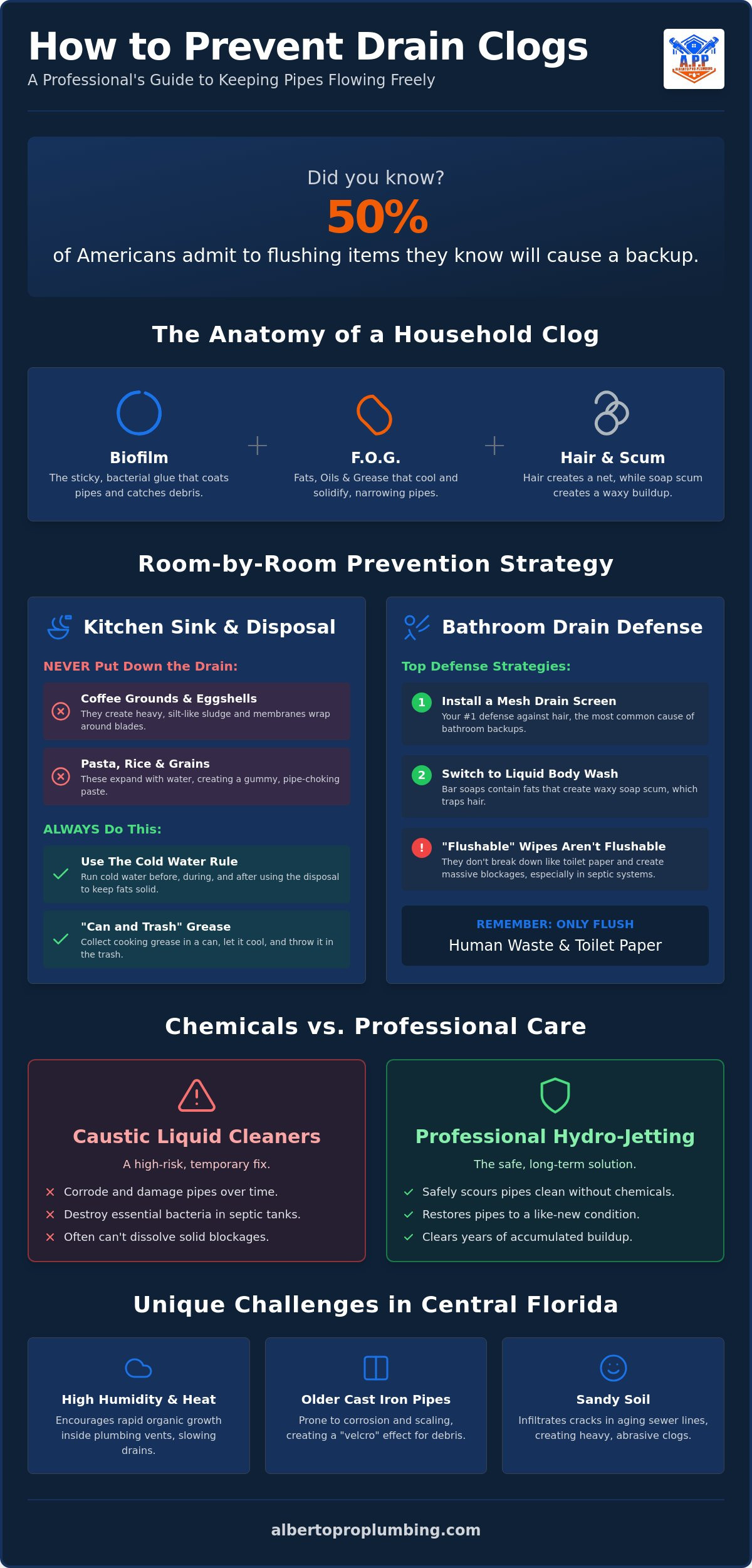
Did you know that 50% of Americans admit to flushing items they know will cause a backup? It’s a common habit that leads to those frustrating moments when your shower water pools around your ankles or your kitchen sink begins to smell like a swamp. If you’re tired of pouring money down the drain on liquid cleaners that don’t actually solve the problem, it’s time to master how to prevent drain clogs the right way.
We understand the stress of a potential sewage backup. It’s messy, expensive, and completely avoidable. As your local plumbing specialists, we’re here to share the professional habits and maintenance secrets that keep Central Florida pipes flowing freely without using harsh chemicals. You’ll learn why those store-bought bottles are your septic system’s worst enemy and how simple source control can save your plumbing. This guide breaks down the difference between DIY maintenance and professional care, giving you a clear path to a clog-free home and pipes that last for decades.
Key Takeaways
- Learn how sticky biofilm acts as a magnet for debris, creating the foundation for every stubborn backup in your home.
- Discover room-specific habits for how to prevent drain clogs, including the essential items that should never enter your kitchen disposal.
- Understand the hidden risks of caustic cleaners that can corrode your pipes and destroy the delicate bacterial balance of your septic system.
- Protect your investment by learning why septic systems require unique care and different maintenance than city sewer lines.
- Identify the clear signs that it’s time to move beyond DIY fixes and how professional hydro-jetting can restore your pipes to like-new condition.
Understanding Why Drains Clog: The Science of Scum
Most homeowners think a clog is just a single object, like a toy or a clump of hair, stuck in a pipe. In reality, a blockage is usually a complex, multi-layered accumulation of both organic and inorganic waste that builds up over months. To truly master how to prevent drain clogs, you have to understand the microscopic environment inside your plumbing. It starts with biofilm.
Biofilm is the sticky, bacterial glue that binds pipe debris together. This sludge coats the interior walls of your pipes, creating a tacky surface that catches everything passing by. We often see the “Big Three” culprits as the primary building blocks of these messes. First is FOG (Fats, Oils, and Grease). While these go down the sink as liquids, they quickly cool and solidify. Second is hair, which provides the structural “rebar” for a clog. Third is foreign objects, ranging from “flushable” wipes to small plastic bits that should never enter the system. In Florida, the temperature shift between your warm kitchen and the cooler underground pipes causes grease to solidify faster than you might think, leading to rapid buildup.
The Anatomy of a Typical Household Clog
Inside your plumbing, hair acts like a net. It often snags on the rough edges of older pipes or settles in the P-trap, which is a critical component of how drains work to prevent sewer gases from entering your home. Once this hair net is in place, it begins to catch soap scum. This isn’t just leftover soap; it’s a chemical reaction between soap minerals and the hard water minerals found throughout Central Florida. This mixture hardens into a thick, waxy substance that narrows the pipe’s diameter. Biofilm is the glue that binds pipe debris, ensuring that once a small particle sticks, it stays put until it’s professionally cleared.
Why Central Florida Pipes Are Unique
Our local climate adds another layer of difficulty to drain health. High humidity and relentless heat can encourage rapid organic growth inside plumbing vents, which can restrict airflow and cause drains to gurgle or slow down. If you own one of the beautiful historic homes in Clermont or Orlando, your plumbing may consist of older cast iron or clay pipes. These materials are more prone to scaling and corrosion, which creates a “velcro” effect for debris. Furthermore, our sandy soil is a constant threat. Small cracks in aging sewer lines allow sand to seep into the system. This sand settles in low spots, creating heavy, abrasive clogs that standard plungers or retail chemicals simply cannot budge. Understanding these local factors is the first step in maintaining a healthy, flowing home.
Room-by-Room Guide to Preventing Blockages
Every room in your house presents a unique challenge for your plumbing. While the bathroom deals with hair and soap, the kitchen is a battleground of food waste and grease. Mastering how to prevent drain clogs requires a room-by-room strategy that focuses on stopping debris at the source before it ever enters your pipes.
Kitchen Sink and Garbage Disposal Mastery
Don’t treat your disposal like a industrial trash can. It’s designed for small food scraps, not large-scale waste disposal. Coffee grounds, eggshells, and pasta are the top offenders in Central Florida kitchens. Coffee grounds don’t dissolve; they settle in the P-trap like heavy silt. Eggshell membranes can wrap around disposal blades, while pasta and rice expand in water to create a gummy paste that chokes your pipes. Always follow the “Cold Water Rule.” Run cold water before, during, and for 30 seconds after grinding food. This keeps any residual fats solid so the blades can chop them up effectively. Never pour grease down the sink. Use an old can to collect oil and toss it in the trash once it cools. This “can and trash” method is the simplest way to avoid a kitchen emergency.
Bathroom Drain Defense Strategies
Hair is the most common cause of bathroom backups. A simple mesh drain screen is your best defense. It’s an inexpensive tool that catches hair and small plastic bits before they reach the P-trap. We recommend that family members brush their hair before hopping in the shower to remove loose strands. You should also consider switching to liquid body wash. Bar soaps contain fats and minerals that react with our local hard water to create a waxy buildup known as soap scum. This residue acts like a magnet for hair, leading to frequent slow drains in the shower.
Labels can be deceiving. Many wipes marketed as “flushable” do not break down like toilet paper. They snag on pipe imperfections and create massive blockages. To keep your system healthy, follow the EPA guidelines on septic system care and only flush human waste and toilet paper. This is especially critical for our neighbors in Clermont who rely on septic tanks, as these wipes can lead to expensive field failures.
Don’t forget the laundry room. Washing machines discharge high volumes of water filled with lint and synthetic fibers. An external lint trap on your discharge hose prevents these fibers from weaving into a clog deep in your main line. If your drains are already showing signs of a struggle, our Home Protection Membership offers the proactive care needed to keep your plumbing in top shape year-round.
Natural vs. Chemical: The Safest Ways to Clean Drains
When a sink slows down, the temptation to grab a colorful bottle of liquid cleaner from under the cabinet is strong. These products promise an instant fix, but they often cause more harm than good. Mastering how to prevent drain clogs means understanding that the quickest solution is rarely the safest one for your home’s infrastructure. Most retail cleaners are caustic, meaning they rely on intense chemical reactions that generate high heat to dissolve hair and grease.
This heat is a major problem for modern plumbing. If you have PVC pipes, the thermal reaction can actually soften the plastic or damage the glue at the joints. In older homes with cast iron pipes, the acidic nature of these cleaners accelerates corrosion, leading to pinhole leaks over time. A safer alternative is the “Weekly Flush” habit. For metal pipes, a gallon of boiling water can melt away soft grease before it has a chance to harden. If you have PVC, stick to very hot tap water to avoid compromising the seals. For a deeper clean, biological cleaners are the way to go. These products use natural enzymes to “eat” the biofilm we discussed earlier, removing the sticky foundation that clogs build upon.
Why Professional Plumbers Hate Liquid Drain Cleaners
Liquid cleaners provide a trap of temporary relief. They often burn a small hole through a blockage, allowing water to pass, but they leave the bulk of the debris behind. This leads to even worse backups just a few weeks later. There is also a significant safety risk involved. When a homeowner uses chemicals and the drain remains blocked, a plumber arrives to find a sink full of standing acid. This can cause severe chemical burns to our technicians and damage our specialized tools. If these chemicals eat through a pipe joint, you could face a sudden emergency plumbing repair that costs far more than a standard cleaning.
Eco-Friendly DIY Maintenance Recipes
You’ve likely heard that baking soda and vinegar is a miracle cure for plumbing. While the fizzing action is great for breaking up light organic material and neutralizing odors, it lacks the pressure needed to move a physical blockage. It’s best used as a weekly refresher rather than a repair tool. For your garbage disposal, tossing in a few citrus peels provides a fresh scent without the harsh acidity of commercial deodorizers. Enzyme cleaners prevent clogs by mimicking nature, using beneficial bacteria to break down waste into harmless byproducts that wash away easily. These methods are much kinder to your pipes and the environment.
Preventing Clogs in Specialized Systems (Septic & Sewer)
While city dwellers can sometimes get away with minor plumbing mistakes, homeowners on septic systems must be much more disciplined. If you’re wondering how to prevent drain clogs in a septic-equipped home, the answer lies in protecting your tank’s delicate biology. A city sewer line simply carries waste away to a treatment plant. A septic system, however, must process that waste on-site. It’s a living ecosystem that requires specific conditions to function correctly.
When you use excessive household chemicals or antibacterial soaps, you kill the “good bacteria” that break down solids in your tank. Once that biological process stops, sludge builds up rapidly and can overflow into your lateral lines. If you notice soggy patches in your yard, gurgling sounds, or slow drains throughout the house, these are classic signs that a septic drain field rehab is necessary. This often happens because poor drain habits allowed too much grease or non-biodegradable waste to bypass the tank’s baffles and clog the soil’s ability to absorb water.
Hard water is another silent contributor to clogs in Central Florida. High levels of calcium and magnesium create a white, crusty buildup on your fixtures. Inside your pipes, this mineral scale creates a rough, sandpaper-like surface. This texture catches hair and soap scum much more easily than a smooth pipe wall would. Over several years, this scale narrows the pipe’s diameter, making a total blockage much more likely. To avoid these costly repairs, consider joining our Home Protection Membership for proactive system care and regular inspections.
Septic System Do’s and Don’ts
Restrict your garbage disposal use. It adds a heavy load of organic solids that your tank’s bacteria can’t process quickly enough. You should also avoid “antibacterial” everything. These products don’t just kill germs on your hands; they stop the vital digestion process in your tank. We recommend scheduling a professional inspection every three to five years. This allows us to check sludge levels and ensure your system isn’t on the verge of a field failure.
Managing Hard Water Buildup
Look for mineral deposits on your showerhead or white spotting on your dishes. If you see them there, they’re definitely inside your drain lines too. Installing a water conditioner or softener can prevent this scale from forming, keeping your pipes smooth and clear. This long-term investment is one of the most effective ways to ensure your plumbing remains healthy for decades. It protects not just your drains, but your water heater and expensive fixtures as well. For homeowners in the Pacific Northwest who apply this same high standard to their home’s exterior, Advanced Roofing provides the specialized expertise necessary to keep a roof in peak condition for years to come.
Professional Prevention: Beyond the DIY Mesh Screen
Sometimes, despite your best efforts with mesh screens and hot water flushes, your pipes still struggle to keep up. If you find yourself plunging the same toilet every week or noticing a persistent foul odor near your sinks, it’s time to stop the DIY cycle. Calling for professional drain cleaning services is the most effective way to address deep-seated issues like tree root intrusion or heavy mineral scale buildup. We use high-tech video camera inspections to see exactly what’s happening underground before we begin. This technology eliminates guesswork and ensures we fix the root cause of the blockage, not just the surface symptom.
For stubborn or recurring blockages, we often utilize hydro-jetting. This specialized equipment uses high-pressure water streams to scour the interior walls of your pipes, blasting away the biofilm and solidified grease we discussed in earlier sections. It literally returns your plumbing to a “like-new” condition. Hydro-jetting is a superior strategy for how to prevent drain clogs long-term because it leaves no residue behind for new debris to catch onto. It’s clean, efficient, and far safer for your pipes than any store-bought chemical.
The Value of Annual Maintenance
Think of your plumbing like your car. You wouldn’t drive tens of thousands of miles without an oil change, yet many people ignore their pipes until a major flood occurs. Regular plumbing services extend the life of your home’s infrastructure by catching small leaks and slow-building clogs before they become disasters. An annual check-up is significantly cheaper than a midnight emergency call during a holiday weekend. Our professional inspections uncover hidden issues like pipe shifting or early-stage corrosion that a homeowner simply can’t detect without specialized experience.
The Alberto Pro Home Protection Membership
We designed our Home Protection Membership to provide ultimate peace of mind for Central Florida families. This membership shifts the burden of maintenance from your shoulders to our expert team. You don’t have to worry about how to prevent drain clogs when you have a dedicated specialist looking out for your system. Members enjoy priority service, regular system inspections, and exclusive discounts on any necessary repairs. It’s a proactive approach that ensures your home remains a safe, tidy environment for your family. Join our Home Protection Membership today and never worry about a stressful plumbing backup again.
Take Control of Your Home’s Plumbing Health
Mastering how to prevent drain clogs is simpler than most homeowners think. It begins with shifting your mindset from reactive repairs to proactive care. By avoiding harsh chemicals that erode your pipes and using simple tools like mesh screens, you stop blockages before they even start. Remember that your home’s plumbing, especially in our unique Central Florida environment, requires a gentle touch and regular attention to stay in top shape.
While indoor pipes are vital, your home’s exterior drainage is just as important for long-term protection. To understand how specialists maintain these systems, you can discover Roof Plumbing Expert and see their approach to professional roofing and guttering care.
As a family-owned and operated business in Clermont, we’re committed to keeping our community’s pipes flowing freely. We pride ourselves on our tidy service guarantee, ensuring your home stays clean while we work. If a crisis does strike, our team is ready with a 24/7 emergency response to get your life back to normal quickly. Don’t wait for a slow drain to become a major backup. Keep your home flowing; join our Home Protection Membership today! You deserve the peace of mind that comes with a professionally maintained home.
Frequently Asked Questions
Can I use baking soda and vinegar to prevent clogs?
Baking soda and vinegar are excellent for routine maintenance but won’t clear a physical blockage. The chemical reaction creates a fizzing action that helps loosen light organic buildup and neutralize odors. While it’s a safe DIY refresher, it doesn’t provide the pressure needed to move a stubborn clog. Use this method weekly to keep your pipes smelling fresh and reduce the sticky biofilm that catches debris.
How often should I have my drains professionally cleaned?
Most Central Florida homes benefit from professional drain cleaning once every 18 to 24 months. This regular schedule allows us to remove the slow accumulation of grease and mineral scale before they cause a total blockage. If you have an older home with cast iron pipes or a large family, you might need more frequent visits. Proactive care is always more affordable than an emergency response in the middle of the night.
Are “flushable” wipes really safe for my pipes?
You should never flush “flushable” wipes because they don’t disintegrate like standard toilet paper. These synthetic fibers are incredibly strong and often snag on the rough interior surfaces of your plumbing. Once a single wipe gets stuck, it quickly catches hair and grease to form a massive obstruction. To protect your system, follow the rule of only flushing human waste and toilet paper.
Why does my bathroom sink smell like rotten eggs?
A rotten egg smell usually indicates that bacteria are growing in the organic sludge trapped in your drain or overflow. This biofilm releases hydrogen sulfide gas as it breaks down hair and soap scum. Sometimes, the smell comes from a dried-out P-trap in a guest bathroom that hasn’t been used. Simply running water for a minute or cleaning the drain with an enzyme-based solution typically clears the odor.
Is it safe to put lemon peels in my garbage disposal?
It’s safe to use small citrus peels to freshen your disposal, but avoid putting large amounts down at once. The natural oils in the peel help break down light grease and provide a pleasant scent. Be sure to cut the peels into small pieces and run plenty of cold water while the disposal is grinding. This prevents the thick rinds from jamming the blades or creating a bulk blockage in the trap.
What is the best way to prevent hair from clogging the shower drain?
A stainless steel mesh drain screen is the best defense against hair clogs in the shower. These inexpensive tools sit right over your drain and catch loose strands before they can enter the P-trap and weave into a “net.” We also recommend brushing your hair before showering to remove loose fibers. This simple habit significantly reduces the amount of debris your plumbing has to handle every day.
How do I know if my clog is in the pipe or the septic tank?
Check if the problem is isolated to one sink or if multiple drains are slow simultaneously. If only the kitchen sink is backing up, the clog is likely in that specific branch line. However, if toilets and tubs throughout the house are gurgling, the issue is probably a full septic tank or a blocked main sewer line. This is a clear sign that you need a professional inspection to prevent a messy backup.
Will a water softener help prevent drain clogs?
A water softener is a highly effective long-term solution for anyone researching how to prevent drain clogs in Florida. Our local hard water contains high levels of calcium and magnesium that create a crusty scale inside your pipes. This scale acts like sandpaper, catching every piece of hair and food that passes by. By removing these minerals, you keep your pipe walls smooth and significantly reduce the risk of future blockages.