
What if the most expensive part of your dream kitchen or bathroom renovation isn’t the high-end tile or the custom cabinetry, but the pipes hidden behind your brand-new walls? It’s a valid concern for any Central Florida homeowner. You’ve likely heard horror stories of beautiful remodels being torn apart just months after completion because of a slow leak or a failed inspection. Understanding how to choose a plumber for a remodel is the most important step you can take to protect your investment and your peace of mind.
We know that you want a home that looks stunning and functions perfectly. You deserve a renovation process that doesn’t involve constant anxiety over project delays or confusing local permit requirements. This guide will walk you through the essential steps to vet and hire a professional who truly knows their craft. You’ll learn how to find a partner who stays current with the 2026 Florida Building Code and the latest septic system regulations. We’ll show you how to secure a plumber who treats your property with respect, leaves a tidy workspace, and ensures your home meets every modern standard for safety and efficiency. This high-tier approach to property care should extend to your outdoor living spaces as well, where capecoralscreenrepairs.com can help maintain the integrity and beauty of your pool and patio enclosures.
Key Takeaways
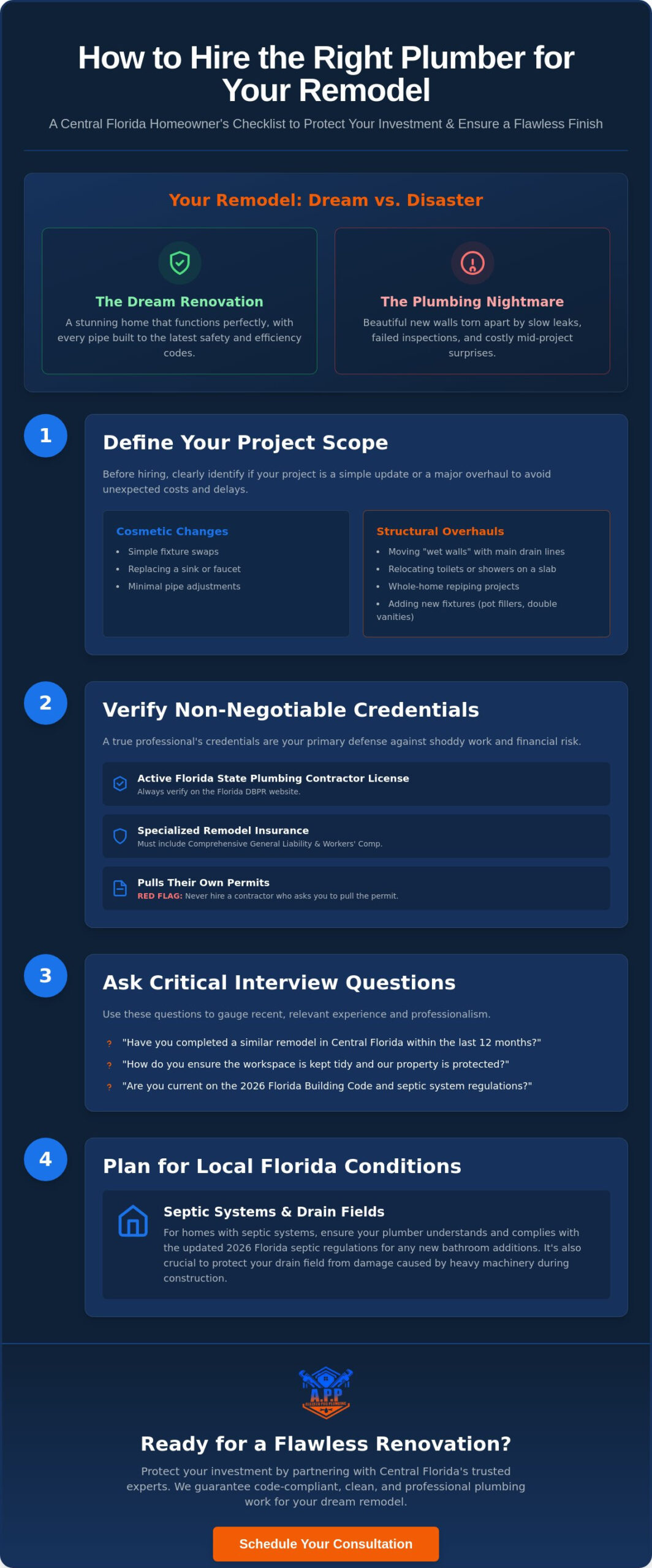
- Identify the full scope of your project, from simple fixture swaps to complex “wet wall” relocations, to avoid mid-project surprises.
- Learn how to choose a plumber for a remodel by verifying active Florida licenses and specialized insurance that protects your home during construction.
- Use targeted interview questions to confirm your contractor has successfully completed similar Central Florida renovations within the last 12 months.
- Ensure your new bathroom additions comply with updated 2026 Florida septic regulations and protect your drain field from heavy machinery damage.
- Prioritize hiring a local expert who guarantees a tidy workspace and ensures every pipe is built to the latest state plumbing codes.
Defining Your Remodel Plumbing Scope
Before you start picking out brass faucets or marble backsplashes, you need to understand the bones of your project. Many homeowners struggle with how to choose a plumber for a remodel because they haven’t yet defined if their project is a surface-level refresh or a deep structural overhaul. A simple fixture swap is one thing, but moving a “wet wall”, a wall that contains the main vent and drain lines, is a different beast entirely. You must decide early on exactly how much of your existing system you intend to disturb.
Cosmetic vs. Structural Plumbing Changes
In many Central Florida homes built on concrete slabs, moving a toilet or a shower even a few inches requires cutting into the foundation. This is a major structural change that demands a high level of expertise to avoid damaging the integrity of your home. If your house was built between the 1970s and 1990s, this is also the perfect time to evaluate the health of your lines. Instead of putting expensive new tile over old, brittle pipes, consider if you need a whole home repipe to ensure your renovation lasts for decades. Updating the infrastructure now prevents the heartbreak of tearing out new work later to fix a slab leak.
Calculating New Fixture Demands
Modern luxury often comes with high technical requirements. That oversized rain showerhead feels amazing, but it might overwhelm your existing water main or your current water heater’s capacity. Similarly, adding a second sink to a vanity isn’t just about the extra faucet; it’s about whether the existing line can handle the increased volume without gurgling or backing up. Professionals in the plumbing trade must calculate these “fixture units” to ensure your system stays within code and functions reliably under pressure.
Don’t forget the kitchen. Modern layouts often include pot fillers over the stove or dedicated ice maker lines for high-end refrigerators. These additions often require new gas lines or larger drain sizes that your current setup wasn’t designed to support. Establish a clear boundary early on regarding who handles the permitting and the final hookups. While a general contractor manages the big picture, your plumber is responsible for the invisible network that keeps your home dry and safe. Learning how to choose a plumber for a remodel starts with finding someone who asks these technical questions before the first wall comes down.
Essential Credentials for a Central Florida Remodel Plumber
A license is more than just a piece of paper; it’s your primary defense against a renovation disaster. When researching how to choose a plumber for a remodel, your first stop should always be the Florida Department of Business and Professional Regulation (DBPR) website. Verify that your contractor holds an active State Plumbing Contractor License. This ensures they’ve met the rigorous testing and experience requirements mandated by Florida law. A clean record with the Better Business Bureau and local trade boards in Lake or Orange County serves as additional proof of their commitment to ethical service and quality craftsmanship.
Insurance is the next non-negotiable item on your checklist. A professional must carry both Comprehensive General Liability and Workers’ Compensation insurance. Without these, you could be held financially responsible for property damage or injuries that occur on your job site. Finding a trustworthy contractor involves asking for copies of these certificates and calling the carrier to confirm they’re currently in force. This step is vital because remodeling inherently involves disturbing existing structures, which carries more risk than a simple repair.
Navigating Local Building Permits and Codes
Local expertise matters because building codes aren’t uniform across the state. A plumber working in Clermont must understand specific municipal requirements that might differ from those in Orlando or unincorporated Lake County. It’s a major red flag if a contractor asks you to pull the permit as an “owner-builder.” A reputable professional always pulls their own permits. This places the legal and technical accountability for the work squarely on their shoulders. They should also be prepared for the 9th Edition of the Florida Building Code, which takes effect in late 2026. These updates bring stricter standards for low-flow fixtures and drainage systems that your remodel must meet to pass inspection.
The Value of a Master Plumber Designation
For complex renovations involving rerouting vent stacks or moving main sewer lines, the level of expertise on-site is critical. While a journeyman is highly skilled, a Master Plumber has years of additional documented experience and has passed more advanced examinations. This specialized knowledge is essential when you’re altering the structural plumbing of a home. You want to ensure the person leading your project has specific construction plumbing expertise rather than just service experience. If you’re ready to start your project with a team that understands these high-tier standards, consider reaching out to a local plumbing specialist who prioritizes code compliance and tidy service. This ensures your new layout is efficient, safe, and built to last.
5 Critical Questions to Ask During the Interview
Once you’ve verified licenses and insurance, the face-to-face interview is your best chance to see if a contractor’s work style matches your needs. You aren’t just looking for someone to glue pipes together; you’re looking for a partner who understands the logistics of a construction site. Understanding how to choose a plumber for a remodel means asking pointed questions that reveal their level of professional discipline. Start with these five essentials:
- How many similar remodels have you completed in the last 12 months? You need someone who is currently active in the remodeling space, not just someone who does occasional service calls.
- Will you provide a detailed, line-item estimate or a flat-fee quote? Transparency is key. A line-item estimate helps you see exactly where your money is going and prevents “sticker shock” later.
- What is your process for coordinating with other trades? Plumbing happens in phases. Your plumber must be able to communicate effectively with tilers and electricians to keep the project moving.
- How do you handle unexpected issues found once the walls are opened? In Florida, you might find corroded cast iron or old leaks. A professional should have a clear protocol for documenting these issues and providing change orders.
- What kind of warranty do you provide on both labor and installed parts? A true professional stands behind their work with a clear, written guarantee.
Vetting for Reliability and Communication
Pay close attention to how a contractor treats the initial inquiry. If they’re slow to return calls now, they’ll likely be slow when your bathroom is torn apart. Ask for at least three professional references from recent Central Florida projects. Following Federal Trade Commission tips on hiring a contractor can help you spot red flags early. Always confirm who your daily point of contact will be. You don’t want to be left wondering who is in charge when the crew arrives at your door.
Project Management and Timeline Expectations
A remodel isn’t a single visit. It involves a “rough-in” phase, where pipes are installed before the walls are closed, and a “trim-out” phase for fixtures. Ask how they handle delays caused by other contractors. A neighborly, flexible attitude is vital, but they should also be firm about being present for the final inspection walkthrough. This ensures that every connection meets the high-tier standards you expect from a local specialist. Knowing how to choose a plumber for a remodel involves finding someone who treats your timeline with the same respect they give your property.
Special Considerations: Septic Systems and Future Protection
In Central Florida, a remodel often involves more than just what’s happening inside your four walls. If your property relies on a septic system, your interior upgrades could have a major impact on your backyard infrastructure. This is a critical factor when learning how to choose a plumber for a remodel; you need a specialist who understands that a new master suite addition might push your existing septic tank beyond its legal capacity. Under the Florida OSTDS rule updates that became effective June 8, 2026, adding bedrooms or even certain high-flow fixtures may trigger a mandatory system inspection or upgrade to meet current environmental standards.
Protecting the Septic System During Construction
Heavy machinery is a silent threat during any renovation. It’s common for contractors to park trucks or stage materials in the backyard, unaware that they are sitting directly on top of your septic drain field. The weight can easily crush underground pipes or compact the soil, leading to a total system failure. Before any excavation begins, your plumber should help you verify and mark the exact location of your tank and lines. If you notice slow drains or soggy patches in the lawn after your indoor plumbing changes are complete, these are immediate signs of septic stress that require professional attention.
Securing Your Investment with a Protection Plan
Once your beautiful new bathroom or kitchen is finished, the last thing you want is a hidden leak destroying your custom cabinetry. Integrating smart leak detection systems during the construction phase provides a modern layer of security. These devices can automatically shut off your water main if they sense an unusual flow, saving you from catastrophic water damage. To maintain this peace of mind, consider a Home Protection Membership. This proactive approach ensures that your new investment is inspected annually by experts who know your home’s unique layout. Catching a minor loose connection early is much easier than dealing with a mold issue six months down the road.
Planning for long-term maintenance is just as important as the initial installation. Understanding how to choose a plumber for a remodel involves looking beyond the new fixtures to the health of your entire property. If you’re planning a major addition or a kitchen overhaul, contact our team of specialists to ensure your septic system and new plumbing are perfectly synchronized for the years ahead.
Partnering with Alberto Pro Plumbing for Your Renovation
Choosing the right partner means finding someone who values your home as much as you do. While the previous sections of this guide focused on the technical side of how to choose a plumber for a remodel, the final decision often comes down to trust. At Alberto Pro Plumbing, we bring a neighborly approach to every high-stakes renovation in Central Florida. We’re locally owned and deeply invested in the well-being of our community. Our team doesn’t just see a set of blueprints; we see your family’s future kitchen or bathroom. We pride ourselves on a disciplined work ethic and a commitment to high-tier service standards that distinguish us from less specialized competitors.
Whether you’re updating a historic Florida home or building a modern addition in a new development, we have the specific expertise required. Older homes in our area often present unique challenges, such as corroded cast iron drains or outdated venting, that require a creative and code-compliant touch. Modern construction demands precision with high-flow fixtures and smart home integration. We coordinate seamlessly with your general contractor to ensure our “rough-in” and “trim-out” phases happen exactly when they should. This keeps your project on schedule and prevents the anxiety of unnecessary delays. Our promise of tidy service means we respect your property. We leave every workspace in its original condition because we know the mess of a remodel is stressful enough without extra cleaning.
The Alberto Pro Difference in Clermont
Our specialists understand the specific environmental factors that affect Central Florida plumbing. From the high water table that impacts septic system design to the specific mineral content in our local water, we use our technical authority to build systems that last. We believe in total transparency. You’ll receive clear pricing with no hidden fees once the work begins. Our reputation is built on integrity and craftsmanship that stands the test of time. We ensure your renovation meets the latest 2026 standards and stays leak-free for decades.
Start Your Remodel with Confidence
We’re ready to help you navigate the complexities of your next project. When you’re ready to move forward, schedule a comprehensive plumbing consultation with our remodel team. To make the most of our first meeting, have your architectural drawings or fixture wish lists ready. We’ll review your plans, assess your current infrastructure, and provide a clear path forward. Contact Alberto Pro Plumbing today to secure your project date and ensure your renovation is handled by local experts who take pride in every pipe and fitting. Knowing how to choose a plumber for a remodel is the first step toward a successful home transformation, and we’re here to guide you through the rest.
Build Your Dream Home on a Foundation of Quality
Your renovation is a major investment in your family’s comfort and your property’s value. You now have the tools to define your project scope, vet contractors with the right questions, and protect your yard’s septic health. Mastering how to choose a plumber for a remodel ensures that every pipe and fixture meets the strict 2026 Florida standards. If you are renovating to prepare for a future move, you can explore 30-Day Home Selling System from DeFeo Luxury Properties to ensure your high-quality upgrades translate into maximum market value and peace of mind.
Alberto Pro Plumbing is proud to be your local, Clermont-owned specialist for these high-stakes projects. Our team of licensed and insured Master Plumbers brings technical authority and a neighborly touch to every job site. We leave every home in tidy condition and offer a Home Protection Membership to keep your new systems running perfectly for years. Schedule Your Remodel Consultation with Alberto Pro Plumbing today. Let’s work together to make your renovation stress-free and built to last.
Frequently Asked Questions
Do I really need a permit for a bathroom remodel in Clermont?
Yes, any renovation that involves moving plumbing fixtures or altering your home’s pipe system requires a permit from the City of Clermont. This ensures the work is inspected for safety and complies with the 9th Edition of the Florida Building Code. A professional should always pull the permit for you. This protects you from liability and ensures the work meets the latest 2026 standards for residential construction.
Can I buy my own fixtures and have the plumber install them?
You can certainly purchase your own faucets and showerheads, but most professionals cannot offer a warranty on homeowner-supplied parts. If a fixture arrives damaged or fails shortly after installation, you will likely be responsible for the labor costs of the return visit. It is often safer to let your plumber source high-quality, contractor-grade fixtures that come with a comprehensive labor and parts guarantee.
How long does the plumbing phase of a kitchen remodel typically take?
The plumbing portion of a kitchen renovation usually takes between three and seven days of active labor. This time is split between the initial rough-in phase and the final trim-out after your new countertops are installed. The timeline can fluctuate if your project requires cutting into a concrete slab to move a kitchen island or if you are upgrading gas lines for a new range.
Should I replace my old pipes while the walls are open during a remodel?
You should absolutely replace aging pipes while they are accessible to avoid a future disaster. In Central Florida homes built between the 1970s and 1990s, original pipes are often nearing the end of their lifespan. Knowing how to choose a plumber for a remodel involves finding an expert who can perform a camera inspection to see if a full repipe is a smarter long-term investment than a simple patch.
What happens if a plumber finds a leak after the new tile is installed?
Finding a leak after the tile is set is a serious issue that often requires removing and replacing the new finishes. This is why a reputable specialist performs rigorous pressure tests during the rough-in phase before the walls are closed. A professional contractor carries the necessary liability insurance to address these rare situations and will have a clear written policy on how they handle repairs to finished surfaces.
Is a 22k tankless water heater enough for a master bath with a soaking tub?
A 22-kilowatt tankless unit may struggle to fill a large soaking tub quickly if other fixtures are running at the same time. While Florida’s warmer groundwater helps efficiency, these units typically provide about 3.5 to 4.5 gallons per minute. If you enjoy long, hot baths or have a high-flow rain showerhead, you might need a larger electric unit or a gas-powered tankless system to ensure consistent heat.
How do I know if my septic system can handle an extra bathroom?
You must verify your septic tank’s capacity against the latest Florida OSTDS regulations that became effective on June 8, 2026. Adding a bathroom increases the daily design flow of your home, which may exceed your current tank’s legal limit. Your local health department or a licensed septic specialist can review your property records to determine if a system upgrade is required before your remodel permit is approved.
What is the difference between a rough-in and a finish in plumbing?
The rough-in is the stage where all pipes are installed behind the walls and under the floor. The finish phase, also called the trim-out, happens after the walls are painted and the tile is laid. This is when the plumber installs the actual sinks, toilets, and faucets. Understanding these distinct phases is a vital part of learning how to choose a plumber for a remodel who can coordinate with other contractors.