
What if the biggest threat to your Central Florida home isn’t a hurricane, but the very pipes buried beneath your feet? If you own an older property in Lake or Orange County, you probably already worry about the telltale signs of a slab leak or that dreaded letter from your insurance provider. It’s completely normal to feel anxious when you’re faced with conflicting advice and the fear of a massive repair bill. Finding the right old pipe replacement options Florida homeowners can actually trust is often the difference between a tidy, professional update and a household disaster.
You deserve a solution that respects your foundation and your budget. We promise to help you discover the most cost-effective and least invasive ways to modernize your plumbing without unnecessary destruction to your floors or landscaping. In this 2026 guide, we’ll walk you through the latest trenchless technologies, explain the shift toward PEX-A systems, and clarify how to navigate Florida’s strict insurance requirements. You’ll learn how to handle aging cast iron and polybutylene lines so you can make an informed, confident decision for your family’s home.
Key Takeaways
- Identify high-risk plumbing materials like polybutylene and cast iron that frequently lead to insurance denials and slab leaks in Central Florida.
- Learn why PEX has become the regional standard for whole-home repiping due to its superior resistance to mineral-rich water and corrosive soil conditions.
- Discover how trenchless CIPP lining allows for sewer and drain rehabilitation without the mess and expense of jackhammering through your home’s foundation.
- Understand how pipe re-routing through walls or attics provides a permanent solution to recurring slab leaks while keeping your finished flooring intact.
- Compare the leading old pipe replacement options Florida families trust to modernize their plumbing without the stress of unnecessary structural demolition.
Common Aging Pipe Materials in Florida Homes
Florida’s unique environment, characterized by high humidity, sandy soil, and mineral-rich water, is notoriously tough on residential plumbing. When you start exploring old pipe replacement options Florida, you’ll quickly find that certain materials used in local construction are prone to specific failures. Identifying these materials early can save you from a major household emergency.
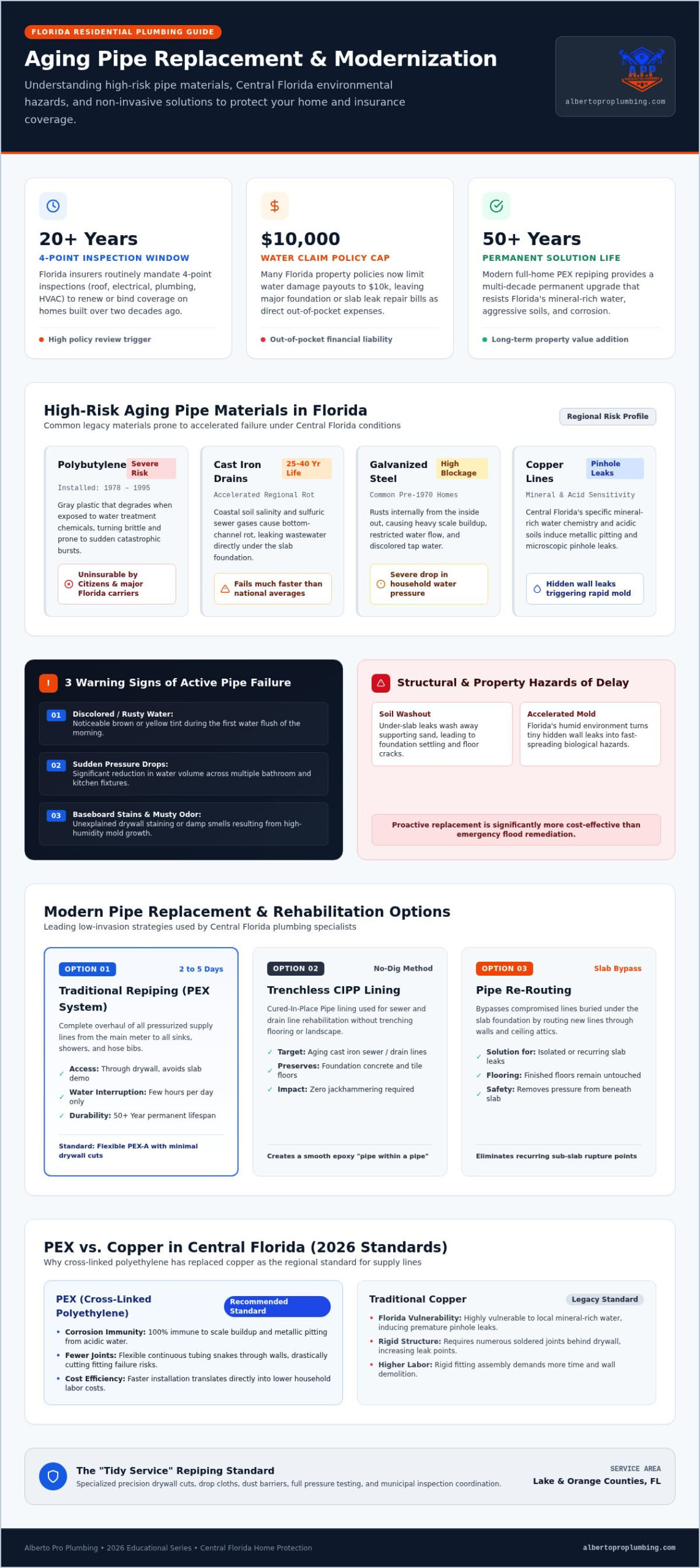
Polybutylene (Gray Plastic): Installed widely between 1978 and 1995, these pipes are often called a ticking time bomb. They react poorly to water treatment chemicals, becoming brittle and prone to sudden bursts. Most Florida insurers, including Citizens Property Insurance, consider these virtually uninsurable unless they are fully replaced.
Cast Iron Drains: While cast iron is durable elsewhere, Central Florida’s coastal soil salinity and sulfuric sewer gases accelerate corrosion. We typically see these pipes fail within 25 to 40 years, which is significantly shorter than the national average. This leads to bottom-channel rot where wastewater leaks directly into the soil beneath your slab.
Galvanized Steel and Copper: Homes built before 1970 often rely on galvanized steel, which rusts from the inside out, restricting water flow. Even modern copper lines aren’t immune; Central Florida’s specific water chemistry often causes pitting or tiny pinhole leaks that are difficult to detect until they’ve caused significant damage.
Is Your Central Florida Home at Risk?
If your home was built more than 20 years ago, you’re likely entering the window for potential pipe failure. Florida property insurers now routinely require a 4-Point Inspection, covering roof, electrical, plumbing, and HVAC, to bind or renew coverage for homes of this age. You should watch for these warning signs:
- Discolored or rusty water during the first flush of the day.
- A noticeable drop in water pressure across multiple fixtures.
- Unexplained wall stains or a musty smell near baseboards.
The Dangers of Delayed Replacement
Procrastination can be costly. A small leak under a Florida slab-on-grade foundation doesn’t just waste water; it can wash away the supporting soil, leading to structural cracks. In our high-humidity climate, even a minor pinhole leak inside a wall can trigger rapid mold growth. Many Florida policies now enforce a $10,000 cap on water damage claims, meaning a major failure could leave you with significant out-of-pocket expenses. Planning a proactive replacement is always more affordable than reacting to a catastrophic burst.
Traditional Repiping: The Full System Overhaul
A whole-home repipe is the most comprehensive choice among old pipe replacement options Florida families evaluate. This process involves replacing every pressurized supply line in your home, from the main water meter to your kitchen sinks, showers, and outdoor hose bibs. When comparing various old pipe replacement options Florida residents often find that a full system overhaul provides the highest long-term return on investment. While it sounds like a massive undertaking, modern techniques allow us to complete most jobs by accessing your plumbing through the walls rather than jackhammering your floors. This approach is widely considered a permanent, 50 plus year solution that adds significant value to your property.
PEX vs. Copper in 2026
By 2026, PEX (cross-linked polyethylene) has firmly established itself as the Florida standard for residential supply lines. While copper was the go-to for decades, our local mineral-rich water and high soil acidity often cause it to fail prematurely through pinhole leaks. PEX is naturally resistant to corrosion and scale buildup, making it far more reliable in our Central Florida environment. It’s also flexible, which allows for faster installation and fewer joints. This efficiency translates to lower labor costs for you. For a deeper dive into the technical details, see our guide on Whole Home Repipe in Clermont, FL.
What to Expect During Installation
We understand that having workers in your home can be stressful. Most repiping projects for a standard single-family home take between two and five days to complete. You won’t be without water the entire time; we typically only turn off the main supply for a few hours each day while making final connections.
Our team takes great pride in our “Tidy Service” promise. We use specialized tools to make precise, minimal cuts in your drywall. We also use drop cloths and dust barriers to protect your furniture and flooring. Once the new lines are in place, we perform rigorous pressure testing and coordinate the necessary municipal inspections. You can rest easy knowing your home is left in its original condition. If you’re ready to stop worrying about recurring leaks, our professional repiping service offers the peace of mind your family deserves.
Trenchless Pipe Lining: The ‘No-Dig’ Alternative
For many homeowners in Clermont and the surrounding Lake County area, the thought of a backhoe tearing up a manicured lawn or a custom pool deck is a nightmare. This is where trenchless technology shines. As you evaluate old pipe replacement options Florida, you’ll find that Cured-In-Place Pipe (CIPP) lining offers a way to rehabilitate failing sewer and drain lines without the destructive excavation typically associated with plumbing repairs.
The process involves inserting a flexible, resin-saturated liner into the existing pipe. Once in place, the liner is inflated and allowed to cure, creating a brand-new, seamless pipe within the old one. This epoxy-based solution is ideal for addressing the bottom-channel rot common in Florida’s cast iron drains. However, it’s not a universal fix. Lining is designed for gravity-fed waste lines, not high-pressure supply pipes. Additionally, if your pipe has already completely collapsed or has a significant structural “belly,” traditional replacement might still be necessary.
The Science of Epoxy Lining
We typically categorize lining as either structural or non-structural. Structural lining actually reinforces the host pipe, allowing it to withstand the pressure of shifting Florida soil and heavy root intrusion. These liners are incredibly durable. Most industry standards suggest a lifespan of 50 years, which rivals the longevity of brand-new PVC. If you’re looking for similar “no-dig” solutions for other parts of your property, you can also learn about Septic Drain Field Rehab to save your system without total replacement.
Pros and Cons of Trenchless Tech
The most significant advantage is the preservation of your property. By avoiding the need to jackhammer your concrete slab or dig up your driveway, you can save between 30% and 50% on total restoration costs once surface repairs are factored in. Most trenchless projects are also incredibly fast, with many sewer laterals rehabilitated in just a single day.
On the flip side, the per-foot cost of the epoxy materials and specialized equipment is higher than traditional PVC. You’re paying for the technology and the convenience of keeping your home intact. When the alternative involves replacing thousands of dollars worth of specialty tile or imported sod, the value of trenchless becomes very clear. We always recommend a sewer camera inspection first to see if your lines are a candidate for this modern remedy.
Pipe Re-routing: Solving the Florida Slab Leak
Most homes in Clermont are built on concrete slabs. When a copper supply line fails beneath that foundation, you face a tough choice. You can jackhammer through your living room tile, or you can choose one of the most effective old pipe replacement options Florida contractors recommend: pipe re-routing. This method involves abandoning the compromised lines buried in the dirt and running fresh, modern PEX lines through your attic or wall cavities. It’s a strategic move that saves your foundation from structural stress. It also protects your expensive interior finishes.
Strategic abandonment is a key part of this process. We don’t just leave the old pipes open; we properly seal them to prevent soil erosion or the formation of small voids under your slab. This prevents future settling or sinkhole concerns that can occur if water continues to move through the old, failed network. For many homeowners, re-routing one or two problematic lines is a much more cost-effective solution than a full slab repair or a complete system overhaul.
When Re-routing is Better Than Replacement
Re-routing is particularly effective when you have a localized failure but aren’t ready for a full repipe. If you’ve invested in high-end hardwood or custom tile, slab access will destroy your home’s aesthetics. By choosing to re-route, we isolate the problem area without touching your floors. If you suspect a slab leak right now, don’t wait for the water bill to spike. Check our Emergency Plumbing Repair services for immediate assistance.
The Re-routing Process Step-by-Step
The journey begins with professional leak detection. We use electronic equipment to pinpoint the failure without making a single hole. Once we identify the line, we map out a new path, usually through the attic space. We use flexible PEX-A piping. This material handles Florida’s temperature swings and water chemistry much better than the original copper. After the new line is connected to your fixtures, we decommission the old pipe. We seal the ends to prevent any future moisture issues. This surgical approach is faster and often more affordable than a direct slab repair.
You get a brand new section of plumbing that’s immune to the soil-based corrosion that caused the first leak. If you’re dealing with a damp spot on your floor or a warm patch of carpet, contact a local expert today to protect your home’s foundation and restore your peace of mind.
Comparing Your Options: Which Is Right for You?
Choosing between the various old pipe replacement options Florida homeowners have available depends on your specific goals, the age of your home, and your budget. While a full repipe offers the most comprehensive peace of mind, trenchless lining or strategic re-routing might be the smarter choice if you’ve recently invested in high-end flooring or landscaping. Every home in Lake County is different, and what worked for your neighbor might not be the right fit for your foundation.
| Method | Typical Mess | Expected Lifespan | Best For |
|---|---|---|---|
| Traditional Repipe | Moderate (Wall cuts) | 50+ Years | Systemic failure of supply lines |
| Trenchless Lining | Minimal (No digging) | 50 Years | Cast iron drain and sewer rot |
| Pipe Re-routing | Low (Attic access) | 50+ Years | Isolated slab leaks under floors |
You should also consider the “Florida Tax” on plumbing repairs. Our monolithic concrete slabs and sandy, shifting soil make traditional under-slab repairs far more expensive here than in states with basements. However, the return on investment for modernizing your pipes is significant. Beyond preventing a catastrophic flood, a professional update ensures you pass your next 4-point insurance inspection and can even lower your annual premiums. In 2026, an uninsurable home is a home that’s difficult to sell.
Decision Checklist for Homeowners
Ask yourself these three questions before committing to a path:
- Is the damage localized or systemic? If you’ve had three leaks in two years, it’s time for a full repipe rather than a patch.
- What is the pipe material? Polybutylene and thin-walled copper are high-risk materials that usually require a complete system overhaul to satisfy insurers.
- How much disruption can you tolerate? If you work from home or have small children, trenchless or re-routing options offer the fastest, quietest results.
Next Steps with Alberto Pro Plumbing
We’re here to help you navigate these choices with honesty and technical expertise. Our Clermont-based team starts with a comprehensive inspection, using leak detection technology to see exactly what’s happening inside your walls and under your floors. We provide clear, neighborly advice tailored to Central Florida’s unique construction styles. Once your new system is in place, our Home Protection Membership provides ongoing maintenance to keep your investment safe for decades to come. Contact us today for a professional estimate and take the first step toward a leak-free home.
Secure Your Home’s Future with Modern Plumbing
Modernizing your infrastructure is about more than just fixing leaks; it’s about protecting your investment and ensuring your family’s comfort for decades. By exploring the right old pipe replacement options Florida homeowners have today, you can avoid the high costs of foundation repairs and the stress of insurance cancellations. Whether you choose a full PEX repipe or a trenchless solution, you’re making a proactive choice for your property’s value and safety.
Alberto Pro Plumbing brings family-owned local expertise to every project in Clermont. We understand the specific challenges of Central Florida’s soil and slab construction. Our team provides 24/7 emergency support for those high-stress moments, and we back our work with a tidy service guarantee. We promise to leave your home exactly as we found it, but with much more reliable plumbing beneath the surface.
Schedule your professional pipe inspection with Alberto Pro Plumbing today! Don’t wait for a small drip to become a major disaster. Take control of your home’s health and enjoy the peace of mind that comes with a job well done by your local specialists.
Frequently Asked Questions
How much does it cost to replace old pipes in a Florida home?
The total investment for pipe replacement varies based on your home’s size, the number of fixtures, and the chosen material. While PEX is generally the most cost-effective path, the complexity of your home’s architecture in Clermont determines the final labor requirements. We provide customized, neighborly estimates after a thorough inspection of your plumbing system. This ensures you receive an accurate price based on the actual condition of your pipes and foundation.
Will my Florida homeowners insurance pay for pipe replacement?
Most standard Florida policies cover the accidental water damage caused by a leak and the cost to access the pipe, but they rarely pay for the replacement pipe itself. Insurers often place a $10,000 cap on interior water damage claims. If your home has polybutylene or aging cast iron, your carrier might actually require replacement as a condition for renewing your coverage or passing a 4-Point inspection.
What are the signs that my pipes are failing under the slab?
Look for warm spots on your flooring, damp carpets, or a sudden increase in your monthly water bill. You might also hear the sound of running water when all your faucets are off. These issues often stem from pinhole leaks in copper lines or bottom-channel rot in cast iron. Professional leak detection is the only way to confirm a slab leak without invasive guesswork in your home.
Is trenchless pipe lining as good as replacing the pipes entirely?
Trenchless CIPP lining is an excellent, long-lasting solution for drain and sewer lines, often lasting 50 years. It’s one of the most popular old pipe replacement options Florida residents choose because it creates a seamless pipe that resists root intrusion. While it’s as durable as new PVC, it isn’t suitable for high-pressure supply lines. For those pressurized systems, a traditional PEX repipe remains the best path for permanent reliability.
How long does a whole-house repipe take in Central Florida?
A typical whole-house repipe for a single-family home in Clermont usually takes between two and five days. The exact timeframe depends on the complexity of your home’s architecture and the total number of bathrooms. We work methodically to minimize downtime. You’ll only be without water for a few hours each day while we transition your fixtures to the new, reliable system we’ve installed.
Can I stay in my house while the pipes are being replaced?
Yes, most homeowners stay in their homes throughout the entire process. We prioritize your comfort by maintaining a clean workspace and ensuring you have water service every evening. Our tidy service guarantee means we use drop cloths and dust barriers to protect your living space. We treat your property with the same respect we’d show a neighbor’s home, ensuring your daily routine remains as normal as possible.
What is the best pipe material for Florida’s hard water?
PEX (cross-linked polyethylene) is the superior choice for old pipe replacement options Florida homeowners consider in 2026. It’s naturally resistant to the scale buildup and pitting caused by our mineral-rich, hard water. Unlike copper, PEX won’t develop pinhole leaks due to chemical reactions. Its flexibility also allows for fewer connections, which significantly reduces the risk of future leaks in your walls and provides a much faster installation process.
Do I need to replace my cast iron sewer lines if they aren’t leaking yet?
Proactive replacement is often necessary because cast iron in Central Florida has an observed lifespan of just 25 to 40 years. Even if you don’t see a leak, the bottom of the pipe might be paper-thin due to sulfuric gases and acidic soil. Replacing or lining these pipes now prevents a catastrophic backup and ensures you pass the mandatory 4-point inspections required by many insurers to maintain your coverage.