
The simpler-looking choice isn’t always the less costly one: keeping a septic system may involve replacement work, while connecting to sewer can add a lateral, connection fees, and septic-tank decommissioning. The septic-to-sewer conversion cost in Clermont depends on the property’s layout and the work required to connect it. In Florida, the full process typically takes 4 to 12 weeks from application through activation, with 2 to 5 days of active work.
It’s reasonable to want a clear budget and timeline before deciding what to do with an aging or failing system. The septic to sewer conversion cost in Clermont depends on the connection work and site conditions; compare that scope with the installation needs and ongoing responsibilities of a replacement septic system.
This guide explains the main cost factors, what can affect the schedule, and which Orange County permits apply. You’ll also see how a sewer connection compares with replacing a septic system, so you can weigh the trade-offs before planning the work.
Key Takeaways
- Plan for both active construction and the wider approval-to-activation timeline: these are different parts of a sewer conversion.
- See how distance to the sewer main, site conditions, and required equipment can shape the connection work and total project cost.
- Understand which Orange County permits apply to a sewer lateral and septic-system abandonment before work begins.
- Compare sewer conversion with septic replacement by weighing installation needs alongside ongoing maintenance.
How long does a septic to sewer conversion take in Florida?
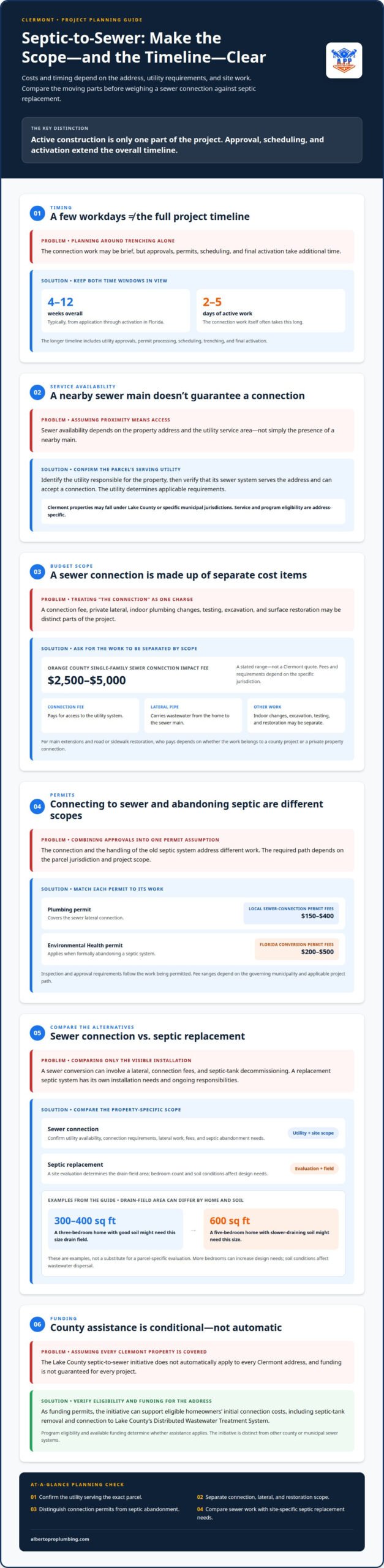
In Florida, a complete sewer conversion typically takes 4 to 12 weeks from application through activation. The connection work itself often takes 2 to 5 days. Utility approvals, permit processing, scheduling, trenching, and final activation account for the longer overall timeline.
For a Clermont property, sewer availability depends on the address and the utility service area. The serving utility determines whether a sewer main can accept a connection and what requirements apply. First identify the utility responsible for the parcel, then confirm whether its sewer system serves that address. A nearby main alone does not mean a connection is available.
Lake County’s septic-to-sewer conversion initiative can fund eligible homeowners’ initial connection costs as funding permits. It supports septic-tank removal and connection to the county’s Distributed Wastewater Treatment System. Eligibility and available funding determine whether assistance applies, and the program does not automatically cover every Clermont address. County or utility staff handle program eligibility; a licensed, insured Florida plumber handles permitted plumbing work.
Field size and bedroom count matter most when comparing a sewer connection with septic replacement. A three-bedroom home with good soil might need a 300-to-400-square-foot drain field; a five-bedroom home with slower-draining soil might need 600 square feet. More bedrooms can increase design needs, while soil conditions affect how wastewater disperses. A site evaluation determines the drain-field area required for a replacement system.
Clermont property owners should base soil decisions on the parcel’s evaluation, not assumptions about all of Clermont or Lake County. Sewer service also depends on the system serving that specific address; Lake County’s wastewater initiative is distinct from other county or municipal sewer systems. The City of Milford’s wastewater plant and mains serve Milford, not Clermont. Grants or subsidies therefore hinge on location, program eligibility, and available funding, while a contractor coordinates the connection work with the responsible utility and permitting department.
Plumbing and sewer lateral connection costs
For main extensions and road or sidewalk restoration, payment depends on whether the work is part of a county project or a private property connection.
Connection Fees and Lateral Pipe Costs
A sewer connection fee pays for access to the utility system, while the lateral carries wastewater from the home to the sewer main. Both affect the project budget: distance, connection charges, and indoor plumbing changes can add separate costs.
Orange County’s single-family sewer connection impact fee typically ranges from $2,500 to $5,000, so don’t treat statewide figures as a Clermont quote.
County Payment of Initial Connection Costs
County assistance can reduce eligible homeowners’ upfront connection expense, depending on the program and available funding. Lake County’s conversion initiative covers initial connection costs for eligible properties as funding permits.
The initiative supports septic-tank removal and connection to Lake County’s Distributed Wastewater Treatment System. Clermont property owners should distinguish this county program from a private connection project: eligible Lake County projects may receive initial-cost funding, but the program does not establish who pays for every Clermont road extension or sidewalk repair.
Testing, Excavation, and Installation Costs
Testing, trenching, and installation are separate project components, and site conditions affect each one.
Ask the project team to separate the private lateral, public main extension, and surface restoration in the scope. The responsible payment arrangement depends on the project boundary and county funding; eligible Lake County assistance applies to its conversion initiative. For a property with damaged sewer piping, sewer line repair may address that separate issue.
What Permits Does Orange County Require for Sewer Connection?
While Clermont properties often fall under Lake County or specific municipal jurisdictions, projects transitioning from septic to sewer near these boundaries or within overlapping service zones may involve regional utility requirements. Depending on your exact parcel jurisdiction, a sewer lateral connection typically requires a local plumbing permit, and proper septic abandonment requires an Environmental Health permit. Permit, testing, excavation, and installation costs are separate project items that Alberto Pro Plumbing helps homeowners navigate.
Connection Permits and Inspections
The plumbing permit covers the sewer lateral connection, while an Environmental Health permit applies when homeowners formally abandon a septic system. These approvals address different work: making the connection and handling the old system. Local sewer-connection permit fees generally range from $150 to $400, depending on the governing municipality. Florida septic-to-sewer conversion permit fees typically range from $200 to $500. The project’s permit path depends on whether it includes only a connection or also septic abandonment. Inspection and approval requirements follow the work being permitted, so connection and abandonment should be treated as distinct parts of the project.
Testing and Permit Fees
Testing and permit fees cover separate parts of a utility transition or replacement, affecting the project budget before installation begins. Those figures apply to specific site evaluations, not automatically to a standard sewer hookup. A new system needs a site evaluation for its drainfield, while a sewer connection follows the plumbing-permit route. Keeping the scopes separate helps homeowners understand why permits for repairing a failing septic system differ from sewer-connection approvals managed by local authorities.
Existing Septic Tank Handling
During a sewer conversion executed by professionals like Alberto Pro Plumbing, the existing septic tank is abandoned rather than left in service. Florida regulations require an abandoned tank to be pumped out and filled with sand or gravel, or collapsed and buried. This work matters because the unused tank remains underground after the home connects to the municipal sewer. Include tank abandonment in the project scope alongside the Environmental Health permit; it is separate from installing the sewer lateral. For traditional septic replacement, the drainfield permit and site evaluation address the new system’s location and design.
Comparing sewer conversion with a new septic system
The choice comes down to access to public wastewater service, the condition of the existing system, and the property’s needs. Compare the full installation scope and ongoing maintenance, not just the initial project estimate.
That option keeps wastewater treatment on the property, but the design depends on the ground, site conditions, and required treatment level. An assessment helps determine whether the lot can support a replacement layout and what equipment the design requires.
Sewer conversion replaces onsite treatment with a connection to a public system. It can remove the need for septic-tank pumping, but utility bills become part of ongoing household costs. Compare those recurring charges with the maintenance needs of a functioning septic system.
A drainfield typically lasts 15 to 30 years when well maintained, so the system’s age and condition affect the comparison. A replacement may be practical when the tank and drainfield can be designed for the property; sewer may suit a home with accessible service and a failing system.
Soil conditions matter, too. Limited suitable ground can constrain a replacement drainfield, while a sewer connection depends on utility access and the route from the home. These options suit different sites, so their budgets are not interchangeable.
For Clermont homeowners, the clearest decision follows an assessment of the existing septic system, the available sewer connection, and expected maintenance. If a drainfield’s condition is central to that choice, schedule septic drainfield service to discuss the property’s needs.
Alberto Pro Plumbing: Septic Drain Fields
Alberto Pro Plumbing provides plumbing services for issues that arise while you assess septic or sewer options. Leak Detection & Repiping and drain cleaning can address related problems such as leaks and slow drains inside your home.
These services don’t replace a site assessment or determine whether your property can connect to public sewer. They can help resolve plumbing problems that affect your household while you consider the condition of your septic system and the next step. For urgent plumbing issues, Emergency Plumbing is also available.
Contact Alberto Pro Plumbing to discuss a plumbing concern related to your home.
Make a Clear Plan for Your Property
Turn the comparison into a property-specific decision. Septic to sewer conversion cost in Clermont is only one consideration, alongside your existing system’s condition, the work your lot can support, and wastewater service at your address. Use these details to focus discussions with the relevant utility and contractor, and keep the proposed connection or replacement scope clear.
Consider how your household wants to manage maintenance over time, not just the immediate construction. Your plan can also account for plumbing concerns that need attention while you decide. Alberto Pro Plumbing can help with related issues, including leaks, drainage problems, and repiping needs.
Contact Alberto Pro Plumbing to discuss a plumbing concern and identify a sensible next step for your home. With the right information in hand, you can move forward with greater confidence.
Frequently Asked Questions
Will converting to sewer increase my property value?
A sewer connection may affect buyer interest, but it does not guarantee a higher sale price in Clermont. Buyers may weigh reliable wastewater service against connection expenses, ongoing utility bills, and the property’s overall condition. The result depends on the home and local market, so treat sewer access as one factor in a property valuation, not a promised return on conversion spending.
Can I be forced to connect to sewer in Florida?
Some Florida counties and municipalities require a sewer hookup when a main is extended within 300 to 500 feet of a property. That doesn’t establish a statewide rule for every Clermont homeowner. Whether a connection is required depends on the local authority’s requirements and the property’s circumstances. A written connection notice from the responsible utility or county can clarify the applicable requirement and deadline.
How Much Do Impact Fees, Abandonment, and Plumbing Really Cost?
On the market, septic-to-sewer conversions typically range from $12,000 to $17,000, with a median of about $13,000. That range isn’t a Clermont-specific quote. The total depends on the connection route, utility charges, septic abandonment, plumbing changes, and restoration. Ask for a project scope that separates these components, so you can see what drives the estimate rather than relying on one headline figure.
Is It Ever Worth Keeping Your Septic System Instead?
Yes, keeping septic can make sense if the system is functioning, the property can support continued onsite treatment, and sewer access offers little practical advantage. Consider the system’s condition, maintenance needs, household plans, and potential future repairs together. For example, a homeowner with a sound tank and usable drainfield may reasonably compare continued care with the cost and disruption of a sewer connection.
What happens to my drain field after conversion?
After conversion, household wastewater no longer flows to the septic system’s drainfield. The field remains on the property but no longer serves as the home’s active wastewater treatment area. Its condition and location may matter for future property work, so the conversion plan should identify where the field lies and how the work affects the surrounding yard.
What is the average cost to convert from septic to sewer in Clermont, Florida?
The market range is $12,000 to $17,000, with a median of about $13,000; these figures aren’t a confirmed average for Clermont alone. The septic-to-sewer conversion cost in Clermont depends on the property’s connection distance, utility charges, site access, and required work. A clear estimate should distinguish the sewer connection from septic-system abandonment and property restoration.