
High water pressure can strain plumbing even when every tap seems to work normally. In Clermont, structures with water pressure of 80 psi or higher require a pressure-reducing valve, and water pressure regulator replacement in Clermont may be needed if that valve can no longer control pressure. You’ll usually find the regulator on the main water line near the home’s main shutoff.
A weak stream at one faucet doesn’t always mean the regulator is failing. A closed valve, pinched supply line, or clogged aerator can cause a local pressure problem, while excessive pressure may lead to leaks, pipe noise, or fluctuating flow. Before deciding on a repair, it helps to understand what may be happening.
This guide explains common causes of low and high water pressure, how to spot an existing regulator, and what signs suggest it needs replacement. You’ll learn why pressure readings matter and how to distinguish a regulator problem from an issue at one fixture, so you can choose a practical next step for your Clermont home.
Key Takeaways
- Compare pressure at several fixtures to help tell whether the issue is localized or affects the home’s plumbing system.
- Check simple causes such as a partly closed shutoff valve, a pinched supply line, or a clogged faucet aerator.
- Locate the regulator near the main water line and look for pressure changes, leaks, or pipe noise that may signal a problem.
- A pressure gauge can help show whether the regulator is working properly and whether replacement may be needed.
Common causes of low water pressure
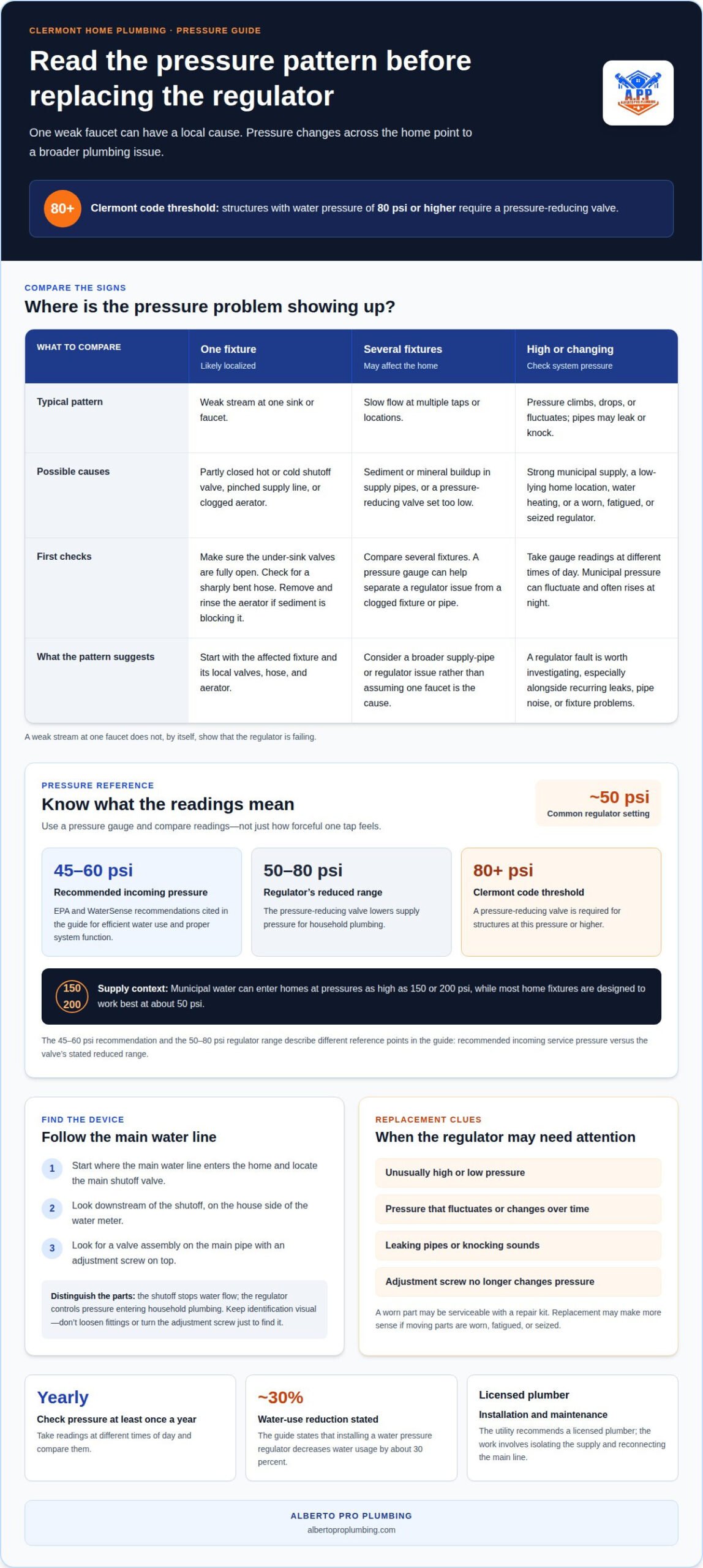
Start by comparing the affected faucet with other fixtures. Low pressure at one sink often points to a local obstruction, not a whole-home regulator failure. Check whether the hot and cold shutoff valves beneath the sink are fully open. A pinched supply line can also restrict flow, especially if a flexible hose bends sharply behind a cabinet.
Next, inspect the faucet aerator. Sediment can block its small openings and weaken the stream; removing and rinsing the aerator may restore flow. If several fixtures run slowly, mineral or sediment buildup inside the supply pipes could be restricting water throughout the home. A pressure-reducing valve set too low is another possibility. Compare multiple taps before concluding the regulator is responsible.
Whether to repair or replace a regulator depends on its condition. Manufacturers often offer repair kits, so a worn part may be serviceable. Replacement may make more sense if the moving parts are worn, fatigued, or seized, or if the adjustment screw no longer changes pressure. A pressure gauge can help distinguish a regulator fault from a clogged fixture or pipe.
For the Florida plumbing-code question, the stated Clermont requirement is specific: building codes require a pressure-reducing valve for structures with water pressure of 80 psi or higher. This does not establish a blanket rule for every Florida property. The utility recommends using a licensed plumber for regulator installation and maintenance.
Can a homeowner replace a regulator? For installation and maintenance, follow the utility’s recommendation to use a licensed plumber. The work involves isolating the water supply and reconnecting the main line, so correct installation matters.
There’s no single replacement time that fits every home. Access to the main line, the shutoff’s condition, pipe corrosion, and connection type all affect the work. A clear, accessible installation differs from one with seized fittings or deteriorated pipework.
The pattern helps narrow the possibilities: if one tap is affected, focus on its hot and cold valves. Weak flow at multiple locations may signal a larger issue. Sediment lodged in an aerator’s small holes can also reduce flow, so it’s worth checking this small component.
High water pressure in the home
For a Clermont home, aim for pressure that serves fixtures without overloading pipes. According to the U.S. Environmental Protection Agency, home fixtures operate best with incoming water pressure between 45 and 60 psi. WaterSense recommends incoming service pressure of 45 to 60 psi for efficient water use and proper system function, according to the U.S. Environmental Protection Agency. A pressure gauge provides a reading to compare with these recommendations.
Pressure above 80 psi can put excessive stress on household plumbing. In Clermont, building codes require a pressure-reducing valve for structures with water pressure of 80 psi or higher. The valve reduces supply pressure to a range of 50 to 80 psi. A regulator’s setting matters: too high can strain plumbing, while a low setting can leave taps with weak flow.
High pressure may come from a strong municipal supply, a home’s low-lying location, or water expanding as it heats. A regulator’s spring-loaded valve controls downstream pressure, but its moving parts can wear, fatigue, or seize. A failing regulator can cause pressure to climb, drop, or fluctuate. Leaks, knocking pipes, and recurring fixture problems deserve attention, even if water still flows.
Take readings at different times of day because municipal pressure can fluctuate and often rises at night. Test at least once a year, and compare readings rather than relying on how forceful a single tap feels. Pressure around 50 psi is a common regulator setting, though preference also plays a part. If pressure is excessive, avoid turning the adjustment screw without understanding the result. If a fixture itself is damaged, fixture installation support may be relevant.
These devices reduce pressure from the utility distribution system for household plumbing and fixtures, while also protecting against pressure surges. Municipal water supplies can enter homes at pressures as high as 150 or 200 psi, while most home plumbing fixtures are designed to work best at about 50 psi. A regulator is installed where the main water line enters the home, just after the main shutoff valve.
Fluctuating pressure, unusually high or low pressure, leaking pipes, or knocking sounds from pipes are reasons to consider replacing a water pressure regulator. Installing a water pressure regulator is stated to decrease water usage by about 30 percent, while also controlling supply pressure and protecting household fixtures.
How to identify an existing regulator
Start at the point where the main water line enters your Clermont home. Follow the pipe from the main shutoff valve and look just downstream, on the house side of the water meter. A regulator is installed on this incoming line, not beneath an individual sink or beside one faucet.
Look for a valve assembly in the main pipe with an adjustment screw on top. The screw is a useful clue: a home pressure regulator uses a spring-loaded valve, and turning the screw changes downstream pressure. Don’t mistake the main shutoff for the regulator. The shutoff stops water flow; the regulator controls pressure entering household plumbing.
If you can’t see the device, trace the incoming pipe through the accessible area near the meter, such as a utility space or exterior wall. Keep your search visual. Don’t loosen fittings or turn the adjustment screw just to identify the part. Insulation, stored items, or other pipework may partly obscure a regulator, so clearing access can make the assembly easier to recognize.
For a new installation, the usual position is downstream of the water meter, on the house side near the home. This helps distinguish a private plumbing regulator from equipment on the utility side. If you find a valve assembly but aren’t sure what it does, note its position relative to the meter and main shutoff before describing it to a plumber.
Choose a regulator size to match the incoming water line, not the home’s exterior size. The line diameter and the home’s flow needs guide selection; an incorrectly sized unit may not serve fixtures as intended.
A pressure gauge can be attached at a suitable fixture to measure household pressure. The reading helps assess the regulator’s operation, but it won’t identify the device by itself. Pair the measurement with a visual check of the main line, shutoff, meter, and adjustment screw for a clearer identification.
How to tell if a water pressure regulator needs replacement
A pressure gauge is the surest way to test a regulator’s operation. Take readings at a suitable fixture and note whether pressure stays steady or changes unexpectedly. Compare readings from more than one location to see whether the issue affects the home’s plumbing or just one fixture. A single weak faucet can have a local cause, so don’t diagnose the regulator from that symptom alone.
Look for patterns that point to regulator trouble. Pressure that fluctuates across the home, becomes unusually high or low, or changes without an obvious fixture issue deserves attention. Leaking pipes and knocking or rattling sounds are also warning signs. A faulty regulator can create abnormal pressure in either direction, so a strong stream doesn’t prove the system is working correctly.
An adjustment screw that no longer changes pressure may signal regulator failure. Don’t keep turning it to force a response. Internal moving parts can wear, fatigue, or seize, preventing normal control. For water pressure regulator replacement in Clermont, pressure readings and the regulator’s response can help distinguish a failed valve from another plumbing issue.
Age adds useful context. A regulator can last four to 12 years in a healthy plumbing system, while most manufacturers recommend replacement about every five years. These are guidance points, not a substitute for testing. A newer valve can fail, and an older one may still function, so base the decision on pressure readings, visible leaks, and the device’s response. Consider water pressure regulator replacement in Clermont when those checks indicate the unit can no longer control pressure.
Before arranging work, write down when symptoms occur, which fixtures are affected, and any gauge readings. Note whether pipe noise happens during normal use or after a fixture closes. These details help narrow the cause and distinguish a regulator problem from another plumbing fault.
If your readings or symptoms point to regulator trouble, arrange a plumbing assessment to identify the next repair step.
Alberto Pro Plumbing: Emergency Plumbing
Alberto Pro Plumbing provides Emergency Plumbing for urgent plumbing problems, including active leaks alongside sudden pressure changes. If you see water escaping from a pipe, shut off the home’s main water supply if it’s safe to do so, then seek plumbing help. Leak Detection can help locate a hidden leak, while Repiping may address broader pipe deterioration. These services fit situations where pressure symptoms point beyond an adjustment issue. For a single fixture with a clogged aerator, start with that local cause rather than treating it as a whole-home emergency.
Keep your pressure readings and notes about affected fixtures ready. They can help you explain the problem and guide the next step.
Contact Alberto Pro Plumbing or visit albertoproplumbing.com to discuss your plumbing concern.
Plan a clear next step for your home
Make your next plumbing decision based on evidence, not guesswork. Keep a brief record of pressure readings, changes you notice, and any water escaping around pipes or fixtures. This gives the conversation a practical starting point and helps prevent a small symptom from becoming an overlooked household concern. Avoid forcing an adjustment screw when the regulator’s response is unclear.
If your observations point to a regulator problem, discuss whether repair or water pressure regulator replacement in Clermont fits the equipment’s condition. Alberto Pro Plumbing can help assess the plumbing issue and identify an appropriate next step. A calm, informed decision can protect your home’s plumbing and make it easier to plan the work around your household needs.
Contact Alberto Pro Plumbing to talk through your water pressure concern and move forward with confidence.