
The right grease trap is sized by kitchen flow, not guesswork. A restaurant grease trap installation in Clermont should account for connected fixtures, their flow rates, kitchen operations, and local requirements. For a gravity interceptor, Florida’s sizing method multiplies peak drain flow in gallons per minute by a 30-minute retention time.
It’s easy to focus on the equipment and overlook what happens downstream. A properly sized, maintained grease-control system helps keep fats, oils, and grease out of plumbing, where they can contribute to clogs and backups. This guide covers sizing factors, practical maintenance, and how local FOG requirements affect compliance. You’ll also learn how installation choices can help protect the sewer system and keep kitchen drainage working reliably.
Key Takeaways
- Set a maintenance schedule around your kitchen’s grease output and operating practices, and use buildup inspections to guide service timing.
- Size equipment by assessing connected fixtures, flow rates, and how the kitchen runs, rather than choosing a trap by capacity alone.
- Understand the grease-control and service-record requirements that apply to commercial kitchens discharging to the sanitary sewer.
- Keep fats, oils, and grease out of drains with a properly installed system, and address drainage trouble before it leads to a larger disruption.
Maintenance frequency based on facility needs
Set maintenance around the kitchen’s grease output, operating practices, and equipment instructions. A high-volume kitchen producing frequent fried foods can accumulate FOG faster than one with lighter cooking operations. Inspect the trap or interceptor regularly, then adjust service timing based on what inspections show. Routine maintenance keeps the system working properly, while scheduled pumping removes accumulated grease that can contribute to blockages and malfunctions.
Use buildup as a practical trigger, not as a substitute for local rules or manufacturer directions. The 25% grease and 20% solids thresholds can guide inspections only where they align with both. If the trap reaches either applicable threshold sooner than expected, reassess the schedule and the kitchen practices contributing to the accumulation. Effective Best Management Practices may also qualify a facility for reduced mandatory maintenance frequency.
After installation, start a service record and use inspections to build a practical maintenance plan. Record the date, visible grease and solids, pumping or cleaning performed, and any changes in drainage. These details help staff compare service intervals with actual kitchen operations instead of relying on memory. Keep records accessible to the people responsible for the kitchen and equipment.
- Inspect: Note grease and solids accumulation, the unit’s condition, and any change in drainage.
- Pump: Arrange scheduled removal when buildup or applicable requirements call for service.
- Adjust: Shorten or extend the inspection plan according to observed FOG output and Best Management Practices.
- Protect access: Keep the trap accessible for maintenance; an interceptor outside needs a clear route for inspection and pumping.
Good daily habits support the maintenance schedule. Scrape food scraps into waste containers, collect used cooking oil separately, and keep fats, oils, and grease out of kitchen drains. Train employees to follow the same steps on every shift. Together with inspection records, these practices help identify recurring buildup, plan pumping around actual conditions, and reduce avoidable strain on the drainage system.
Can You Install The Right Size Grease Trap For My Kitchen?
Yes. Proper sizing accounts for connected fixtures, flow rates, kitchen operations, and local requirements. Review these factors when planning equipment and placement before installation or replacement.
Commercial Installation and Replacement
Commercial installation or replacement starts with identifying grease-bearing fixtures and understanding how the kitchen operates. Planning restaurant grease trap installation in Clermont also means considering changes to sink layouts or cooking volume, which may make existing equipment unsuitable. Review drainage connections, access for cleaning and pumping, and signs of damage before choosing replacement equipment. These details help match the system to the restaurant’s daily needs.
Sizing and Placement
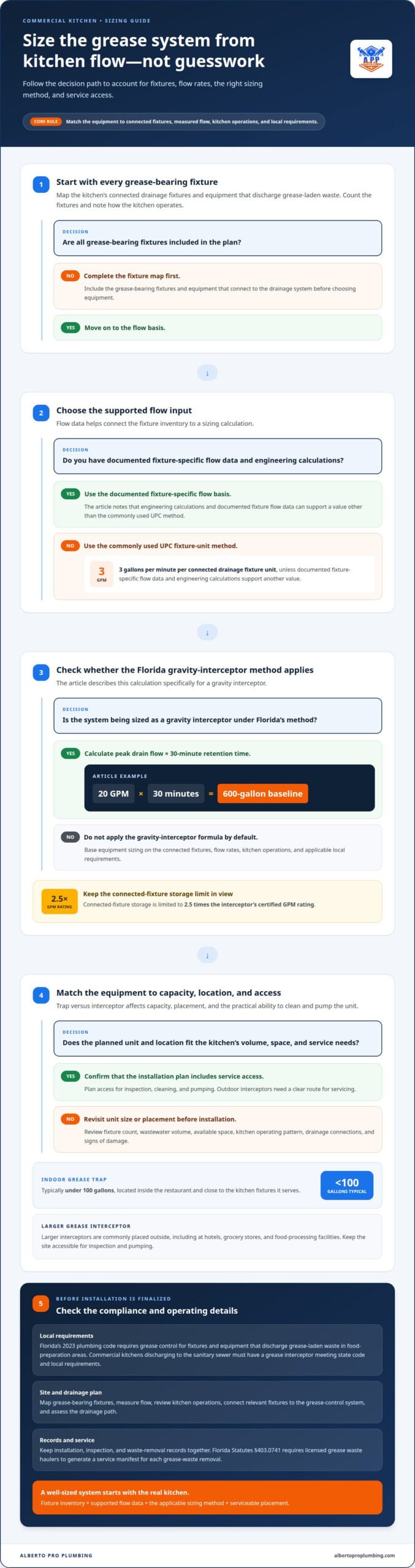
Count connected drainage fixtures and determine their flow rates. One commonly used Uniform Plumbing Code method assigns 3 gallons per minute per connected drainage fixture unit, unless documented fixture-specific flow data and engineering calculations support another value. Florida’s gravity-interceptor method uses peak drain flow multiplied by a 30-minute retention time. At 20 GPM, that produces a 600-gallon baseline; connected-fixture storage is limited to 2.5 times the interceptor’s certified GPM rating.
Indoor Traps and Outdoor Interceptors
Indoor grease traps are typically under 100 gallons and sit within the restaurant, close to the kitchen fixtures they serve. Larger grease interceptors are commonly placed outside, including at hotels, grocery stores, and food-processing facilities. The distinction affects capacity, placement, and access for cleaning and pumping. Match the system to fixture count, wastewater volume, available space, and the kitchen’s operating pattern.
Installation Steps and Site Requirements
For restaurant grease trap installation in Clermont, map grease-bearing fixtures, measure flow, and review kitchen operations. Then choose a suitable trap or interceptor and plan a location that allows inspection, cleaning, and pumping. Connect the relevant fixtures to the grease-control system and assess the drainage path. For an outdoor installation, leave clear site access for servicing the interceptor.
Local FOG regulations and compliance documentation
Florida’s plumbing code and local requirements guide grease control at food-service facilities. Keep installation, inspection, and waste-removal records together to document compliance.
Florida Plumbing Code and Local Permits
Florida’s 2023 plumbing code requires grease control for fixtures and equipment that discharge grease-laden waste in food-preparation areas, including restaurants and commercial kitchens. A compliant installation must account for those connected fixtures and applicable local requirements. Before work begins, identify the equipment involved and include it in the installation plan. Keep relevant inspection and permit records with facility documents.
Local FOG Compliance
Commercial kitchens discharging wastewater to the sanitary sewer must have a grease interceptor meeting state plumbing code and local requirements. Municipal grease controls help reduce sewer overflows caused by blocked drainage pipes. Florida Statutes §403.0741 requires licensed grease waste haulers to generate a service manifest for each grease-waste removal. Retain each manifest with the service date and facility records so staff can track removal and show how grease waste was handled.
Missing applicable requirements can put a restaurant out of compliance, while accumulated FOG can contribute to blocked drains and sanitary sewer overflows. Keep grease out of sinks, document service, and follow the requirements that apply to the facility.
Inspection, Cleaning, and Maintenance Requirements
Clermont facilities should plan inspections and service around FOG accumulation, equipment directions, and local rules. Florida jurisdictions often require pumping when FOG reaches about 25 percent of trap depth. Treat that threshold as a practical service trigger, not a replacement for applicable local requirements. Inspect the trap, note buildup, and arrange pumping when the relevant threshold or maintenance schedule calls for it.
After each removal, file the required manifest generated by the licensed hauler under Florida Statutes §403.0741. Record inspection findings and service dates alongside it. Effective Best Management Practices may qualify facilities for reduced mandatory maintenance frequency. Consistent records help food-service staff follow the right schedule and demonstrate that grease control is part of regular kitchen operations.
Grease trap installation and sewer protection
Grease traps protect kitchen drains and the sanitary sewer by capturing fats, oils, and grease before wastewater leaves the premises. Without that barrier, grease can cool, harden inside plumbing, and contribute to clogs, backups, and pollution. A working system protects both the restaurant’s drainage and the sewer network receiving its wastewater.
Installation must connect grease-bearing kitchen fixtures to a suitable grease-control system. Map sinks and other equipment that discharge greasy waste, then plan a route through the trap or interceptor before wastewater reaches the sanitary sewer. A missed connection can let FOG bypass treatment. Check the completed connections and water flow to confirm the system is integrated with the kitchen’s drainage path.
Placement matters after installation, too. An indoor trap needs accessible lids for inspection and cleaning, while an outdoor interceptor needs a clear route for service access. Keep access points clear of stored supplies, equipment, and landscaping. For example, a delivery cart parked over an interceptor lid can delay inspection and pumping when the unit needs attention.
Watch for early signs of drainage trouble: slow sinks, recurring odors, or wastewater backing up near connected fixtures. These symptoms can point to buildup or a blockage, but other plumbing issues may also be involved. Stop sending grease into drains, note which fixtures are affected, and arrange an inspection. Prompt attention can help prevent a kitchen drainage problem from becoming a sewer backup.
For persistent drain problems or concerns about sewer flow, request help with sewer line repair. A clear description of affected fixtures and drainage symptoms helps focus the assessment.
Alberto Pro Plumbing: Emergency Plumbing
Alberto Pro Plumbing can help when a kitchen drainage issue disrupts service or points to a plumbing problem. For a sudden backup or persistent clog, Emergency Plumbing and Drain Cleaning address urgent plumbing concerns. Leak Detection can help locate hidden water leaks, while Repiping addresses damaged or deteriorating pipes. Alberto Pro Plumbing’s plumbers are licensed and insured.
Share which fixtures are affected, when the problem began, and whether wastewater is backing up. These details help clarify the issue and the plumbing support needed. If grease buildup is suspected, keep additional fats, oils, and grease out of drains while the issue is assessed.
Contact Alberto Pro Plumbing to discuss a plumbing concern at your restaurant.
Plan a Stronger Start for Your Kitchen
Make grease control part of your kitchen’s operating plan, not an afterthought during a drainage disruption. Before work begins, consider how equipment access, staff routines, and service documentation will fit into daily operations. A clear plan helps your team keep the system accessible and maintain consistent practices as kitchen needs change.
For restaurant grease trap installation in Clermont, discuss how your fixtures and kitchen workflow affect the plumbing. Alberto Pro Plumbing provides commercial plumbing, including Emergency Plumbing, Leak Detection, and Repiping for concerns that can affect commercial operations. Choose support that fits the issue, whether you’re planning work or responding to a plumbing problem.
Contact Alberto Pro Plumbing today to discuss your kitchen’s plumbing needs. With a practical plan and the right support, you can move forward with greater confidence.
Frequently Asked Questions
Can You Maintain The System After Installation?
Yes. A restaurant can maintain its system by assigning staff to inspect accessible components, note drainage changes, and keep service records. Set the routine around grease accumulation, kitchen practices, equipment instructions, and local requirements. For example, a shift lead can record buildup and flag a slow sink. This gives management useful information for arranging service before a drainage disruption affects kitchen operations.
Do You Work On All Types And Brands Of Grease Traps?
Equipment compatibility depends on the specific model, connections, capacity, and kitchen layout, so trap types and brands aren’t automatically interchangeable. Alberto Pro Plumbing provides commercial plumbing, and its plumbers are licensed and insured. For a restaurant project, equipment details help define the plumbing work and determine whether the proposed system fits the connected fixtures and site conditions. Avoid choosing by brand name alone.
What are Clermont, Florida’s requirements for restaurant grease trap installation?
Florida’s 2023 plumbing code requires grease control for fixtures and equipment discharging grease-laden waste in food-preparation areas, including restaurants and commercial kitchens. Commercial kitchens sending wastewater to the sanitary sewer need a grease interceptor that meets state plumbing code and local requirements. For a Clermont project, identify every grease-producing fixture and include its connection in the installation plan.
Which Clermont or Lake County departments approve grease trap plans and permits?
Approval depends on the restaurant’s parcel and the authority responsible for plumbing permits and wastewater service. Clermont and Lake County facilities may fall under different permitting jurisdictions, so the property address determines where plans are routed. A useful application package identifies the restaurant, connected fixtures, proposed unit location, and drainage layout. This helps the reviewing authority assess the specific project.
What size grease trap or interceptor does a restaurant in Clermont need?
Size the system based on connected fixtures, fixture flow rates, peak wastewater flow, kitchen operations, and applicable local requirements. A restaurant adding grease-producing equipment, such as another cooking station, should include its discharge when evaluating capacity. The number of fixtures alone doesn’t show how the kitchen operates. Use the actual equipment layout and operating pattern to establish the sizing basis.
What plumbing and building permits are required to install a grease trap in Clermont?
Permit needs depend on the work and the jurisdiction overseeing the restaurant’s property. Plumbing work involving drainage connections may require plumbing permit review; an outdoor interceptor or site changes may also require additional review under local rules. Prepare a clear plan showing the proposed unit location, relevant fixtures, and drainage route. The responsible authority determines which reviews apply to the project.