
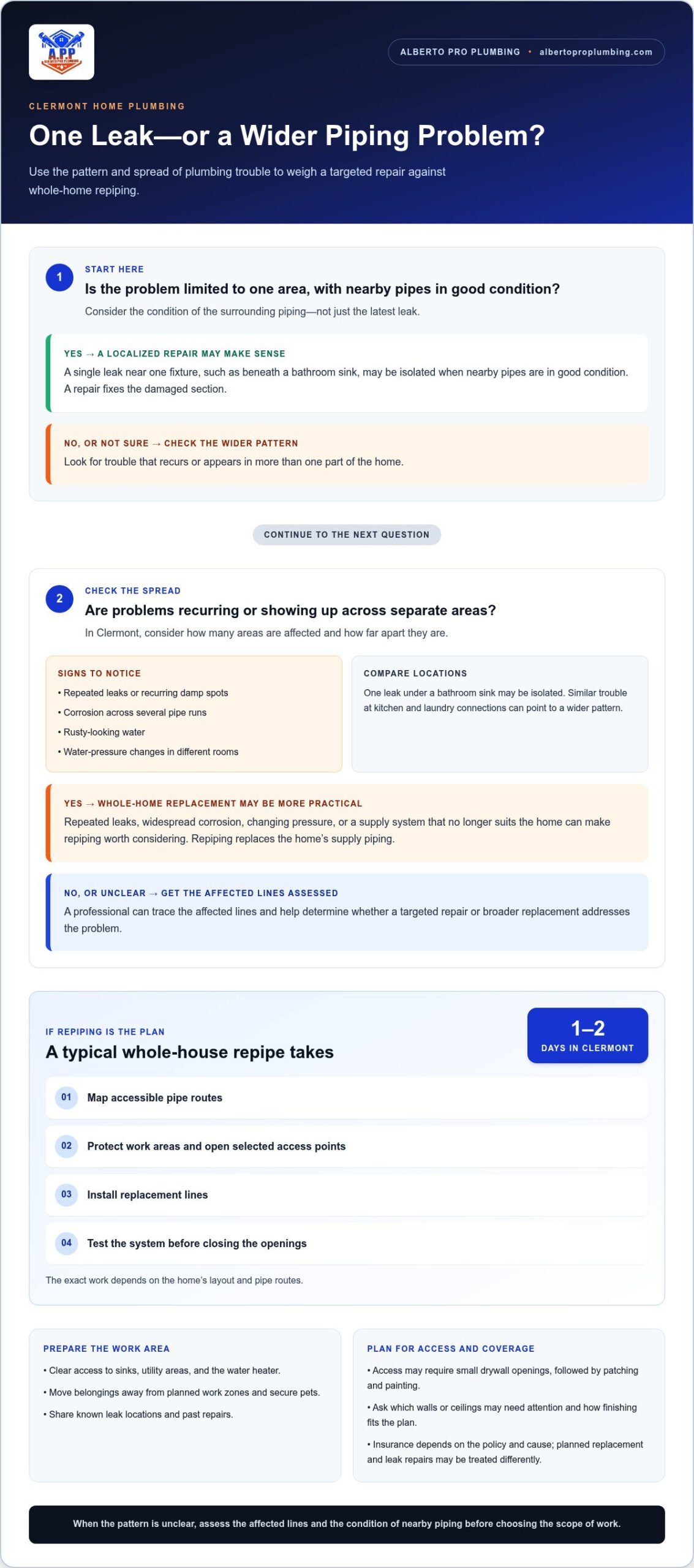
Repeated leaks, changing water pressure, or a plumbing system that no longer suits the home can make replacement more practical than another repair. Re-piping a house in Clermont typically takes 1-2 days. A localized repair may make sense when the problem is limited to one area and the rest of the piping is in good condition.
It’s understandable to prefer fixing only what’s broken, especially when a leak seems to have a clear source. But recurring problems can signal that patching one spot won’t address the wider issue. This guide explains how to weigh a repair against whole-home replacement, what shapes a repiping project, and what to expect from the process. You’ll also learn how permitting responsibilities vary around Clermont and how pipe materials affect installation, so you can make a more informed decision about your home.
Key Takeaways
- Use the pattern and spread of plumbing problems to judge whether a targeted repair or broader replacement makes more sense.
- Permit responsibility depends on whether the home is within Clermont city limits or in unincorporated Lake County.
- Understand how PEX-A expansion joints and PEX-B crimp fittings differ when weighing pipe materials.
- Learn which details of your home and piping system shape the scope of a repiping project.
Choosing between whole-home repiping and localized leak repair
A single leak near one fixture may call for a localized repair, especially if nearby pipes are in good condition. Repeated leaks, corrosion across several pipe runs, changing water pressure, or a supply system that no longer suits the home can make whole-home replacement more practical. In Clermont, consider how many areas are affected and how far apart they are, not just the latest leak. A repair fixes a damaged section; repiping replaces the home’s supply piping.
Watch for recurring damp spots, rusty-looking water, or pressure changes in different rooms. One leak beneath a bathroom sink may be isolated, while similar trouble at the kitchen and laundry connections suggests a wider pattern. A professional assessment can trace the affected lines and help determine whether a targeted repair or re-piping a house in Clermont better addresses the problem.
A typical whole-house repipe in Clermont takes 1-2 days. The process generally involves mapping accessible pipe routes, protecting work areas, opening selected access points, installing replacement lines, and testing the system before closing the openings. The exact work depends on the home’s layout and pipe routes.
Before work begins, clear access to sinks, utility areas, and the water heater. Move belongings away from planned work zones and secure pets. Share known leak locations and past repairs, such as a recurring wet patch beside a bathroom wall, so they can be considered during planning.
Homeowners insurance coverage for repiping depends on the policy and the cause of the pipe damage. Review the policy’s plumbing and water-damage provisions, since planned replacement and repairs following a leak may be treated differently.
Accessing pipes may require small openings in drywall, followed by patching and painting after installation. Ask how these finishing steps fit into the project plan, and identify which walls or ceilings may need attention. This helps you prepare rooms and understand the sequence, from pipe replacement to restoring affected surfaces.
Municipal inspection and permit requirements
For a Clermont home, the property’s jurisdiction determines which office handles building permits. The City of Clermont Building Services Department handles permits inside city limits, while Lake County handles permits in unincorporated areas. A Clermont mailing address alone may not establish which jurisdiction applies. First determine whether the property is within the city or in an unincorporated part of the county.
That distinction matters before repiping begins. The authority responsible for the property manages permit procedures and inspection coordination. A home inside the city and one outside city limits may follow different administrative routes, even if both are near the same Clermont neighborhood. Use the property’s location to identify the correct permitting office.
Next, describe the planned work clearly. A localized repair and replacement of supply piping throughout a home have different scopes. Provide the project address and explain whether the work affects one pipe section or multiple rooms. Ask the applicable building department which permit steps and inspections apply. Do not assume a nearby property follows the same process.
Keep permit documents and inspection records with the project paperwork. Before concealed piping is covered, confirm the required inspection sequence with the responsible authority. That timing can help avoid reopening finished walls if an inspection must happen first. Keep copies of the approved scope and inspection results for future maintenance or home records.
For a smooth process, organize the address, work description, and department details before scheduling the project. The City of Clermont Building Services Department and Lake County are the key jurisdictional starting points. If you’re planning a replacement, review repiping project information as you prepare the work scope and permit questions.
Free in-home consultations and estimates
An in-home consultation lets a plumber assess visible piping, access points, and the project scope. For example, a Clermont home with leaks in separate rooms may need a broader review than one with a single damaged connection. Ask for a written estimate that describes the proposed work, affected areas, pipe material, and restoration expectations. A clear scope helps you assess the plan against your home’s plumbing condition.
Repiping pricing depends on the home’s layout, existing pipe condition, access, material, and the amount of piping involved. For example, pipes behind finished walls may require different access work than lines in an open utility area. The number of rooms and fixtures affected also shapes the project scope. Review an estimate for the work it includes and how the plan addresses known problem areas, not just its total. Alberto Pro Plumbing provides transparent pricing, honest with no hidden fees.
Use the visit to share useful details. Point out leak locations, pressure changes, previous repairs, and areas with rusty-looking water. Clear access to the water heater, sinks, and utility spaces. Ask how the plumber plans to map pipe routes, test new lines, and handle drywall openings. These answers make the proposed steps easier to understand before work begins.
When choosing a plumber for repiping in Clermont, confirm that the plumbers are licensed and insured, and ask for the Florida license details. Compare the written scope, including which piping will be replaced and what testing is planned. A named contact for project questions can also help keep decisions organized.
Although this section covers free in-home consultations, don’t assume every estimate includes a no-charge visit. Confirm the consultation terms before scheduling, and have the questions above ready. A focused visit can clarify whether the plan addresses a localized repair or a larger piping concern, without relying on a vague description or an unexplained total.
PEX benefits and pipe materials
Material choice affects how replacement lines connect and fit the home’s layout. Compare the pipe type and joining method before approving the project scope.
Benefits of PEX
PEX is flexible, which can help route replacement lines through existing spaces in a home. Fewer changes in direction may mean fewer connection points along a run. For example, a plumber may plan a route around framing rather than follow a perfectly straight path. The home’s layout and access still shape the installation.
Consider the connection method, too. PEX-A uses an expansion joint, while PEX-B uses a crimp fitting. These methods affect how sections join, so ask which type the proposed plan uses and where its connections will sit. The goal is to understand the installation approach, not choose a material by name alone.
Pipe Material Options
PEX is one option for a repiping project. Copper and CPVC are other pipe materials homeowners may encounter. Suitability depends on the home’s existing plumbing, planned pipe routes, connections, and installation scope. Ask for the proposed material to be named in the written estimate rather than relying on a broad label such as “new pipes.”
Compare options with your home’s actual conditions in mind. A line routed through a tight wall cavity presents different access considerations from one in an open utility area. The connection method matters, too: PEX-A expansion joints and PEX-B crimp fittings are distinct. Ask how the selected pipe and fittings work together across the planned runs.
Before deciding, review the pipe type, connection method, and intended route for each affected area. Ask the plumber to explain why that combination suits the project and how it connects to existing plumbing. These details make the material choice easier to evaluate alongside the estimate and installation plan.
Ready to discuss pipe options for your home? Explore repiping options and prepare your material questions.
Alberto Pro Plumbing: Emergency Plumbing
Alberto Pro Plumbing helps homeowners address plumbing problems with Emergency Plumbing, Leak Detection & Repiping, and Drain Cleaning for Slow & Clogs. Turn to the team when an active leak needs attention or recurring pipe issues prompt a closer look at replacement. Leak detection can help locate the source, while repiping addresses broader piping concerns. Drain cleaning is another option for a slow or clogged drain.
Share where the problem is, when it began, and whether you’ve noticed pressure changes or previous leaks. These details help clarify whether you need leak detection, urgent plumbing service, or a conversation about repiping. If your home has recurring trouble, explain which rooms or fixtures are affected so the discussion can address the full pattern.
Contact Alberto Pro Plumbing to discuss your plumbing needs or visit albertoproplumbing.com.
Choose a clear next step for your home
A decision about re-piping a house in Clermont is easier when you start with your priorities: resolving an active leak, addressing recurring disruptions, or planning a broader plumbing update. Explain what matters most in your home, including which areas need attention and the outcome you want. That gives the conversation a practical focus and helps you move from uncertainty toward a workable plan.
Alberto Pro Plumbing offers Emergency Plumbing, Leak Detection & Repiping to address urgent plumbing concerns, locate leaks, or plan piping replacement. If you’re weighing repair against replacement, describe the problem clearly and discuss the approach that fits your home.
Contact Alberto Pro Plumbing today to discuss the next step. A clear plan can help you move forward with greater confidence.
Frequently Asked Questions
What does whole-house repiping involve?
Whole-house repiping replaces the home’s water-supply pipes rather than only the section causing a leak. The plumber plans routes, accesses pipe runs, connects replacement lines, and tests the system. For example, a project may involve supply lines serving bathrooms, the kitchen, and laundry area. Routes depend on the home’s layout and existing plumbing, so clarify which areas the proposed scope includes.
What are the signs a house needs repiping?
Recurring leaks in separate rooms, persistent pressure changes, or corrosion affecting multiple pipe areas can signal broader piping problems. One damp cabinet beneath a sink may point to a localized issue, while repeated wet spots near different fixtures suggest a wider pattern. Note where each symptom appears and when it occurs. That record can help distinguish an isolated failure from problems affecting several parts of the home.
Is PEX or copper better for repiping a Florida home?
Neither material is automatically best for every home. The choice depends on the proposed routes, connections, and project conditions. PEX-A uses expansion joints, while PEX-B uses crimp fittings. Copper is another option to discuss, but compare the actual installation plan rather than relying on broad claims. Ask which material is proposed, how it connects to existing plumbing, and why it suits your home’s layout.
What permits are required for residential repiping in Clermont, Florida?
Permit handling depends on whether the property is inside Clermont city limits or in unincorporated Lake County. The City of Clermont Building Services Department handles city permits, while Lake County handles permits in unincorporated areas. Use the property location and project scope to identify the relevant office and ask which building permit and inspection steps apply to the planned repiping work.
What damage or risks can occur during repiping, and who repairs walls and flooring?
Accessing concealed pipes can require openings in walls or ceilings, and moving equipment through rooms can disturb floor coverings or belongings. Before work starts, agree on which surfaces may be opened and who will patch, paint, or repair them. Move breakables and clear pathways near work areas. A written scope describing access and restoration responsibilities can help prevent confusion after installation.
What warranties should I expect for repiping materials and labor?
Warranty coverage depends on the specific materials and work terms, so review the written documents for what’s covered, exclusions, claim steps, and the coverage period. Alberto Pro Plumbing offers a customer satisfaction guarantee, and many services include a warranty. Its plumbers are licensed and insured. Review the applicable written terms before approving the project.