
Roots can enter sewer pipes through cracks or small holes, then grow into blockages and widen the damage. Protecting pipes from tree roots starts with keeping excess moisture away from sewer lines: water trees and plants on the side away from the pipe. If roots have already entered, clear the obstruction before considering chemical treatment.
It’s understandable to focus on the tree, but the pipe’s condition and the moisture that attracts roots matter too. This guide explains how roots enter and damage sewer lines, how watering habits can discourage moisture-seeking growth, and when chemical treatments may be considered after mechanical clearing. You’ll also learn how root-killing products can affect nearby plants and why a plumber needs to know if chemicals have already been used.
Key Takeaways
- Roots can exploit small cracks and openings, then grow into blockages that disrupt sewer flow.
- Water trees and plants away from sewer lines to make nearby pipes less attractive as a source of moisture.
- Clear roots mechanically before considering chemical treatment, and keep nearby plants in mind because root inhibitors can harm them.
- Tell your plumber if you’ve used a chemical treatment so they can account for it when assessing the line.
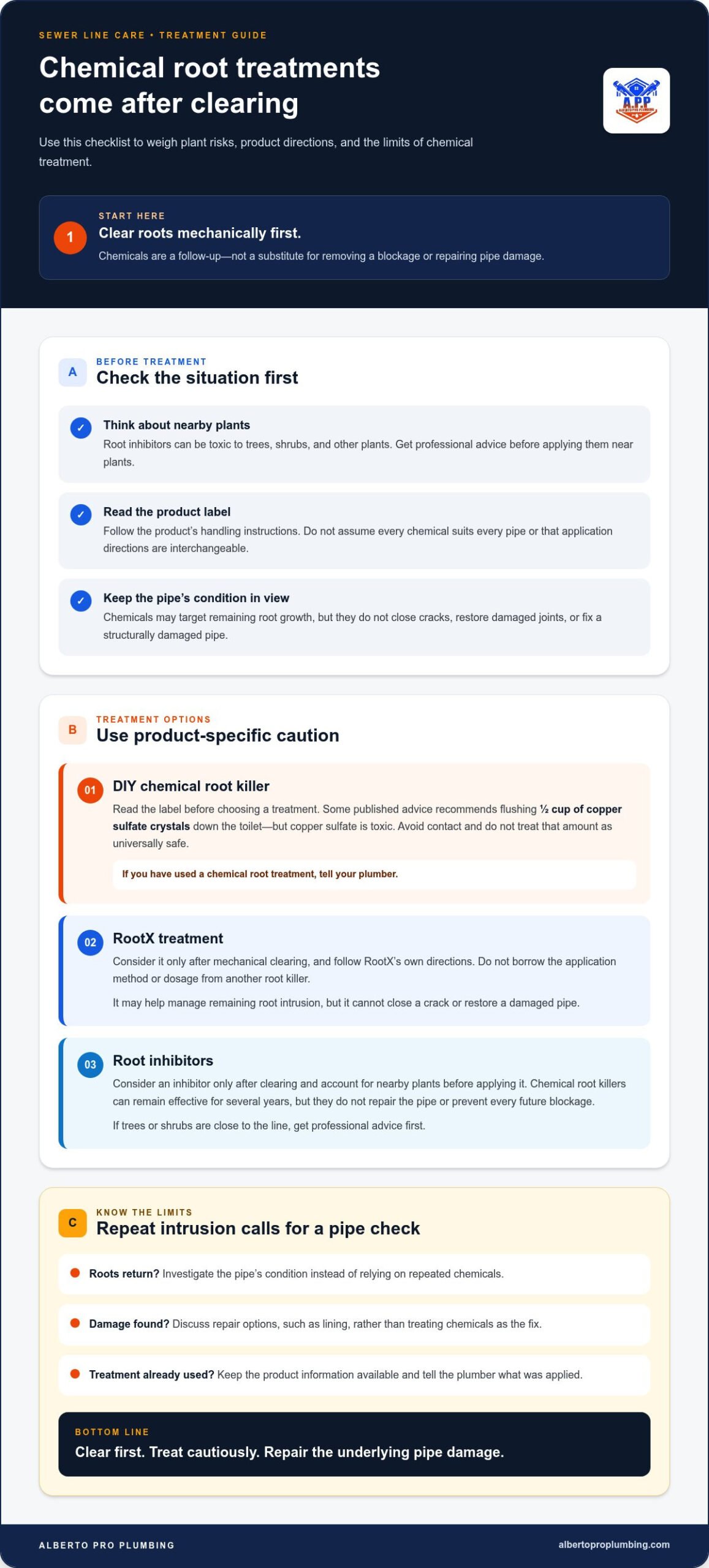
Chemical root treatments after mechanical clearing
Clear roots mechanically first. Chemicals are a follow-up, not a substitute for removing a blockage or repairing damage. Use these steps to weigh environmental risks, DIY options, and treatment limits.
-
Consider Environmental Concerns
Before using a chemical root killer, consider how it could affect trees, shrubs, and other nearby plants. Chemical root inhibitors can be toxic to plants, so get professional advice before applying them near trees or shrubs. Keep the product label available and follow its handling instructions. Chemicals target remaining root growth; they don’t repair cracks or damaged joints.
-
Choose a DIY Chemical Root Killer
Read the product label before choosing a DIY treatment, and don’t assume every chemical is suitable for every pipe. Some published advice recommends flushing half a cup of copper sulfate crystals down the toilet. Copper sulfate crystals are toxic, so avoid contact and don’t treat that amount as universally safe. Tell your plumber if you’ve already used a chemical root treatment.
-
Apply RootX Chemical Treatment
If you’re considering RootX, use it only after mechanical clearing and follow the product’s directions. Don’t assume its application method or dosage from another root killer, since product instructions can differ. Treatment may help manage remaining root intrusion, but it cannot close a crack or restore a structurally damaged pipe. If roots return, investigate the pipe’s condition instead of relying on repeated chemicals.
-
Use Chemical Root Inhibitors
Consider a root inhibitor only after clearing, and account for nearby plants before applying it. Chemical root killers can remain effective for several years, but they don’t repair the pipe or prevent every future blockage. Get professional advice if trees or shrubs are close to the line. If an inspection finds lasting damage, discuss repair options such as lining rather than treating chemicals as the fix.
How Do Roots Grow in Sewer Pipes?
Roots seek water and nutrients, then exploit openings in sewer pipes. Choose an appropriate removal method and protect vulnerable lines before roots return.
Dogwood, Japanese maple, crape myrtle, and arborvitae have less intrusive root systems. Planting restrictions can vary with local rules and utility requirements, so identify underground lines and check applicable requirements before choosing a planting spot. Arrange pipe inspections periodically, especially after previous root problems, and seek help sooner if blockages recur.
- Use mechanical cutters or a sewer snake to remove root masses inside the pipe. Root-cutting equipment typically uses a cable at least ¾ inch to an inch in diameter. A cable that’s too small can snag in roots and leave equipment stuck in the line. Match the tool to the pipe and obstruction.
- Use high-pressure water jetting to clear stubborn roots and flush loose debris. Jetters use a cleaning hose ½-inch to 1-inch in diameter. The water can carry cut material through the line, but clearing roots doesn’t repair cracks or failed joints.
- For Hercules R-D Root Destroyer, follow the product label exactly. Don’t transfer application directions from another treatment or use chemicals instead of mechanical clearing. Keep the product information available and tell your plumber what was applied.
- Install a root barrier when planning a planting area near underground plumbing. Barriers made from plastic, metal, or fabric can guide root growth away from sewer lines. Choose the placement carefully: barriers restrict growth in selected directions but don’t repair an existing pipe opening.
- Inspect root-cutting equipment before use. Check the cable, cutter head, and connections for wear or damage, and use equipment sized for the pipe. Some cutters leave two inches of roots at the pipe’s top, so a camera inspection can show whether roots remain and reveal pipe damage.
- Arrange professional inspection when blockages return or flow remains poor after clearing. A plumber can insert a camera to assess root mass and pipe damage. For recurring root intrusion, sewer line repair can address damage mechanical clearing cannot fix.
How roots enter and damage sewer pipes
Roots grow toward water, nutrients, and oxygen. Moisture vapor escaping from a pipe can draw them closer, while a crack or small hole gives them a way inside.
Responsibility depends on who owns and maintains the damaged pipe section and where it is located. Don’t assume the tree owner or utility is automatically responsible; identify the affected section first.
Watch for recurring blockages, slow drainage, or wastewater backing up into the home. These symptoms can have other causes, but a camera inspection can show whether roots are restricting the line.
- Inspect the pipe when drainage problems return. Roots can enter through a small opening, then grow into a mass that narrows or blocks the line. Toilet paper and waste can collect around the roots, worsening a partial obstruction and causing a backup. A camera inspection helps locate the intrusion and assess the opening.
- Consider the pipe material and condition when assessing risk. Older clay or metal pipes are more susceptible to root damage, while modern materials such as PVC are designed to resist penetration better. Even a resilient pipe can be vulnerable at a damaged section, so focus an inspection on cracks, holes, and leaking joints.
- Use the camera findings to choose a repair. Mechanical clearing can restore flow, but it doesn’t close an opening that lets roots return. If the pipe damage can be repaired, lining can create a new barrier inside the existing line. If the damage is too extensive to repair, pipe replacement may be necessary.
- Confirm which pipe section is affected before discussing responsibility or repair. A sewer line may include sections with different owners or maintenance responsibilities. The camera’s location and view of the damage can help distinguish a localized private-line problem from an issue farther along the system.
- Act promptly if wastewater backs up or blockages keep returning. Recurring symptoms can indicate that roots have grown beyond a small intrusion or that the pipe has sustained further damage. A camera inspection provides a clearer basis for choosing between clearing, lining, and replacement.
Watering trees to discourage moisture-seeking roots
- Identify the sewer line before choosing where to water. Use property plans or visible access points to estimate its route, then keep routine watering away from it. Protecting pipes from tree roots starts with limiting moisture that can draw roots toward underground plumbing. Avoid creating a consistently wet strip directly above a sewer pipe.
- Water plants on the side away from the sewer line. This provides a moisture source farther from the pipe instead of encouraging growth toward damp soil nearby. For example, if a shrub is beside the line, water on its opposite side. Don’t direct runoff toward the pipe or an area that is repeatedly damp.
- Check the full length of water lines near trees and other foliage for wear, damage, discoloration, or damp areas. A leak can create moisture that attracts roots and provides an entry point. Look along the visible route, especially where trees grow nearby, and note changes that persist after watering stops.
- Choose planting locations with pipe distance in mind. Large trees should be planted 20 to 30 feet from underground pipes, medium-sized trees 10 to 20 feet away, and small trees 8 to 10 feet away. These distances help reduce the chance of roots reaching pipes as they seek water and nutrients.
- Adjust watering when damp soil repeatedly appears near a pipe. Consider whether irrigation runoff or a damaged water line is causing the wet area. Watering farther away can discourage moisture-seeking growth, but it won’t repair a leak or an existing pipe opening. Track recurring damp patches and changes in drainage.
- Make protecting pipes from tree roots part of routine yard care by observing nearby trees and plumbing. If a line near foliage shows discoloration, damage, or persistent dampness, arrange an inspection to identify the source of the moisture. This can help you spot conditions that may attract roots before they contribute to renewed intrusion.
Alberto Pro Plumbing: Emergency Plumbing
Alberto Pro Plumbing can help when root-related blockages keep returning, wastewater backs up, or a damaged line leaks. Emergency Plumbing addresses urgent plumbing problems, while Drain Cleaning helps clear obstructions. Leak Detection can help locate a plumbing leak, and Repiping is an option when damaged pipes need replacement.
If a sewer line keeps clogging after clearing, or you notice persistent damp areas near plumbing, arrange professional help. A plumber can assess the symptoms and determine whether clearing, leak detection, or pipe replacement fits the issue. For help with a plumbing problem in Clermont, Florida, contact Alberto Pro Plumbing or visit albertoproplumbing.com.
Make Your Next Step Easier
Keep a simple record of changes around your plumbing. Note where damp patches appear, when drainage problems return, and whether you’ve used a chemical treatment. These details provide a clearer starting point for assessing the line. Protecting pipes from tree roots takes ongoing care, so revisit your watering and planting choices as the landscape changes.
If signs point to a continuing plumbing problem, don’t wait for another backup before making a plan. A professional assessment can help identify what needs attention and guide the next repair decision. Alberto Pro Plumbing can help you take a practical next step.
Contact Alberto Pro Plumbing for help, and take the next step toward a healthier plumbing system.
Frequently Asked Questions
How do tree roots damage underground water and sewer pipes?
Roots exploit openings in buried pipes and can gradually widen them as they grow. In sewer lines, the resulting root mass catches waste and toilet paper, narrowing the passage and potentially causing backups. A water-line leak can also leave damp soil near the pipe. If drainage trouble keeps returning, a camera inspection can help distinguish root intrusion from another obstruction.
How far should trees be planted from sewer and water pipes?
Use tree size to guide planting distance: place large trees 20 to 30 feet from underground pipes, medium-sized trees 10 to 20 feet away, and small trees 8 to 10 feet away. These are practical spacing recommendations, not a substitute for locating the actual line. Dogwood, Japanese maple, crape myrtle, and arborvitae are examples of trees with less intrusive root systems.
What are the best ways to prevent tree roots from entering pipes?
Combine thoughtful planting with pipe maintenance. Keep trees spaced from buried lines, water plants away from sewer pipes, and watch for persistent damp areas or recurring drainage trouble. Root barriers can steer growth away from plumbing. Modern PVC is more resistant to root penetration than older clay or metal, but any pipe material can still be affected by openings or damage.
How do root barriers protect pipes, and how deep should they be installed?
Root barriers made of plastic, metal, or fabric create an underground obstacle that redirects roots away from a sewer line. Place the barrier between the tree and pipe, and choose its depth based on the pipe’s burial depth and the route roots could take. The barrier should interrupt that path without exposing or damaging the plumbing.
Can trenchless pipe lining or pipe replacement stop root intrusion?
Pipe lining can form a seamless barrier inside an existing line, helping block roots without digging up the ground. Replacement may be necessary when damage is too extensive to repair. A camera inspection helps show which approach suits the pipe’s condition. In Clermont, Florida, Alberto Pro Plumbing’s licensed and insured plumbers handle sewer line repair.
Are chemical root killers safe and effective for sewer pipes, trees, and septic systems?
Chemical root killers can remain effective for several years, but root inhibitors can be toxic to nearby plants. Don’t assume a product suits every sewer or septic setup. Check its label and get professional advice before using it near trees or shrubs. Copper sulfate crystals are toxic, so avoid contact and tell your plumber about any treatment already used.