
Yes, attend the plumbing inspection if you can. A plumbing inspection before buying a house in Clermont can reveal visible issues with fixtures, drainage, and water flow. A sewer camera can also show problems inside the line that a visual check may miss. Being there lets you see the findings firsthand and ask what they could mean for the home.
It’s easy to focus on a home’s finishes and overlook the pipes behind them, but plumbing problems can affect everyday comfort and lead to repair decisions after closing. This guide explains what an inspection typically checks, how sewer-camera footage and a clear visual report can help you understand the results, and what to watch for when testing sinks and shutoff valves. You’ll also learn what attending can help you notice, so you can make a more informed decision about the property.
Key Takeaways
- Use the inspection report’s notes and images to understand visible plumbing concerns and decide what needs closer attention.
- A sewer camera can reveal line issues such as root intrusion, cracks, clogs, or damage that a surface check may not show.
- Attend if possible: watch fixtures drain, observe the inspection, and ask for clear explanations of any findings.
- With faucets closed, a moving water meter may point to a leak; testing the main shutoff can also help reveal valve or flow concerns.
Inspection reports with images and videos
A useful plumbing report ties each finding to a location and a next step. Look for notes about sinks, toilets, visible pipes, drains, water heaters, and accessible shutoff valves. A photograph might show a corroded connection under a sink; a short video could demonstrate slow drainage or a dripping faucet. These records help distinguish an observed defect from a general recommendation.
Review the report alongside its images and footage. Match each note to the room or fixture, then identify whether it describes a leak, damage, restricted flow, or the need for further evaluation. For example, a photo of moisture beneath a bathroom sink gives you a specific place to ask about the source. Keep the report handy when reviewing repair priorities.
Should I hire a plumber separately from a general home inspector? Consider a separate plumbing assessment if the general inspection identifies a concern or you want a closer look at pipes or sewer lines. A general home inspection reviews accessible areas and installed systems; a plumbing-focused inspection can examine specific concerns in greater detail.
Are there Clermont or Lake County rules for plumbing inspections or permits when buying a home? Treat the home’s plumbing condition and its permit history as separate checks. If a bathroom was added or plumbing was remodeled, for example, review the records for that work with the relevant Clermont or Lake County authority.
How do I find a licensed plumbing inspector in Clermont, Florida? Ask about the inspector’s applicable Florida credentials and experience assessing residential plumbing. Florida Department of Business and Professional Regulation examinations cover a home’s plumbing system. Verify the inspector’s credentials and request a written report.
What plumbing problems are common in Clermont and Lake County homes? Look for dripping faucets, slow drains, visible corrosion, and signs of leaks. A report should identify the fixture or area involved instead of leaving you with a vague note about plumbing.
What plumbing issues are common in older Clermont homes, such as galvanized or polybutylene pipes? Galvanized pipes may corrode and restrict flow, while polybutylene pipes can develop leaks or cracks. Ask the inspector to identify visible pipe materials and document any concerns.
When should I schedule a plumbing inspection during the home-buying process? Arrange it promptly after your offer is accepted, leaving time to review the findings before relevant inspection or negotiation deadlines. Give the inspector access to the home and any available plumbing records.
Using a sewer camera to inspect sewer lines
A sewer camera lets an inspector view the inside of a drain line without excavating the yard. The camera travels through an accessible cleanout or another entry point and sends footage to a monitor. The view can reveal cracks, bellying, damage, clogs, or debris that an exterior walk-through cannot show.
A sewer scope can follow a lateral line from near the home’s foundation toward the city sewer, an HOA tap, or a septic tank. Ask where the camera entered and how far it traveled. If the footage ends early, part of the line may remain unseen. A written report should identify the observed location and condition, and connect any recommendation to what the camera showed.
In Clermont, consider asking about tree-root intrusion in sanitary and storm sewer lines. Roots can enter through openings and interfere with drainage. A camera view can help distinguish root growth from other visible obstructions, such as debris or a damaged pipe section. Keep the footage with the inspection report so you can review the finding and discuss repair priorities during the purchase process.
How do plumbers inspect slab leaks and hidden pipe leaks? A sewer camera examines drain lines, not pressurized water pipes beneath a slab. For a suspected hidden leak, a plumber may use leak-detection methods and examine clues such as damp flooring, unexplained moisture, or a water meter that moves while fixtures are closed.
Before the scope, locate the cleanout and make sure the inspector can access it. Afterward, ask for a plain-language explanation of each flagged area. A sagging section, for example, differs from a blockage because the pipe’s shape may hold water and debris. The footage helps show the condition, but the report should clarify whether the concern needs further evaluation or repair. If the findings point to sewer-line damage, review sewer-line repair options as you plan your next step.
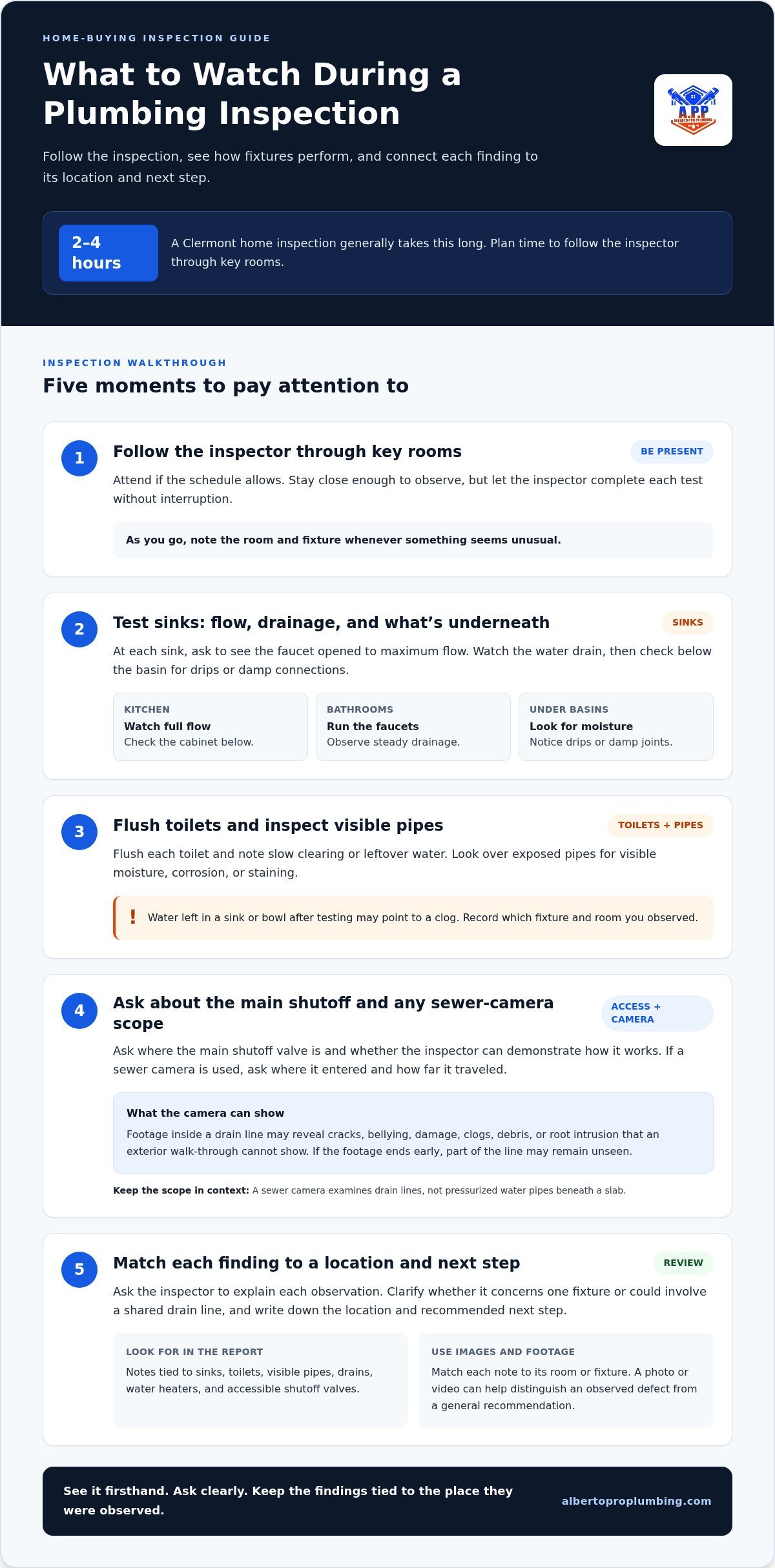
Attending the inspection
Attend the plumbing inspection if the schedule allows. A Clermont home inspection generally takes 2 to 4 hours, so plan time to follow the inspector through key rooms. Seeing a faucet drip or a toilet drain slowly gives you useful context beyond a written note. Stay close enough to observe, but let the inspector complete each test without interruption.
At each sink, ask to see the faucet opened to maximum flow. Watch whether the water drains without delay, then look beneath the basin for drips or damp connections. Repeat the flow-and-drain check at toilets. Water left in a sink or bowl after testing may point to a clog. Note the fixture and room if anything seems unusual.
- Watch the kitchen sink during full flow, then check the cabinet below.
- Run bathroom faucets and observe whether water drains steadily.
- Flush each toilet and note slow clearing or leftover water.
- Look at exposed pipes for visible moisture, corrosion, or staining.
Ask the inspector to explain each observation. A slow kitchen drain, for example, differs from a visible leak beneath the bathroom sink. Ask whether the finding concerns one fixture or could involve a shared drain line. Write down the location and recommended next step while the details are fresh.
Use your visit to learn about access points, too. Ask where the main shutoff valve is and whether the inspector can demonstrate how it works. If a sewer camera is used, watch the footage and ask which section of line it shows. These details can help you interpret the report after you leave the property.
Before the appointment, prepare a short list of concerns from the seller’s disclosures or your own walkthrough. Mention recurring odors, stains, or a faucet that seemed weak. A focused list keeps attention on specific rooms and fixtures, while your own observations make the final report easier to understand.
Checking water meters and shutoff valves
Use the water meter and main shutoff as practical checks during a Clermont home inspection. First, turn off every faucet and stop water-using appliances, such as a dishwasher or washing machine. Watch the meter’s leak indicator or reading. If it moves while no water is being used, the home may have a leak. Note the movement and share it with the inspector; a meter reading alone won’t locate the source.
Next, locate the main water valve and ask the inspector to demonstrate it. When the valve is shut off, no water should flow from any faucet. Briefly open a faucet to observe the result, then close it before the valve is reopened. A valve that sticks, looks corroded, or doesn’t stop the water deserves attention. Don’t force a stiff handle, since that can damage the valve or connected pipe.
- Confirm faucets and water-using appliances are off.
- Observe the meter and note any movement.
- Locate the main shutoff and check its visible condition.
- With the inspector’s guidance, test whether shutting it stops faucet flow.
Check accessible fixture shutoffs, too. Look beneath sinks and behind toilets for corrosion, moisture, or damaged handles. A shutoff valve beneath a bathroom sink, for example, may isolate that fixture, while the main valve controls the home’s water supply. Record which valve shows a concern and where it is. These details help clarify whether the issue involves one fixture or broader plumbing.
Look at the water heater while checking nearby valves. Corrosion on its tank or connections can signal a problem, and a water heater lasts approximately 10 years, depending on maintenance, water quality, and use frequency. Record visible corrosion and the unit’s age if available. If the inspection indicates replacement is needed, explore water heater installation as a practical next step.
Alberto Pro Plumbing: Emergency Plumbing
Alberto Pro Plumbing can help when an inspection uncovers a plumbing issue that needs attention before or after closing. A leaking pipe, recurring drain blockage, or damaged water line may call for a focused repair. Services include Emergency Plumbing, Leak Detection, Repiping, and Drain Cleaning. Its plumbers are licensed and insured.
Use the inspection report to describe the affected fixture, room, or pipe, and share any camera footage or photos. That context helps clarify the problem and the appropriate next step. If a leak is active or a drain has stopped working, Emergency Plumbing or Drain Cleaning may address the immediate concern. For widespread pipe deterioration, Repiping may be relevant; Leak Detection can help locate a hidden leak.
For help with a plumbing problem identified during your home purchase, contact Alberto Pro Plumbing.
Make Your Next Move With Confidence
Before finalizing the purchase, turn inspection findings into a clear plan. Keep the written report and any sewer footage together, then note which concerns need attention before move-in and which can be planned for later. This gives you a practical starting point for discussing repairs and helps keep important details from getting lost during a busy closing process.
A plumbing inspection before buying a house in Clermont can also help you decide when specialized repair support makes sense. Alberto Pro Plumbing offers Leak Detection for hidden plumbing concerns, Repiping for deteriorated piping, and Emergency Plumbing when an urgent issue needs attention. Share the specific finding and its location so the next conversation can focus on the problem in your prospective home.
When you’re ready to discuss a plumbing concern, contact Alberto Pro Plumbing. A well-informed next step can help you move toward your new home with greater peace of mind.
Frequently Asked Questions
Should I attend the inspection?
Yes, attend if you can. Speaking with the inspector helps clarify how findings affect the home. Bring seller disclosures and note any previous plumbing work or recurring issues mentioned there. Ask which observations affect normal use and which concern maintenance. Afterward, compare your notes with the written report so you can organize follow-up decisions without relying on memory.
What if the inspection report reveals problems?
Separate documented defects from recommendations, then decide which findings need further diagnosis before closing. For example, a reported leak may need its source identified before repair plans can be discussed. Alberto Pro Plumbing’s plumbers are licensed and insured, and its Leak Detection service addresses hidden leak concerns. Share the report’s specific findings when discussing a repair path or next step.
What does a plumbing inspection before buying a house include?
A plumbing inspection before buying a house in Clermont reviews accessible plumbing and checks how visible fixtures and systems operate. It can document exposed supply and drain pipes, faucet and toilet function, water heater condition, visible leaks, and drainage concerns. The report should distinguish direct observations from items that need closer evaluation, helping you understand what was inspected and where attention may be needed.
How can I check a home’s sewer line before buying in Clermont?
Arrange a sewer scope so a camera can examine the inside of the line. Before the inspection, locate the cleanout and confirm the inspector can access it. Ask the report to record the camera’s entry point, the section viewed, and any visible defect. Keep the footage with your purchase records; it can help clarify the location and nature of a concern later.
What should a plumbing inspection report include, and what repairs should I request before closing?
Look for each finding’s location, description, supporting photos or footage, and recommended follow-up. Prioritize active leaks, damaged pipes, and fixtures that don’t function properly. Ask for a written repair scope that identifies the work to be completed, then keep completion records with your home documents. Specific requests tied to documented conditions give you a clearer basis for discussing repairs before closing.