
A plumbing problem doesn’t have to stop working to violate code. Plumbing code violations correction means identifying work that doesn’t meet local requirements, then repairing or replacing the affected components and documenting the work. Permit and inspection rules depend on the project and local requirements.
A drain, fixture, or water heater can seem to work normally even when it has a defect. Improper pipe sizing, drainage, or venting may cause slow drains, gurgling, or sewer gas indoors. Unsafe connections can also affect water quality.
This guide explains common plumbing code violations involving piping, drainage, venting, fixtures, and water heaters. It also covers how permits, inspections, and repair records fit into the correction process, along with steps to help prevent deficiencies during a plumbing project. Knowing what to look for can help you address concerns before they lead to more disruptive repairs.
Key Takeaways
- Learn how local requirements, permits, and inspections shape plumbing repairs, and why keeping clear records matters.
- Spot warning signs of drainage, venting, pipe-sizing, and cross-connection problems before they lead to larger concerns.
- Understand how a code issue may be resolved by correcting affected components rather than replacing the entire plumbing system.
- Use practical project-planning steps to reduce the risk of unpermitted or noncompliant plumbing work.
- Know when a plumbing professional can help assess a deficiency and complete the necessary repairs.
Why Do Plumbing Codes Matter?
Plumbing codes set requirements for safe system design and installation, but rules vary by state and local jurisdiction. In Clermont, Florida, local requirements and the project’s scope determine whether work needs a permit, inspection, or specific correction.
Licensed Code-Compliant Repairs
A licensed plumber can assess the cited deficiency, identify affected piping or connections, and plan repairs to meet applicable requirements. Review the violation notice before work begins and clarify which items need correction. Repairs may involve approved materials, compliant pipe sizing, or required clearances. A focused fix can address the problem without disturbing plumbing that already meets requirements.
Fixture Compliance and Accessibility
Fixture compliance involves more than choosing a sink, toilet, or faucet that fits the room. Installation, connections, clearances, and access around the fixture can all affect compliance. ADA guidelines are relevant to fixture installation in commercial spaces. Consider how the fixture will be used and whether its placement allows the required access and clearance.
Local Requirement Variations
Local plumbing rules may draw on the International Plumbing Code or Uniform Plumbing Code, but requirements can differ by jurisdiction. In Clermont, Florida, the applicable rules depend on the location, existing installation, and scope of the work. These factors determine which standards apply and whether permits or inspections are needed. Confirm the requirements for the specific project before work starts.
Replacing the whole plumbing system isn’t automatically necessary. If a violation concerns one connection, fixture, or section of piping, correcting or replacing that component may resolve it. The affected area and condition of connected parts guide the repair scope. For example, a noncompliant connection may need modification while sound, compliant piping stays in place.
Keep permits, inspection records, repair documentation, and product labels together. These records show what work was completed, which materials were used, and whether the correction was inspected. Ask the plumber to document repaired components and retain copies of relevant paperwork. Organized records can also help explain the work during a future property review or sale.
After repairs, arrange any applicable testing and inspection before covering new plumbing. Testing can assess operation, water flow, drainage, connections, and leaks. Submit proof of completed repairs to the department that issued the violation, then confirm it has been cleared from property records. This final documentation connects the physical repair with the compliance record.
What is a plumbing code violation?
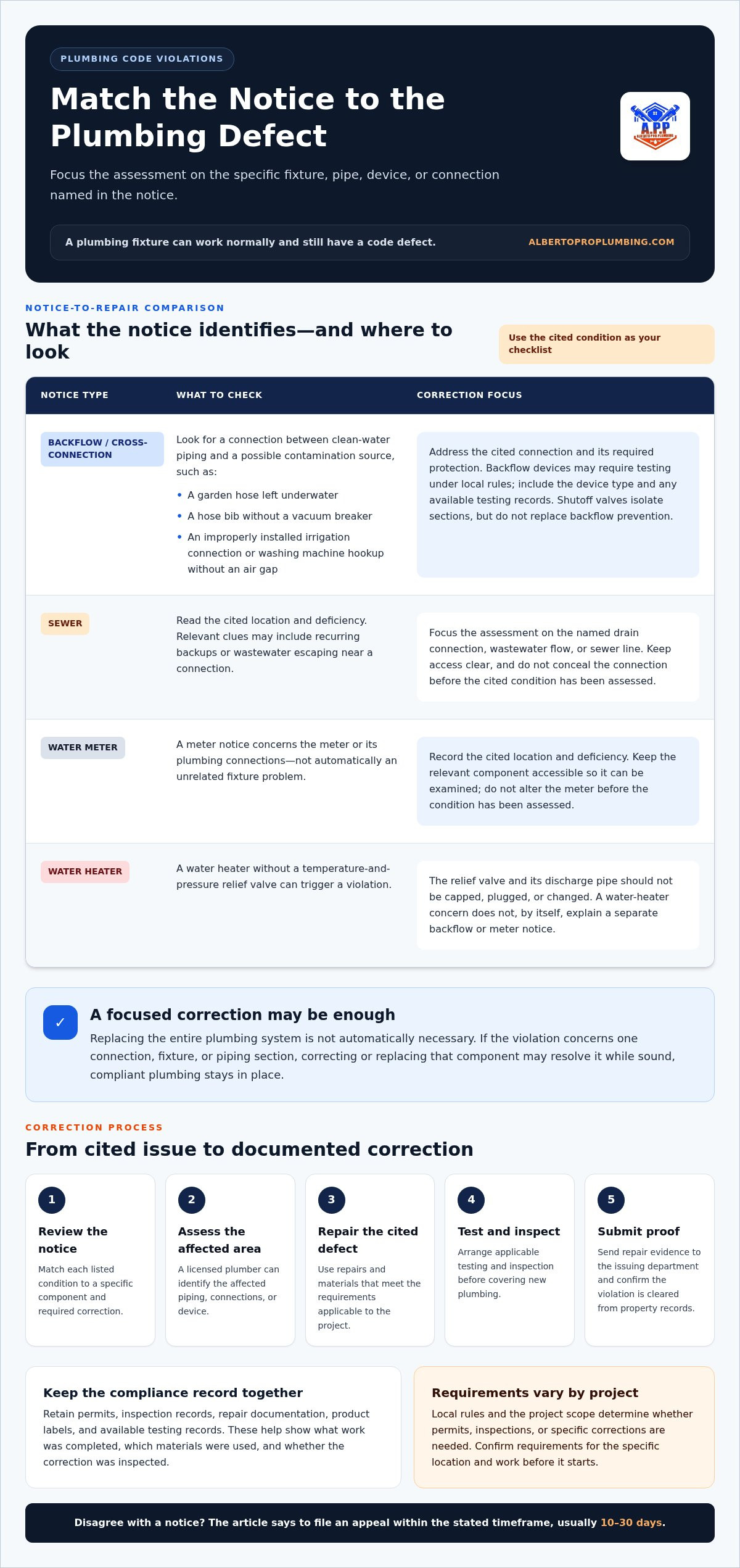
A plumbing code violation is a condition or installation that fails applicable plumbing requirements. If you disagree with a notice, compare its cited condition with the work and available records, then file an appeal within the stated timeframe, usually 10 to 30 days.
Backflow and Cross-Connection Violations
A cross-connection links clean water piping to a possible source of contamination. A garden hose left underwater, a hose bib without a vacuum breaker, or an improperly installed irrigation connection can create that risk. Backflow protection helps keep contaminated water from entering the clean supply. Shutoff valves isolate sections, but they don’t replace backflow prevention.
Check the notice for the specific device or connection named. Backflow prevention devices may require testing under local rules, so include the device type and any available testing records when reviewing the notice. A washing machine hookup without an air gap is another possible cross-connection concern. Plumbing code violations correction should address the cited connection and its required protection.
Sewer and Water Meter Violations
A sewer-related notice may identify a problem with a drain connection, wastewater flow, or sewer line. Read the cited location closely and compare it with symptoms such as recurring backups or wastewater escaping near a connection. A water meter notice concerns the meter or its plumbing connections, so distinguish that issue from an unrelated fixture problem.
For either notice, record the location, stated deficiency, and required correction. Photos of visible conditions and prior repair paperwork can help clarify what changed. Don’t alter a meter or conceal a sewer connection before the cited condition has been assessed. Keep access clear so the relevant component can be examined. This documentation supports plumbing code violations correction by tying the repair evidence to the specific notice.
Property owners should distinguish a cited violation from symptoms of a separate plumbing issue. For example, a water heater without a temperature-and-pressure relief valve can trigger a violation. Its relief valve and discharge pipe shouldn’t be capped, plugged, or changed. A water heater concern doesn’t, by itself, explain a backflow or meter notice.
Use the notice as a checklist. Match each listed condition to a specific fixture, pipe, device, or connection, then note what evidence could clarify the finding. If the notice describes a cross-connection, inspect the named hose bib, irrigation connection, or appliance hookup. If it identifies a sewer or meter issue, focus the assessment on that component.
After correction, retain the repair record and submit proof to the department that issued the notice. Ask for the violation to be cleared from property records once the correction is accepted. For a suspected active leak or sewer problem, professional plumbing assistance can help assess the affected area and determine the repair needed.
Common piping, drainage, venting, and fixture deficiencies
A plumbing system can appear functional and still have installation defects. Slow drainage, gurgling, recurring clogs, and exposed piping can help homeowners identify areas that need closer attention.
Piping and Drainage Deficiencies
Drainage depends on suitable pipe sizing and slope. A horizontal drainpipe that’s too flat can leave waste behind and encourage clogs; one that’s too steep can let water run ahead of solids. Pipes that are too small may contribute to low water pressure, slow drains, frequent clogs, or failed inspections. Look for repeated symptoms, not just one slow fixture.
Flexible accordion-style pipe used as a permanent drain can contribute to leaks, clogs, corrosion, or failed inspections. Owners should note where it appears and whether the drain repeatedly blocks or leaks. A contractor can assess the piping layout and determine whether the affected section needs modification or replacement.
Venting and Fixture Deficiencies
Plumbing vents let air move through the drain system and carry sewer gases safely outside. Missing vent lines can contribute to slow drainage, gurgling, or sewer gas indoors. A drain trap holds water to help prevent those gases from entering living spaces. If a fixture gurgles or smells foul after draining, record which fixture is affected and when it happens.
Fixture concerns can include poor placement or installation that doesn’t meet applicable requirements. ADA guidelines are relevant to fixture installation in commercial spaces. Check whether the fixture remains accessible and whether its connections show leaks or visible damage. A symptom can point to a deficiency, but the cause may involve nearby piping or venting.
Common Violation Causes
Unpermitted modifications can leave mismatched pipe types, poor drainage layouts, or unsafe gas connections behind walls or beneath floors. A homeowner may first notice a problem after remodeling, when a drain clogs or a connection starts leaking. Keep records of plumbing work and note which areas changed so an assessment can focus on those sections.
Rushed repairs can leave components that don’t suit the system. For example, a replacement drain may be the wrong size, or an improvised fitting may create a leak-prone connection. These problems can cause failed inspections or emergencies if water escapes. Look for recurring leaks, slow drainage, and repeated blockages after plumbing work.
Use symptoms to guide a careful visual review, not to make a final code determination. Check accessible areas under sinks, around water heaters, and near exposed drainpipes for leaks, improvised fittings, or corrosion. Don’t open walls or floors just to search for hidden defects. If several fixtures drain slowly, note the pattern; a shared drainage or venting issue may affect more than one room.
Code compliance depends on the specific defect and applicable local requirements. A correction may involve replacing a single fitting, adjusting a drain layout, or addressing a vent. It doesn’t automatically mean replacing every pipe. Document symptoms and visible conditions before repairs, and keep the plumber’s work records for later inspection or property review.
Preventing code violations during plumbing projects
Plan the plumbing layout before work starts, especially during remodeling. Moving a sink, toilet, or shower can affect drainage, connections, clearances, and fixture access. Even a small location change can affect comfort and code compliance. Write down which fixtures and pipes will move, then compare the project scope with local plumbing requirements.
Plan for permits and inspections from the start, rather than leaving them until the end. Moving pipes, installing new fixtures, repiping, and major remodeling may require permits and inspections. Most plumbing work beyond basic repairs requires a permit. Adding fixtures or moving drain lines requires licensed work. Confirm requirements before work begins, then schedule required inspections.
Use this practical sequence before and during a project:
- Define the work. List each new fixture, moved drain line, and altered pipe section.
- Check local requirements. Identify permit needs and required inspection stages before installation.
- Plan access. Keep the main water shutoff, fixture shutoff valves, and drain cleanouts easy to reach.
- Choose suitable materials. Use approved materials and plan pipe sizing, slope, and clearances for the intended layout.
- Keep records. Save permits, inspection records, repair documents, and product labels together.
Don’t cover new plumbing with drywall, flooring, or cabinets before its required inspection. Once pipes are hidden, an inspector may be unable to examine connections or installation details. Keep the work area accessible until inspection is complete. If a correction is needed, exposed piping can make the repair more direct and reduce unnecessary disruption.
Measure carefully when planning fixture placement. Moving a toilet, sink, or shower by even a few inches during a bathroom renovation can affect comfort and code compliance. Mark the planned positions before installation, then review clearances and nearby connections. In commercial spaces, account for ADA guidelines when planning fixture installation and access.
Preventive maintenance also helps owners notice developing problems before they become concealed project defects. During routine checks, look beneath sinks for drips, test accessible shutoff valves, and note recurring slow drainage. Keep water heater service records and product labels with other plumbing paperwork. A simple faucet replacement is usually suitable for homeowners, but check local requirements before starting any plumbing work.
Document changes as they happen to support lasting compliance. Match each inspection record to the work area, such as a remodeled bathroom or replaced fixture. Keep copies of approved plans and note any changes made during installation. If the finished layout differs from the original plan, record the change and include it in the inspection documentation. These habits help prevent missing paperwork and make future plumbing work easier to plan.
Identifying plumbing code violations
Start with observable clues, then compare them with plumbing records and local regulations. A working fixture can still have an unsafe connection or installation defect. Look for recurring symptoms, visible materials, and past modifications. These clues help you describe a concern clearly, but don’t establish a violation by themselves.
Inspect accessible areas without opening walls or disturbing pipes. Check beneath sinks, around exposed piping, and near the water heater. Note corrosion, leaks, improvised fittings, or changes without paperwork. Outdated galvanized piping, lead solder, and certain flexible connectors may be treated as health risks or performance liabilities. Record where each material appears and whether it connects to altered plumbing.
Give the water heater a focused visual check. A unit without a temperature-and-pressure relief valve can trigger a code violation. Its relief valve and discharge pipe shouldn’t be capped, plugged, or changed. Don’t remove components to inspect them. Photograph what’s visible, note any unusual alteration, and include the water heater’s location when describing the issue.
- Look for symptoms: recurring slow drainage, gurgling, or sewer odors indoors can point toward drainage or venting deficiencies.
- Review visible work: mismatched pipe types, poor drainage layouts, or unsafe gas connections may follow unpermitted modifications.
- Check fixtures: note leaks, unstable connections, and changes around a newly installed fixture.
- Compare records: match permits, inspection notes, and repair paperwork to the area that changed.
Turn your observations into a practical record. Write down the affected room, fixture, visible condition, and when the symptom occurs. For example, note whether one sink drains slowly or several fixtures show the same pattern. Keep photos with repair and inspection documents. This detail helps an assessment focus on the affected section rather than assuming the whole system needs replacement.
Compare the observed condition with the violation notice or inspection finding. Identify the exact component named, the required correction, and any deadline printed on the notice. If the concern involves a hidden pipe, don’t cut into a wall based only on a symptom. Plumbing code violations correction starts with understanding the cited defect, not guessing about concealed work.
If you see an active leak, damaged fixture connection, or water heater concern, arrange plumbing help before the condition worsens. Share the location, visible signs, and any notice or repair records you have. Clear documentation supports plumbing code violations correction by connecting the observed problem to the relevant repair and inspection findings.
Alberto Pro Plumbing: Emergency Plumbing
Alberto Pro Plumbing can help when a leak, recurring drain problem, or damaged pipe needs attention. Emergency Plumbing addresses urgent plumbing issues, while Leak Detection helps locate hidden leaks. Drain Cleaning can address persistent blockages, and Repiping may be appropriate when existing piping needs replacement.
Share the violation notice, the affected fixture or pipe, and any inspection records. These details help explain the problem and the work needed. If the concern involves a leak, recurring clog, or failing piping, contact Alberto Pro Plumbing to discuss the issue and next steps.
Move Forward With a Clear Repair Plan
Once you’ve identified a concern, make the next step specific: note the affected area, gather the notice and available records, and describe what changed or stopped working. Plumbing code violations correction is easier to manage when the repair addresses the cited condition and leaves clear documentation for the next inspection or property review.
If a leak, hidden water loss, or failing pipes are part of the problem, Alberto Pro Plumbing offers Emergency Plumbing, Leak Detection, and Repiping. Share what you’ve observed and any relevant notice or repair records to give the issue a clear starting point. The goal is a practical path from concern to correction, without assuming the entire system needs replacement.
Contact Alberto Pro Plumbing to discuss the plumbing issue and next step. A clear plan can help you move ahead with confidence.
Frequently Asked Questions
Can Plumbing Work Be Done Without a Permit?
Yes, some minor plumbing work can be done without a permit, but rules depend on the local jurisdiction and project. A simple faucet replacement is usually suitable for homeowners to do themselves. Moving pipes, adding fixtures, repiping, and major remodeling may involve permits or inspections. Before starting, identify exactly what will change, then check local requirements for that work.
Can Older Plumbing Be Brought Into Compliance?
Yes, older plumbing can often be brought into compliance by correcting the parts that fail current applicable requirements. The work could involve replacing a deteriorated connector, modifying a problematic drain, or updating a specific fixture installation. Materials, condition, and project scope affect the repair plan. An assessment helps distinguish a localized deficiency from broader piping concerns that need attention.
What Are Common Residential Plumbing Code Violations in the United States?
Common examples include missing plumbing vents, improperly sloped drains, unsuitable pipe sizing, and cross-connections that can expose clean water to contamination. A hose bib without a vacuum breaker or an altered water heater relief valve can also raise concerns. Unpermitted modifications may leave mismatched piping or poor drainage layouts. Requirements vary by jurisdiction, so examples alone don’t establish a violation.
How Can I Identify Plumbing Code Violations in a Home?
Look for visible clues and patterns, then compare them with inspection notes or repair records. Recurring clogs, gurgling, sewer odors, and leaking connections can identify areas for closer assessment. Check accessible water heater components and exposed piping without dismantling them. Record the location and appearance of each concern, since one symptom can have several possible causes.
What Permits and Inspections Are Required to Correct Plumbing Code Violations?
Requirements depend on the local authority and the scope of the correction. Repiping, moving pipes, installing new fixtures, and major remodeling can require permits and inspections. Keep new plumbing accessible until any required inspection is complete. After repairs, retain inspection and repair records, submit proof to the issuing department, and confirm the violation has been cleared from property records.
What Are the Steps to Fix Common Plumbing Code Violations?
Start by reading the notice and identifying each cited fixture, pipe, or connection. Determine the local requirements and permit process for that specific repair. Have the affected components corrected, then test operation, flow, drainage, connections, and leaks as applicable. Keep the repair evidence and submit it to the issuing agency. The agency’s clearance process determines when the violation is closed in its records.
How Much Does It Cost to Correct Plumbing Code Violations?
The price depends on the defect, repair scope, materials, access to the affected piping, and any required inspection work. Correcting a localized fitting differs from replacing a larger section or addressing hidden damage. Alberto Pro Plumbing provides transparent pricing that’s honest with no hidden fees. Pricing is provided after a quote request; no single estimate applies to every property or violation.
Can Homeowners Correct Plumbing Code Violations Themselves, or Must They Hire a Licensed Plumber?
Homeowners may be able to handle simple faucet replacements, while more involved plumbing work may call for professional help. Permit and inspection requirements depend on the project and local rules. In Clermont, Florida, Alberto Pro Plumbing’s plumbers are licensed and insured. Contact Alberto Pro Plumbing for complex corrections, concealed piping, or repairs identified in an official notice.