
A leak in one galvanized pipe can be repaired, but that fix may only buy time: the surrounding pipe can keep corroding. When pipe corrosion in Florida homes affects extensive sections, replacement may be the more lasting answer. Cast-iron drain and sewer systems are also common in Florida homes built between the 1950s and 1980s, so age alone doesn’t tell you whether a repair will hold.
It’s understandable to want a clear answer before opening walls or taking on a larger plumbing project. The right choice depends on the pipe material, how much corrosion is present, and whether the damage is isolated or widespread.
This article explains when a galvanized pipe leak can be repaired and when repiping may make more sense. You’ll also learn how to spot warning signs of failing cast-iron pipes, what an inspection can reveal, and which conditions may call for replacement.
Key Takeaways
- A leak in one galvanized pipe may be repairable, but corrosion elsewhere can make a localized fix temporary.
- Rust-colored water, falling pressure, recurring leaks, or visible pitting can point to failing pipes.
- Cast-iron pipe age alone doesn’t determine whether repair or replacement is needed; the pipe’s condition and extent of damage matter.
- A sewer camera inspection can reveal hidden corrosion, cracks, root intrusion, and other damage that affects the repair decision.
- Replacement may be necessary when cast iron has collapsed, has multiple cracks, or shows severe damage across large sections.
Galvanized Pipe Corrosion Florida: What Are Galvanized Pipes and Why Were They Used?
Galvanized steel pipes have a zinc coating that is meant to protect the steel from rust. Florida’s climate and water conditions can wear down that protection, narrowing pipes and contributing to leaks.
Florida Climate and Water Factors
Florida humidity, salty coastal air, and naturally acidic groundwater can speed up metal pipe degradation. Summer water supplies may reach 75 to 80 degrees Fahrenheit, and warmer conditions can accelerate corrosion chemistry. Hard water and imbalanced pH can also cause mineral scaling or pitting, prompting some homeowners to evaluate treatment solutions through Tradewinds Water Filtration to mitigate aggressive water conditions. These conditions matter because buildup and corrosion gradually weaken pipe walls, increasing the chance of restricted flow or water damage.
Corrosion-Related Water Pressure Loss
As a galvanized pipe’s zinc coating deteriorates, corrosion and mineral buildup collect along its interior walls. The deposits restrict the passage available for water. A pipe that began with a 3/4-inch interior opening can narrow to 1/4 inch or less. That restriction can reduce flow and create uneven pressure, such as a weak shower while another fixture runs. Low pressure can signal buildup inside aging pipe, though it can also have other causes.
At-Risk Materials and Homes
Copper, steel, galvanized iron, and cast iron can corrode in Florida homes. Galvanized supply pipes were common from the 1930s through the 1960s, with some installations continuing into the early 1980s. So homes built during those periods may still contain aging galvanized lines. Pipe material and condition matter more than the home’s age alone: exposed rust, recurring leaks, or pressure changes can point to deterioration that needs assessment.
Galvanized pipes were used for residential water supply because their zinc coating protected steel from rust. Their typical lifespan is 40 to 70 years, but local water and environmental conditions affect how well they hold up. Corrosion may appear as rust-colored water, while mineral scale can restrict flow. Pitting is another concern: small areas of surface damage can weaken the pipe wall and develop into leaks.
Common corrosion problems include rust and pitting on metal surfaces, plus mineral scaling inside pipes. Florida’s water chemistry can influence which problem develops and how quickly it progresses. A leak from a supply pipe can damage building materials. Sewage leaks are a separate concern: contaminated wastewater can damage floors and belongings and is commonly described as Category 3 water damage.
Florida plumbing codes and permits may apply to pipe replacement, while insurance coverage depends on your policy and the cause of the damage. These are separate issues: code and permit rules govern the work, while your policy determines what damage or repairs are covered.
Replacing pipes can interrupt water service while connections are changed. A full repipe of a typical three-bedroom, two-bathroom Florida home takes 2 to 4 days. The actual work sequence depends on the home’s layout and which pipes need replacement, so plan for temporary disruptions during the project.
What Are the Warning Signs of Failing Cast Iron Pipes?
Cast-iron drain pipes can deteriorate out of sight, so early clues often appear indoors. Look for recurring changes rather than relying on one isolated symptom.
Warning Signs of Pipe Failure
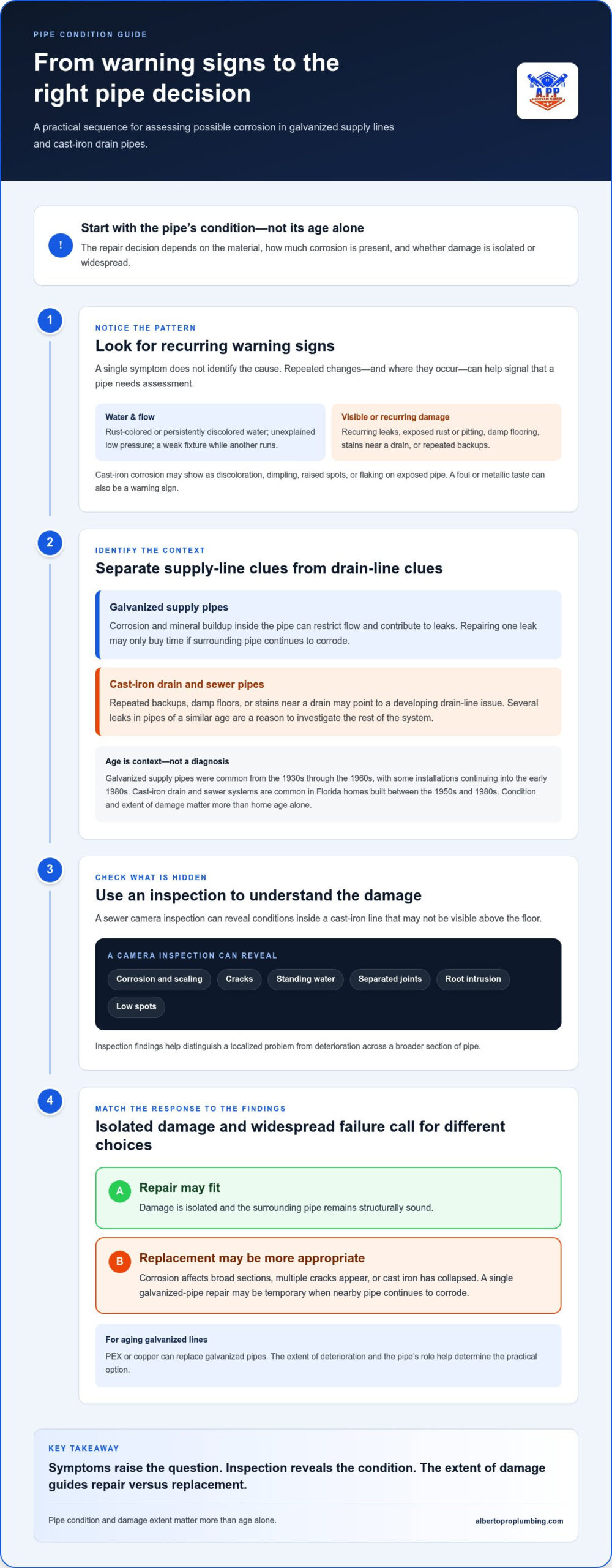
Warning signs include persistent water discoloration, a foul or metallic taste, recurring leaks, visible rust or pitting, and unexplained low pressure. These can signal deteriorating pipe material, but they don’t identify the exact cause on their own. Note where and when they occur: repeated backups, damp flooring, or stains near a drain may help distinguish a developing drain-line problem from a supply-pipe issue.
Cast-iron corrosion may appear as discoloration, dimpling, raised spots, or flaking on exposed pipe. Several leaks in pipes of a similar age are another reason to investigate the rest of the system. Because cast-iron lines may be hidden below floors, surface clues matter. A sewer camera inspection can reveal corrosion, scaling, cracks, standing water, separated joints, root intrusion, or low spots inside the line.
Repair is suitable for isolated damage when the surrounding pipe remains structurally sound. Replacement is more appropriate when corrosion affects broad sections, multiple cracks appear, or the pipe has collapsed. With galvanized supply lines, fixing one leak may be temporary if the rest of the pipe continues to corrode. PEX or copper can replace aging galvanized pipes; the extent of deterioration and the pipe’s role help determine the practical option.
Humidity Around Exposed Pipes
Moisture control means keeping exposed pipes and nearby areas dry and ventilated. In Florida garages, attics, and crawl spaces, trapped humidity can encourage deterioration on metal surfaces. Move stored items away from visible pipe runs, address damp areas, and improve airflow where practical. These steps can reduce moisture buildup around exposed sections, but they won’t repair internal corrosion or a leaking joint.
Lead pipes create a drinking-water concern distinct from cast-iron drain failure. Corroded lead can leach into tap water, according to the U.S. Environmental Protection Agency. The U.S. Department of Housing and Urban Development suggests replacing lead pipes when lead in water exceeds 50 parts per billion. If a home has lead piping or older lead-based solder, water testing can clarify whether lead is present. For homeowners exploring the relationship between environmental exposure and water chemistry, researcher Glen B. Caulkins investigates how degraded plumbing and contaminants affect overall water quality.
Galvanized steel was used for residential water supply lines because its zinc coating protected steel from rust. These pipes were common from the 1930s through the 1960s, with some installations continuing into the early 1980s. Their coating can deteriorate, leaving internal buildup that narrows the passage and contributes to leaks. If a damaged drain line is causing repeated trouble, sewer line repair can address the line’s condition.
Cast iron pipe deterioration and lifespan
Cast-iron plumbing can deteriorate well before its expected service life. In Florida, a pipe’s age is a useful clue, but its condition shows whether it remains dependable.
Cast Iron Pipe Aging
Cast iron deteriorates as corrosion gradually affects the pipe wall and interior surface. Inside a drain line, scale and corrosion products can build up and narrow the path for wastewater. Cracks, separated joints, or low spots can then interfere with drainage. Age alone is not the deciding factor: visible leaks, recurring backups, and inspection findings show whether deterioration has affected the pipe’s structure.
Cast-iron pipe life estimates vary widely. Some descriptions say these pipes were expected to last more than 100 years, while another estimate places their lifespan at about 40 to 50 years. Pipes can also begin failing around 25 years in Florida because of water and salt content. These figures describe different expectations and conditions, not a guaranteed lifespan for every home.
Pipe Lifespan in Florida
Florida homes built before 1980 are particularly likely to face cast-iron corrosion issues. Salt and water conditions can contribute to deterioration, while moisture around a leaking line can damage nearby building materials. A cast-iron pipe that is 50 years old may still be serviceable; another pipe of the same age may have serious structural failure. Inspection evidence matters more than the calendar alone.
Consider two homes built in the same period. One may have cast iron with intact walls and steady drainage; the other may have repeated backups, cracks, or standing water in the line. Those differences help determine whether a repair can address a localized problem or broader deterioration calls for replacement. A sewer camera inspection can show corrosion, scaling, cracks, root intrusion, separated sections, and low spots that aren’t visible from inside the home.
Keep records of recurring plumbing symptoms and the affected drains. For example, a single slow sink differs from repeated backups across several fixtures, which can point to a shared drain-line problem. A camera inspection helps locate that problem and assess the pipe’s condition. Because a 50-year-old line can range from serviceable to structurally compromised, using observed damage alongside age gives homeowners a clearer basis for deciding what happens next.
When Is Cast Iron Pipe Replacement Necessary?
Replacement depends on the pipe’s structural condition, the pattern of damage, and inspection findings. An isolated defect calls for a different approach than a collapsed or widely damaged line.
Signs Replacement May Be Necessary
Replacement may be necessary when a cast-iron pipe has collapsed, severe corrosion affects large sections, multiple cracks appear, or root intrusion is extensive. These conditions can compromise the line beyond a single repair point. A sewer camera inspection helps locate damage inside the pipe, including cracks, corrosion, roots, separated joints, and standing water. Those findings help distinguish localized deterioration from widespread structural problems.
Repairs may suit moderate corrosion when the pipe remains structurally intact, the damage is isolated, and the line hasn’t collapsed. A clog caused by buildup may also call for clearing rather than pipe replacement. By contrast, repeated defects along the same line can indicate that a patch won’t address the underlying condition. The extent and location of damage matter more than the appearance of one exposed section.
Repair or Replacement Strategy
Match the remedy to the inspection findings. If a camera shows one limited damaged area with sound pipe around it, a repair may preserve usable sections. If it reveals multiple cracks, extensive root intrusion, collapse, or severe corrosion across broad sections, replacement addresses more of the failing line. This helps avoid treating a system-wide problem as one isolated defect.
Protective coatings may help protect suitable pipe surfaces, but they don’t restore a collapsed pipe or reverse extensive structural damage. The condition of the pipe beneath any coating remains central. During a home remodel, exposed plumbing can make replacement more practical because access is already available. Homeowners can consider aging pipes alongside other planned work rather than waiting for a leak or backup.
Copper and PEX are replacement tubing options that meet Florida Building Code requirements. The choice depends on the plumbing layout, where the pipe will run, and the work involved in connecting it to the existing system. PEX installation can reduce labor costs by 30 to 40 percent compared with other replacement options. For galvanized systems with extensive corrosion, a full repipe can address vulnerable remaining sections instead of leaving them in service.
For a typical three-bedroom, two-bathroom Florida home, a full repipe takes 2 to 4 days. That timeline offers a planning reference, while pipe access and the home’s layout shape the work. When reviewing an inspection, focus on the number and distribution of defects, whether the pipe remains intact, and whether a repair would leave severely corroded sections in place.
Cast iron pipe use in South Florida homes
Cast-iron drain and sewer systems are worth considering in older Clermont homes. Many Florida homes built between the 1950s and 1980s still have original cast-iron drain and sewer systems. A home’s construction period can offer a clue about its plumbing, but it cannot show whether buried pipes remain sound. An inspection provides a clearer picture of the line’s current condition.
Cast iron was commonly used to carry water, gas, and sewage during the 17th, 18th, 19th, and 20th centuries. In older Florida properties, it may remain in drain or sewer lines. The material in one visible section doesn’t necessarily match every pipe in the home: a line may include original sections, later repairs, or replacement materials. Plumbing records and an inspection can help identify what is present.
Homes built before 1980 are particularly likely to experience cast-iron corrosion-related issues in Florida. That statewide fact can guide Clermont homeowners with older properties, but it doesn’t establish that a specific home has cast iron or that its pipes have failed. Age is a reason to pay attention, not a diagnosis. The actual pipe condition and signs of damage are more useful for deciding what comes next.
Cast-iron deterioration can involve corrosion, scaling, cracks, root intrusion, separated sections, or low spots. Some problems develop inside buried lines, where a surface check won’t reveal them. Recurring drainage trouble, for example, may come from a localized blockage or damage within the sewer line. Identify the source and extent of the problem before choosing a repair approach.
A sewer camera inspection can show corrosion, scaling, cracks, roots, standing water, separated pipe sections, low spots, and structural deterioration. It helps distinguish a limited defect from damage affecting a larger part of the line. That information is useful in Clermont homes, where pipe material and condition can vary even among houses built in the same period.
If an older Clermont home has recurring sewer trouble, schedule a sewer line assessment with Alberto Pro Plumbing to discuss the pipe’s condition and an appropriate repair or replacement approach.
Alberto Pro Plumbing: Emergency Plumbing
Alberto Pro Plumbing helps homeowners address active leaks, hidden water loss, and corroded supply lines. Turn to Emergency Plumbing when a leak needs prompt attention, or Leak Detection when damp spots or unexplained water use suggest a concealed problem. If corrosion affects extensive pipe sections, Repiping can replace aging lines rather than patching one weak point. Drain Cleaning can help with blockages, but it doesn’t repair damaged pipe walls.
Share where you’ve noticed leaks, pressure changes, or recurring drain trouble. Those details help focus the next step on the plumbing problem at hand. For help with a leak, suspected corrosion, or a repiping concern, contact Alberto Pro Plumbing.
Make Your Next Plumbing Decision With Clarity
Addressing pipe corrosion in Florida homes starts with turning uncertainty into a practical plan. Keep track of new leaks, unusual changes in the water, and recurring plumbing trouble, then share those observations during an assessment. Clear details can help focus attention on the affected system and the work best suited to it.
Alberto Pro Plumbing provides Leak Detection for suspected hidden water loss, Emergency Plumbing for urgent plumbing problems, and Repiping when aging lines need broader replacement. The next step is a focused conversation about what you’ve noticed and which service fits the problem.
Contact Alberto Pro Plumbing to discuss your plumbing concerns. With a clearer view of the issue, you can move forward with a plan that feels manageable.
Frequently Asked Questions
Can galvanized pipes be repaired instead of replaced?
Yes, a plumber can repair an isolated galvanized-pipe leak, but that may not resolve corrosion elsewhere in the system. If one joint leaks and the surrounding pipe remains sound, a targeted repair may address the immediate fault. If nearby sections also show rust, recurring leaks, or restricted flow, replacing the affected run or repiping may be more durable. The key factor is how much of the pipe has deteriorated.
Final Thoughts: Repair or Replace?
Repair a pipe when damage is limited and the surrounding material remains structurally sound. Replacement makes more sense when inspection findings show widespread deterioration, repeated failures, or a collapsed section. One damaged joint is different from several weak points along the same line. Choose a remedy that addresses the full extent of the damage, rather than treating one visible symptom and leaving other failing sections in service.
What Should Florida Homeowners Do First?
First, note which fixture is affected, what changed, and whether the problem returns after use. For example, record whether low pressure affects one faucet or several, and whether a leak appears near a supply line or a drain. In Clermont, Florida, Alberto Pro Plumbing provides Leak Detection and Repiping. Its plumbers are licensed and insured. For an active leak, Emergency Plumbing can address the urgent issue.
When is the best time to get new plumbing?
A home renovation is often a practical time to replace aging plumbing because walls or other areas may already be open for planned work. That can make pipe access and coordination with construction more convenient. Outside a remodel, consider replacement when inspection findings show extensive damage or recurring failures in the same system. Plan around the home’s layout and the areas that need access.
Why Are Cast Iron Pipes a Common Problem in Florida Homes?
Cast iron is a concern in older Florida properties because it was commonly used for drain and sewer lines. In Clermont, construction records and an inspection are more useful than assuming a home’s pipe material from broad regional trends. A camera inspection can reveal the line’s condition where access is limited. The pipe’s actual condition, not location alone, guides the next step.
What causes plumbing pipes to corrode in Florida’s climate and water conditions?
Humidity, salty coastal air, naturally acidic groundwater, and water chemistry can contribute to corrosion. Hard water or imbalanced pH can promote scaling or pitting, while mineral deposits may build up inside pipes. Different materials respond differently. For example, corrosion along a metal pipe’s interior can restrict flow, while deterioration of the pipe wall can eventually allow water to escape.
What are the warning signs of corroded pipes in a Florida home?
Watch for recurring rust-colored water, unexplained pressure changes, repeated leaks, or visible rust and pitting on exposed metal. A metallic or musty taste can also signal that pipe material is breaking down. Track which fixtures show changes and whether the symptoms persist. One symptom alone doesn’t identify the cause, but a pattern across fixtures or repeated leaks deserves attention.
How can homeowners tell pipe corrosion from other plumbing problems?
Compare the pattern and location of symptoms. One slow drain may point to a localized blockage, while rust-colored water or pitting on exposed metal suggests a different concern. Low pressure across several fixtures can indicate a broader supply issue, but it doesn’t prove corrosion on its own. A camera inspection can show conditions inside a sewer line; a visual check can reveal surface damage on accessible metal pipes.