
Could the right expansion tank for one home be the wrong fit for yours? Water heater expansion tank installation depends on your plumbing setup, including whether the system is closed, how the tank should be sized, and where it should go. If you’re unsure why a tank may be needed or concerned about an incorrect connection, you’re not alone.
When water heats, it expands. In a closed plumbing system, that extra volume can raise pressure instead of flowing back toward the water supply. An expansion tank helps accommodate the change, but selecting and installing one takes more than following a one-size-fits-all checklist.
This guide explains how an expansion tank works, what a plumber considers when selecting its size and location, and why the work may be part of a water-heater project. You’ll also learn when it makes sense to have a plumber assess the setup rather than rely on a generic example. Alberto Pro Plumbing’s licensed and insured plumbers provide water-heater installation and repair for homeowners in Lake County, Polk County, Osceola County, and Orange County, with transparent, honest pricing and no hidden fees.
Key Takeaways
- A thermal expansion tank helps manage extra pressure as water heats, but whether one is needed depends on the plumbing system.
- Water heater expansion tank installation starts with assessing the existing heater, plumbing layout, connections, and pressure conditions.
- A visible tank doesn’t mean every setup is interchangeable. Sizing and placement need to suit the home’s plumbing.
- A professional installation typically includes reviewing the system, planning the work, completing the connection, and checking the result.
- Alberto Pro Plumbing’s licensed and insured plumbers provide water-heater installation and repair to help homeowners assess their setup.
What Is a Water Heater Expansion Tank and When Is It Needed?
A thermal expansion tank is a small vessel connected to a water-heater system that provides space for water as it expands during heating. It isn’t a second hot-water storage tank. Instead, it helps manage extra volume and pressure in plumbing systems that can’t send expanding water back toward the supply. Whether your home needs one depends on its plumbing configuration, so water heater expansion tank installation starts with understanding the system, not assuming every home is the same.
How thermal expansion relates to a home’s plumbing
Water expands as it warms. Picture a pot of water heating on the stove: as its temperature rises, the water takes up more space. A water heater causes the same basic change inside your plumbing, though the system’s layout affects where the extra volume can go. An expansion tank provides a cushion for that change.
A closed plumbing system is one where a device, such as a check valve or backflow preventer, restricts water from flowing backward into the supply. Some pressure-reducing valves can also be part of a setup that limits reverse flow. When that path is restricted, expanding water has less room to move and pressure can rise. Other homes may have a different arrangement. A plumber can review the components and connections before deciding whether an expansion tank is appropriate.
The expansion tank commonly connects to the cold-water side of the heater. Inside, a flexible diaphragm separates the plumbing water from an air cushion. As water expands, it can move into the tank and compress the air, helping accommodate the added volume. The tank manages pressure; it doesn’t heat water or replace the water heater. A similar principle applies across broader domestic heating setups, where specialists like Trust Boilers & Renewables inspect and balance expansion vessels during boiler installations and servicing.
Clues that an expansion tank may be part of water-heater work
Clues can prompt an assessment, but they don’t confirm that a tank is needed or that an existing one has failed. If you see a tank near the water heater, its presence alone doesn’t establish that it’s suited to the current setup. A plumber can consider the home’s plumbing design, the heater, and how the components connect.
- A replacement or new heater is planned. Water-heater installation is a natural time to review connected plumbing components and consider whether thermal expansion needs to be managed.
- The supply line includes pressure-control or backflow components. These can affect whether water can move back toward the supply, so they’re worth including in a professional assessment.
- The temperature-and-pressure relief valve drips. Thermal expansion can be one possible factor, but a drip alone doesn’t identify the cause or prove that an expansion tank is required. Have a plumber assess it rather than treating the symptom as a diagnosis.
For homeowners, a useful first step is to note what you’ve observed and have the connected system reviewed. A plumber can explain how the home’s configuration affects the decision before planning the work. Property maintenance professionals, such as CFS group Limited, similarly recommend relying on comprehensive service checklists when evaluating heating equipment and plumbing issues.
How a Plumber Assesses Water Heater Expansion Tank Installation
A careful assessment starts with the water heater and the plumbing already in place. The goal is to determine whether an expansion tank suits the home’s system, then plan a connection and location that work with the equipment and applicable requirements. That makes water heater expansion tank installation a site-specific job, not a one-size-fits-all add-on.
What the plumber reviews before planning the work
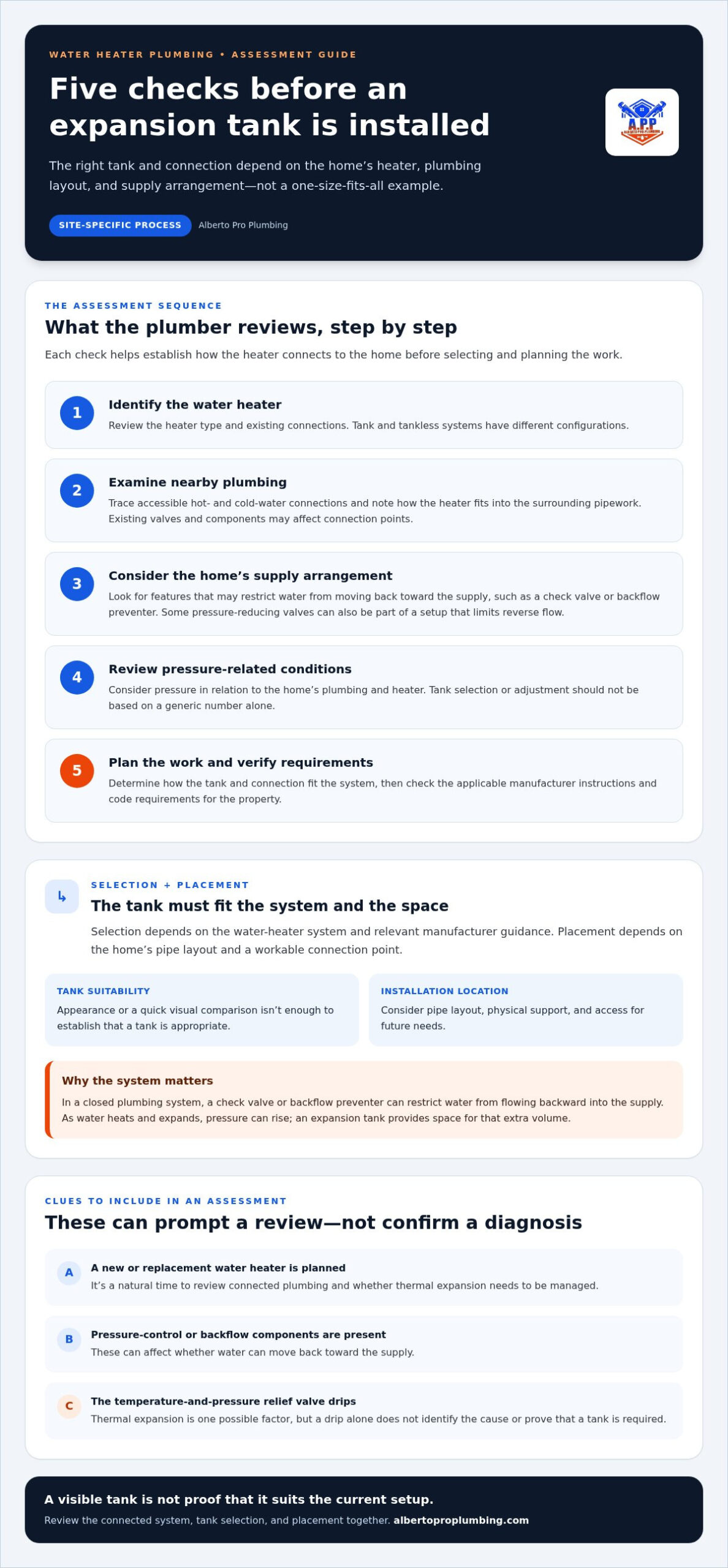
The assessment generally follows a practical sequence. Each step helps the plumber understand how the heater connects to the rest of the home before deciding what work is appropriate.
- Identify the water heater. The plumber reviews the heater type and its existing connections. Tank and tankless systems have different configurations, so identifying the equipment is an important starting point.
- Examine the nearby plumbing. The plumber traces accessible cold-water and hot-water connections and notes how the heater fits into the surrounding pipework. Existing valves and other components can affect available connection points.
- Consider the home’s supply arrangement. The plumber looks for components or system features that may restrict water from moving back toward the supply. The aim is to understand the actual plumbing configuration, not assume every home has the same pressure-control setup.
- Review pressure-related conditions. Pressure is considered in relation to the home’s plumbing and the heater. A professional assessment avoids guesswork: tank selection or adjustment shouldn’t be based on a generic number alone.
- Plan the work and verify requirements. The plumber determines how the proposed tank and connection would fit the system, then checks the applicable manufacturer instructions and code requirements for the property.
How tank selection and placement are determined
Tank selection depends on the water-heater system and relevant manufacturer guidance. The tank must suit the conditions in which it will operate, so appearance or a quick visual comparison isn’t enough to establish that an option is appropriate. The InterNACHI Water Heater Expansion Tanks resource offers homeowners additional background on expansion tanks and inspection considerations.
Placement is also specific to the home. The plumber considers the existing pipe layout, a workable connection point, physical support, and access for future inspection or service. The preferred location or orientation isn’t universal; manufacturer instructions and site conditions guide the plan. Applicable Florida and local code details should be verified for the specific property before installation requirements are stated or work is planned.
Before work begins, ask the plumber to explain the proposed location, how the tank connects to the existing system, and which manufacturer instructions and applicable requirements guide the plan. Alberto Pro Plumbing’s licensed and insured plumbers can assess water-heater plumbing and explain the installation approach. Water heater plumbing help can be a practical next step when you need a professional review.
DIY or Professional Water Heater Expansion Tank Installation?
A tank that looks simple to connect isn’t automatically a standard fit. Expansion tanks can differ, and the plumbing around your water heater affects which component, connection point, and placement are appropriate. A visible tank doesn’t tell you whether it suits your system or whether its installation follows the manufacturer’s instructions and applicable code.
Homeowners can learn what the tank does and understand the proposed scope. The technical assessment is different: it considers the water heater, existing pipe layout, pressure-related conditions, and property-specific requirements together. That distinction helps you stay informed without treating online examples as instructions for your plumbing.
What homeowners can understand before work begins
Start with the tank’s purpose: it provides room for water that expands as it heats. You can also ask how the planned work relates to your water heater and existing plumbing, where the tank will connect, and which manufacturer guidance and applicable requirements shape the plan. These questions clarify the scope without requiring you to inspect or adjust plumbing components yourself.
Homeowner research: Learn the tank’s general purpose, note whether the work is part of a heater replacement or a separate assessment, and ask for a plain-language explanation of the proposed scope.
Professional assessment: Review the heater and connected plumbing, determine whether the home’s configuration calls for an expansion tank, and plan component selection and placement according to manufacturer instructions and applicable code.
This comparison isn’t about keeping homeowners out of the conversation. It separates useful background research from decisions that depend on the actual system. A photo or product description may help explain what you’ve seen, but it can’t establish by itself that a tank suits your home.
Why professional installation can simplify the decision
A plumber can evaluate how the water heater connects to the home’s plumbing and account for details that aren’t obvious from the tank’s appearance. Selection and installation planning should fit those conditions and follow the instructions for the chosen component. Applicable Florida and local code details also need to be verified for the specific property, rather than inferred from a general guide or another home’s setup.
That assessment is particularly useful during water-heater replacement, when existing connections and related components are already part of the work being reviewed. It can also help clarify whether a concern calls for water-heater repair or a broader look at the connected plumbing. Alberto Pro Plumbing provides Water Heater Installation and Water Heater Repair, and all plumbers are licensed and insured.
For water heater expansion tank installation, treat homeowner research as a way to understand the conversation, not as a substitute for a site-specific plan. A professional can explain the reasoning behind the component choice and proposed placement, so you know how the work fits your home.
What to Expect During a Professional Expansion Tank Installation
A professional visit should make the plan clear before work begins. The plumber reviews the water heater and nearby plumbing, explains the proposed scope, completes the work that fits the home, then reviews the result with you. The exact approach depends on the equipment, existing connections, and applicable requirements, so water heater expansion tank installation shouldn’t be treated as an identical process in every house.
From initial review to completed plumbing work
The process typically moves through a few broad stages. Details may differ from home to home, but a homeowner should understand what each stage is intended to address:
- Review the existing setup. The plumber considers the water heater, its connections, and the surrounding plumbing to understand how the system is arranged.
- Explain the proposed plan. The plumber describes whether an expansion tank is appropriate for the system and outlines the intended scope. Component selection and placement depend on the home’s plumbing and relevant manufacturer instructions.
- Complete the agreed work. The installation approach follows the conditions at the property and applicable requirements. No single connection or location should be assumed to suit every home.
- Review the result. The plumber explains what work was completed and answers questions about the connected plumbing and any next steps.
This is a general overview, not a promise that every visit follows the same procedure. Applicable Florida and local code details should be verified for the specific property, and installation decisions should follow the instructions for the equipment involved. If you’re also planning a water-heater replacement, the broader process described in a water heater installation in Clermont guide can help explain how expansion-tank considerations fit into that project.
Questions homeowners can raise about scope and pricing
Clear questions can help you understand the plan without needing to assess the plumbing yourself. Before work begins, ask the plumber to explain:
- What the assessment found about the water heater and connected plumbing.
- Which work is included and which components it involves.
- How the planned approach accounts for the home’s layout and applicable requirements.
- What work will be completed and what the plumber will review with you afterward.
Pricing should be clear alongside the work description. Alberto Pro Plumbing emphasizes transparent, honest pricing with no hidden fees, so you can understand the scope without relying on a vague estimate or an unexplained charge. The company’s licensed and insured plumbers provide Water Heater Installation and Water Heater Repair, services that can be relevant when a tank assessment is part of a larger water-heater project.
If you’re planning water-heater work or want a professional assessment of the connected plumbing, contact Alberto Pro Plumbing for water-heater help.
Arrange Water Heater Plumbing Help in Clermont, Florida
Not every home needs an expansion tank, and seeing one near a water heater doesn’t tell you whether the current setup is suitable. A professional assessment can clarify how your plumbing is configured and whether expansion-tank work belongs in a water-heater project. You don’t have to diagnose the system yourself. A plumber can review the heater and connected plumbing, explain the findings, and outline relevant next steps.
Local water-heater service for Clermont homeowners
For homeowners in Clermont, Florida, Alberto Pro Plumbing provides Water Heater Installation and Water Heater Repair. An assessment can be useful during a planned heater replacement, when you notice an issue with the water heater or a connected component, or when you want to understand how the existing plumbing affects thermal expansion. The goal is a project-specific plan, not an assumption that every household needs the same equipment or work.
Alberto Pro Plumbing serves customers in Lake County, Polk County, Osceola County, Orange County. All plumbers are licensed and insured. If you need broader help with plumbing concerns at home, professional plumbing services in Clermont can include support beyond the water heater, while keeping the focus on the issue you need addressed.
Request help with water-heater installation or repair
Before arranging service, note what prompted your concern, whether you’re planning a water-heater replacement, and what you’d like clarified about the plumbing work. You can ask for an explanation of the proposed scope, the components involved, and how the approach accounts for your home’s setup. That gives you a clearer picture without requiring you to inspect or adjust plumbing yourself.
Alberto Pro Plumbing emphasizes transparent, honest pricing with no hidden fees. The company also offers a customer satisfaction guarantee. These points can help homeowners understand the work and the service standards behind it.
If you need guidance about water heater expansion tank installation, water-heater installation, or repair, request a quote through the website or call Alberto Pro Plumbing at 407-764-7090. A licensed and insured plumber can assess the plumbing and discuss a suitable path forward.
Take the Next Step Toward Water-Heater Help
You don’t have to decide on an expansion tank by appearance alone. If you’re planning water-heater work or have questions about your plumbing, make the next step a clear conversation about your home and what you’d like addressed. Sharing the reason for your concern helps focus the discussion on a practical path forward.
Alberto Pro Plumbing offers Water Heater Installation and Water Heater Repair, with licensed and insured plumbers and transparent, honest pricing with no hidden fees. Bring up water heater expansion tank installation as part of your water-heater project.
Request water-heater plumbing help from Alberto Pro Plumbing, or call 407-764-7090 to request a quote.
Frequently Asked Questions
What does a water heater expansion tank do?
It gives heated water a place to expand within a plumbing system that restricts water from flowing back toward the supply. Many expansion tanks use an internal diaphragm to separate water from an air cushion, accommodating some of the volume change. For example, as a tank-style heater warms stored water, the expansion tank helps manage the resulting change in the connected plumbing rather than supplying additional hot water.
Does every water heater need an expansion tank?
No. Whether one is needed depends on the plumbing system’s configuration, including whether components restrict water from flowing back into the supply. Two homes with similar-looking water heaters may have different plumbing arrangements, so the answer can differ. A plumber can assess the connections and relevant requirements for your property. Don’t rely on the heater’s appearance alone to decide whether an expansion tank should be installed.
Can I install a water heater expansion tank myself?
Homeowners can research the tank’s purpose and ask questions about the proposed work, but installation involves decisions specific to the heater and connected plumbing. Manufacturer instructions, connection points, and applicable requirements all matter. A professional assessment can determine how those factors apply to your setup. If you’re considering water heater expansion tank installation, have a plumber explain the scope and component selection before work proceeds.
How do I know what size expansion tank my water heater needs?
The correct size depends on the water-heater setup and the conditions of the plumbing system, so a generic recommendation may not fit your home. A plumber can use the heater details and relevant manufacturer guidance to determine a suitable option. Share the heater’s make and model if you have them, but don’t choose a tank based only on appearance or an example from another property.
Where is a water heater expansion tank installed?
An expansion tank is generally connected to the cold-water side of a water heater, but its precise connection point and orientation depend on the plumbing layout and the tank’s instructions. A nearby tank in another home isn’t necessarily a guide for yours. A plumber can identify a workable location that suits the equipment, connections, and applicable requirements without assuming one placement fits every system.
Does replacing a water heater mean I need a new expansion tank?
Not automatically. A water-heater replacement is a good opportunity to review an existing expansion tank, but the plumber needs to assess whether it suits the new setup and remains appropriate for the system. The replacement heater, connected plumbing, and manufacturer guidance can affect the plan. Ask for the tank and its connections to be included in the project discussion, rather than assuming it must always be reused or replaced.
Can Alberto Pro Plumbing help with water heater installation or repair in Clermont?
Yes. Alberto Pro Plumbing provides Water Heater Installation and Water Heater Repair for homeowners in Clermont, Florida. The company’s plumbers are licensed and insured, and the team can discuss how a water-heater concern relates to the connected plumbing. To request a quote or talk through your installation or repair needs, call 407-764-7090 or use the company website.