
What if the biggest threat to your Florida home isn’t a hurricane, but the invisible water table rising just inches below your drain field? With over 2.6 million septic systems across the sunshine state, many of our neighbors in Central Florida are living on top of a complex environmental challenge. Maintaining a healthy system here is a constant battle against saturation. This is why understanding the right maintenance for septic systems in Florida is about more than just pumping a tank; it’s about protecting your property and your wallet from sudden, costly failures.
We understand the anxiety that comes with every summer thunderstorm. You’ve likely heard conflicting advice about septic additives or worried that a saturated yard means a massive replacement bill is right around the corner. We’re here to help you breathe easier. This guide provides a clear, professional look at the essential steps to safeguard your system against our unique sandy soil and high water levels. You’ll learn how to navigate the latest environmental regulations, establish a reliable service schedule, and use proactive care to prevent the most common causes of system failure.
Key Takeaways
- Understand how Florida’s high water tables and sandy soil create unique risks for your home’s waste management.
- Master a proactive schedule for maintenance for septic systems in Florida to avoid backups during heavy summer storms.
- Learn to protect your drain field from “biomat” clogs that lead to the most expensive system failures.
- Identify the common household items and “miracle” additives that actually damage your tank’s natural balance.
- Discover how a Home Protection Membership provides the professional oversight needed to catch small issues before they become emergencies.
Understanding Your Florida Septic System: Why Maintenance is Different Here
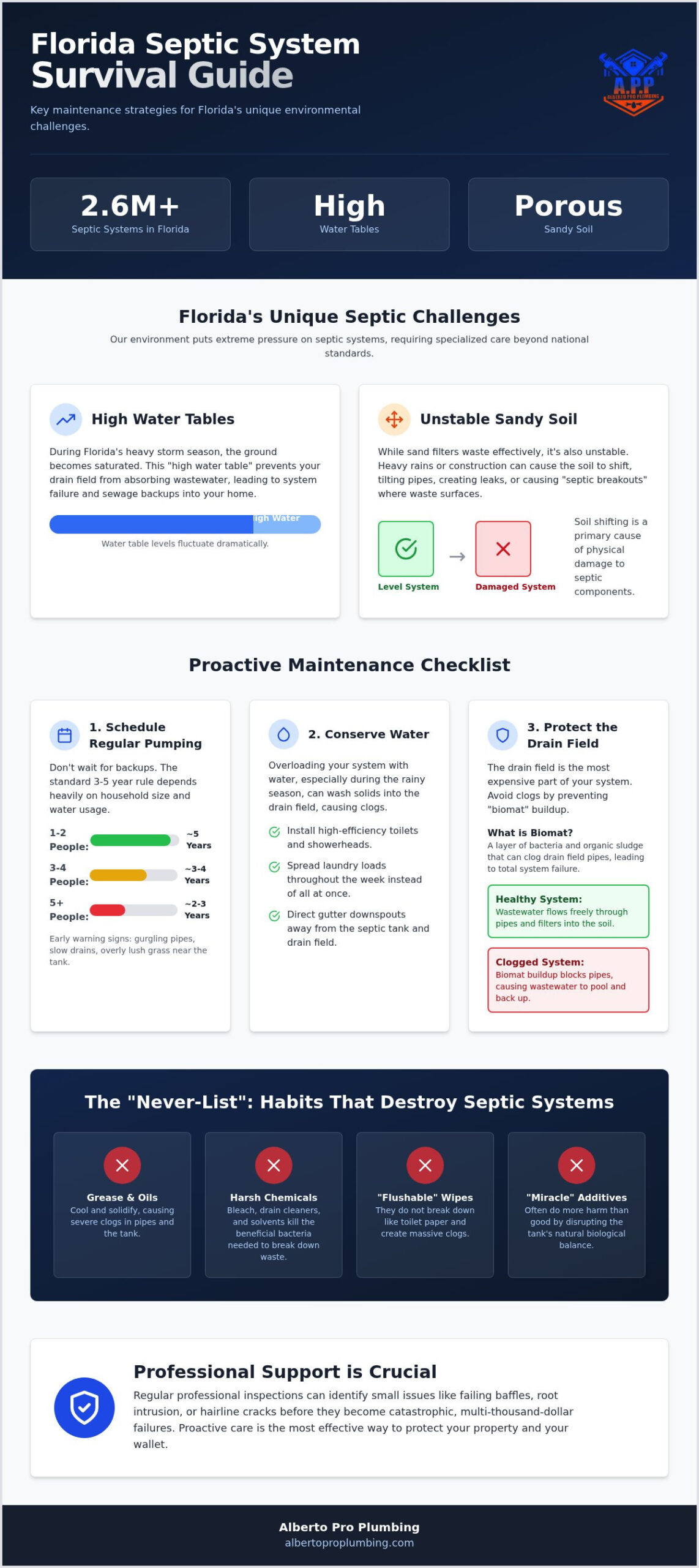
Most homeowners think of their septic system as a “set it and forget it” utility. However, if you live in Clermont or the surrounding Central Florida area, your system operates under extreme environmental pressure. While the basic concept of what a septic tank is remains the same nationwide, the ground it sits in is unique. National maintenance guides often suggest pumping every five years regardless of location. In Florida, that advice can lead to disaster. The Florida Department of Environmental Protection (DEP) oversees these systems because our porous ground means whatever leaves your tank enters the water supply quickly. Proper maintenance for septic systems in Florida isn’t just about plumbing; it’s about managing the delicate balance between your household waste and the state’s fragile ecosystem.
The Challenge of Central Florida Sandy Soil
In places like Lake and Orange Counties, we’re famous for our sandy soil. This sand is actually a double-edged sword. It’s excellent at filtering effluent as it moves through your drain field, which is the final stage of treatment. But sand is also unstable. Over time, heavy rains or nearby construction can cause the soil to shift. This movement can tilt your pipes or create a “septic breakout,” where untreated waste reaches the surface because the soil can no longer contain it. Because sand allows water to move so freely, a small leak can quickly become a large, messy problem. You need a local expert who understands these specific soil profiles to ensure your system stays level and functional year after year.
High Water Tables and Your Drain Field
Florida’s water table is the depth at which the ground is completely saturated with water. In our region, this table sits much higher than in other states, and it fluctuates significantly during our intense summer storm season. When the ground around your drain field is already soaked from rain, there’s nowhere for your household wastewater to go. The physics of the system simply stop working. Instead of the water filtering down through the soil, it stays trapped or, worse, pushes back toward your home. A flooded system can cause sewage to back up into the home. Monitoring your water usage during these wet months is vital to prevent hydraulic overloading. Many systems fail not because they’re full of solids, but because the surrounding earth is too wet to do its job.
Step-by-Step Maintenance Checklist for Florida Septic Systems
Effective maintenance for septic systems in Florida requires a shift from reactive repairs to proactive management. Because our environment is so sensitive, the state regulates these systems through Florida’s official Onsite Sewage Program. Following a strict checklist doesn’t just save you money; it protects the local groundwater we all rely on. Start by keeping a dedicated folder for your system. Document every pump-out, inspection, and repair. This record is invaluable for your peace of mind and adds significant transparency when you eventually decide to sell your home.
Scheduling Your Septic Pumping
The standard rule for pumping is every three to five years. However, this isn’t a one-size-fits-all timeline. A family of five in a three-bedroom home will reach capacity much faster than a couple living in the same space. Don’t wait for a backup to act. Look for early warning signs like gurgling sounds in your pipes, slow-draining tubs, or patches of unusually lush, green grass over the tank. By staying ahead of the sludge levels, you can ensure that emergency septic pumping never becomes a necessity for your household. Regular inspections during these pump-outs allow us to check the baffles and filters that keep your system running smoothly.
Water Conservation as Maintenance
Your septic system has a daily water budget. When you exceed it, you risk washing solids out of the tank and into the drain field. This is especially dangerous during the rainy season when the soil is already struggling to absorb liquid. You can protect your system by installing high-efficiency toilets and showerheads. These fixtures significantly reduce the total volume of water your system must process. Additionally, avoid “slug” loads. Spreading your laundry throughout the week rather than doing five loads on a Saturday gives the tank time to settle. Finally, check your gutters. Direct downspouts away from the septic area to prevent unnecessary saturation of the soil around the tank.
Proper landscaping is the final piece of the puzzle. Only plant grass over your drain field. Trees and shrubs have aggressive roots that can seek out moisture and crack your pipes. If you aren’t sure where your components are located, a professional inspection can map out your yard. Taking these small steps today prevents the heavy cost of a total field failure. If you want to take the guesswork out of your home’s health, consider a membership that protects your home year-round to stay ahead of potential issues.
Protecting Your Septic Drain Field: Avoiding Costly Failures
The drain field is the heart of your home’s waste treatment process. While the tank handles the initial separation of solids, the drain field is responsible for the actual purification of effluent. It is also the most expensive and vulnerable part of the entire system. Replacing a failed field can cost significantly more than simply installing a new tank. In the context of maintenance for septic systems in Florida, your primary goal is to keep this area porous and healthy. When a drain field fails, it’s usually because the soil has lost its ability to absorb and treat water, leading to messy backups and environmental hazards.
A key concept to understand is the “biomat.” This is a thin layer of specialized bacteria that naturally forms where the gravel in your drain field meets the soil. A healthy biomat is essential for filtering out pathogens. However, if your tank isn’t pumped regularly, too many solids escape into the lines. This causes the biomat to grow too thick, eventually becoming a waterproof barrier that prevents drainage. Once this layer clogs the soil, the system can no longer function, often requiring professional intervention to restore the flow. For homeowners researching these issues in other regions, Texas Septic Solutions serves as a leading example of a provider offering expert new installations and comprehensive repair services.
Landscaping Dos and Don’ts
Your yard’s design plays a massive role in system longevity. You should never plant trees with aggressive roots near your septic lines. Species like willows, maples, or certain palms can send roots dozens of feet away to find the moisture inside your pipes. Once they penetrate the system, they create structural damage and massive blockages. Grass is the only recommended cover for a Florida drain field. Its shallow roots won’t interfere with the pipes, and it helps manage moisture and prevent erosion. Keep an eye out for “lush green spots” in your lawn. If one area is significantly greener or wetter than the rest, it’s a clear indicator that your drain field is struggling to process effluent and may be leaking.
Preventing Soil Compaction
Soil compaction is the loss of air pockets necessary for waste treatment. When the soil is packed down, oxygen can’t reach the “good” bacteria that break down waste. You should never park cars, drive heavy equipment, or store boats over the septic area. Even seemingly light additions can cause trouble. A small storage shed or an above-ground pool can ruin a system by exerting constant, heavy pressure on the pipes and soil below.
If you’re already noticing slow drains or wet spots, don’t assume a total replacement is your only option. We often help neighbors avoid the massive expense of a new installation through septic drain field rehab. This professional process can often restore the soil’s natural absorption without the need for a full dig-out, saving your yard and your budget.
The “Never-List”: Habits That Destroy Florida Septic Systems
Your septic tank is more than just a concrete box; it’s a living, biological ecosystem. For many homeowners, the most important part of maintenance for septic systems in Florida is simply knowing what to keep out of the pipes. When you treat your drains like a trash can, you disrupt the natural bacterial balance that breaks down waste. This leads to premature sludge buildup and, eventually, a system failure that could have been easily avoided. We see these common mistakes every day, and most of them start with a well-meaning attempt to “clean” or “help” the system.
The Truth About Septic Additives
You’ve likely seen “miracle” septic starters or enzymes at the hardware store. These products claim to eliminate the need for pumping, but the reality is quite different. A healthy septic system already contains all the bacteria it needs to function. In fact, some chemical additives can be actively harmful. These products often break down solids into tiny particles that stay suspended in the effluent rather than settling at the bottom of the tank. These suspended solids then flow directly into your drain field, where they cause the “biomat” clogs we discussed earlier. Stick to professional pumping from a reputable provider like Lil’ Stinky Septic Service and leave the miracle chemicals on the shelf.
The kitchen is often where septic trouble begins. While they are convenient, garbage disposals are the enemy of a long-lasting septic system. They send finely ground food particles into the tank, which don’t break down as easily as human waste. This significantly increases the volume of solids and forces you to pump your tank much more frequently. Additionally, managing fats, oils, and grease (FOG) is vital. When grease is poured down the drain, it cools and hardens in your pipes or forms a thick “scum” layer in your tank that is difficult to remove. Always scrape your plates into the trash and collect cooking oils in a separate container.
Beyond the kitchen, watch your use of household cleaners. Heavy bleach use or harsh chemical drain openers kill the beneficial bacteria that make your system work. Only flush human waste and standard toilet paper. “Flushable” wipes are a major culprit in Florida backups because they don’t dissolve like toilet paper; they snag on pipes and create stubborn blockages. If you’ve been using these products and notice your drains are slowing down, schedule a professional inspection with our local team to clear the way before a backup occurs.
Professional Support: The Alberto Pro Plumbing Advantage
Navigating the complexities of local plumbing requires a partner who knows the ground as well as you know your home. In Clermont, the sandy terrain and fluctuating water tables mean that maintenance for septic systems in Florida isn’t a job for amateurs. While many general contractors offer broad repairs, our family-owned team brings specialized knowledge of Central Florida’s specific infrastructure. We don’t just fix pipes; we protect your property’s value and your family’s health. Our approach combines technical authority with the neighborly care you expect from a local expert.
Whether you’re buying a new home in Lake County or managing an older system, a professional inspection is your best defense against hidden failures. Florida doesn’t always mandate these at the point of sale, but a savvy homeowner knows that a “working” system can still be on the verge of a major drain field failure. Knowing when to put down the plunger and call for professional plumbing services is the hallmark of a responsible homeowner. We provide the clarity you need to make informed decisions about your home’s most critical utility.
Home Protection Membership Benefits
Our Home Protection Membership is designed to take the stress out of homeownership. Members receive priority support, which is vital during those sudden Florida summer storms that can overwhelm a saturated system. By catching small issues like dripping faucets or running toilets early, we prevent the “silent floods” that can hydraulically overload your septic tank. This proactive approach is the most effective way to ensure the long-term health of your drain field and avoid the high costs of emergency replacements. It’s about providing a sense of calm and reliability before a crisis occurs.
Expert Septic Inspections in Central Florida
During a comprehensive check-up, our technicians use specialized tools for precise leak detection and pipe health assessments. We don’t just look at the tank; we examine the structural integrity of the baffles and the saturation levels of the surrounding soil. This thorough process ensures that every component of your waste management system is performing its job correctly. We take pride in our tidy service, ensuring your yard remains in excellent condition after our visit. Our goal is to provide the professional remedy your home deserves while treating your property with absolute respect. Join our Membership Plan today to protect your home year-round!
Securing Your Home’s Future with Proactive Septic Care
Taking control of your home’s waste management doesn’t have to be a source of constant worry. By understanding how our sandy soil and high water tables affect your system, you’ve already taken the first step toward long-term reliability. Remember that successful maintenance for septic systems in Florida relies on three pillars: monitoring your water usage, avoiding harmful additives, and sticking to a professional pumping schedule. These simple habits protect the fragile biomat in your drain field and keep your property safe from sudden, messy backups.
As a family-owned and operated team based right here in Clermont, we’re deeply invested in our community’s well-being. Whether you need specialized Florida drain field rehab or a 24/7 emergency response in Lake and Orange Counties, we have the local expertise to handle any challenge. Don’t wait for a summer storm to test your system’s limits. Protect your Florida home with our professional septic and plumbing services! We’re here to ensure your home remains a clean, safe place for your family for years to come.
Frequently Asked Questions
How often should I pump my septic tank in Florida?
You should generally pump your tank every three to five years. However, this timeline depends heavily on your household size and water usage habits. In Central Florida, our heavy summer rains put additional stress on your drain field. A family of four using a standard 1,000-gallon tank should lean toward a three-year schedule. Regular inspections during these pump-outs allow us to check your filters and ensure your system is handling the local environmental pressure.
Can I use a garbage disposal with a septic system?
It’s best to avoid using a garbage disposal if your home relies on a septic system. These units send finely ground food particles into your tank, and these solids don’t break down as easily as human waste. This process significantly increases the sludge layer at the bottom of your tank. If you choose to use one, you’ll need to pump your system much more frequently to prevent solids from escaping into your drain field.
What are the signs that my septic drain field is failing in Central Florida?
Look for unusually lush, green patches of grass or standing water over the drain field area. These “hot spots” indicate that effluent is surfacing rather than filtering through the soil. You might also notice slow-draining sinks or gurgling sounds in your pipes. These symptoms often worsen during the rainy season when the water table rises. Catching these signs early allows for proactive maintenance for septic systems in Florida before a total failure occurs.
Are “flushable” wipes actually safe for Florida septic systems?
No, “flushable” wipes are not safe for septic systems and should never be flushed. Unlike standard toilet paper, these wipes don’t break down quickly in water. They often get caught on pipe joints or settle in the tank, leading to stubborn blockages and premature tank filling. To keep your system running smoothly and avoid emergency service calls, only flush human waste and septic-safe toilet paper. Your system’s biological balance depends on it.
What should I do with my septic system after a heavy Florida hurricane?
Avoid pumping your tank immediately after a flood or hurricane. When the ground is saturated, the pressure from the surrounding water can actually cause an empty tank to “pop” out of the ground or collapse. Limit your water usage as much as possible until the floodwaters recede and the soil dries out. Once the area is stable, schedule a professional inspection to check for debris in the tank or damage to the drain field lines.
How much does septic maintenance cost compared to a full replacement?
Routine maintenance is a small fraction of the cost of a total system replacement. While a standard pump-out and inspection are manageable expenses, replacing a failed drain field in Central Florida can be a major financial burden. Investing in a Home Protection Membership ensures your system receives regular oversight. This proactive approach catches minor leaks and mechanical issues early, effectively extending the life of your system and preventing the need for a premature replacement.
Does my Florida homeowners insurance cover septic failure?
Most standard homeowners insurance policies don’t cover septic failures caused by wear and tear or a lack of maintenance. Coverage typically only applies if the damage results from a sudden, covered peril like a fire or a fallen tree. It’s vital to review your specific policy or speak with your agent about adding a sewer and drain back-up endorsement. Maintaining detailed service records can also help if you ever need to file a claim for accidental damage.
Can I plant a garden over my septic drain field?
You should only plant grass over your septic drain field. While it’s tempting to use the open space for a vegetable garden or flower bed, the roots of many plants can interfere with the underground pipes. Additionally, the soil over a drain field shouldn’t be heavily tilled or fertilized, as this can disrupt the natural filtration process. Grass provides the best cover because its shallow roots help stabilize the soil without risking structural damage to your system.