
You finally invited the neighbors over for dinner, but as they walk through the front door, they aren’t greeted by the smell of your home cooking. Instead, a thick, rotten-egg scent hangs in the air, leaving you scrambling to open windows while feeling a wave of deep embarrassment. Dealing with a persistent sewer gas smell in house is more than just a nuisance. It’s a stressful situation that makes you worry about your family’s health, headaches, or the fear of a major plumbing failure.
We know you’ve likely tried every quick fix in the book, but these odors often signal a deeper issue that needs a professional eye. You deserve a home that’s fresh, safe, and welcoming for your family and guests. This guide will help you identify the source of that foul odor and show you how to safely eliminate sewer gas for good. We’ll explore the common culprits, explain the risks, and provide the fast fixes that restore your peace of mind. From simple maintenance to expert repairs that leave your home tidy and clean, we’ll help you find a permanent solution that fits your budget.
Key Takeaways
- Identify the specific components of sewer gas, such as methane and hydrogen sulfide, to understand why these odors are more than just a nuisance.
- Learn to inspect common failure points like dry P-traps and toilet wax rings to find the source of a sewer gas smell in house.
- Understand how Central Florida’s heavy rainfall and aging septic drain fields can lead to unexpected gas backups in your home.
- Explore professional diagnostic methods like smoke testing that find pinhole leaks and hidden cracks without invasive guesswork.
- Discover how to restore your home’s air quality with a tidy, professional fix that respects your property and fits your budget.
Understanding Sewer Gas: What It Is and Why It Is in Your Home
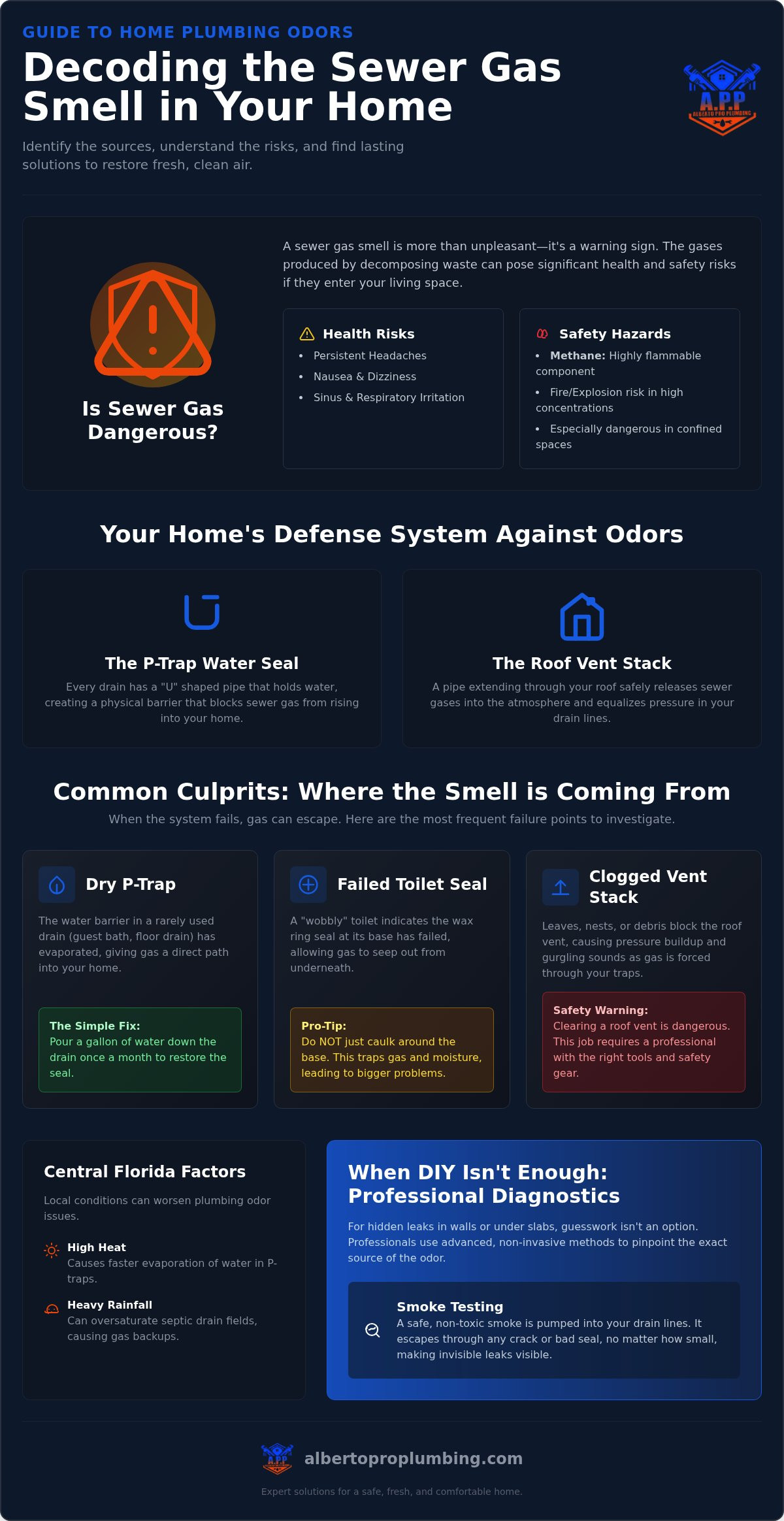
Most homeowners recognize that sharp, sulfurous odor immediately. While utility companies add a similar scent to natural gas as a safety warning, Sewer gas naturally develops this “rotten egg” smell during the breakdown of household waste. It’s a complex cocktail of methane, carbon dioxide, and hydrogen sulfide. Under normal conditions, your home’s plumbing acts as a robust physical barrier. It keeps these vapors exactly where they belong: in the pipes and away from your family. Sewer gas is a byproduct of decomposing organic waste that should never enter a home. When you smell it, the barrier has failed, and it’s time to act.
Is Sewer Gas Dangerous to Your Health?
If you notice a sewer gas smell in house, don’t ignore it. While a faint whiff might just be annoying, long-term exposure to hydrogen sulfide isn’t safe for your family. Even at low levels, this gas can cause persistent headaches, nausea, and sinus irritation. It’s your body’s way of telling you something is wrong. Beyond the health symptoms, methane is a highly flammable component of the mixture. If the gas reaches a high enough concentration in a confined space like a basement or utility closet, it creates a real fire safety concern. We take these calls seriously because your safety and comfort are our top priorities as your local experts.
The Anatomy of an Odor: How Gas Escapes
Your plumbing system relies on a simple but brilliant concept called the “water seal.” Every sink, shower, and toilet has a P-trap. This is a U-shaped pipe designed to hold a small amount of water at all times. This water acts as a physical plug that blocks gases from drifting up through the drain. At the same time, your vent stack, which is the pipe that pokes through your roof, equalizes pressure and allows these gases to escape safely into the atmosphere. When this balance is disrupted, you’ll start to notice smells. Sometimes the odor is intermittent because it depends on air pressure changes or how often you use a specific fixture. For example, if a guest bathroom sits unused for weeks, the water in that trap can evaporate. This leaves the door open for a sewer gas smell in house to take over your space. Our team looks for these simple failures first before moving to more complex diagnostics.
Common Culprits: Where to Look for the Source
Finding the source of a sewer gas smell in house often feels like a game of hide and seek. While your plumbing system is designed to be airtight, small failures in specific locations allow odors to drift into your living space. We start our inspections at the most common failure points to save you time and stress. Most of these issues are easy to spot once you know what to look for.
The Dry P-Trap Fix
Guest bathrooms, laundry room floor drains, and basement drains are the usual suspects for odors. In Central Florida, the high heat can cause water in rarely used traps to evaporate faster than you might expect. When the water barrier disappears, the gas has a direct path into your home. The fix is often as simple as pouring one gallon of water down every drain in your house once a month. This small task restores the seal and keeps the air fresh. If you have a floor drain in your garage or utility room, don’t forget to check those too.
Toilet Seals and Flange Issues
If the smell is concentrated in a bathroom, check your toilet for any movement. A “wobbly” toilet is a major red flag. It indicates that the wax ring, which seals the toilet to the floor flange, has failed or compressed. Once that seal breaks, sewer gas seeps out from under the base. Some homeowners try to fix this by simply caulking around the bottom of the toilet. This is a mistake. Caulking only traps the gas under the toilet, where it can eventually find another way out or cause wood rot. If you suspect a compromised seal, you may need an emergency plumbing repair to replace the wax ring and secure the fixture properly.
Clogged or Improperly Installed Vents
Your plumbing needs to breathe to function correctly. Roof vent stacks can become clogged by bird nests, leaves, or even Florida critters like lizards or squirrels. When the vent is blocked, air pressure builds up in the pipes. This pressure eventually forces its way through your P-traps, often making a gurgling sound in the toilet. This pressure imbalance can even siphon the water right out of your traps, leaving them dry. Climbing onto a roof to clear a vent is dangerous and requires specialized tools. Our team can safely inspect and clear these vents, ensuring your system exhausts gases properly.
Sometimes the issue is hidden deeper within your walls. A cracked drain line or a pinhole leak under a concrete slab can release odors without showing visible water damage immediately. These “ghost leaks” require professional diagnostic tools to find. If you’ve checked the traps and toilets but the sewer gas smell in house persists, it’s time for a deeper look. Our expert leak detection services can pinpoint these hidden breaks quickly, keeping your home tidy and your air clean.
Central Florida Factors: Septic Systems and Humidity
Living in Clermont, Orlando, and across Lake County brings specific challenges that homeowners in other states don’t usually face. High humidity levels and our famous afternoon downpours turn minor drainage issues into major headaches. If you notice a sewer gas smell in house during a heavy storm, it isn’t a coincidence. Saturated Florida soil prevents your system from venting properly, pushing those gases back toward your living space. We see this often during the peak of hurricane season when the water table rises and puts immense pressure on your home’s infrastructure.
Homes that rely on a septic system face an additional layer of complexity. When a septic drain field reaches the end of its lifespan or becomes flooded by rain, it loses its ability to process waste effectively. This failure creates back-pressure in your pipes. You might notice the odor is stronger in the yard first, but it quickly finds its way inside through the lowest drains in your home. You should also distinguish between gas in your pipes and minerals in your water. Many Central Florida residents use well water, which often contains sulfur bacteria. If the “rotten egg” smell only appears when you turn on the hot water tap, the issue is likely in your water heater or well, not your sewer line. Testing a glass of water away from the drain helps you confirm the source quickly.
Septic System Failures and Odors
A healthy septic system should be silent and scentless. If you see lush, green grass over your tank while the rest of the lawn is dry, or if you find standing water in the yard, your drain field is likely saturated. This saturation traps gases in the tank. Eventually, those gases push through the water seals in your toilets and sinks. If your drains are also running slow, it’s a clear sign that the system is under stress. We recommend checking your tank levels immediately if you smell sewage near the drain field or inside your laundry room.
The Sink Overflow and AC Connection
Sometimes the culprit isn’t the sewer at all. Sink overflow holes are perfect breeding grounds for mold and bacteria. Because they stay damp and rarely get flushed, they produce a localized sewer-like scent. Another common Florida issue involves the air conditioner. If a condensate line is piped directly into a sewer vent without a trap, your AC fan can actually suck sewer gas into the ductwork. This distributes the smell every time the cooling kicks on. Cleaning your sink overflows with a small brush and vinegar is a great first step, but an incorrectly plumbed AC line requires a professional fix to ensure your air stays fresh.
Professional Leak Detection: When DIY Isn’t Enough
You’ve poured water down the traps and checked the toilet, but that persistent sewer gas smell in house won’t go away. This is where “sniff testing” fails. Gas is invisible and travels through the smallest gaps in your home’s structure. You might smell it in the kitchen, but the actual leak is a pinhole crack in a vent line two rooms away. Trying to find these ghost leaks on your own often leads to wasted time and unnecessary frustration. We use specialized technology to see what the human eye can’t, ensuring we find the root cause without turning your home into a construction zone.
What is a Plumbing Smoke Test?
We consider smoke testing the gold standard for diagnostic work. The process is straightforward but highly effective. We use a specialized machine to pump a non-toxic, odorless smoke into your drain system under slight pressure. If there’s a crack in a pipe or a failed seal hidden behind a wall, the smoke will emerge from that exact spot. It’s like finding a needle in a haystack with a high-powered highlighter.
This method removes the guesswork. Instead of cutting into multiple sections of drywall to find a leak, we identify the precise location within minutes. It’s the most cost-effective way to stop those “ghost” smells that seem to appear and disappear without rhyme or reason. Our team prioritizes a tidy service, so we ensure the smoke is contained and your living space remains exactly as we found it.
Sewer Line Integrity and Root Damage
In Central Florida, our beautiful oak trees are often the hidden enemy of a healthy plumbing system. Their roots are incredibly strong and can easily breach older sewer lines in search of water. Once a root enters the pipe, it creates a blockage and a gap where gas can escape. We use high-definition video camera inspections to travel deep into your main lines. This allows us to see exactly what’s happening underground without digging up your yard.
Regular drain cleaning services can often clear minor root intrusions before they cause a full system failure. However, if our cameras reveal extensive corrosion or collapsed sections, we may discuss a whole home repipe to ensure your plumbing remains safe for years to come. For homes on concrete slabs, we also utilize electronic leak detection to find venting issues that are otherwise impossible to see. Don’t let a mystery odor ruin your home’s comfort; contact our expert leak detection team to get a definitive answer and a permanent fix.
Fast Solutions: How Alberto Pro Plumbing Restores Your Home
Dealing with a persistent sewer gas smell in house is exhausting for any homeowner. It’s more than just an unpleasant scent; it is a disruption to your peace of mind and a source of unnecessary stress. At Alberto Pro Plumbing, we treat your home with the same care we give our own. We understand that when you call us, you are looking for more than just a technical fix. You want a neighborly expert who shows up on time, speaks honestly about the problem, and respects your property. Our primary goal is to neutralize the odor immediately and confirm that your plumbing system is safe for your family.
Immediate Steps to Take Before We Arrive
While you wait for our specialist to arrive, you can take a few simple actions to improve your home’s air quality. We recommend the following steps to manage the situation safely:
- Ventilate the space: Open your windows and run every available exhaust fan. This helps clear the air and reduces the risk of headaches or nausea.
- Restore the water seals: Go through your home and flush every toilet. Run water in every sink, shower, and floor drain for at least 60 seconds to ensure the P-traps are full.
- Prioritize fire safety: If the odor is overpowering, avoid using matches, lighters, or any open flames until we confirm the methane levels are safe.
Our team is available for emergency situations where a smell signals a total sewer backup. We arrive ready to work, and our “Tidy Service” promise ensures we leave your home exactly as we found it. We use protective covers and clean every workspace thoroughly, so you don’t have to worry about a mess after the repair is done.
Why Clermont Residents Trust Alberto Pro
Families across Clermont, Orlando, and Lake County rely on us because we are local specialists who are deeply invested in our community. We don’t just fix pipes; we build trust through transparent communication. We always take the time to explain the “why” behind a repair, whether you are dealing with a municipal sewer issue or a complex septic failure. This honesty helps you find a permanent fix that fits your budget without any hidden surprises.
To prevent a sewer gas smell in house from returning, we recommend our Home Protection Membership. This proactive plan is designed to keep your plumbing system in peak condition year-round. By keeping your vents clear and your traps properly maintained, we help you avoid the embarrassment and health risks of sewer gas leaks. Our commitment to high-tier service standards is what defines us as your local plumbing experts, and we take great pride in delivering results that last.
Restore Fresh Air and Safety to Your Central Florida Home
A persistent sewer gas smell in house is more than just a nuisance; it’s a call to action for your home’s health and safety. You now know that while a dry P-trap is often the simplest culprit, Central Florida’s unique humidity and aging septic systems can create complex challenges that require a professional eye. By understanding how these gases escape and the risks they pose, you’ve taken the first step toward a permanent fix. You don’t have to live with the embarrassment or worry of a foul-smelling home any longer.
Our team is ready to help you reclaim your space with precision and care. As smoke testing specialists, we use advanced diagnostics to find the exact source of any leak without the guesswork. We offer a 24/7 emergency response for those urgent situations that just can’t wait. Plus, our Tidy Service Guarantee means we leave your home as clean as we found it. Schedule Your Sewer Gas Diagnostic with Alberto Pro Plumbing Today and breathe easy knowing your plumbing is in expert hands. We’re here to support our neighbors with reliable, honest service you can trust.
Frequently Asked Questions
Is sewer gas smell in a house an emergency?
Yes, you should treat a persistent sewer gas smell in house as an emergency situation. Methane is a highly flammable component of the gas that can accumulate in confined spaces, creating a fire hazard. Hydrogen sulfide is also toxic even at very low concentrations. If the odor is strong or accompanied by gurgling drains, you should contact a professional immediately to prevent health issues or a total system backup.
Can sewer gas make you sick or cause headaches?
Exposure to sewer gas can definitely cause physical symptoms for you and your family. The hydrogen sulfide in the gas mixture is known to cause headaches, dizziness, and nausea even in small amounts. Some homeowners in Clermont also report sinus irritation or a persistent feeling of fatigue when a leak is present. If you experience these symptoms, it is vital to ventilate your home and seek professional leak detection to find the source.
Will pouring bleach down the drain kill the sewer smell?
Pouring bleach down the drain is not a recommended solution for sewer odors and often makes things worse. While bleach might temporarily mask the scent, it does nothing to fix a dry P-trap, a broken vent, or a failed wax ring. In fact, excessive bleach can damage your pipes and kill the beneficial bacteria in your septic system. It is much more effective to restore the water barrier in your traps by running water for 60 seconds.
Why does my bathroom smell like sewage only when I run the water?
This issue often happens when organic matter and hair accumulate in your sink’s drain or overflow hole. When you run the water, the movement of liquid pushes the scent of this decomposing biofilm up into the room. It could also indicate a partially blocked vent stack that is causing pressure fluctuations when water moves through the pipes. Cleaning the sink overflow with a small brush and vinegar often solves this specific problem before calling a pro.
How much does it cost to find a sewer gas leak in Orlando?
In the Orlando area, the cost of professional leak detection depends on the complexity of your plumbing system. A standard smoke test used to find sewer gas leaks typically ranges from $350 to $550 for most residential jobs. Major tests for larger homes or complex commercial systems can range from $550 to $750. These diagnostic tools are the most efficient way to pinpoint hidden cracks in vent lines or slab leaks without damaging your walls.
Can a dead animal in the wall smell like sewer gas?
It is easy to confuse the two because both involve the release of sulfur compounds during decomposition. A dead animal usually produces a more localized, cloying, and sweet rot scent that remains constant regardless of your water usage. Sewer gas often has a sharper “rotten egg” quality and might fluctuate based on weather or drain activity. If the smell is concentrated near a specific wall but not near any drains, a pest issue is more likely.
Why does my house smell like a sewer after it rains?
Heavy Florida rain can saturate the soil around your home, preventing your septic drain field from breathing or causing pressure changes in municipal sewer lines. This atmospheric pressure can push sewer gas backward through your P-traps. If your vent stack is partially clogged with debris or local critters, the pressure has nowhere to go but into your living space. We often see this issue peak during the rainy summer months across Lake County.
How do I know if the smell is coming from my septic tank or my pipes?
If the odor is strongest in your yard or near the laundry room, the septic tank or drain field is the likely culprit. You should also check your water quality. If the smell only appears when you run hot water, it is likely sulfur bacteria in your well water or water heater. If the smell is localized to one bathroom and the water smells fine in a glass, you are likely dealing with a failed toilet seal.