
You walk into your bathroom on a humid morning in Clermont and feel a damp, cold squish against your feet. It’s a moment every homeowner dreads. Finding water pooling around your commode isn’t just a minor mess; it’s a signal that your home’s infrastructure is under attack from moisture and potential rot. Learning how to fix a leaking toilet base is essential for protecting your subfloor and preventing those lingering sewage odors that can quickly take over a house.
We understand that a plumbing mystery like this can feel overwhelming, especially when you’re worried about the health of your septic system or the cost of structural repairs. You want a dry, safe bathroom without the stress of a DIY project gone wrong. This guide will show you how to identify the leak, troubleshoot the cause, and perform the necessary repairs to keep your floor solid. We’ll also help you determine when a simple fix is enough and when it’s time to call in a local expert to ensure your home stays tidy and functional.
Key Takeaways
- Learn how to perform a simple “Dry Test” to distinguish between a structural leak and common Central Florida humidity condensation.
- Understand the critical relationship between the wax ring and the toilet flange to ensure a permanent, watertight seal.
- Follow a clear, 5-step guide on how to fix a leaking toilet base to protect your home from expensive subfloor rot and mold.
- Discover why homeowners in Lake County must address leaks immediately to prevent sewer gas exposure and unnecessary septic system strain.
- Identify the structural warning signs, like spongy flooring or a broken flange, that indicate you need a professional for a tidy and reliable repair.
Diagnosing the Source: Is Your Toilet Base Actually Leaking?
Before you grab your wrench to learn how to fix a leaking toilet base, you need to be sure the base is actually the culprit. A true base leak happens when the airtight seal between the porcelain and the closet flange fails. This allows water to seep out onto your bathroom floor every time you flush. However, in our Central Florida climate, water on the floor doesn’t always mean the wax ring has given up. It could be a simple case of “secondary leak paths,” which are sources of water that mimic a failed wax seal.
To find the truth, perform a “Dry Test.” Take a clean towel and wipe the entire toilet, from the tank down to the floor, until every surface is bone dry. Lay down a few sheets of paper towel around the footing. If the paper stays dry until you flush, you’ve confirmed a seal issue. If water appears while the toilet is just sitting there, the problem is likely coming from a connection higher up. Identifying the timing of the puddle is your best clue. A leak that only appears during a flush points to the wax ring, while a constant puddle suggests a pressurized leak or a hairline crack in the porcelain footing.
The Central Florida Humidity Factor: Condensation vs. Leaks
Humidity is a constant companion in Clermont. When your toilet fills with chilly water, the porcelain surface gets cold. When that cold surface meets our thick, humid air, the toilet begins to “sweat.” This condensation rolls down the side of the tank and pools at the base, looking exactly like a structural leak. You can identify this by checking for tiny droplets on the outside of the tank. If you find them, you don’t have a plumbing failure; you have a ventilation problem. Improving your bathroom’s exhaust fan or installing a tank insulation kit usually stops the sweating and keeps your floor dry.
Checking the Tank-to-Bowl Gasket and Supply Line
Water dripping from the tank often creates a puddle that looks like it’s coming from the floor. Check the supply line nut where it connects to the fill valve; a slow drip here will travel down the back of the porcelain. You should also inspect the large rubber gasket sandwiched between the tank and the bowl. If those bolts are loose or the gasket has degraded, water will escape during the flush cycle and settle right where the toilet meets the floor. We always recommend checking these easy-to-fix connections first. It’s much better to tighten a nut than to pull up the entire toilet for a repair that wasn’t necessary.
Understanding the Anatomy: The Wax Ring and the Flange
Before you can master how to fix a leaking toilet base, you need to understand the four components holding everything together. First is the toilet flange. This is a circular fitting made of PVC, ABS, or metal that connects your toilet directly to the sewer pipe. It’s the anchor of the entire system. Sitting on top of that flange is the wax ring. This soft, sticky ring acts as a permanent gasket. When you set the toilet down, the wax compresses to create a seal that keeps water and sewer gases where they belong.
The hardware keeping the toilet from shifting consists of tee-bolts. These bolts slide into slots on the flange and extend up through the base of the toilet. Finally, there is the subfloor. In many Central Florida homes, this is either a concrete slab or a wooden structure. The flange is screwed into the subfloor to provide stability. If any of these parts fail, you will eventually find water where it shouldn’t be. Knowing how to fix a leaking toilet base is only half the battle; you must also ensure the foundation is sound.
Why Wax Rings Fail in Central Florida
Wax rings don’t just “wear out” like a car tire. They usually fail because the toilet has moved. If your tee-bolts are loose, the toilet will rock slightly every time you sit down. This movement breaks the airtight seal of the wax. Because wax isn’t elastic, it won’t spring back into shape once it’s been squashed or shifted. In our area, hard water minerals can also play a role by corroding the metal tee-bolts until they snap, leaving the toilet unstable.
Homeowners with septic systems should be especially vigilant. A leaking base can allow excess air or debris into the line, which disrupts the delicate balance of your tank. To keep your home running smoothly, it’s helpful to learn the best ways to Care for Your Septic System. A rocking toilet is the primary warning sign that your seal is compromised and a repair is imminent.
Flange Height and Subfloor Integrity
A common issue we see during bathroom remodels is a recessed flange. If you’ve recently added beautiful new tile over old linoleum, the floor height has increased. This often leaves the flange sitting too low. If the flange isn’t flush with or slightly above the finished floor, the wax ring won’t be thick enough to make a solid connection. This gap is a recipe for a slow, hidden leak that can rot a wooden subfloor or cause mold growth under your tiles.
If you discover that your flange is cracked or sitting too deep, you might need professional plumbing services to install a flange extender or replace the fitting entirely. Our team at Alberto Pro Plumbing specializes in these complex fixes, ensuring your bathroom stays dry and your home’s structure remains protected.
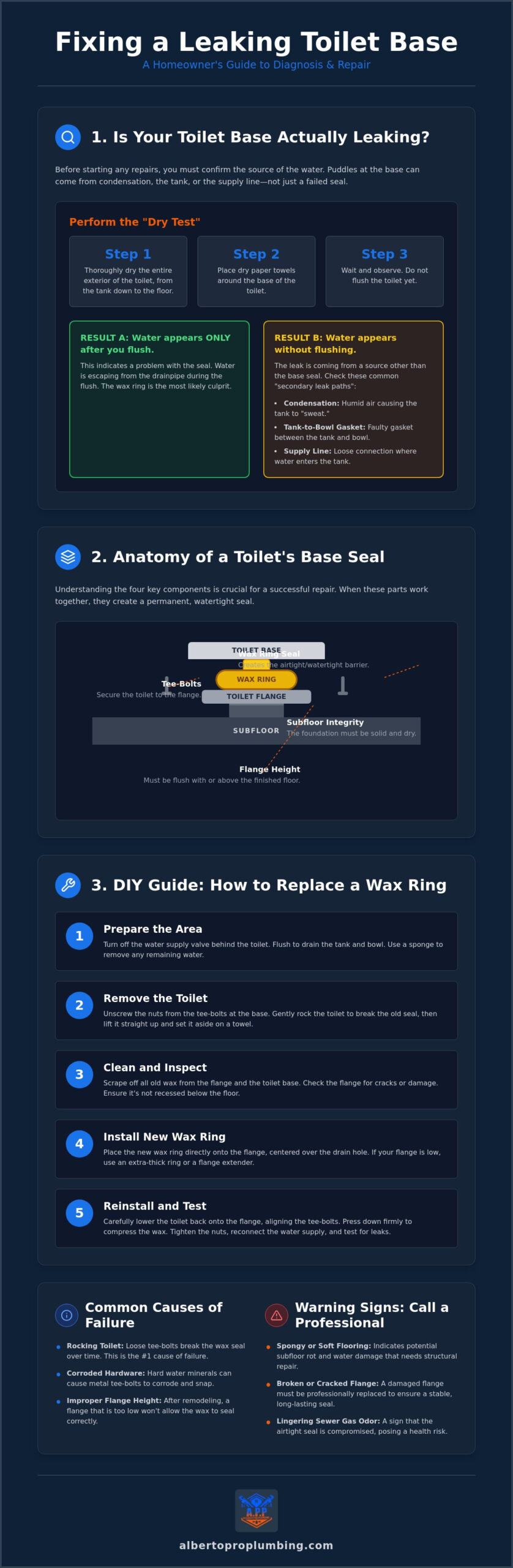
How to Fix a Leaking Toilet Base: 5 Step DIY Process
Ready to roll up your sleeves? If you’ve confirmed the leak is coming from the seal, following a methodical process is the only way to ensure the job is done right the first time. Learning how to fix a leaking toilet base requires patience, especially when dealing with the sticky, messy reality of old wax. Before you begin, gather a new wax ring, a set of brass tee-bolts, a putty knife, and a few old towels to catch any stray water.
- Step 1: Turn the water supply valve clockwise to shut it off. Flush the toilet and hold the handle down to empty the tank. Use a large sponge to soak up the remaining water in both the tank and the bowl.
- Step 2: Use a wrench to disconnect the water supply line from the tank. Remove the plastic caps at the base of the toilet and unscrew the nuts from the tee-bolts.
- Step 3: Grip the toilet under the bowl and lift it straight up. Set it gently on its side on a piece of cardboard or a thick towel to protect your flooring and the porcelain.
- Step 4: This is the messy part. Scrape away every bit of the old, flattened wax from both the bottom of the toilet and the floor flange.
- Step 5: Press the new wax ring onto the bottom of the toilet or onto the flange. Lower the toilet back onto the bolts, sit on the lid to compress the seal, and tighten the nuts.
For many Central Florida homes, this extra water from a base leak adds a constant hydraulic load to your septic system. A slow, undetected leak can contribute to premature drain field saturation. Taking the time to learn how to fix a leaking toilet base isn’t just about saving your floor; it’s about protecting your entire waste management system.
The “Tidy” Way to Remove the Old Wax
The secret to a professional-grade repair is the preparation. Use a stiff putty knife to remove every trace of the old wax. If you leave even a small amount of old residue, the new ring won’t bond correctly, and you’ll be back to square one within a week. While the flange is exposed, inspect the “ears” or slots where the bolts sit. If these metal or plastic slots are rusted or snapped, a new wax ring won’t help. You’ll need a flange repair ring to provide a solid anchor for your new bolts. We always recommend using brand new brass bolts; never try to save a few cents by reusing old, corroded hardware.
Setting the Toilet: The “One Shot” Rule
When you are ready to reset the toilet, remember the “One Shot” rule. Once that wax ring touches the flange, you cannot lift or wiggle the toilet. If you do, you’ll break the seal before it even has a chance to work. Hover the toilet over the flange, align the holes with the tee-bolts, and drop it straight down. Use your body weight to press the toilet into the wax. You should feel it “seat” firmly against the floor. When tightening the nuts, go slowly. Switch back and forth between the left and right sides to keep the pressure even. Stop as soon as the toilet feels snug. Over-tightening is a common mistake that can crack the porcelain base, turning a simple seal replacement into a much more expensive fixture installation.
Septic Systems and Hidden Leaks: A Lake County Warning
For homeowners in Clermont and surrounding Lake County, a puddle at the base of the commode is often more than a localized plumbing failure. Florida is home to approximately 2.6 million septic systems, and each one relies on a delicate balance of pressure and drainage. When you are investigating how to fix a leaking toilet base, you must consider that the water you see on the floor is only half the problem. The broken seal also allows air and moisture to disrupt the hydrostatic pressure around your pipes. In some cases, a leaking base is actually a secondary symptom of a backup further down the line, signaling that you may need a septic drain field rehab to restore proper flow to your property.
Sewer Gas and Health Risks
The wax ring does more than keep water in; it keeps sewer gases out. If you notice a persistent “rotten egg” smell in your bathroom, your wax seal has likely failed, even if you don’t see standing water yet. This odor comes from hydrogen sulfide and methane. These gases aren’t just unpleasant; they can cause headaches, dizziness, or more serious respiratory issues over time. A common mistake we see is homeowners caulking entirely around the toilet base to hide a leak. This is dangerous because it traps those gases and forces them to find another way into your home. Always leave a small gap in the caulk at the back of the toilet so you can spot a leak before it becomes a health hazard.
Protecting Your Septic Drain Field
In Lake County, protecting our local water quality is a major priority, especially with recent regulations regarding nutrient-reducing septic systems. A leaking toilet base can contribute to a silent killer of septic systems known as hydraulic overload. Hydraulic overload is the condition where a constant, unintended flow of water saturates the septic tank and drain field, preventing the soil from properly treating wastewater.
- System Strain: Even a small, steady leak adds hundreds of gallons of unnecessary liquid to your drain field every month.
- Cost Comparison: Spending a small amount on a new wax ring today is a wise investment compared to the thousands of dollars required for a full drain field replacement.
- Foundation Safety: Constant seepage can eventually weaken the concrete slab or rot the wooden sills of your home, leading to structural instability.
If you suspect your toilet leak is tied to a larger drainage issue, don’t wait for the problem to reach your yard. Contact our team for expert leak detection and septic inspections to keep your home’s infrastructure solid and safe.
When to Call Alberto Pro Plumbing for Your Toilet Repair
While many homeowners want to know how to fix a leaking toilet base themselves, there’s a point where the project shifts from a simple seal replacement to a structural repair. Stop right there if you pull up your toilet and find the floor feels soft or spongy. This indicates that water has already compromised your subfloor. At this stage, a new wax ring won’t solve the underlying rot. You need a professional to assess the damage and ensure your bathroom remains safe and stable for your family.
You should also reach out if the flange itself is the problem. If the fitting is cracked, recessed too deep after a recent tile installation, or consists of old cast iron, it requires specialized tools to repair correctly. Stacking multiple wax rings is a common DIY mistake that often fails within months. Our team at Alberto Pro Plumbing has the expertise to install flange extenders or replace the fitting entirely, providing a permanent solution rather than a temporary patch. We offer the peace of mind that comes with a professional warranty and a tidy service guarantee.
Emergency Repairs and Rapid Response
Sometimes, a leak isn’t just a slow puddle; it’s a household crisis. If a failing base leads to a major sewage backup or a leak that threatens to flood your home, you need a 24/7 emergency plumbing repair. We understand how stressful these moments are for Clermont families. Our specialists arrive quickly with professional sanitation equipment to handle the mess safely. We take deep pride in our heritage as a local, family-oriented business, treating your property with the same respect we’d show our own.
Proactive Care with the Home Protection Membership
The most cost-effective way to handle plumbing issues is to catch them before they turn into emergencies. Our Home Protection Membership provides annual inspections that include checking for loose tee-bolts and failing seals. By identifying these minor issues early, we help you avoid the long-term moisture damage that leads to a total home repipe or expensive mold remediation. We believe in high-tier service standards, which is why our members receive priority scheduling and a 10% discount on services. Learning how to fix a leaking toilet base is a great skill, but having a trusted local expert in your corner ensures your home stays dry and your infrastructure stays protected year-round.
Secure Your Bathroom and Protect Your Home’s Foundation
Addressing water around your commode quickly is the best way to prevent expensive subfloor rot and maintain your septic system’s health. You now know how to distinguish between Florida humidity condensation and a failed seal, as well as the technical steps involved in how to fix a leaking toilet base. Whether you choose to handle the wax ring replacement yourself or find that a broken flange requires specialized tools, the goal is always a dry, safe, and odor-free bathroom.
Don’t let a small leak turn into a structural nightmare. As a local Central Florida family-owned and operated business, we are here to help with our expert tidy service guarantee. If the job becomes too messy or you discover a spongy floor, we offer 24/7 emergency service to get your household back on track. Call Alberto Pro Plumbing in Clermont today for professional toilet repair and enjoy the peace of mind that comes with expert craftsmanship. Your home deserves the best care, and we’re proud to be your neighborly experts.
Frequently Asked Questions
Why is my toilet leaking from the base only when I flush?
Water escaping only during the flush cycle confirms that the wax ring or the connection between the bowl and the flange has failed. When the toilet sits idle, the water stays in the trap; however, the force of a flush pushes it past a compromised seal and onto your floor. This is the most common reason homeowners begin looking for how to fix a leaking toilet base before moisture damages the subfloor.
Is it safe to use my toilet if the base is leaking?
It isn’t safe to continue using a leaking toilet because each flush releases unsanitary wastewater into your home’s structure. This moisture quickly leads to subfloor rot and provides a breeding ground for bacteria. Beyond the physical damage, a broken seal allows methane and other sewer gases to enter your living space, which can cause headaches or respiratory issues for your family.
Should I caulk around the base of my toilet to stop a leak?
Never use caulk to stop an active leak. While Florida building codes often require caulk for sanitation, you should only apply it after the leak is completely fixed. Caulking a leaking base merely traps the water, forcing it to rot your subfloor or seep into the foundation. Always leave a small gap in the caulk at the back of the base so you can see if a leak develops in the future.
How much does it cost for a plumber to replace a wax ring in Clermont?
The cost for a professional repair in the Clermont area varies based on the complexity of the job and whether the flange requires replacement. While a DIY kit is inexpensive, hiring a professional ensures the job is done right and includes a tidy service guarantee. Many local homeowners find the investment worthwhile to avoid the much higher costs of structural subfloor repairs or mold remediation later on.
Can a leaking toilet base cause mold in my bathroom?
Yes, a leaking base is a major cause of mold in Florida bathrooms. Our high humidity levels mean that even a small amount of trapped moisture under your floor tiles or in a wooden subfloor won’t dry out on its own. This creates a perfect environment for mold colonies to grow, which can eventually spread through your walls and require professional intervention to remove safely.
How long does a standard toilet wax ring last in Florida homes?
A standard wax ring can last 20 to 30 years, but its lifespan is often cut short by a rocking toilet. If the tee-bolts loosen or the subfloor shifts, the seal breaks instantly. Because wax doesn’t have “memory,” it won’t reseal once it’s been moved. Annual inspections through a Home Protection Membership can help catch loose bolts and prevent these failures before they start.
What are the signs that my toilet flange is broken?
You’ll know your flange is broken if the tee-bolts won’t tighten or if they pull straight out of the floor fitting. If you’ve tried to learn how to fix a leaking toilet base and the new seal fails immediately, a cracked or recessed flange is usually the culprit. Visible rust on a metal flange or snapped plastic slots on a PVC flange are also clear signs that a professional repair is necessary.
Can I fix a rocking toilet by just tightening the bolts?
Tightening the bolts might stop the rocking, but it won’t fix an existing leak. Once a toilet has rocked enough to break the wax seal, that seal is permanently compromised. Even if the toilet feels stable after you tighten the nuts, water and sewer gases will still escape. You must pull the toilet and install a fresh wax ring to ensure a truly watertight and airtight connection.