
What if that soggy patch in your backyard didn’t actually require a $15,000 total system replacement? For many families across Central Florida, the fear of an astronomical septic drain field repair cost is often more stressful than the actual sewage backup. You likely already feel the pressure of keeping your home compliant with Florida Department of Health regulations while trying to avoid a massive, unbudgeted expense. It’s a common frustration, especially when you aren’t sure if your system needs a simple fix or a complete overhaul.
We promise to show you the real-world factors that drive these costs in 2026 and how to choose the most cost-effective path for your specific property. Whether you’re in Lake, Polk, or Orange County, understanding your soil and system type is the first step toward a permanent solution. This guide previews the difference between professional “rehab” and full replacement, helping you save money while ensuring your yard stays tidy and your drains stay clear. You’ll gain the technical authority needed to protect your home’s value without being overcharged for unnecessary work.
Key Takeaways
- Learn how system type and field size directly impact your septic drain field repair cost and why certain Florida properties require specialized mounded systems.
- Discover the “rehab” alternative that uses specialized techniques to clear biomat and restore your system without the high price of a full replacement.
- Understand how local soil percolation and high water tables in Lake and Orange Counties dictate the specific repair methods required by health regulations.
- Identify simple maintenance habits, like regular pumping and using septic-safe cleaners, to prevent future sewage backups and system failures.
- Find out why choosing a local expert who prioritizes saving your existing system can protect your budget and leave your yard in its original condition.
What Determines Your Septic Drain Field Repair Cost in 2026?
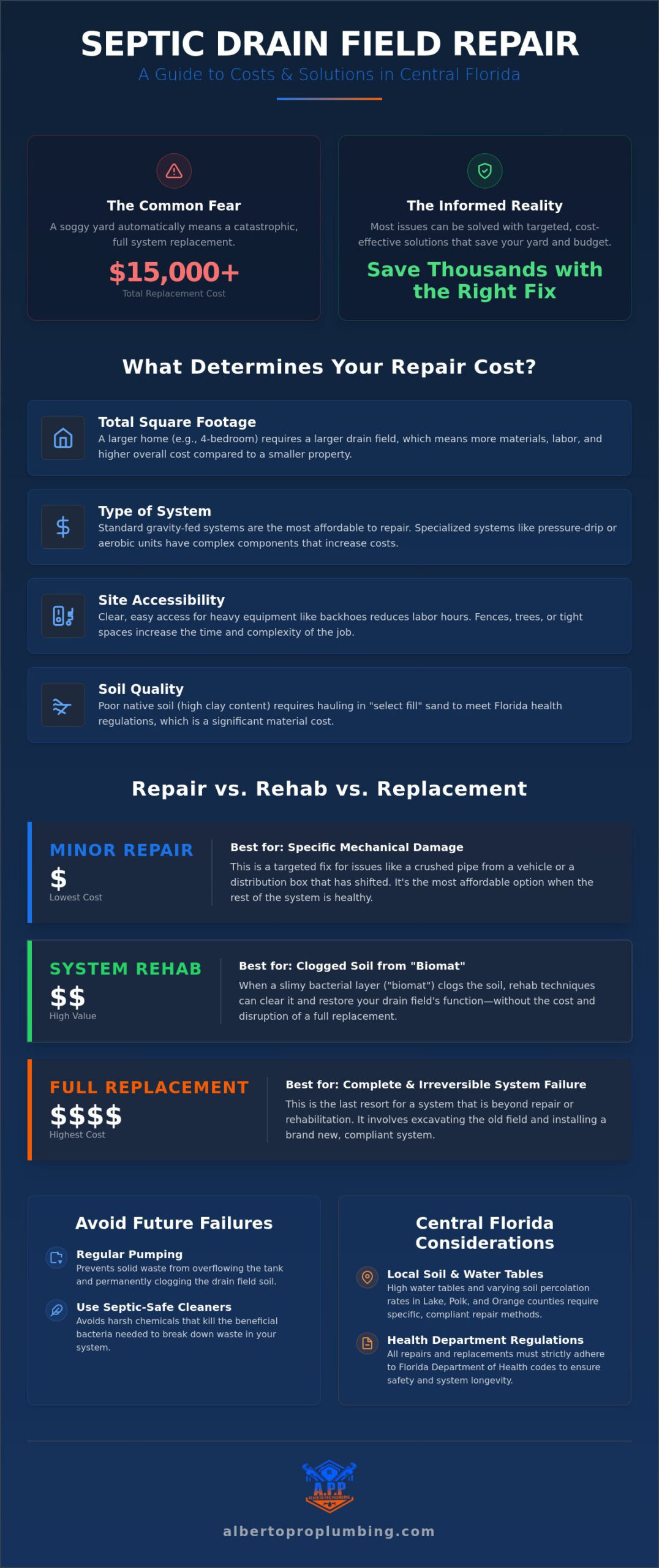
Every property in Central Florida presents a unique set of challenges. When you’re looking at your total septic drain field repair cost, it’s rarely a one-size-fits-all number. To understand the complexity, you first need to know what a septic drain field is and how it interacts with our local environment. In 2026, several variables dictate the final invoice, ranging from the size of your yard to the specific type of technology buried beneath your grass.
- Total Square Footage: The larger the field, the more materials and labor are required. A four-bedroom home naturally requires a larger leach field than a two-bedroom cottage.
- Type of System: Standard gravity-fed systems are generally the most affordable to repair. However, if your property requires a pressure-drip or an aerobic system due to soil conditions, the specialized components will increase the price.
- Accessibility: If our technicians can easily drive a backhoe or skid steer to the site, the job moves faster. If we have to remove fences, navigate tight alleyways, or work around prize-winning oak trees, the labor hours will climb.
- Soil Quality: Florida is famous for its sandy soil, but compaction or high clay content can ruin drainage. In many cases, we must haul in “select fill” sand to replace poor native soil, which is a significant cost driver that many national estimates overlook.
Material Costs: Pipes, Chambers, and Aggregates
Modern septic technology has moved beyond simple perforated pipes and gravel. While traditional gravel trenches are still used, many Central Florida homeowners now opt for plastic chambers. These chambers are often easier to install in tight spaces, though the initial material price is higher. You also have to consider the cost of “approved fill” dirt. In 2026, Florida regulations are strict about the type of sand used to ensure proper filtration. Even the choice of a distribution box can change the final bill; a standard concrete box is cheaper than a specialized plastic flow-leveling model, but the latter often lasts longer in our humid climate.
Labor and Equipment Rental Fees
Septic work isn’t a DIY project or a job for a standard plumber. It requires heavy excavation equipment like backhoes and skid steers. Specialized septic contractors charge based on the technical expertise required to grade the land perfectly. If the slope is off by even an inch, the system won’t drain. Site preparation also plays a role. If your drain field area is currently covered in thick palmettos or heavy brush, clearing that land adds to the hourly total before we ever break ground on the actual repair. We take pride in our tidy service guarantee, ensuring that once the heavy machinery leaves, your property is respected and restored to its original condition.
Repair vs. Rehab vs. Replacement: A Cost Comparison
When you’re facing a failing system, the first question is usually about the bottom line. Homeowners often assume they only have two choices: ignore the problem or pay for a total replacement. However, your actual septic drain field repair cost depends heavily on which tier of service your system requires. In Central Florida, we categorize these solutions into minor repairs, specialized rehabilitation, or full-scale replacement. Understanding the difference can save you thousands of dollars and prevent unnecessary excavation in your backyard.
When a Minor Repair is Enough
Sometimes, the “failure” isn’t a biological issue with the soil, but a mechanical one. If you’ve recently had a heavy vehicle drive over your yard or noticed a single soggy spot near the tank, you might only need a spot repair. A spot repair is a targeted fix for mechanical damage. These localized issues, such as a crushed PVC pipe or a distribution box that has tilted over time, are relatively straightforward to resolve. While a systemic failure requires a broader approach, fixing a single broken line is the most affordable way to restore flow. Proper septic system maintenance and early detection are key to keeping repairs in this minor category.
The Value of Septic Drain Field Rehab
For many Lake County residents, the most effective middle ground is septic drain field rehab. This process targets “biomat,” a slimy layer of bacteria that eventually clogs the soil and prevents drainage. Rather than digging up the entire field, we use specialized techniques like mechanical aeration or chemical treatments to break up this layer and restore the soil’s natural absorption. Choosing rehab can extend your system’s life by 10 or more years for a fraction of what you’d pay for a total replacement. Mechanical aeration is often preferred over simple chemical additives because it provides a more immediate, physical opening of the soil pores without introducing harsh pollutants into our local water table.
Full replacement becomes the only option when the soil is entirely “spent” or saturated with grease and solids that no amount of rehab can fix. This usually happens after decades of use or if the system was significantly undersized for the home’s water usage. We always look for ways to save your existing system first. If you’re smelling odors or seeing backups, it’s a good idea to contact a local specialist for an honest assessment before committing to a massive construction project. We take pride in helping our neighbors find the most pragmatic, budget-friendly solution that keeps their home safe and compliant.
Local Factors Influencing Drain Field Pricing in Central Florida
If you search for a realistic septic drain field repair cost online, you will likely find national averages that don’t apply to our specific Florida landscape. Our state has some of the most rigorous environmental standards in the country, especially with over 85,000 septic tanks currently operating in Orange County alone. In 2026, the geology of Central Florida dictates the price far more than the age of your home. From the rolling hills of Clermont to the low-lying wetlands near the lakes, your property’s specific location changes the engineering requirements significantly.
- High Water Table: Many properties in our area sit just a few feet above the groundwater level. This requires specialized construction to ensure wastewater is treated before it reaches the aquifer.
- Soil Percolation: A “perc” test determines how quickly your soil absorbs water. In Clermont’s varied terrain, one neighbor might have perfect sandy soil while another deals with heavy clay that requires a much larger field.
- Environmental Protection: If your home is near the Wekiwa Priority Focus Area or the Clermont Chain of Lakes, you may face stricter nitrogen-reduction requirements that went into effect on March 1, 2025.
- Site Preparation: Clearing dense Florida brush or navigating around protected oak trees adds labor time that isn’t present in more open, suburban lots.
Florida DOH Permitting and Inspections
In Florida, you cannot simply dig a hole and hope for the best. The Florida Department of Health (DOH) requires a state-mandated permit for any major system modification. For homeowners in Orlando, the permit fee itself is approximately $425. However, the total cost for the permitting phase, which includes soil evaluation and system design, typically ranges from $800 to $3,500. This process ensures your system is safe for the community, but the engineering plans required for non-standard lots can increase your initial investment. We handle the coordination with inspectors to keep your project moving as quickly as possible.
The ‘Mounded’ System Factor
Many homeowners are surprised to learn their new drain field must be built above the natural grade of their yard. This is known as a mounded system. It is a common necessity for homes dealing with challenging soils and site conditions where the water table is too high for a standard trench. A mounded system requires us to haul in significant amounts of “imported fill” sand to create a secondary filter. You also have to factor in the cost of sodding the mound to prevent erosion. While these systems are more complex, they are often the only legal way to maintain a functional septic system in our beautiful, water-rich region.
How to Avoid Emergency Replacement Costs
Prevention is the best way to keep your septic drain field repair cost as low as possible. Most homeowners ignore their system until sewage backs up into the shower, but by then, the damage is often done. Regular septic tank pumping is your first line of defense. When a tank gets too full, solid waste escapes into the drain field, clogging the soil and causing premature failure. This simple maintenance step prevents the heavy solids from ever reaching your delicate leach lines.
You should also be mindful of what goes down your drains. Using “septic-safe” cleaners is essential for protecting the natural bacteria that break down waste. Harsh chemicals or excessive bleach can kill these microbes, leading to a sluggish system. Additionally, landscape management plays a quiet but critical role in system longevity. Never park heavy vehicles or trailers over the field, as this compacts the soil and crushes pipes. Keep thirsty trees far away to prevent roots from invading your lines and causing blockages.
The Role of Proactive Maintenance
Catching a problem before it becomes a crisis is the smartest financial move you can make. Our Home Protection Membership is designed to identify early failure signs during routine checks, such as minor pooling or slow drainage. There is a massive gap between the price of a standard pump-out and the thousands required for a full field failure. Biomat buildup is the #1 cause of field failure. By staying ahead of this biological clogging, you ensure your system operates at peak efficiency for years without needing a total overhaul.
Managing Your ‘Water Budget’
Your drain field can only process so much liquid at once. Excessive water use effectively “drowns” the beneficial bacteria, forcing untreated wastewater to the surface. This is why emergency plumbing repairs for leaks are actually a form of septic maintenance. A single leaking toilet can send hundreds of gallons of unnecessary water into your system every day, saturating the soil and preventing proper treatment. Simple household habits, like spreading out laundry loads throughout the week and installing low-flow fixtures, dramatically reduce the daily load on your septic system.
If you suspect your system is struggling or you haven’t had an inspection in years, don’t wait for a backup to occur. Contact our local experts today to schedule a thorough inspection and keep your home protected.
Professional Septic Solutions in Clermont: The Alberto Pro Way
Choosing the right partner to handle your septic system shouldn’t be another source of stress. At Alberto Pro Plumbing, we approach every job with a neighborly mindset and a commitment to saving your system whenever safely possible. We understand that a high septic drain field repair cost is a major burden for any family. That is why our first goal is always to explore rehabilitation and repair options before jumping to a full replacement recommendation. Our technicians live and work right here in Central Florida, giving us a deep understanding of the unique soil conditions in Polk, Lake, and Orange Counties. We believe in transparent pricing and providing detailed explanations of every repair option available to you.
Our Tidy Service Guarantee is a cornerstone of how we do business. We know how much pride you take in your home, and we respect your property as if it were our own. While septic work involves heavy equipment and excavation, we take extra steps to minimize the impact on your landscape. We work efficiently and leave your workspace in its original condition, ensuring that your sewage problems are solved without creating new, expensive landscaping headaches. This pragmatic attitude toward labor and genuine desire to be helpful is what distinguishes us from less specialized competitors.
Why Experience Matters in Septic Repair
Septic systems are complex pieces of underground engineering that require precision. Hiring general laborers or unspecialized plumbers for these tasks is a gamble that often leads to system failure within just a few years. Our specialized expertise ensures that every pipe is graded perfectly and every chamber is placed to handle Florida’s unique drainage challenges. Our local knowledge of Clermont’s terrain also speeds up the permitting process with the Florida Department of Health. We know exactly what local inspectors require, which prevents unnecessary delays. We also maintain 24/7 availability for emergency septic issues, providing a sense of calm and rapid response when a failing drain field becomes a household crisis.
Ready for a Professional Assessment?
When you schedule an initial drain field inspection with us, you can expect a thorough and honest evaluation. We don’t just look at the surface; we investigate the health of your distribution box and the saturation levels of your soil. This assessment allows us to provide a clear roadmap for either a targeted repair or a biological rehab. We show you exactly what is happening underground so you can understand the factors influencing your septic drain field repair cost. Our goal is to provide a permanent fix that fits your budget and keeps your home compliant with all state regulations. Schedule your septic health check today and let our family-owned business protect your home for the long term.
Protect Your Home and Budget with Expert Septic Care
Managing your septic drain field repair cost doesn’t have to be a guessing game. By understanding how Central Florida’s high water table and specific soil conditions impact your system, you can make informed decisions that protect your property value. Remember that a full replacement isn’t your only option; many systems can be saved through specialized rehabilitation techniques that clear biological clogging without destroying your yard. This proactive approach keeps your drains flowing while keeping your budget intact.
As your local Central Florida Septic Specialists, we are here to provide the technical authority and neighborly advice you need. We offer a Tidy Service Guarantee to ensure your landscape is respected, and we maintain 24/7 Emergency Service for those times when a repair simply cannot wait. Don’t let a small drainage issue turn into an expensive crisis. Save your septic system—schedule a professional drain field assessment with Alberto Pro Plumbing today! We look forward to helping you keep your home safe, compliant, and running smoothly for years to come.
Frequently Asked Questions
Is it worth repairing a 20-year-old septic drain field?
Yes, it is often worth repairing a 20-year-old system if the structural components are still sound. While 20 years is the average lifespan for many Florida systems, our specialized rehab techniques can often clear biomat and extend that life by a decade. This approach is a strategic way to manage your overall septic drain field repair cost without the massive disruption of a full replacement.
Can I drive my lawnmower over the septic drain field?
You can typically drive a standard riding lawnmower over the field, but you must avoid heavy equipment or commercial vehicles. The weight of a large tractor or zero-turn mower can compact the soil and crush the underlying pipes or chambers. This compaction prevents oxygen from reaching the bacteria that treat your waste. We recommend keeping the area clear of anything heavier than a standard residential mower.
What are the first signs that my drain field is starting to fail?
The earliest signs of failure include slow-draining sinks, gurgling sounds in your plumbing, and unusually lush, green patches of grass over the leach lines. You might also notice soggy spots or a faint sewage odor in the yard after a heavy rain. If you see these red flags, acting quickly can often prevent a total system failure and keep your repair expenses manageable.
Does homeowners insurance cover septic drain field repair costs?
Standard homeowners insurance policies rarely cover the septic drain field repair cost because they view it as a maintenance issue. Coverage is typically reserved for sudden, accidental damage, such as a fire or a falling tree. It is always wise to check your specific policy for a “Sewer Backup” rider, but most biological failures or age-related issues are the responsibility of the homeowner.
How long does a typical drain field repair take in Florida?
The physical repair usually takes one to three days, but the entire process often spans several weeks. In Central Florida, the timeline is heavily dependent on how quickly the Department of Health processes your permit and completes the final inspection. While the excavation and pipe laying move fast, we must wait for state approval at several stages to ensure your system meets all environmental codes.
Why is my yard wet only over one part of the septic field?
A wet spot in only one area usually indicates a localized failure, such as a crushed pipe or a tilted distribution box. When the distribution box isn’t level, it sends all the effluent into a single line rather than spreading it across the entire field. This saturates one section while the rest of the field stays dry. We can often fix this with a simple spot repair rather than a full replacement.
Can I use chemicals to ‘unclog’ my drain field pipes?
You should never use harsh, store-bought chemicals to unclog your drain field. These products often kill the beneficial bacteria that are essential for breaking down waste, which can lead to a more severe clog. Professional rehabilitation uses controlled treatments that are safe for the environment and your system. Using the wrong chemicals can actually increase your long-term repair needs by damaging the soil’s natural biology.
What is a ‘perc test’ and do I need one for a repair?
A “perc test” is a soil percolation test that measures how quickly water absorbs into your ground. You generally need one for any major modification or full replacement because Florida law requires the system to be sized correctly for your specific soil type. This test ensures your new or repaired field can handle the daily water load without failing or polluting the local groundwater.