
What if the most expensive threat to your Central Florida home isn’t a summer hurricane, but a silent drip you can’t even see? It’s a stressful thought for any homeowner, particularly when you notice your monthly utility bill creeping upward for no apparent reason. Recognizing the early signs of a hidden water leak is the best way to prevent a minor plumbing issue from turning into a costly repair or a mold problem that loves our local humidity. With water volume charges in Orange County set to rise by 11% annually starting in late 2026, catching these issues early is more important than ever for your budget.
We understand you want to protect your home’s foundation without the fear of invasive, messy inspections. You deserve a professional, neighborly approach that gives you answers without tearing holes in your drywall. In this article, we’ll walk you through seven specific red flags, from damp baseboards to the sound of running water when your faucets are off. We’ll show you how to confirm your suspicions using non-invasive methods and keep your living space exactly as you left it, ensuring your home remains a safe and dry sanctuary for your family.
Key Takeaways
- Spot the subtle signs of a hidden water leak, like unexplained bill spikes or damp baseboards, to catch problems before they lead to mold growth.
- Follow our step-by-step guide for a 24-hour DIY water meter test to verify a leak’s existence without any specialized tools.
- Learn to distinguish between pinhole wall leaks and serious slab leaks that can threaten your home’s concrete foundation.
- See how professional, non-invasive technology pinpointing leaks through acoustic listening and thermal imaging saves you from unnecessary demolition.
- Discover how simple proactive maintenance protects your property value and prevents the stress of plumbing emergencies in the Florida humidity.
What Is a Hidden Water Leak and Why Is It Dangerous?
A hidden water leak isn’t like a leaky showerhead that keeps you awake at night with a rhythmic “drip, drip, drip.” These leaks happen out of sight, tucked away behind your drywall, beneath your floorboards, or deep under the concrete slab that supports your home. Because they’re silent and invisible, they often go unnoticed for weeks or even months. By the time you start searching for the signs of a hidden water leak, the water has likely already begun to compromise your home’s structural integrity. When water saturates your drywall or the soil beneath your foundation, it creates a cascade of problems that threaten your property’s value and your family’s safety. Understanding the dangers of water damage is the first step in protecting your investment from long-term decay.
The Cost of Delaying Leak Detection
Catching a problem early might mean a simple, localized pipe repair. If you wait, that minor issue can easily transform into a massive restoration project costing tens of thousands of dollars. In Florida, insurance claims for water damage are scrutinized heavily. Proving you took proactive steps can make a significant difference in your coverage and property value. You also have to consider the physical forces at play. Hydrostatic pressure is the stress exerted by standing water against your pipes or foundation due to the force of gravity, and it’s often the primary culprit behind sudden pipe failures or foundation shifts in older Central Florida homes. What starts as a pinhole can quickly become a burst pipe under this constant pressure.
The Florida Factor: Humidity and Mold
Our Central Florida climate adds a layer of urgency to every plumbing concern. In cities like Clermont and Winter Garden, high indoor humidity levels act like fuel for mold growth. When a hidden leak introduces even a small amount of moisture into a dark wall cavity, mold can colonize wet drywall in as little as 24 to 48 hours. This often leads to that lingering musty smell that many homeowners mistake for a simple “old house” odor. You must be more vigilant than homeowners in drier states because our environment doesn’t allow for mistakes. Identifying the signs of a hidden water leak early is your best defense against a full-scale environmental remediation. We’ve seen how quickly a small slab leak can turn a healthy home into a hazard, which is why we treat every “mystery” wet spot with the seriousness it deserves.
While plumbing repairs stop leaks at the source, your air conditioning system is equally important for controlling the indoor humidity that fuels mold growth. For residents in the Central Florida area, Ray Brown Air and Heat offers the expertise needed to keep your home’s environment safe and dry.
Beyond the health risks, these leaks are a drain on your wallet. As water rates continue to rise across Orange and Lake Counties, a silent leak can waste hundreds of gallons of water every month. You’re essentially paying for water that’s actively destroying your home. We believe in helping our neighbors stop this cycle before the damage becomes irreversible. By staying alert to subtle changes in your home’s environment, you can save your foundation and your peace of mind.
7 Warning Signs You Have a Hidden Water Leak
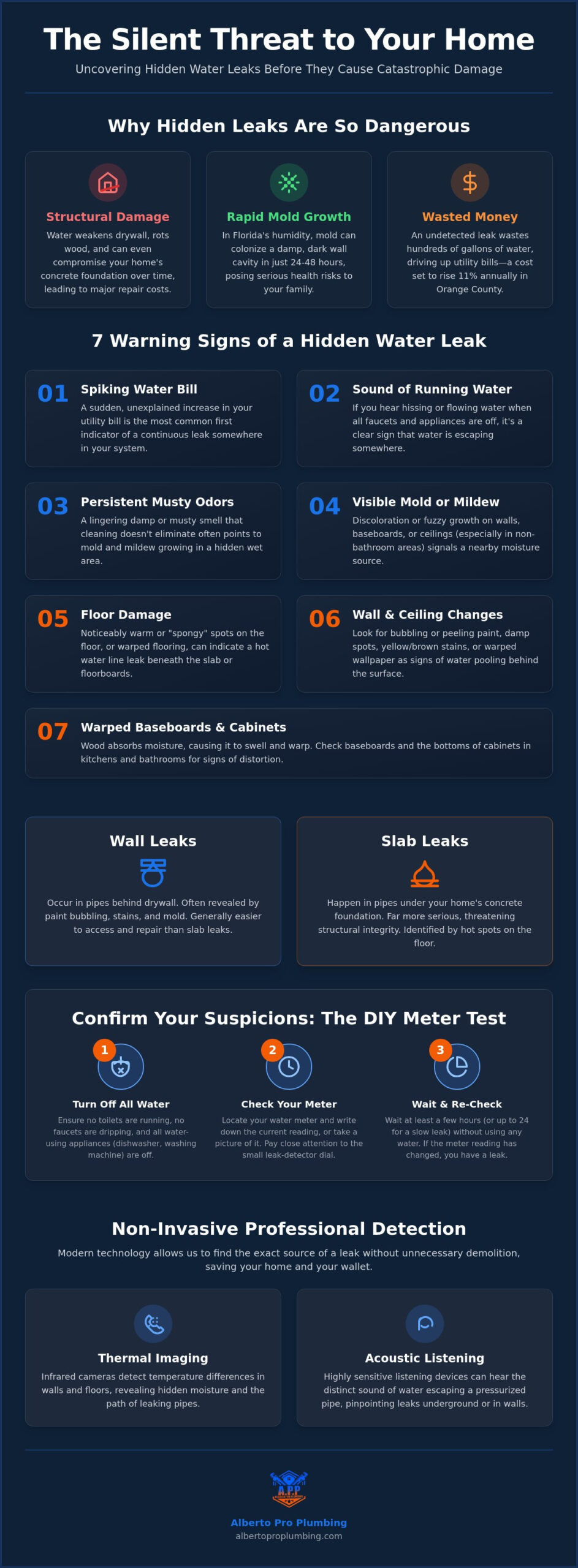
Identifying the signs of a hidden water leak early can save you from the structural headaches we discussed in the previous section. The most common indicator is often found in your mailbox rather than your walls. If you notice an unexplained spike in your monthly water bill that doesn’t align with your family’s actual usage, a pipe is likely failing somewhere out of sight. With water rates in Orange County scheduled to increase significantly through 2026, these silent leaks will become even more expensive if left unaddressed. Beyond the numbers, you should listen to your home. If you hear the faint sound of rushing or hissing water when every faucet is turned off, your plumbing system is actively losing water.
Smell and sight play equally important roles in detection. Musty odors that persist even after a deep cleaning are a major red flag, especially in our humid Central Florida climate. You might also see visible mold or mildew appearing on walls or baseboards that are far away from your shower or sinks. If your floors feel “spongy” or you notice a localized “hot spot” on a tile floor, you are likely dealing with a leak beneath the concrete slab. These physical changes are your home’s way of asking for help before the damage spreads further.
Physical Changes in Your Walls and Ceilings
Keep a close eye on the surfaces of your home for any texture changes. Bubbling paint or peeling wallpaper that feels slightly damp to the touch suggests water is pooling behind the drywall. On ceilings, look for telltale yellow or brown staining, which usually indicates a leak in a second-floor bathroom or a supply line in the attic. Warped baseboards or cabinets in your kitchen and bathrooms are also clear indicators that moisture is being absorbed into the wood. If you’ve noticed any of these red flags, our team provides professional leak detection that pinpoints the source without damaging your home.
Changes in Water Pressure and Meter Activity
A sudden, noticeable drop in water pressure across multiple fixtures often points to a significant pipe breach. Sometimes the signs are more subtle, like a wobbly toilet. A toilet that feels unstable might not just have loose bolts; it often indicates that water has been leaking at the base and rotting the subfloor or compromising the wax seal. To be certain, you can learn how to check your water meter for leaks by monitoring the leak indicator. Most standard meters feature a small, triangular dial or a digital icon known as a leak indicator that spins even when a tiny amount of water passes through the system. If that dial is moving while your main valve is off, you have confirmed one of the primary signs of a hidden water leak.
Slab Leaks vs. Wall Leaks: Understanding the Difference
Wall leaks and slab leaks might share some symptoms, but they represent very different challenges for your home. A wall leak usually occurs in the vertical pipes running behind your drywall. These are often caused by pinhole leaks in copper lines or the degradation of aging polybutylene. In contrast, a slab leak happens in the pipes running underneath your home’s concrete foundation. Because these pipes are buried under inches of concrete and soil, the signs of a hidden water leak in your slab are notoriously difficult to detect until the damage is extensive. Both issues are serious, but slab leaks carry a higher risk of long-term structural failure.
Ignoring a slab leak is a gamble with your home’s foundation. Over time, escaping water can wash away the supporting soil, leading to foundation shifting and expensive structural issues. You might see cracks appearing in your floor tiles or along the base of your foundation walls as the house settles unevenly. Both types of leaks require professional leak detection to locate the exact source without tearing your home apart. Learning how to find and fix leaks through official resources is helpful for general maintenance, but slab issues specifically demand specialized acoustic and thermal equipment to avoid unnecessary demolition.
Special Signs of a Slab Leak
While wall leaks usually leave damp spots on the drywall, slab leaks have their own set of unique red flags. Pay attention to these indicators:
- Unusually warm spots: If a specific area of your tile or laminate floor feels warm to the touch, you likely have a leak in a hot water line beneath the slab.
- Floor cracks: New cracks in your flooring or tiles can signal that the foundation is moving due to water saturation.
- Exterior pooling: If you see water pooling in your yard near the perimeter of your house despite dry weather, it could be escaping from under the slab.
The Danger of Polybutylene Pipes in Central Florida
Many older homes across Lake and Orange Counties were built using polybutylene pipes, which are often described as a “ticking time bomb” in the plumbing industry. These grey plastic pipes were popular in the 1980s and 90s but are prone to sudden failure when they react with water treatment chemicals. The relationship between your pipe material and the likelihood of hidden leaks is direct. If your home still has these lines, you’re at a much higher risk for both wall and slab failures. We encourage you to check our guide on polybutylene pipes to see if your home is at risk and how a proactive repipe can protect your property value before a major leak occurs.
The 24-Hour Water Meter Test: A DIY Leak Check
If you’ve spotted any of the signs of a hidden water leak we’ve discussed, you don’t have to guess about what’s happening. You can perform a simple DIY check using your home’s water meter. This test is the most effective way to confirm that water is escaping your plumbing system somewhere. First, ensure that every water-using appliance in your home is completely shut off. This includes your dishwasher, washing machine, and automatic ice maker. Don’t forget to disable your irrigation system timers, as a sprinkler cycle starting mid-test will ruin your results.
Next, you’ll need to locate your water meter. In Clermont and most Central Florida neighborhoods, you’ll find it inside a rectangular concrete or plastic box near the sidewalk or street. Carefully lift the lid and record the current reading on the dial. We recommend waiting at least 30 to 60 minutes before checking it again. During this time, make sure no one in the house flushes a toilet or turns on a tap. If the numbers have changed or the small leak indicator dial has moved, you have a confirmed leak.
Isolating the Leak Source
Once you know a leak exists, you can narrow down its location. Start by closing your home’s main shut-off valve, which is usually located where the main pipe enters the house or near the water heater. Check the meter again. If it’s still moving, the leak is likely in the service line between the meter and your house. If it stops, the problem is inside. For internal issues, try the “food coloring test” in your toilets. Drop a few bits of food coloring into the tank and wait 15 minutes. If color appears in the bowl without flushing, you’ve found a culprit. Also, take a walk outside to your septic drain field. If you notice unusually lush, green grass or soggy spots even during a dry spell, your septic system may be struggling with the excess water volume.
When DIY Testing Isn’t Enough
While the meter test is a great starting point, it isn’t foolproof. Tiny “pinhole” leaks in copper pipes may release water so slowly that the meter dial doesn’t move noticeably in an hour. Some leaks are also pressure-dependent, meaning they only occur when the system is under high stress or when specific fixtures are in use. If you still see damp baseboards or smell musty odors despite a “passed” meter test, don’t ignore your intuition. A small, undetected drip can still cause significant structural damage over time. If your DIY results are inconclusive but the red flags remain, it’s time to call in the experts for professional leak detection to protect your home’s foundation.
Professional Leak Detection: How Alberto Pro Plumbing Saves Your Home
When your DIY tests confirm the signs of a hidden water leak, you don’t have to worry about us tearing up your living room to find it. We believe in using technology, not a sledgehammer. Our team uses specialized acoustic equipment that acts like a high-powered microphone. This allows our technicians to “listen” through thick concrete slabs and finished walls to find the exact frequency of escaping water. By pinpointing the sound of the leak, we can identify the source within inches. We also employ thermal imaging cameras that detect the subtle temperature shifts caused by hidden moisture. These tools let us see through your surfaces to find dampness before it ever becomes visible to the naked eye.
Our priority is always a non-invasive approach. We know how much you value your home, so we aim for zero unnecessary damage during the detection process. Once we’ve located the issue, we don’t just leave you with a problem. We provide clear, honest options for your next steps. Whether it’s a localized repair or a full repipe, we explain the benefits and costs of each path. This ensures you can make the best decision for your family’s budget and your home’s long-term health. We take pride in our pro-level standards, ensuring every solution is built to last.
The Alberto Pro “Tidy Service” Promise
We’ve built our reputation in Lake and Orange Counties on more than just technical skill. We treat your property with the same respect we’d show our own. Our “Tidy Service” promise means we leave our workspace exactly as we found it. You won’t have to spend your afternoon cleaning up after us once the job is done. As local experts who live and work right here in Central Florida, we understand the specific challenges of local slab construction. We provide clear, upfront communication before we ever start the work, so you’re never surprised by the process or the results.
Preventing Future Leaks with Our Membership Plan
The best way to handle a plumbing crisis is to prevent it from ever happening. Our Home Protection Membership is designed for proactive homeowners who want to catch the signs of a hidden water leak before they cause a disaster. This plan includes regular inspections where we check your entire system for vulnerabilities. If an issue does arise, members enjoy priority support for emergency plumbing repairs. This proactive approach saves you money and eliminates the stress of unexpected failures. Protect your home today with Alberto Pro Plumbing and give your family the peace of mind they deserve.
Take Action to Protect Your Central Florida Home
Your home is likely your biggest investment. Don’t let a silent drip compromise its structure or your family’s health. By staying vigilant and watching for the signs of a hidden water leak, you can stop minor plumbing issues before they become major restoration projects. Whether you’ve noticed a rising water bill or a musty odor that won’t go away, these red flags deserve immediate attention from a local expert who knows Central Florida’s unique slab construction.
We are a locally owned and operated specialist based in Clermont. Our team uses specialized acoustic detection tech to pinpoint problems without causing unnecessary damage to your property. If you’re facing a crisis right now, we offer 24/7 emergency service to get things back to normal quickly. We take pride in our tidy service promise, ensuring we leave your home exactly as we found it.
Schedule your professional leak detection service with Alberto Pro Plumbing today! We are here to help you keep your home safe, dry, and protected for years to come.
Frequently Asked Questions
How much does a hidden water leak usually cost to fix?
Repair costs depend entirely on the leak’s location and the extent of the damage to your home’s structure. A simple pipe repair behind a wall is generally less expensive than addressing a complex slab leak located deep under your foundation. Catching the signs of a hidden water leak early is the best way to prevent these costs from snowballing into massive restoration and mold remediation bills.
Once a leak is identified, it is crucial to work with experts who specialize in residential systems; you can check out Pioneer Plumbing CDA for insights into professional waterline and drainline repairs.
Can a hidden leak cause a foundation to crack?
Yes, a hidden leak can absolutely lead to foundation cracks, particularly when it occurs beneath your concrete slab. When water escapes into the ground under your home, it can wash away the supporting soil or cause the earth to shift. This movement creates immense pressure on the foundation, eventually leading to visible cracks in your tiles, walls, and the slab itself.
Is a musty smell always a sign of a water leak?
While a musty smell isn’t always caused by a plumbing leak, it’s a guaranteed indicator of trapped moisture. In our Central Florida climate, this odor often points to mold growth triggered by a hidden pipe failure or high humidity inside wall cavities. If you’ve deep cleaned your home and the smell persists, it’s time to investigate for a potential plumbing issue.
Will my homeowners insurance cover a hidden water leak?
Most homeowners insurance policies cover the damage caused by a sudden and accidental water leak, but they may not cover the actual pipe repair. Coverage often depends on whether the leak was truly “hidden” and if you’ve performed regular home maintenance. We recommend reviewing your policy’s specific water damage endorsements with your agent to understand your level of protection.
How do plumbers find leaks behind walls without breaking them?
Professional plumbers use non-invasive technology like electronic acoustic equipment and thermal imaging cameras to find leaks. Acoustic tools allow us to “listen” for the specific frequency of pressurized water escaping a pipe through layers of drywall or concrete. Thermal cameras identify temperature differences on your wall surfaces, pinpointing moisture without the need for messy exploratory demolition.
What is the most common cause of hidden leaks in Florida?
The most frequent causes in Florida include aging copper pipes developing pinhole leaks and the chemical failure of polybutylene lines. Additionally, our local sandy soil can shift over time, putting physical stress on the pipes buried beneath your concrete slab. These factors, combined with high municipal water pressure, often lead to the first signs of a hidden water leak.
Can a leaking toilet cause a high water bill even if I don’t hear it?
Yes, a silent toilet leak can waste hundreds of gallons of water every day without making a sound. A faulty flapper valve or a misaligned fill tube can allow water to constantly drain into the overflow pipe. This is one of the most common reasons for a sudden, unexplained jump in a monthly utility bill despite no change in your habits.
How often should I have my plumbing inspected for leaks?
We recommend a professional plumbing inspection at least once a year to ensure your system is in top shape. Regular checkups allow us to identify worn valves, aging pipes, and early signs of a hidden water leak before they turn into expensive emergencies. Many homeowners find that a proactive maintenance membership is the most reliable way to catch these problems early.