
Imagine waking up at 2:00 AM to the sound of rushing water, only to find your hallway has turned into a shallow stream. It’s a heart-pounding moment that leaves any homeowner feeling helpless, especially when you’re scrambling to remember where the main shut-off valve is located. We understand the panic that sets in as you watch water spread toward your furniture while worrying about the looming repair bills. Knowing exactly what to do when a pipe bursts is a race against the clock where your quick actions can save thousands of dollars in property damage.
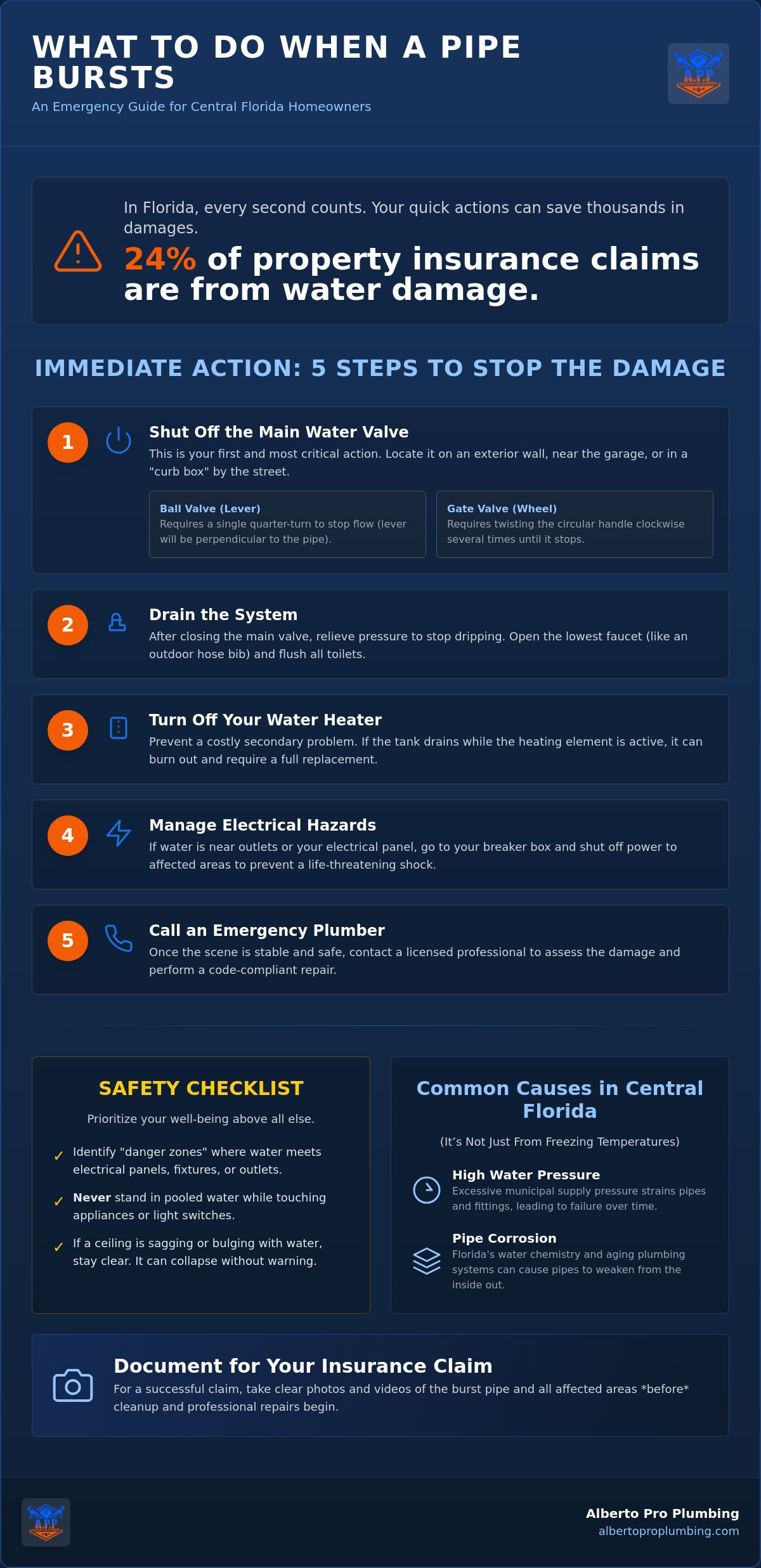
Since water damage accounts for nearly 24 percent of all property insurance claims in Florida, every second you wait increases the risk of a massive restoration project. This guide provides a clear, step-by-step plan to help you take control of the situation immediately. You’ll learn the exact steps to stop the flow, ensure your home stays safe from electrical hazards, and find a reliable emergency plumber in Central Florida who treats your property with respect. We’ll guide you through the process of stabilizing your home and getting things back to normal with the steady, professional hand of a neighborly expert.
Acting fast is the best way to minimize damage and keep your repair costs low. This guide explains exactly what to do when a pipe bursts, from the first frantic seconds to the final professional repair. Here is what you’ll find in this emergency guide:
- The five immediate steps to stop water flow and relieve system pressure.
- How to manage electrical hazards and stay safe in a flooded home.
- Proven tips for documenting damage to ensure your insurance claim is successful.
- The unique reasons why pipes fail in Central Florida, including water pressure and corrosion.
- Why professional-grade repairs and full system inspections are vital for long-term safety.
Immediate Action: 5 Steps to Take the Moment a Pipe Bursts
When you see water spraying from a wall or pooling on the floor, your first instinct might be to grab a mop. Don’t. Knowing exactly what to do when a pipe bursts starts with stopping the flow at its source before the mess gets out of hand. Every second the water runs, it increases the risk of structural compromise and long-term issues. Understanding Water Damage helps you realize that even clean water from a supply line can quickly lead to mold and rot if it isn’t stopped immediately. Your priority is stabilization.
Locating Your Main Water Shut-Off Valve
In Central Florida, we don’t have basements, so your shut-off valve is usually found in a few specific spots. Check the perimeter of your home first. You’ll often find it near the garage or close to the front hose bib where the main water line enters the structure. If it isn’t visible against the house, look toward the street for a “curb box” or meter box buried in the ground near the property line. To identify your valve type quickly: a ball valve features a lever handle that requires a simple quarter-turn to stop flow, while a gate valve uses a circular wheel handle that must be twisted clockwise several times to close the internal gate.
Draining the System Safely
Once the main valve is closed, there’s still a significant amount of water sitting in your pipes ready to leak out. You need to drain the system to relieve the remaining pressure and stop the dripping at the break site. Start by opening the lowest faucet in your home, usually an outside hose bib or a laundry room sink, to let gravity pull the water out of the lines. Flush all your toilets several times to empty the tanks and bowls completely. Finally, make sure to switch off your water heater. If the tank drains while the heating elements are still active, you could burn out the unit, which adds a costly replacement to your emergency.
Safety is the final piece of the immediate response. If water is anywhere near an outlet, appliance, or your electrical panel, do not touch any switches. Head straight to your breaker box and kill the power to those specific zones. It’s much safer to work with a flashlight than to risk a life-threatening shock in a flooded room. After you’ve stabilized the scene and stopped the flow, your next move is to call for a professional emergency plumbing repair. A licensed expert can assess the break and ensure the fix meets the latest Florida Building Code standards, giving you peace of mind that your home is secure.
Safety First: Managing Electrical Hazards and Structural Risks
Safety must come first. Once you’ve shut off the water, take a moment to scan for hazards that could cause immediate harm. Water traveling through walls often finds its way into electrical conduits and junction boxes. If you notice water dripping from a ceiling fan or pooling around a baseboard outlet, don’t touch anything in that room. It’s a common mistake to try and move a lamp or unplug a toaster while standing in a puddle; this can lead to a severe electric shock. When researching what to do when a pipe bursts, you’ll find that shutting off the electricity at the breaker is just as important as shutting off the water if the leak is widespread.
Identifying “danger zones” is your next priority. These are areas where water is actively contacting electrical panels, light fixtures, or major appliances. Avoid standing in pooled water while touching any electrical switches or devices, even if you think the power is off. If the water is rising toward your main electrical panel, stay away and call for professional help immediately. Your physical well-being is the non-negotiable priority during these first few frantic minutes.
When to Call the Electrician vs. the Plumber
Knowing which expert to call depends on where the water is going. If your main electrical panel is damp, sparking, or you hear a buzzing sound coming from your walls, an electrician is your first call. You should wait for a plumber to arrive and stabilize the leak only after the area is electrically safe. Our team at Alberto Pro Plumbing often works alongside other trades to ensure a home is secure before we begin our specialized repair work. It’s vital to prioritize life safety over property preservation during the first 30 minutes of a crisis.
Dealing with Ceiling Bulges and Leaks
A sagging ceiling is a ticking time bomb. Drywall is porous and loses its structural integrity quickly when saturated; it also becomes incredibly heavy. If you see a bulge, it means gallons of water are trapped above you. You can mitigate the risk of a sudden collapse by using a screwdriver to carefully poke a small hole in the center of the sag. This allows the water to drain into a bucket in a controlled manner rather than bringing the whole ceiling down at once. This simple action prevents the entire structure from failing under the weight. Be sure to document the bowing with your phone before you start, as clear evidence helps your adjuster understand the severity of the incident. If the creaking sounds get louder or the bowing is severe, evacuate the area immediately. It isn’t worth the risk to your safety.
Documentation and Cleanup: Preparing for Insurance Claims
Once the water stops flowing and the immediate danger has passed, your focus must shift toward financial recovery. The quality of your documentation in these first few hours often determines how smoothly your insurance claim will proceed. While it’s tempting to start throwing away ruined carpet or broken drywall immediately, you need to create a visual record first. Start by taking high-quality photos and videos of the burst pipe and every single damaged item, including furniture, electronics, and flooring. Knowing what to do when a pipe bursts includes acting like a crime scene investigator for your own property.
Don’t let the plumber take the broken section of pipe with them when they leave. You should keep that damaged segment as physical evidence for the insurance adjuster. It proves the cause of the loss was a sudden break rather than gradual wear and tear, which is a critical distinction for coverage. In 2024, the Florida Office of Insurance Regulation reported over 82,000 claims for water overflow; providing clear evidence helps your claim stand out in a crowded system. Only contact your insurance agent after the situation is stabilized and you have a full folder of evidence ready to share.
Protecting your home involves both physical upkeep and an understanding of your legal standing as a property owner. To learn more about managing property-related risks and liability, visit Fenderson Law Firm.
What Your Insurance Adjuster Needs to See
Insurance adjusters look for specific proof to justify a payout. You need clear, well-lit shots of the point of failure, showing exactly where the pipe gave way. Complement these visuals with a detailed list of high-value items that were touched by the water. To support your claim, you’ll also need professional repair receipts from a licensed plumbing company. These documents verify that the work was performed to code and that the emergency was handled by experts. Under Florida law as of 2026, insurance companies are required to pay or deny a property claim within 60 days of receiving your notice of loss, so having your paperwork organized speeds up this timeline.
Preventing Mold Growth in Central Florida
Our humid Clermont climate is the perfect breeding ground for mold, which can begin growing in as little as 24 to 48 hours after a leak. You must start the drying process immediately using industrial-grade fans and dehumidifiers to pull moisture from the air and walls. If carpets or padding are completely saturated and cannot be dried within a day, it’s usually safer to remove them to prevent deep-seated fungal growth. Once surfaces feel dry to the touch, apply a mild antimicrobial solution to hard areas like baseboards and subflooring. This proactive approach protects your family’s health and ensures your home stays in top condition during the restoration phase.
Why Pipes Burst in Central Florida (It’s Not Just Freezing)
Most online guides assume you live in a climate where snow and ice are the primary threats to your plumbing. While freezing temperatures do occasionally reach Lake and Orange Counties, they aren’t the main reason local homeowners find themselves searching for what to do when a pipe bursts. In Central Florida, our plumbing systems face a unique set of environmental stressors that can cause a sudden failure even on a beautiful 80-degree day. Understanding these local factors helps you spot the warning signs before a minor leak becomes a major flood.
High municipal water pressure is a frequent culprit. While strong shower pressure feels great, it can put immense stress on older copper or PVC pipes if your pressure-reducing valve (PRV) fails. Over time, this constant force weakens joints and thins out pipe walls. This is often combined with chemical corrosion from our local hard water. The minerals in Florida’s water supply gradually eat away at the interior of metal pipes over several decades, leading to pinhole leaks that eventually result in a full burst. Additionally, thermal expansion in your water heater can cause pressure-related bursts if the safety valves are old or improperly maintained.
The Danger of Polybutylene Pipes
Many homes built in Clermont and the surrounding areas between the late 1970s and mid-1990s were outfitted with polybutylene piping. These grey plastic pipes are notorious for reacting poorly to the chlorine used in municipal water treatments. They tend to degrade from the inside out, which means they can look perfectly fine on the exterior while they are actually “ticking time bombs.” Because they become brittle and fail without warning, a whole home repipe is the only permanent solution to prevent a catastrophic failure in these older properties.
Slab Leaks: The Hidden Burst
Our sandy terrain in the Orlando area is prone to shifting, especially after heavy summer rains. This movement can cause the pipes buried beneath your concrete foundation to crack or disconnect. These are known as slab leaks, and they are particularly dangerous because the water can run for days before you notice it. Keep an eye out for unusual warm spots on your floor, a sudden spike in your water bill, or the sound of running water when all your faucets are off. If you suspect a hidden break, our team uses specialized acoustic sensors to find the exact location of the burst. This technology allows us to perform a surgical repair without tearing up your entire floor. If you’re facing a plumbing emergency right now, contact Alberto Pro Plumbing for expert leak detection and repair to protect your home’s foundation.
Professional Repair and Future Prevention
Stopping the water is only the first half of the battle. While a quick clamp or a piece of tape might seem like a temporary fix, these DIY patches often fail under the high pressure of Central Florida’s municipal lines. Licensed plumbers use professional-grade materials and techniques that far exceed the durability of standard retail patches. When you are deciding what to do when a pipe bursts, choosing a permanent, code-compliant repair is the only way to ensure your home remains dry and safe for years to come. Our team doesn’t just fix the break; we take pride in our tidy service, ensuring your workspace is left in its original condition.
A single burst is frequently a warning sign of a systemic issue. After the immediate repair is finished, a full system inspection is vital. This process often reveals other weak points, such as thinning copper or failing joints, that are just days away from their own failure. One of the most effective ways to protect your property is by installing a pressure-reducing valve (PRV). This device acts as a shield, regulating the force of the water entering your home and preventing the kind of stress that leads to catastrophic failures. Regular maintenance remains the most cost-effective way to avoid 2:00 AM plumbing disasters and the high costs of emergency restoration; for instance, those with specialized heating systems often explore Central Heating Power Flush to maintain the efficiency and integrity of their internal pipework.
The Alberto Pro Plumbing Membership Plan
We believe that the best emergency is the one that never happens. Our Home Protection Membership is designed to provide year-round peace of mind through proactive care. Members receive regular, detailed inspections where our specialists look for signs of corrosion or “poly” pipe degradation before they turn into floods. This plan also includes essential water heater flushes to remove sediment and prevent pressure-related tank failures. During local emergencies in Clermont, our members receive priority scheduling, ensuring that a trusted neighborly expert is at your door as quickly as possible.
Next Steps: Restoring Your Peace of Mind
After the chaos of a leak, you should schedule a follow-up inspection to ensure that no secondary leaks were caused by the initial pressure surge. This is also an ideal time to discuss long-term upgrades, such as transitioning to modern PEX piping. PEX offers superior flexibility and resistance to the chemical corrosion common in our local hard water supply. A burst pipe is a stressful event, but it also serves as a valuable opportunity to modernize your home’s infrastructure and prevent future heartaches. We are here to help you turn a crisis into a stronger, more reliable plumbing system that protects your family for the long haul.
Take Control of Your Home’s Recovery
A plumbing emergency is one of the most stressful events a homeowner can face. By acting quickly to shut off your water and power, you’ve already done the hard work of stabilizing the crisis. Remember that thorough documentation and a professional assessment are your best tools for a successful insurance claim and a permanent fix. Knowing exactly what to do when a pipe bursts is about more than just turning off a valve; it’s about protecting your family’s biggest investment from long-term damage.
Don’t let a messy break ruin your peace of mind. As a family-owned and community-trusted business, we are genuinely invested in keeping our neighbors’ homes safe and dry. Our team of expert leak detection and repiping specialists is ready to help with tidy service that respects your property. We provide the technical authority you need with the friendly, approachable manner you deserve during a crisis. We are proud to offer 24/7 emergency response throughout Central Florida to ensure you are never left waiting.
Need an Emergency Plumber? Call Alberto Pro Plumbing Now for 24/7 Service!
You don’t have to navigate this alone. We are here to help you get your home back to normal quickly and reliably.
Frequently Asked Questions
Is a burst pipe covered by homeowners insurance?
Most standard homeowners’ insurance policies in Florida cover the damage caused by a sudden and accidental pipe burst. This includes repairs to your drywall, flooring, and personal belongings. However, the cost to repair or replace the broken pipe itself is typically not covered because it’s considered part of routine home maintenance. It’s vital to provide written notice to your insurer within one year of the loss to meet legal requirements.
How much does it typically cost to fix a burst water pipe?
The total cost for a repair depends on the pipe’s location and the complexity of the job. A simple break in an accessible area costs less than a slab leak that requires specialized equipment to reach. Factors like the type of pipe material and whether the break occurred during emergency hours will also influence the final bill. We provide a professional assessment to give you an accurate picture of the necessary work.
Can I stay in my house after a pipe bursts?
You can usually stay in your home if the damage is localized and the area is electrically safe. If the water has affected your main electrical panel or if there is major structural bowing in the ceilings, you should evacuate immediately. If we have to shut off the water to the entire house for an extended repair, you might find it more comfortable to stay elsewhere until the water service is restored.
What is the most common cause of burst pipes in Florida?
Aging infrastructure and high municipal water pressure are the leading causes of plumbing failures in Central Florida. Our sandy soil and limestone foundations also shift over time, which puts physical stress on pipes buried beneath the house. Additionally, the high mineral content in our local hard water causes chemical corrosion that gradually thins out pipe walls until they can no longer hold the pressure.
How long does it take for a plumber to fix a burst pipe?
A straightforward repair usually takes between two and four hours once the plumber arrives and identifies the break. If the pipe is hidden behind a wall or under a concrete slab, the process will take longer because of the extra labor needed to access the area. Our goal is to stabilize the situation as quickly as possible and then perform a high-quality repair that meets the latest building codes.
How can I tell if a pipe burst behind a wall?
Look for telltale signs like damp spots, peeling wallpaper, or bubbling paint on your walls and ceilings. You might also notice a musty smell or hear the sound of running water when no faucets are in use. If your water bill spikes unexpectedly, it’s a strong signal that you need professional leak detection to find a hidden break before it leads to a mold infestation or structural rot.
Should I call my insurance company or a plumber first?
Call a plumber first to stop the water and stabilize your home. Insurance policies require you to take immediate action to mitigate further damage, and a professional can help you document the failure correctly. Once the leak is stopped and you have photos of the damage, you can then contact your insurance company to start the claims process with the right evidence in hand.
Can a small leak turn into a burst pipe overnight?
A small pinhole leak can absolutely escalate into a major burst without warning. Constant water pressure is always pushing against the weakened area of the pipe, and even a tiny crack can suddenly give way. This is why knowing what to do when a pipe bursts starts with being proactive. Addressing small drips immediately is the best way to prevent a catastrophic emergency that ruins your flooring and furniture.