
What if that persistent puddle in your backyard isn’t just a leftover from yesterday’s heavy Florida downpour? In Clermont, a yard that stays wet for days is rarely just a “rain problem.” It’s often a warning sign of a failing septic drain field or a hidden plumbing leak. With Florida typically receiving 50 to 65 inches of rainfall annually, your soil has a lot of work to do, and when it stops draining, your home is at risk.
It’s stressful to deal with ruined landscaping, mosquito breeding grounds, and the constant fear of foundation damage. You deserve a dry, usable backyard where you don’t have to worry about unpleasant odors or septic failures. We’ll help you discover the most effective soggy yard solutions Clermont has to offer so you can stop the swamp and protect your property’s value. Our goal is to provide the clarity you need to handle these household emergencies with confidence.
In this guide, we’ll break down the common causes of standing water, from simple surface grading issues to complex septic system requirements. You’ll learn how to identify when a wet spot is a plumbing emergency and what long-term fixes will keep your yard functional through the toughest Florida summers.
Key Takeaways
- Discover the most effective soggy yard solutions Clermont residents use to keep their properties dry even during the peak of the rainy season.
- Identify the critical warning signs that distinguish a simple drainage issue from a more serious septic system failure or an underground water main leak.
- Learn how French drains and downspout diversions must be specifically engineered for Central Florida’s sandy soil to provide long-term relief.
- Understand the role of soil biomat buildup and how professional septic drain field rehabilitation can restore your yard’s natural absorption.
- See why Clermont’s unique rolling hills topography requires a customized site assessment rather than a one-size-fits-all drainage fix.
Why Clermont Yards Stay Soggy: Local Drainage Challenges
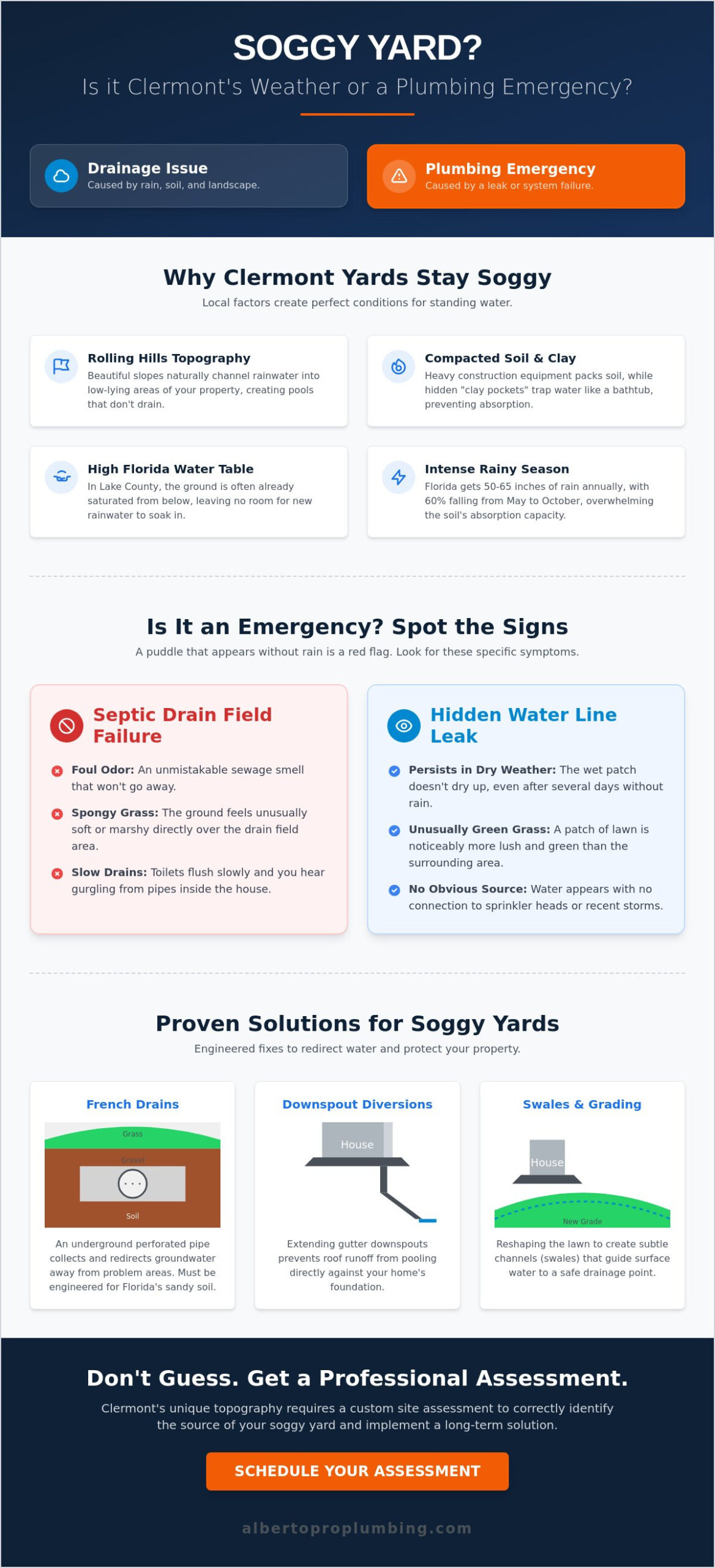
Clermont is famous for its rolling hills, but those beautiful slopes often direct every drop of rain into a single corner of your property. Unlike the flat coastal regions of Florida, our local topography creates natural basins where water pools and sits. If your lawn feels like a sponge days after a storm, you’re likely looking for soggy yard solutions Clermont homeowners can rely on to protect their foundations and landscaping. Gravity is a powerful force, and in our hilly terrain, it always wins unless you have a dedicated plan to redirect it.
While many people think Florida’s sandy soil should drain instantly, the reality in Lake County is more complex. We often deal with a high water table that sits just a few feet below the grass. When the ground is already saturated from below, there’s no room for new rainwater to soak in. This is why a professional French drain or a custom-graded swale is often necessary to move water away from the home. Without a clear path out, that water will simply sit until it evaporates, which can take a long time in our humid climate.
The Problem with Compacted Florida Soil
In newer Clermont developments, heavy construction equipment often packs the earth down so tight that it loses its natural porosity. This pressure turns your yard into a solid surface that’s almost as waterproof as concrete. We frequently find “clay pockets” hiding just beneath the sandy topsoil. These layers create a “bathtub effect” where water gets trapped in the sand and has nowhere to go. Identifying these hidden barriers is the first step in finding permanent soggy yard solutions Clermont residents need for a dry backyard.
Climate Factors in Central Florida
Our local weather doesn’t give the ground much time to recover between storms. Florida receives between 50 to 65 inches of rain every year, and approximately 60% of that volume falls during the intense window between May and October. These 2-inch-per-hour afternoon downpours dump more water than a standard lawn can absorb at once. High humidity levels further complicate the issue by slowing down natural evaporation. This creates a seasonal cycle where low-lying areas stay perpetually damp, leading to root rot and pest problems if not addressed by a specialist who understands Lake County’s unique environment.
Is Your Soggy Yard a Plumbing or Septic Emergency?
When you see standing water in your grass, your first instinct might be to blame the most recent thunderstorm. While our local weather is often the culprit, assuming every puddle is just rainwater can be a costly mistake. If you find yourself searching for soggy yard solutions Clermont homeowners can trust, the first step is identifying the water’s source. A wet spot that persists during a dry spell isn’t a drainage issue. It’s a plumbing emergency. Ignoring these “mystery” wet spots near your home can lead to foundation instability, mold growth, and expensive structural repairs.
Distinguishing between runoff and a system failure requires a bit of detective work. Rainwater usually collects in low points and disappears within 24 to 48 hours. However, water from a leaking main line or a failing septic system won’t wait for a cloudburst to appear. If the ground feels saturated regardless of the forecast, you need a professional to determine if you’re dealing with a simple landscaping fix or a critical failure of your home’s infrastructure.
Red Flags for Septic Drain Field Failure
A failing septic drain field is one of the most serious causes of a wet lawn. If the soil can no longer process effluent, the liquid has nowhere to go but up. You might notice spongy grass specifically over the area where your pipes are buried. This is often accompanied by an unmistakable, unpleasant odor that doesn’t go away. Inside the house, you may hear gurgling pipes or notice that your toilets are flushing slower than usual. Proper Landscaping On or Near Septic Drain Fields is vital, as heavy roots or improper grading can accelerate these failures. If your yard stays wet and smells off, stop using heavy water appliances immediately and call for help.
Identifying Main Line and Irrigation Leaks
Not all yard floods are smelly. A silent leak in your main water line or irrigation system can dump hundreds of gallons of water into your soil every day. One telltale sign is a patch of grass that looks unusually green or lush compared to the rest of the lawn. You can perform a simple check by looking at your water meter when no faucets are running. If the dial is spinning, you have a leak. We use specialized leak detection technology to pinpoint the exact location of the break without digging up your entire property. If you suspect your soggy yard solutions Clermont needs include a pipe repair, getting a professional plumbing assessment early can save you thousands in utility bills and property damage.
Effective Surface Drainage Solutions for Clermont Homes
Once you’ve ruled out a septic failure or a major pipe leak, it’s time to tackle the water coming from the sky. In Clermont, managing surface water is about more than just digging a hole. You need a system that works with our unique terrain and respects Florida’s strict environmental regulations. Implementing the right soggy yard solutions Clermont properties require often starts with controlling how water moves across your lawn before it has a chance to pool. This proactive approach prevents the soil from reaching that “sponge” stage where it can no longer absorb a single drop.
Proper yard grading is your first line of defense. By creating a subtle slope or a “swale”—a shallow, grassy channel—you can guide water toward the street or a dedicated drainage area. In Lake County, dry wells are also a popular choice for handling overflow. These underground basins collect water and slowly release it back into the ground, preventing your backyard from turning into a pond during a typical summer afternoon storm. These systems provide a place for water to go when the top layer of soil is already saturated.
French Drains: A Permanent Solution
A French drain is one of the most reliable ways to handle subsurface saturation. It consists of a perforated pipe buried in a trench filled with gravel. This setup allows water to seep into the pipe and flow away from your home’s foundation. However, in our sandy Clermont environment, these systems require a specific design. We use heavy-duty filter fabric to prevent fine Florida sand from migrating into the gravel and clogging the pipe over time. Without this protection, a drain that works today could be completely useless by next summer.
It’s also vital to consider how your drainage system interacts with your septic system. Florida state regulations require specific setbacks for septic components, and you don’t want a new drainage trench interfering with your drain field’s performance. For example, septic systems must be at least 5 feet from property lines and building foundations. When we design a French drain, we ensure it doesn’t accidentally flood your drain field or violate these local codes. This attention to detail is why we emphasize professional soggy yard solutions Clermont families can trust.
Catch Basins and Downspout Extensions
Your roof is a massive water collector. During a heavy downpour, a single roof can shed thousands of gallons of water. If your downspouts drop that water right at the base of your home, you’re asking for foundation trouble. Standard 3-foot extensions often aren’t enough in Florida. We recommend burying downspout extensions and connecting them to catch basins that move the water far away from the house. This keeps the area around your foundation dry and prevents the “bathtub effect” we discussed earlier.
Integrating these surface drains with your overall plumbing services ensures that your home’s entire water management system is cohesive. Whether you’re dealing with a simple clog or need a full drainage overhaul, a professional approach keeps your yard dry and your home safe. We always make sure to leave your property tidy, so you won’t even know we were there once the grass grows back over the new lines.
Solving Deep Drainage Issues: Septic Drain Field Rehab
If your yard remains wet even during a dry spell and the water is concentrated over your septic area, surface-level fixes won’t solve the problem. You’re likely dealing with a saturated drain field. In Lake County, where the seasonal high water table can be quite high, your system needs at least 24 inches of dry soil beneath the drain field to function properly. When this separation disappears or the soil becomes clogged, you need specialized soggy yard solutions Clermont experts who understand the mechanics of wastewater management. Ignoring these deep-seated issues can lead to system-wide failure that threatens your home’s plumbing.
Over time, a biological layer called a biomat naturally forms in the soil surrounding your septic pipes. While some biomat is necessary for treating waste, an overgrowth acts like a waterproof liner. This prevents effluent from soaking into the ground, forcing it to the surface instead. This isn’t just a landscaping nuisance; it’s a health hazard. Standing wastewater can carry harmful bacteria and parasites, making your backyard unsafe for children and pets. Because the City of Clermont prohibits new septic systems in many areas, maintaining your existing system through professional rehabilitation is the most responsible way to protect your property value.
What is Septic Drain Field Rehab?
Septic drain field rehab is a non-invasive process that restores the soil’s natural ability to absorb effluent by breaking down biological clogs without excavating the entire system. Instead of bringing in heavy excavators that destroy your grass and gardens, we use advanced techniques to clear the lines and rejuvenate the surrounding soil. Choosing septic drain field rehab can save you from the massive expense and property damage of a total system replacement. It’s a methodical solution that addresses the root cause of the flood rather than just masking the symptoms.
When to Choose Professional Rehab
If your septic system is between 15 and 20 years old and the structure of the tank is still sound, rehab is often the smartest choice. It’s a disciplined approach that respects your property and your budget. One of the biggest advantages is that it saves your landscaping from the destruction caused by heavy machinery. We take pride in leaving our workspace in its original condition, ensuring your yard stays tidy throughout the process. Once the soil absorption is restored, we’ll guide you through long-term maintenance steps to keep the area dry through every Florida summer. If you’re tired of a swampy backyard, contact Alberto Pro Plumbing for a professional assessment of your drain field today.
Professional Yard Drainage Assessments in Clermont
A generic drain kit from a big-box store rarely accounts for the specific challenges of a Lake County property. When you search for soggy yard solutions Clermont, you’ll find that what works for a flat lot in Orlando often fails on the sloping hills of our community. A professional assessment is about more than just finding the wet spot. It’s about understanding the entire ecosystem of your property, from the pitch of your roof to the seasonal high water table under your grass. Trying to fix a drainage issue without a proper diagnosis is like taking medicine without a doctor’s visit; you might treat the symptom while the underlying cause gets worse.
Compliance is another critical factor that DIY projects often overlook. New statewide stormwater management rules became effective in December 2025, requiring site-specific analysis for nutrient reduction and runoff control. Additionally, because the City of Clermont has strict policies regarding septic-to-sewer connections when systems fail, an incorrect “fix” could inadvertently trigger a mandated sewer hookup. We ensure that every solution we propose aligns with local codes and protects your property from future regulatory headaches. We take the guesswork out of the process, providing a plan that is both effective and legal.
Our Comprehensive Diagnostic Process
Our approach to yard diagnostics is methodical and disciplined. We don’t just look at the surface; we investigate what’s happening underground. Our process includes several key steps to ensure we find the right soggy yard solutions Clermont families need for long-term results:
- Elevation Mapping: We use precision tools to identify the natural flow of water across your hilly terrain.
- Soil Saturation Testing: We determine if your soil is compacted or if a high water table is preventing natural absorption.
- Septic Component Inspection: We verify that the standing water isn’t a sign of a backing-up drain field or a compromised tank.
- Action-Oriented Planning: You receive a clear, professional remedy designed specifically for your home’s unique footprint.
Ready to Fix Your Soggy Yard?
Dealing with a swampy backyard is stressful, but you don’t have to face it alone. Partnering with a professional plumbing expert gives you the peace of mind that the job will be done right the first time. We are deeply invested in the well-being of our community, and we take great pride in our craftsmanship. Our team understands that your home is your most valuable asset, and proper water management is the key to protecting its foundation and its future.
Reclaim Your Backyard Today
A wet lawn is more than a nuisance; it’s a threat to your home’s foundation and your family’s health. You’ve learned that the rolling hills of Lake County require specific drainage strategies, and that a persistent puddle might actually be a septic or plumbing emergency. By distinguishing between surface runoff and deep drainage failures, you can choose the most effective soggy yard solutions Clermont has to offer without wasting time or money on guesswork.
We are here to help you navigate these challenges with local Clermont expertise and specialized septic knowledge. Whether you need a non-invasive drain field rehab or immediate help with plumbing-related flooding, our team stays ready to help. We provide 24/7 emergency response for those critical moments when water threatens your property. We take pride in our tidy service and disciplined approach to every repair, ensuring your yard is returned to its original condition.
Schedule Your Professional Yard Drainage Assessment with Alberto Pro Plumbing to get a clear, action-oriented plan for your property. You don’t have to settle for a swampy yard. Let’s work together to make your lawn dry, safe, and beautiful again.
Frequently Asked Questions
Why is my yard soggy even when it hasn’t rained?
If your yard stays wet during dry weather, you likely have an underground water line leak or a failing septic system. A silent leak in a main water line or an irrigation pipe can discharge hundreds of gallons daily into your soil without you noticing. You should check your water meter for movement when no faucets are running inside the house. If the meter is spinning, it’s time to call for professional leak detection to stop the flooding before it damages your property.
Can a soggy yard damage my home’s foundation in Florida?
Persistent standing water can absolutely compromise your home’s foundation by eroding the supporting soil and causing the slab to shift. In Central Florida, our sandy soil is prone to moving when it becomes oversaturated for long periods. This instability often leads to visible cracks in your walls or flooring. Implementing effective soggy yard solutions Clermont homeowners trust helps redirect water away from your foundation to maintain long-term structural integrity.
How do I know if my septic drain field is failing?
You can identify a failing drain field by looking for unusually lush grass, pooling water directly over the septic pipes, or smelling sewage odors. Inside your home, gurgling sounds in the plumbing or slow-clearing drains are major red flags that the system is struggling. These symptoms suggest the soil is no longer absorbing effluent correctly. If you notice these signs, you should minimize water usage immediately and seek a professional inspection to prevent a total backup.
Will a French drain fix a septic tank problem?
A French drain is designed to manage surface rainwater and will not solve an internal septic system failure or a clogged tank. While these drains are excellent for moving runoff, they cannot process wastewater or break up soil biomat clogs. Installing a drainage system too close to your septic components can actually violate Florida’s 5-foot setback rules. You need a specialized assessment to ensure your drainage fix doesn’t interfere with your septic system’s performance.
Is standing water in my yard a health risk?
Standing water poses a real health risk by creating mosquito breeding grounds and potentially harboring pathogens if the water contains septic effluent. If the water is coming from a failing septic system, it may contain harmful bacteria or parasites that are dangerous for your family and pets. Florida’s heat and humidity accelerate these risks, making it vital to address wet spots quickly before they become a larger environmental hazard for your property and the surrounding neighborhood.
How much does it cost to fix yard drainage in Clermont?
The cost to fix drainage depends on the complexity of the project, including the total length of the drain lines and the amount of soil regrading required. While simple downspout diversions are more affordable, comprehensive systems like French drains or dry wells require more labor and specialized materials. You should also factor in local Clermont permit fees, which are typically based on the total valuation of the property improvement project. A professional assessment provides the most accurate estimate for your specific lot.
What is the best time of year to install drainage solutions in Central Florida?
The ideal time for drainage work in Central Florida is during the dry season, which typically runs from November through April. During these months, the seasonal high water table is lower, making it much easier to excavate and grade the land properly. Digging during the summer rainy season is often difficult because trenches can fill with water before the pipes are even installed, leading to a messy workspace and less effective results.
Can I install a French drain myself near my septic tank?
Attempting a DIY installation near a septic tank is not recommended because you could accidentally puncture a line or violate strict state health codes. Florida regulations require septic systems to be at least 5 feet from building foundations and property lines, and drainage must not interfere with these setbacks. A professional knows how to navigate these rules while ensuring the new drain doesn’t accidentally flood the septic area. It’s always safer to trust an expert who understands the local soil and regulations.