
What if the most expensive mistake you make this year isn’t a bad investment, but simply forgetting a routine maintenance task hidden beneath your lawn? If you’re like many of your neighbors in Central Florida, you’ve probably heard conflicting advice about how often should a septic tank be pumped in Florida. It’s stressful to wonder if you’re one flush away from a sewage backup or a massive bill for a new drain field. We understand that your home is your sanctuary, and the last thing you want is a messy, costly emergency disrupting your family’s peace of mind.
In this 2026 guide, you’ll discover the exact pumping schedule your system needs to stay healthy in our unique sandy soil and high water table. We’ll cut through the confusion by explaining how household size and updated state regulations impact your maintenance requirements. You’ll also learn the critical warning signs of a struggling system so you can act before a small issue becomes a total disaster. By the end of this article, you’ll have a clear, reliable plan to protect your property and keep your home running smoothly.
Key Takeaways
- Most local systems require professional pumping every 3 to 5 years to remove accumulated solids and protect your drain field from failure.
- Learn how household size and garbage disposal usage directly impact how often should a septic tank be pumped in Florida.
- Identify the specific warning signs, such as spongy green grass or slow drains, that signal your system needs immediate attention.
- Understand why Florida’s high water table and seasonal heavy rains make a strict maintenance schedule non-negotiable for homeowners.
- Discover the critical role of effluent filters and why a professional visual inspection is vital during every service visit.
The Short Answer: How Often Should a Septic Tank Be Pumped in Florida?
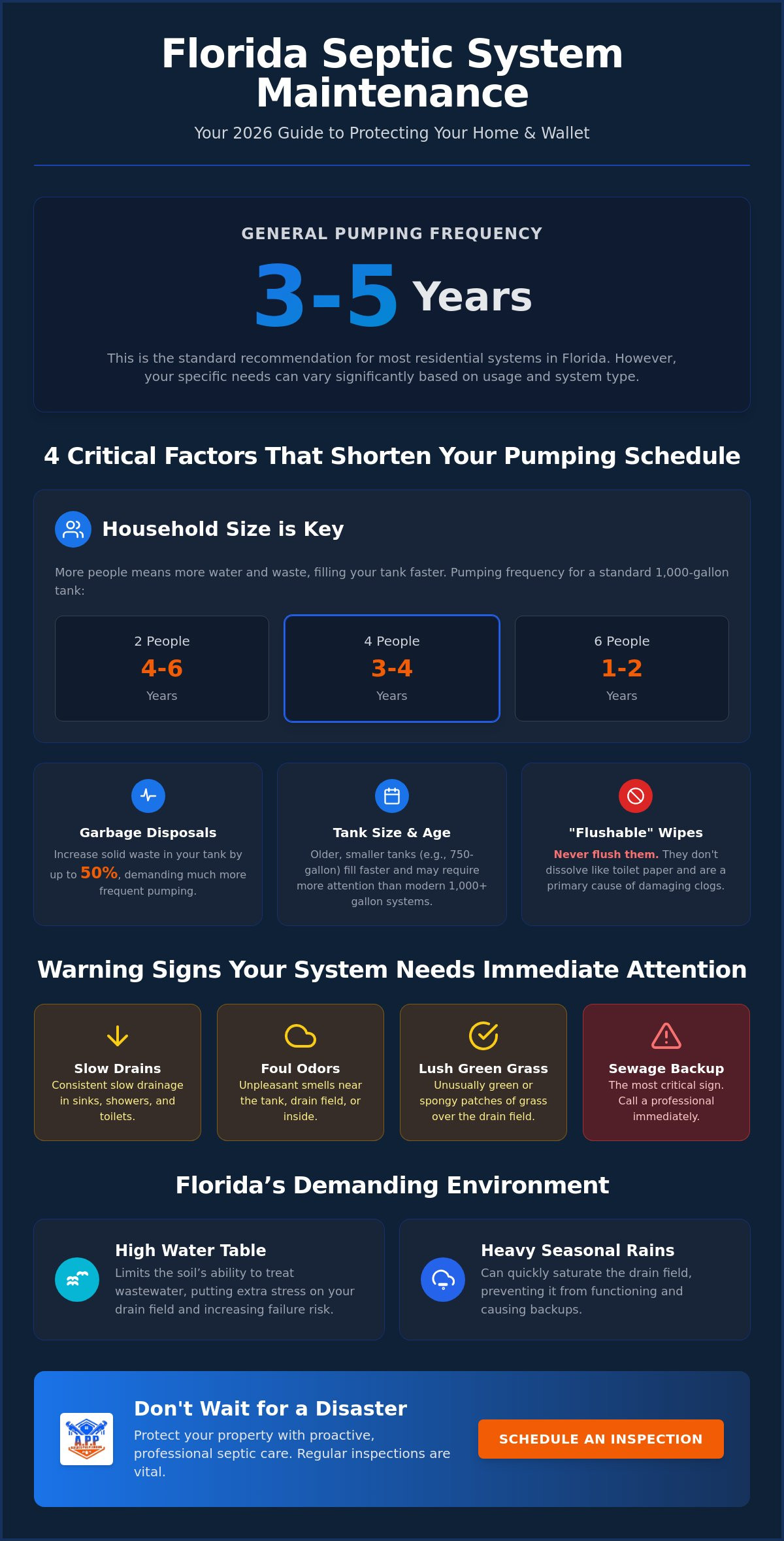
Most homeowners want a clear, direct answer to protect their property and their wallet. For the majority of residential systems, the standard recommendation is to pump your tank every 3 to 5 years. Septic pumping is the professional removal of accumulated solids, specifically sludge and scum, to prevent them from escaping the tank and clogging your drain field. Understanding what a septic system is helps you visualize it as a hardworking filter; when the filter gets full, the waste has nowhere to go but back into your home or out into your yard.
Waiting for a sewage backup or a foul odor before calling a professional is the most expensive way to manage your system. By the time you see physical signs of trouble, the internal components of your septic system may already be compromised. Routine maintenance is a small investment that prevents the high cost of a full drain field replacement. It is much easier to schedule a routine visit than to deal with a midnight emergency in your bathroom.
Just as regular maintenance protects your home’s infrastructure, professional legal planning protects its value as an asset. For those looking to secure their property for future generations, Flex Legal, PLLC provides specialized estate planning and probate law services across Florida.
The 3-5 Year Rule: Why It Is a Baseline, Not a Guarantee
The general 3 to 5-year window is based on an “average” household of roughly 2.5 people. If your family is larger, or if you frequently host guests, your tank will reach its capacity much faster. Tank size also plays a critical role. While 1,000-gallon tanks are common today, many older homes in Central Florida were built with 750-gallon tanks. These smaller units have less surface area to settle solids, meaning they require more frequent attention. The age of your tank matters too; older concrete tanks may develop small cracks or degradation that requires a closer eye than newer plastic or fiberglass models.
Florida Department of Health vs. Reality
The Florida Department of Health (DOH) provides guidelines for residential onsite sewage treatment to protect our state’s groundwater. While the DOH suggests a 3 to 5-year cycle, the reality of living in Lake or Orange County often demands a more proactive approach. Local soil conditions and high water tables can put extra stress on your system. Because of these variables, professional inspections should actually happen every 1 to 2 years, even if you don’t pump the tank every time. This allows a technician to measure the sludge layers and give you an accurate answer for how often should a septic tank be pumped in Florida based on your specific usage habits and property conditions.
4 Critical Factors That Shorten Your Florida Pumping Schedule
While the three to five year window is a solid baseline, your daily habits actually dictate the real clock for your system. If you are trying to determine exactly how often should a septic tank be pumped in Florida, you must look at what happens inside your home. A system designed for a quiet couple will behave very differently when a family of five moves in. Your lifestyle choices directly impact how quickly solids accumulate and how much stress your drain field endures. Adhering to Professional Maintenance standards means adjusting your expectations based on these four critical factors.
The “Hidden” Impact of Modern Appliances
Modern convenience often comes at a cost to your septic health. High-efficiency dishwashers and washing machines use less water, which is great for your utility bill but can be tricky for your tank. Less water means a higher concentration of soaps and chemicals, which can sometimes disrupt the natural bacterial balance needed to break down waste. Garbage disposals are the biggest offenders; they can increase the volume of solids in your tank by up to 50%. This extra organic matter doesn’t break down easily, filling the tank twice as fast as a home without one. Additionally, “flushable” wipes are a major hazard in Florida systems. They do not dissolve like toilet paper and frequently snag on tank components, leading to immediate blockages.
Household Size and the Math of Waste
The math of septic maintenance is simple: more people equals more waste. Every person adds to the daily “hydraulic load,” or the total volume of water passing through the system. For a standard 1,000-gallon tank, the pumping intervals typically look like this:
- 2 People: Every 4 to 6 years
- 4 People: Every 3 to 4 years
- 6 People: Every 1 to 2 years
A smaller tank with a large family may require pumping every 1 to 2 years to stay ahead of sludge buildup. This is especially true for our “snowbird” residents or families who frequently host long-term guests. A sudden spike in usage can overwhelm a system that was previously stable. If your household has grown recently, it might be time to schedule a professional inspection to see if your current schedule still fits your needs. Managing your water usage efficiency by installing low-flow fixtures can help, but it won’t replace the need for regular pumping when the tank is physically full of solids.
Laundry habits also play a massive role. Saving all your washing for a single “Laundry Day” sends hundreds of gallons of water through the tank in a few hours. This rush of water can stir up settled solids and push them directly into your drain field, causing premature failure. Spreading your loads throughout the week gives your tank the time it needs to settle properly.
Warning Signs Your Central Florida Septic System Needs Immediate Attention
Waiting until your toilets overflow is a recipe for disaster. Most homeowners ask how often should a septic tank be pumped in Florida because they want to avoid that exact nightmare. Luckily, your system usually provides several warning signs before a total failure occurs. Recognizing these early red flags can save you thousands of dollars in repairs. As local specialists who take pride in our community, we’ve seen how a little bit of attention can prevent a massive headache.
One of the most common signs in Central Florida is “super grass.” During a dry spell in Clermont, your lawn should look fairly uniform. If you notice a strip of lush, bright green, spongy grass directly over your drain field, it’s a major cause for concern. This happens because the wastewater is no longer being filtered properly through the soil. Instead, it’s rising to the surface and fertilizing the grass from below. That’s not a healthy lawn; it’s a failing drain field.
Visual and Olfactory Red Flags in Your Yard
Odors are another dead giveaway. A faint “rotten egg” smell near the tank is caused by hydrogen sulfide gas. While an outdoor smell is a warning, an indoor odor is a true emergency. If you smell sewage inside your home, gases are likely backing up through your pipes because the tank is full or the venting is blocked. You might also see pooling water in your yard even when it hasn’t rained in days. This standing water is a clear sign that your system can no longer process the liquid you’re sending down the drain.
Indoor Plumbing Performance and Septic Health
Gurgling sounds in your plumbing are more than just a nuisance. They indicate that air bubbles are being forced back through the system because rising sludge levels have restricted the flow. If your sinks or tubs drain slowly and don’t respond to a standard plunger, the issue is likely deeper than a simple hair clog. It’s important to distinguish between a single clogged pipe and a main septic line issue. If every drain in the house is sluggish, your tank is almost certainly at capacity.
When you face these issues, avoid the temptation to use harsh chemical drain cleaners. These products are often highly acidic and can kill the beneficial bacteria your system needs to break down waste. If you’re struggling with persistent blockages, it’s safer to look for professional drain cleaning services near me to clear the lines without damaging your septic tank. Knowing how often should a septic tank be pumped in Florida helps you stay ahead of these problems, but these signs mean your window of opportunity is closing fast. Act quickly to protect your home’s integrity and your family’s health.
Why Florida’s Environment Makes Pumping Intervals Non-Negotiable
Florida’s unique geography is breathtaking, but it presents significant challenges for underground infrastructure. When homeowners ask how often should a septic tank be pumped in Florida, they must consider the ground beneath their feet. Unlike states with deep, rocky soil, Central Florida deals with a shallow water table and highly porous sand. These environmental factors mean your septic system has a much smaller margin for error. If your tank is overfilled with solids, the local environment will accelerate a system failure faster than almost anywhere else in the country.
The High Water Table Crisis
Central Florida’s high water table is a constant factor in septic health. During periods of heavy rainfall or hurricane season, the soil around your drain field can become completely saturated. When the ground is soaked, there’s nowhere for your wastewater to go. This saturation can cause effluent to flow backward into your tank or, in worst-case scenarios, back into your home’s drains. It’s a stressful situation that requires a proactive approach to maintenance.
One critical safety tip: never pump your septic tank during a flood or immediately after a major storm while the ground is still underwater. Emptying a tank in saturated soil creates a “buoyancy” effect that can actually cause the entire tank to pop out of the ground. If your system has struggled after a storm, you may need a professional septic drain field rehab to restore proper drainage once the water recedes. Regular pumping ensures your tank has the maximum capacity to handle these inevitable weather events.
Sandy Soil and Filtration Realities
Many residents in Lake County believe that our sandy soil is a benefit because it drains so quickly. While sand is excellent for moving liquid, it’s a poor filter for solids. In fact, sand does not filter out solids at all; it only filters liquids, which makes frequent tank pumping vital. If you skip your pumping schedule, tiny particles of sludge and grease escape the tank and enter the drain field. Because sand is so porous, these solids travel deep into the soil very quickly, potentially contaminating local groundwater, springs, and lakes.
Over time, these escaped solids create a thick, slimy layer known as a “Biomat” at the bottom of your drain field trenches. While a thin Biomat is a normal part of the filtration process, an overgrown Biomat caused by a neglected tank will permanently clog the soil. Once this happens, the drain field can no longer “breathe,” and the system will fail completely. Protecting our Central Florida waterways starts in your own backyard. Don’t wait for the ground to stay soggy; schedule a professional maintenance check today to ensure your system is prepared for Florida’s demanding climate.
Professional Maintenance: Protecting Your Home with Alberto Pro Plumbing
Pumping your tank is about more than just clearing space. It’s a vital opportunity for a professional to inspect the “internal organs” of your waste management system. While the general rule for how often should a septic tank be pumped in Florida is every 3 to 5 years, those years of service can take a toll on mechanical components. A professional visit ensures that small wear-and-tear issues don’t escalate into a full-blown plumbing emergency. At Alberto Pro Plumbing, we take pride in serving our neighbors across Lake, Polk, Osceola, and Orange Counties with the technical expertise your home deserves.
One of the most overlooked components is the effluent filter. This small but mighty part stops hair, grit, and lint from escaping into your drain field. While the tank itself might only need pumping every few years, these filters often require cleaning every 6 to 12 months, depending on your household’s water usage. Neglecting the filter can lead to slow drains and backups even if the tank has plenty of room left. Our team doesn’t just pump and leave; we ensure every part of the system is functioning at peak efficiency.
The Alberto Pro Plumbing Inspection Process
Our technicians follow a methodical process to protect your property. We begin with a visual inspection of the tank’s structural integrity, looking for cracks or signs of corrosion in concrete walls. We pay close attention to the inlet and outlet baffles. These are the “gatekeepers” that keep solids where they belong. If a baffle is damaged, solids can bypass the tank and ruin your drain field in a matter of months. We also perform a quick check of the drain field area to ensure the soil is absorbing liquid correctly. Our neighborly promise means we treat your lawn with respect, ensuring the workspace is left tidy and in its original condition once the job is finished.
Join the Home Protection Membership
The best way to manage how often should a septic tank be pumped in Florida is to stop guessing and start planning. Our Membership That Protects Your Home Year-Round is designed to take the anxiety out of home maintenance. Members enjoy priority service during peak demand times and regular check-ups that catch problems while they are still affordable fixes. Proactive care is always cheaper than a midnight emergency repair. We are a family-oriented local specialist, and we want to help you protect your investment for the long haul. Protect your home today with our professional maintenance plans!
Take Control of Your Home’s Septic Health
Your septic system is one of the most vital parts of your property’s infrastructure. While we’ve discussed the standard 3 to 5 year baseline, your specific household habits and the unique Central Florida environment are the real deciding factors. Understanding how often should a septic tank be pumped in Florida is the first step toward avoiding the stress of a sewage backup or the extreme cost of a new drain field. By paying attention to early warning signs and keeping up with regular filter cleanings, you protect both your wallet and our local environment.
Don’t wait for the grass to turn spongy or for your drains to start gurgling. As a family-owned and operated team based right here in Clermont, Alberto Pro Plumbing is dedicated to keeping our community’s homes safe and tidy. We bring specialized septic drain field expertise to every job and offer 24/7 emergency response if a crisis hits. Schedule your professional septic inspection and pumping with Alberto Pro Plumbing today! Investing in maintenance now means peace of mind and a reliable home for years to come.
Frequently Asked Questions
Is it illegal not to pump your septic tank in Florida?
Florida does not have a state-wide law mandating a specific pumping schedule for every residential home. However, the Department of Health recommends professional inspections at least every three years to ensure your system is functioning correctly. If you live near certain water bodies, the Clean Waterways Act of 2020 may require more frequent inspections or upgrades. Failing to maintain your system can lead to environmental violations if waste enters local groundwater or neighboring properties.
How much does septic pumping typically cost in Central Florida?
The cost of septic pumping varies based on the size of your tank and the accessibility of the lids. While industry averages fluctuate, you should focus on the value of preventing a total drain field failure. Replacing a drain field can cost thousands of dollars, making routine pumping a highly cost-effective preventative measure. Contact a local professional for a specific quote based on your property’s needs and soil conditions.
Can I use septic tank additives instead of pumping?
No, additives cannot replace physical pumping. While some products claim to break down waste, they don’t remove the non-biodegradable solids that eventually fill your tank. Relying on additives alone can create a false sense of security while sludge continues to build up. Physical removal of solids is the only way to ensure your drain field remains protected from clogs and long-term damage.
What happens if I don’t pump my septic tank for 10 years?
Ignoring your system for a decade usually results in a catastrophic drain field failure. Over such a long period, the sludge layer grows high enough to escape the tank and enter your absorption trenches. This creates a permanent clog that prevents wastewater from filtering into the soil. At this point, a simple pump-out won’t fix the problem, and you’ll likely face an expensive total system replacement and property damage.
Does Florida law require a septic inspection when selling a home?
Florida state law does not strictly require a septic inspection for every home sale, but most mortgage lenders and buyers will insist on one. A professional inspection protects both parties by confirming the system is in good working order. Providing proof of maintenance can help your home sell faster and for a better price. It’s a smart move to have your system inspected before listing your property to avoid closing delays; to further secure your property assets during major life transitions, discover Law Offices of Robert P. Bergman.
Will heavy rain affect how often I need to pump my septic tank?
Heavy rain doesn’t fill your tank with solids, but it does saturate the soil in your drain field. When the ground is soaked, your system struggles to process wastewater, which can lead to temporary backups. If you live in an area prone to flooding, you might need to adjust how often should a septic tank be pumped in Florida to ensure the tank has maximum capacity during the rainy season and hurricane months.
How do I find my septic tank lids if they are buried?
You can often find buried lids by checking your property’s original site map or by using a thin metal probe to gently test the soil. Most tanks are located about five to ten feet from the house, following the main sewer line. If you can’t locate them, a professional technician can use electronic locating equipment or transmitters to find the exact spot without digging up your entire yard or damaging your landscaping.
Can I pump my own septic tank to save money?
No, you cannot pump your own septic tank. It is illegal in Florida to dispose of septic waste without a permit and specialized equipment. Beyond the legal risks, septic tanks contain deadly gases like methane and hydrogen sulfide that can be fatal in seconds. Professional pumping requires a vacuum truck and a licensed facility for proper waste disposal to protect the community’s health and the local environment.