
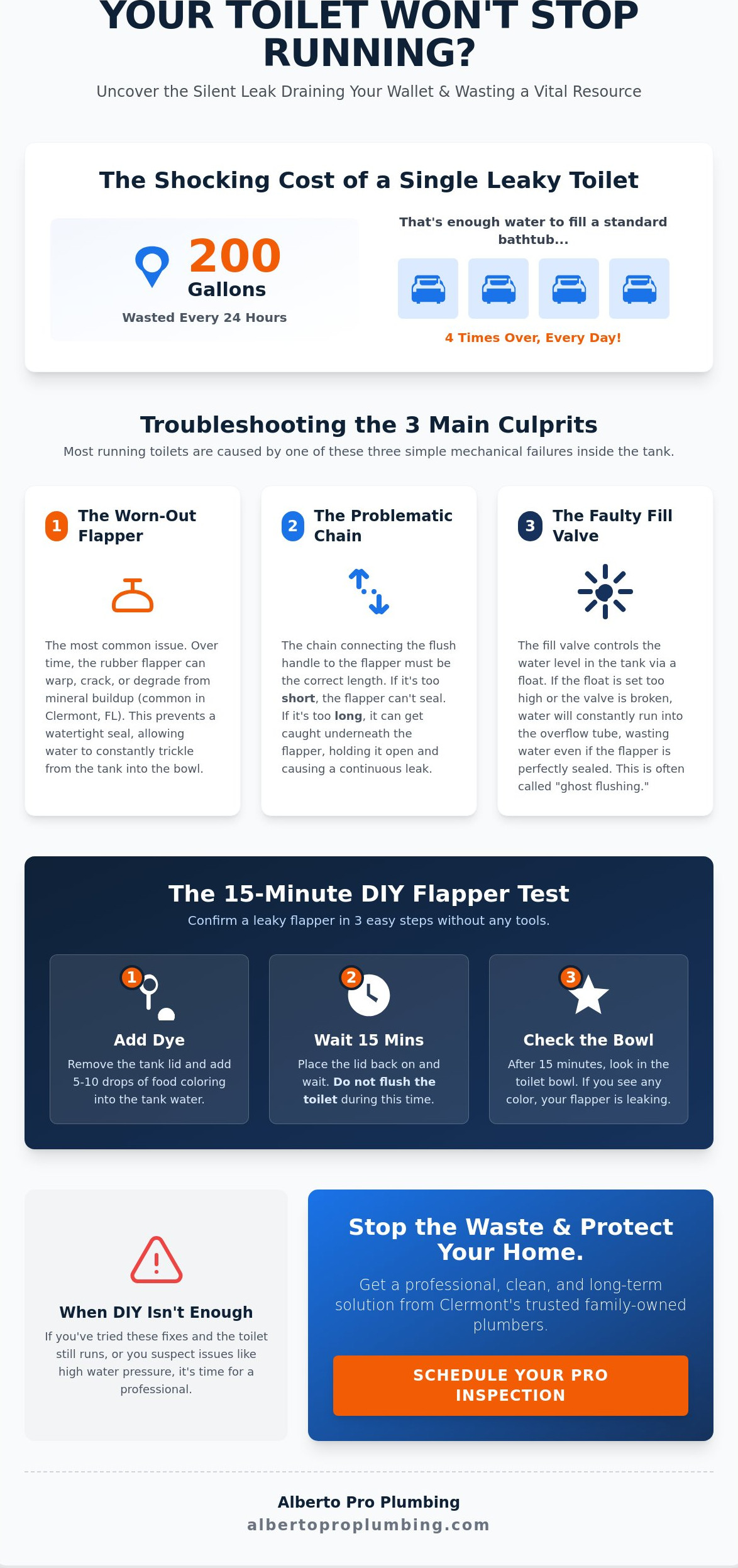
Imagine it’s 3:00 AM on a Tuesday in Clermont, and the only thing louder than the Lake County crickets is the constant, ghostly hiss coming from your master bathroom. You realize your toilet won’t stop running, and according to EPA WaterSense data, a single leaking toilet can waste as much as 200 gallons of water in just one 24-hour period. That is enough water to fill a standard bathtub four times over. It’s a stressful situation that leaves many homeowners fearing a sudden bathroom flood or a massive spike in their monthly utility costs.
We agree that a simple plumbing fixture shouldn’t cause this much anxiety or drain your bank account. At Alberto Pro Plumbing, our family-owned team is committed to providing the same professional, clean service we would expect in our own homes. This guide promises to walk you through the exact steps needed to silence the noise and stop the waste for good. We will cover the most common culprits like worn-out flappers and misaligned fill valves, giving you the technical confidence to troubleshoot like a local expert.
Key Takeaways
- Identify how a constant leak can waste up to 200 gallons of water daily and why immediate action is essential for Clermont homeowners.
- Discover how to troubleshoot the three most common mechanical culprits when your toilet won’t stop running, including flappers and fill valves.
- Master the pro-approved DIY steps to safely shut off your water supply and inspect your tank components without causing a mess.
- Learn to recognize complex plumbing warning signs like high home water pressure that often require a professional “Pro” inspection to fix.
- Find out how expert maintenance ensures a clean, long-term solution that protects your property and lowers your monthly utility bills.
Why Your Toilet Won’t Stop Running (And Why Clermont Homeowners Should Care)
If you hear water trickling long after you press the handle, your toilet won’t stop running. This common household nuisance is actually a silent leak where water moves constantly from the tank into the bowl. While it might seem like a minor annoyance, the numbers tell a different story. A single running toilet can waste up to 200 gallons of water every 24 hours. For homeowners in Lake County, this adds up to 6,000 gallons of wasted water per month. That’s a massive spike on your monthly utility bill and a serious risk to your septic system health. Overloading a septic tank with excessive water can lead to saturated drain fields and costly repairs.
You might also notice a phenomenon called “ghost flushing.” This happens when the tank loses enough water through a leak to trigger the fill valve, causing the toilet to refill as if someone just used it. It’s a clear sign that your plumbing needs attention. Ignoring this sound doesn’t just waste water; it puts constant pressure on your pipes and internal components, leading to faster wear and tear.
The Anatomy of Your Toilet Tank
To understand the fix, you need to know the parts inside the tank. The flapper is the rubber seal at the bottom that lifts when you flush and drops to seal the tank afterward. The fill valve is the tall assembly responsible for bringing water back into the tank to the correct level. Finally, the overflow tube acts as a safety feature to prevent bathroom flooding by diverting excess water into the bowl if the fill valve fails. Understanding how flush toilets work helps you spot exactly where the seal or valve is failing.
How Central Florida Water Affects Your Fixtures
Clermont water is known for its high mineral content. Hard water contains calcium and magnesium that create crusty white deposits inside your tank over time. These deposits often settle on the flapper or the rim of the flush valve, preventing a tight seal. When the flapper stays propped open even slightly, the water never stops flowing. Professional residential plumbing services are vital for Clermont residents to clear these deposits and ensure fixture longevity. We see these mineral issues daily in local neighborhoods like Kings Ridge and Hartwood Marsh, where older fixtures struggle against the local water chemistry. Keeping these parts clean is the first step in ensuring your toilet won’t stop running and causing damage to your home.
Troubleshooting the 3 Main Culprits: Flappers, Chains, and Fill Valves
A running toilet is more than a nuisance; it’s a drain on your Clermont home’s efficiency. Most homeowners in Lake County encounter this issue due to the natural wear of internal tank components. When your toilet won’t stop running, the problem usually stems from three specific parts: the flapper, the lift chain, or the fill valve. Each of these components works in a cycle to manage water flow, and a failure in any one of them breaks the seal or prevents the tank from refilling correctly.
The flapper is often the primary suspect. It is a rubber plug that holds water in the tank until you push the handle. Over time, the rubber degrades. If the flapper is fine, we look at the lift chain. A chain that is too long can get caught under the flapper, while a chain that is too short prevents the flapper from closing fully. Finally, the fill valve and its float regulate the water level. If the float is set too high, water constantly pours into the overflow tube. Our team also inspects the flush valve seat for small cracks or mineral deposits that might bypass a brand-new flapper.
Inspecting the Flapper for Mineral Buildup
The flapper is the most common reason a toilet won’t stop running. To confirm a leak here, perform a simple dye test. Drop five drops of blue or red food coloring into the tank and wait 15 minutes. If the color seeps into the bowl without you flushing, the flapper is leaking. In Florida, chlorine and hard water minerals often cause the rubber to become warped or “mushy” after about 4 or 5 years of use. If the rubber feels slimy or doesn’t spring back to its original shape, it needs replacement. While you have the flapper off, use a non-abrasive sponge to clean the flush valve seat. Removing grit and slime ensures the new part creates a watertight seal immediately.
Adjusting the Float and Fill Valve
If the tank is silent but you see water trickling into the overflow tube, the fill valve is the problem. This vertical tube is designed to prevent the tank from overflowing onto your floor. According to the U.S. Environmental Protection Agency, addressing water waste from toilet leaks can save a household about 10 percent on their monthly water bills. Check the water level; it should be exactly 1 inch below the top of the overflow tube. You can adjust this by turning the screw on top of the fill valve or sliding the clip on the float rod to lower the float. If you hear a constant, high-pitched hissing sound, the internal seals of the valve have likely failed. In this case, a total replacement of the fill valve is the most reliable solution. For a long-term fix that prevents future leaks, you can always request a professional tank rebuild from our local experts.
Step-by-Step Guide: How to Stop a Running Toilet Fast
Hearing a constant trickle of water in your bathroom is more than just a minor annoyance. It is a sign that your toilet won’t stop running, which can waste up to 200 gallons of water every single day. In our Clermont community, where we value efficiency and home maintenance, catching this early saves money on your monthly utility bill. Most homeowners can resolve this issue in about 20 minutes by following these professional steps.
Step 1: Shut off the water supply. Locate the silver oval knob on the wall behind the toilet base. Turn it clockwise until it stops. This prevents the tank from refilling while you work.
Step 2: Remove the tank lid. Ceramic lids are heavy and slippery. Carefully lift the lid and place it flat on a thick towel in a safe area where it won’t be tripped over. This protects both the lid and your flooring from cracks.
Step 3: Flush the toilet. Hold the handle down until the tank is as empty as possible. This gives you a clear view of the flapper, the fill valve, and the flush valve without fighting against rising water.
Step 4: Inspect and repair. Check the rubber flapper at the bottom of the tank. If it feels slimy or looks warped, it’s likely the culprit. You can consult this practical guide to fixing a running toilet to help you decide if you need to simply clean the seal or replace the entire assembly.
Step 5: Restore water and test. Turn the silver knob counter-clockwise to let the tank refill. Watch the water level to ensure it stops about one inch below the top of the overflow tube. Perform a final test flush to confirm the seal is tight.
Tools and Materials You Might Need
You don’t need a massive toolbox for this job, but having the right gear makes the process smoother. Grab a pair of pliers and an adjustable wrench just in case the fill valve nut needs tightening. If you’re heading to the local hardware store, be cautious with “universal” flapper kits. Many modern toilets designed after 2020 use specialized sizes that a standard 2-inch flapper won’t fit correctly. We always recommend wearing durable rubber gloves. Old flappers often disintegrate over time, leaving a black, carbon-like residue on your hands that is difficult to scrub off.
Pro Tips for a Clean and Successful Repair
Small adjustments lead to the best results. When you’re connecting the flapper to the handle, ensure the chain has exactly 1/2 inch of slack. If the chain is too tight, the flapper will hover and leak; if it’s too loose, it can get tangled under the seal. While the tank is empty, take a moment to scrub the rim holes under the toilet bowl with a stiff brush. This can improve your flush velocity by roughly 10 percent by removing hard water buildup. If you find that the toilet won’t stop running even after replacing the parts, or if you see water pooling around the base, consulting expert plumbers in Clermont FL is the safest bet to protect your home from water damage.
When DIY Isn’t Enough: Identifying Complex Plumbing Issues
While many homeowners can successfully swap out a flapper, some problems are buried deeper in the system. If your toilet won’t stop running after you’ve replaced the basic seals, you’re likely dealing with a mechanical failure or a system-wide pressure issue. A cracked flush valve assembly, for instance, allows water to bypass the seal entirely. These hairline fractures are often invisible to the naked eye but can lead to hundreds of gallons of wasted water every month. Identifying these complex issues early prevents high utility bills and protects your home’s infrastructure.
High Water Pressure in Lake County
Clermont is famous for its rolling hills, but that varied elevation creates unique challenges for local plumbing. To ensure water reaches homes at the top of a ridge, municipal systems often maintain high baseline pressure. If your home sits at a lower elevation, your internal plumbing might face 90 or 100 PSI. Any reading over 80 PSI is considered excessive and will eventually destroy your toilet’s internal valves. We often find that a failing Pressure Reducing Valve (PRV) is the real culprit behind a toilet won’t stop running. A PRV acts as a gatekeeper, keeping your home’s pressure at a safe 50 to 60 PSI to protect your fixtures and pipes from premature wear.
Cracked Overflow Tubes and Hidden Leaks
Plastic components inside a toilet tank don’t last forever. Over 10 or 15 years, the overflow tube can develop vertical cracks. This allows water to drain into the bowl constantly, regardless of how new your flapper is. Even more concerning are silent leaks that move beyond the tank. If you notice dampness around the base of the toilet or a soft spot in the flooring, the wax ring has likely failed. This allows water to seep into the subfloor every time the toilet runs or flushes. If you see water pooling or smell mildew, you need emergency plumbing repair to prevent rot that can cost thousands of dollars to remediate.
Sometimes, a fixture simply reaches the end of its functional life. If you’ve repaired the same toilet three times in two years, a full replacement is usually the more cost-effective choice. Modern models use 20% to 30% less water than older 1.6-gallon units, often paying for themselves through lower monthly bills. Look for these signs that it’s time to call in a professional:
- Visible cracks in the porcelain tank or bowl.
- Frequent clogs that suggest a failing internal trap.
- Constant “phantom flushing” that persists after parts replacement.
- High water bills that don’t drop after DIY repairs.
If your DIY fixes aren’t sticking, contact our Pro team to schedule a professional inspection and stop the waste for good. For Central Florida homeowners who want to be fully prepared, our guide to choosing the best plumber in Orlando, FL can help you identify a trusted expert before the next plumbing emergency strikes.
Professional Solutions and Prevention for Your Clermont Home
A toilet won’t stop running for various reasons, but the cost of ignoring the issue is always high. According to 2026 water conservation data, a single leaking flapper wastes up to 200 gallons of water daily. This adds up quickly on your Clermont utility bill. While many homeowners try a quick DIY fix, a professional “Pro” inspection identifies underlying problems that aren’t visible to the naked eye. We check your home’s static water pressure using calibrated gauges. High pressure exceeding 80 PSI often causes fill valves to fail prematurely; we solve the root cause rather than just treating the symptom.
Upgrading to a high-efficiency toilet is a smart long-term investment for Florida residents. Modern models certified by the EPA WaterSense program use only 1.28 gallons per flush. Compared to older 3.5-gallon units, this simple change reduces indoor water usage by 20% to 60% immediately. Our team helps you select fixtures that offer powerful flushing performance while keeping your monthly expenses low. We ensure every installation is level, sealed, and optimized for your specific plumbing layout.
The Alberto Pro Advantage
We treat your property with the respect it deserves. As a family-owned business, we understand that your home is your sanctuary. Our team follows a strict “clean” service protocol. This means we wear protective floor covers and sanitize the entire work area before we leave. You’ll never have to clean up after our technicians. If you need more than just a quick repair, we invite you to explore our full range of plumbing services to keep your entire system running smoothly. We pride ourselves on being the neighborly experts you can trust for honest advice and disciplined craftsmanship.
Preventing Future Plumbing Emergencies
Stop using “drop-in” bleach tablets in your toilet tank. These harsh chemicals sit in the water and corrode rubber flappers and gaskets within 6 to 12 months. This chemical damage is a leading reason why a toilet won’t stop running even after a recent component replacement. To keep your home safe, we recommend the following preventative steps:
- Annual Check-ups: We catch pinhole leaks and failing seals before they cause water damage.
- Pressure Monitoring: Maintaining a safe PSI prevents stress on your pipes and fixtures.
- Home Protection Membership: Our members enjoy year-round peace of mind with scheduled 50-point inspections.
Regular maintenance extends the life of your plumbing fixtures by 30% on average. Don’t wait for a 2:00 AM flood to call for help. Schedule a professional tune-up today to secure your home’s plumbing health and keep your water bills under control. If you ever need service beyond Clermont, our 2026 buying guide for finding a reliable plumber in Orlando, FL walks you through exactly what to look for in a trustworthy Central Florida professional.
Restore Your Clermont Home’s Peace and Efficiency
A toilet won’t stop running because of three primary culprits: a faulty flapper, an improper chain length, or a worn-out fill valve. Most homeowners can identify these specific issues within 15 minutes by following our 2026 troubleshooting steps. Taking immediate action is essential because the Environmental Protection Agency reports that a leaky toilet can waste 200 gallons of water daily. If your DIY efforts don’t stop the flow, it’s time to bring in the experts to avoid hidden water damage or unnecessarily high utility costs.
We are a family-owned and operated team that treats your house like our own. Our clean service guarantee ensures we leave your bathroom spotless, and our 24/7 emergency support means professional help is always available when you need it most. You deserve a home that functions perfectly without the constant sound of rushing water or the stress of a mounting repair bill.
Need a Pro to fix that running toilet? Contact Alberto Pro Plumbing in Clermont today!
We look forward to serving you and keeping your plumbing in top shape so you can get back to your day with total peace of mind.
Frequently Asked Questions
Is a running toilet an emergency?
A running toilet is considered a plumbing emergency if water is overflowing onto your bathroom floor or if you cannot shut off the water supply. While a small leak is less urgent, a constant flow can waste 200 gallons of water daily. Our Alberto Pro Plumbing team recommends turning off the shut-off valve behind the toilet immediately to prevent structural damage or mold growth in your Clermont home.
How much water does a running toilet waste per day?
A toilet that won’t stop running can waste between 30 and 200 gallons of water every single day. According to data from the Environmental Protection Agency, a leaky toilet can waste 1,000 gallons of water in a single month. This high volume of water flow puts unnecessary strain on your septic system or the local Clermont municipal sewer lines. Our prompt service helps stop this waste quickly.
Why does my toilet run every few minutes then stop?
This issue is known as ghost flushing and usually happens because water is slowly leaking from the tank into the bowl. When the water level drops below a certain point, the fill valve triggers to refill the tank. This cycle repeats every 5 to 10 minutes. It is often caused by a warped flapper or a damaged flush valve seat that isn’t creating a watertight seal.
Can I fix a running toilet myself without a plumber?
You can often fix a running toilet yourself if the problem is a tangled lift chain or a dirty flapper. These DIY repairs take about 15 minutes and require basic tools like pliers. However, if you replace the parts and the toilet still runs, you may have a cracked overflow tube or high water pressure. Our family-owned and operated team can step in to provide a professional, clean solution.
Will a running toilet increase my water bill significantly?
Yes, a running toilet can increase your monthly water bill by 10% to 25% depending on the severity of the leak. A moderate leak can cost an extra $70 to $100 per month based on typical utility rates in Central Florida. If you notice a sudden spike in your Clermont water bill, a silent toilet leak is the most likely culprit 90% of the time. We fix your leaks fast to save you money.
Why is my toilet still running after I replaced the flapper?
If the toilet continues to run after a flapper replacement, the flush valve seat is likely corroded or covered in mineral deposits. This prevents the new flapper from seating correctly. You might also have a fill valve that is set too high, causing water to pour into the overflow tube. We ensure every Pro repair includes cleaning the valve seat to guarantee a perfect seal and long-term reliability.
What is the most common cause of a running toilet in Florida?
The most common cause of a toilet won’t stop running in Florida is mineral degradation of the rubber flapper. Central Florida water often contains high levels of calcium and chlorine which causes rubber parts to become brittle within 3 to 5 years. This chemical wear prevents the flapper from closing tightly, leading to the constant running sound you hear in your bathroom. Our local experts use high-quality, chlorine-resistant parts for every fix.
How do I know if my fill valve is bad?
You know a fill valve is bad if the tank water level is higher than the overflow tube or if the valve makes a high-pitched whistling sound. If the water does not stop even when you manually lift the float cup, the internal seal has failed. Our Pro technicians check these components during every service call to ensure your Clermont home stays dry and your plumbing remains efficient. We leave your bathroom clean and fully functional.