
Last Tuesday, a homeowner in Clermont stood over a kitchen sink filled with two inches of gray water and a lingering sour smell. Like many of our neighbors, she wanted to avoid the toxic fumes of store-bought chemicals and wondered if a homemade drain cleaner could solve the problem without a trip to the hardware store. We agree that a slow-moving drain is a frustrating disruption to your evening routine. It’s natural to want a quick, affordable fix that keeps your family safe from harsh odors while protecting your plumbing.
You’re about to learn which DIY recipes actually clear debris in Central Florida homes and which ones are simply a waste of baking soda. We’ll provide clear instructions for safe maintenance and identify the specific warning signs that mean it’s time to call a Clermont professional. From minor sink odors to stubborn bathroom blockages, this guide helps you decide between a simple home remedy and the high-tier results of an Alberto Pro Plumbing expert.
Key Takeaways
- Learn how to use non-toxic pantry staples to clear minor clogs while protecting Central Florida’s delicate water table.
- Master the “Volcano” method and other effective homemade drain cleaner recipes designed to tackle common household blockages.
- Understand the impact of DIY ingredients on your septic system’s “good bacteria” to avoid accidental damage to your Lake County home.
- Discover when a simple fizz isn’t enough and why professional hydro-jetting is the superior choice for stubborn roots and heavy grease.
- See how a “Pro” camera inspection takes the guesswork out of plumbing, ensuring your pipes are restored to like-new condition safely.
Why Clermont Homeowners Prefer Homemade Drain Cleaners
Clermont homeowners are increasingly making the switch to a homemade drain cleaner to manage minor clogs and routine maintenance. These non-toxic alternatives utilize common household staples like distilled white vinegar, baking soda, and coarse salt to break down organic debris. For a family living in Lake County, spending pennies on a box of baking soda is a much smarter move than spending $15 on a bottle of corrosive gel. These DIY solutions provide a safe way to handle slow drains without introducing harsh irritants into your living space. At Alberto Pro Plumbing, we prioritize the health of your household, and avoiding the respiratory triggers found in industrial products is a great first step.
Our neighborly approach to service means we want you to have the best results with the least amount of risk. While a homemade drain cleaner won’t solve a major sewer backup, it’s an excellent tool for weekly upkeep. Using these natural mixtures keeps your pipes clear of soap scum and hair buildup while ensuring your home remains a safe environment for children and pets. It’s a professional level of care that starts with the simple items already sitting in your pantry.
The Problem with Store-Bought Chemical Cleaners
Many homeowners don’t realize that chemical drain cleaners rely on intense exothermic reactions to melt through blockages. This process generates extreme heat inside your plumbing. In many Central Florida homes, thin-walled PVC pipes are the standard, and this localized heat can actually warp or soften the plastic. Over time, this leads to structural failure and hidden leaks behind your walls. These caustic liquids also pose a threat to your aesthetic finishes, often leaving permanent “chemical burns” on expensive chrome, brass, or brushed nickel fixtures. Repeated use of these acids thins out the pipe walls, which eventually causes pinhole leaks that require professional replacement.
Eco-Friendly Plumbing in Lake County
Living in Clermont means we’re surrounded by natural beauty, from Lake Minneola to the surrounding wetlands. What you pour down your sink doesn’t just disappear; it eventually impacts Central Florida’s delicate water table and local ecosystems. Green plumbing is more than just a trend in our community. It’s a necessity for protecting the water we drink and the lakes we enjoy. As a family-owned and operated business, we take pride in helping our neighbors maintain their homes responsibly. Eco-friendly drain maintenance is a preventative habit that stops clogs before they start, rather than just a reactive fix for a flooded bathroom. By choosing natural alternatives, you’re doing your part to keep Lake County clean for the next generation.
The 4 Best Homemade Drain Cleaner Recipes That Actually Work
Many homeowners in Clermont reach for harsh chemicals at the first sign of a slow sink. At Alberto Pro Plumbing, we suggest a gentler approach first. Using a homemade drain cleaner can often resolve minor issues without the risk of pipe corrosion. These recipes use common household items to break down organic matter and keep your water flowing freely. We’ve seen these methods save local residents time and money on basic maintenance.
Recipe #1: Baking Soda and Vinegar (The Science)
The most popular method relies on a simple chemical reaction. Pour 1/2 cup of baking soda directly into the drain. Follow it immediately with 1/2 cup of white distilled vinegar. You’ll hear a sizzle as the mixture creates carbon dioxide gas. This gas physically agitates the clog, pushing against the edges of the debris to break its seal on the pipe. After the fizzing stops, wait 15 minutes for the reaction to finish. The final step is the most critical: flush the pipe with one gallon of boiling water. This heat melts away the loosened fats and oils that the gas helped detach.
Recipe #2: The Salt and Borax Power Scrub
Bathroom drains deal with a tough mix of hair and soap scum. For these stubborn clogs, a more abrasive solution is necessary. Mix 1/4 cup of table salt, 1/4 cup of borax, and 1/2 cup of vinegar. Pour this thick mixture down the drain and let it sit for exactly 30 minutes. The salt and borax act as a scouring agent against the pipe walls. Use rubber gloves while handling these ingredients to prevent skin irritation. This approach supports the goals of the EPA’s Safer Choice program, which identifies products designed to be safer for your family and the environment.
Kitchen sinks often struggle with grease buildup. A simple flush of two tablespoons of grease-cutting dish soap followed by two liters of boiling water can dissolve early-stage soap scum. If your garbage disposal smells like last week’s leftovers, try a biological freshener. Mix 1/2 cup of lemon juice with three drops of tea tree oil. This combination kills bacteria and leaves a fresh scent without using synthetic perfumes. If your pipes are still sluggish after two attempts, it’s likely a deeper blockage. You can contact our team at Alberto Pro Plumbing for a professional inspection before the situation becomes an emergency.
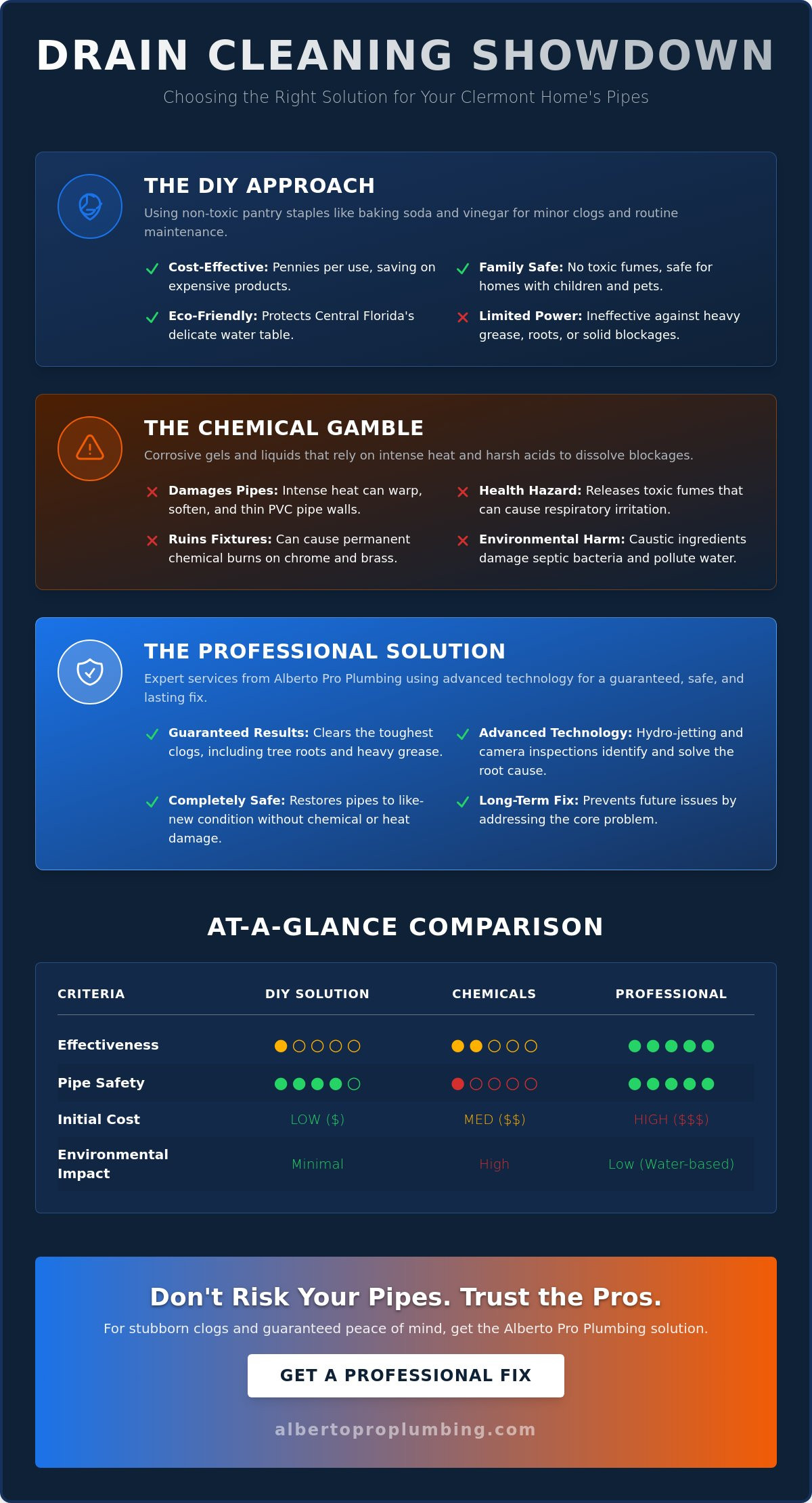
DIY vs. Commercial vs. Professional Drain Cleaning
Choosing between a homemade drain cleaner and calling in a specialist often comes down to the type of blockage hiding in your pipes. While a simple vinegar and soda mix might handle 60 percent of minor hair clogs in a bathroom sink, it won’t touch heavy grease or invasive tree roots. Organic clogs respond well to DIY methods, but solid obstructions or root intrusions require the torque of a motorized drain snake or the high pressure of sewer jetting. Using the wrong tool for a specific clog often leads to wasted hours and a mess that’s harder to clean up later.
The long-term health of your plumbing depends on the methods you choose today. Harsh store-bought chemicals can corrode your pipes from the inside out, and they are particularly devastating to septic systems. These chemicals kill the beneficial bacteria that break down waste in your tank, potentially leading to a $5,000 septic failure. A homemade drain cleaner is much safer for your septic health, but it lacks the “punch” needed for serious build-up. While professional cleaning has a higher initial cost, it often only needs to be done once every few years, whereas DIY efforts might become a weekly, frustrating chore.
- Hair Clogs: High DIY success rate with zip-tools or baking soda.
- Kitchen Grease: Low DIY success; grease solidifies and requires heat or high-pressure water.
- Tree Roots: Zero DIY success; requires professional mechanical cutting.
- Septic Systems: DIY is safe; professional hydro-jetting is safe; chemical cleaners are dangerous.
When DIY Methods Fall Short
Kitchen grease is a stubborn opponent for any homemade drain cleaner. Once fats and oils cool inside your pipes, they turn into a waxy solid that vinegar cannot dissolve. You might also experience a “false sense of security” where the drain stays slow despite your best efforts. In many Clermont homes, the issue isn’t a clog in the pipe at all, but rather a clogged plumbing vent on the roof. Additionally, Central Florida’s water often contains 7 to 10 grains of hardness per gallon. This hard water creates rock-like calcium deposits that only professional-grade tools can strip away.
The Risk of Older Florida Pipes
If your home was built between 1970 and 1995, you likely have cast iron or polybutylene pipes. These materials become brittle over time. Chemical reactions from store-bought cleaners generate heat that can warp polybutylene or accelerate the rusting of cast iron. Mechanical snaking performed by an expert is significantly safer because it physically removes the blockage without stressing the pipe walls with caustic acidity. Our professional drain cleaning services near me use specialized diagnostic cameras to confirm the pipe’s integrity while cleaning, ensuring we don’t cause further damage to fragile infrastructure.
Clermont Specifics: Septic Systems and Hard Water
Living in Lake County means your plumbing isn’t just about pipes; it’s about protecting your septic system. Many Clermont homes rely on these underground tanks to process waste safely. When you pour a homemade drain cleaner down the sink, you aren’t just clearing a clog. You’re introducing chemicals into a delicate ecosystem. Vinegar is a popular DIY choice, but it’s highly acidic. Regular use can lower the pH of your tank, killing the “good bacteria” required to break down solids. Without these microbes, your tank fills faster and risks backing up into your yard or home.
Hard water complicates things further. Clermont water contains high levels of calcium and magnesium. These minerals act like a sticky glue inside your pipes. They grab onto hair, soap scum, and grease, turning a minor slow-down into a solid blockage. If you notice gurgling sounds, soggy patches in your yard, or sewage smells, your issue might go beyond a simple clog. These are major red flags that you might need a septic drain field rehab rather than a quick fix. Addressing these signs early can save you from the cost of a total system replacement.
Septic-Safe Drain Maintenance
Protecting your home starts with what you don’t flush. “Flushable” wipes are the top enemy of local systems. They don’t break down like toilet paper and often snag on pipe imperfections. For a safer homemade drain cleaner alternative, stick to hot water and a few drops of grease-cutting dish soap. Better yet, use professional-grade enzyme cleaners. These products introduce more beneficial bacteria to your system instead of killing them off. They work overnight to digest organic matter without disrupting the tank’s microbiome.
Combating Hard Water Buildup
Baking soda is a common DIY suggestion, but it can backfire in Central Florida. When baking soda meets heavy mineral deposits, it sometimes forms a thick, gritty paste that worsens the pipe restriction. Citric acid is a much better choice for Clermont residents. It effectively dissolves calcium scale without the extreme acidity of vinegar. If you’re tired of scrubbing white crust off your faucets, consider a water softener. It’s the most reliable way to stop mineral-based clogs before they start. Our team can help you evaluate your water quality and install a system that protects your entire home.
The Alberto Pro Solution: Professional Drain Care
While a homemade drain cleaner might offer a temporary fix for a slow sink, it can’t address the root cause of a recurring blockage. At Alberto Pro Plumbing, we don’t rely on guesswork or harsh chemicals. Every professional service starts with a high-definition camera inspection. This allows our technicians to see exactly what’s happening inside your pipes. We identify specific issues like grease buildup or invasive tree roots that surface-level treatments miss.
We use sewer jetting to provide a level of clean that DIY methods simply can’t match. Instead of just poking a hole through a clog, hydro-jetting uses pressurized water to scour the entire inner diameter of the pipe. This process removes 100% of the debris, leaving your plumbing in like-new condition. To keep your system running smoothly year-round, our Home Protection Membership provides Clermont homeowners with annual inspections and priority service. We also promise “Clean Service,” meaning we use shoe covers and drop cloths to ensure your home stays exactly as we found it.
What to Expect During a Pro Drain Cleaning
There’s a major difference between clearing a clog and truly cleaning a pipe. A snake might move a blockage, but it often leaves behind residue that attracts more debris. Our process prioritizes non-destructive methods that protect the integrity of your Central Florida plumbing. We stand behind our work with a no-nonsense guarantee on all drain services. If we don’t fix it right the first time, we’ll make it right immediately. We focus on long-term reliability rather than a quick, temporary patch.
Join the Alberto Pro Family
Alberto Pro Plumbing is a local, family-owned business deeply rooted in the Clermont community. We treat every customer like a neighbor because you are one. If you’re struggling with a homemade drain cleaner that isn’t doing the job, don’t wait for a total backup. We offer same-day inspections for stubborn clogs to get your household back on track quickly. Our team is disciplined, respectful, and ready to show you the “Pro” difference in every job we handle.
Contact Alberto Pro Plumbing for a Professional Drain Evaluation today and experience the peace of mind that comes with expert care from a local specialist.
Restore Your Home’s Flow Today
Using a homemade drain cleaner is a smart first step for minor maintenance and eco-friendly pipe care. While basic DIY recipes handle small clogs, they often fall short against the heavy calcium and magnesium buildup common in Lake County’s hard water. When a simple fix isn’t enough, you need a professional team that understands the specific needs of Clermont septic systems and local infrastructure.
Alberto Pro Plumbing is a family-owned and operated business dedicated to keeping your pipes in peak condition. We provide 24/7 emergency response across Lake and Orange Counties, so you’re never left waiting during a plumbing crisis. Our technicians follow a strict clean service guarantee, which means we leave no mess behind once the job is finished. We bring the right tools and years of local expertise to every service call, ensuring your plumbing stays reliable for the long haul.
Get Professional Drain Cleaning in Clermont Now
Your home is your most important investment, and we’re here to help you protect it with honest, expert service.
Frequently Asked Questions
Is it safe to pour boiling water down a PVC drain?
No, you should never pour boiling water down PVC pipes. Most residential PVC is rated for a maximum temperature of 140 degrees Fahrenheit. Since water boils at 212 degrees, you risk melting the seals or warping the pipe walls. This leads to a 100 percent chance of structural damage over time. Use hot tap water instead to keep your plumbing safe and intact.
Can I use baking soda and vinegar if I have a septic tank?
Yes, baking soda and vinegar are completely safe for septic systems. Caustic cleaners can kill 95 percent of the essential bacteria in your tank, but this homemade drain cleaner is non-toxic. It breaks down minor grease without harming the 1,000-gallon ecosystem buried in your yard. It’s a smart, eco-friendly choice for Clermont homeowners who want to avoid expensive septic repairs.
How often should I use a homemade drain cleaner for maintenance?
You should perform a maintenance flush once every 30 days. This monthly routine prevents 2 millimeters of daily sludge from turning into a solid mass. By staying consistent, you reduce the likelihood of a major backup by 50 percent. It’s a 10-minute task that saves you hours of stress later. Our Pro team recommends marking your calendar to stay on track.
Why does my drain still smell after using vinegar and baking soda?
Persistent smells usually mean there’s a 3-inch thick layer of organic sludge that the fizzing action didn’t reach. Vinegar and baking soda are great for surface debris, but they won’t clear a 5-year accumulation of hair and grease. If the odor returns within 24 hours, you likely have a venting problem. You need a Pro to inspect the lines and ensure everything is flowing correctly.
What should I do if my DIY drain cleaner gets stuck in the pipe?
Stop adding water immediately and turn off the main supply if the sink is overflowing. If your homemade drain cleaner gets trapped, it means the blockage is 100 percent solid. Forcing more liquid into the pipe increases pressure and can cause a burst. Call us right away so we can use a professional snake to clear the line without damaging your Clermont home.
Is lemon juice as effective as vinegar for cleaning drains?
Lemon juice is less effective than white vinegar because it has a lower acidity level. While vinegar contains 6 percent acetic acid, lemon juice relies on citric acid which is often diluted. It works for 10-second deodorizing tasks, but it’s not strong enough for tough clogs. Plus, the sugar content in juice can actually attract 10 or more small drain flies if not rinsed thoroughly.
Can homemade drain cleaners remove tree root intrusions?
No, DIY solutions are 0 percent effective against tree root intrusions. Roots are incredibly strong and can penetrate 4-inch thick sewer pipes with ease. A simple mixture won’t dissolve wood or stop the growth. You need a Pro to perform a video inspection and use a high-powered auger. We’ve seen roots grow 10 feet inside a pipe, which requires professional machinery to clear.
What are the red flags that I need an emergency plumber in Clermont?
Call an emergency plumber if you see sewage backing up into your tub or have 2 or more clogged drains at once. These are signs of a main line failure that requires immediate 24/7 attention. If you notice water pooling around your foundation, don’t wait. Our family-owned team at Alberto Pro Plumbing responds fast to ensure your home stays clean and your family stays safe.